
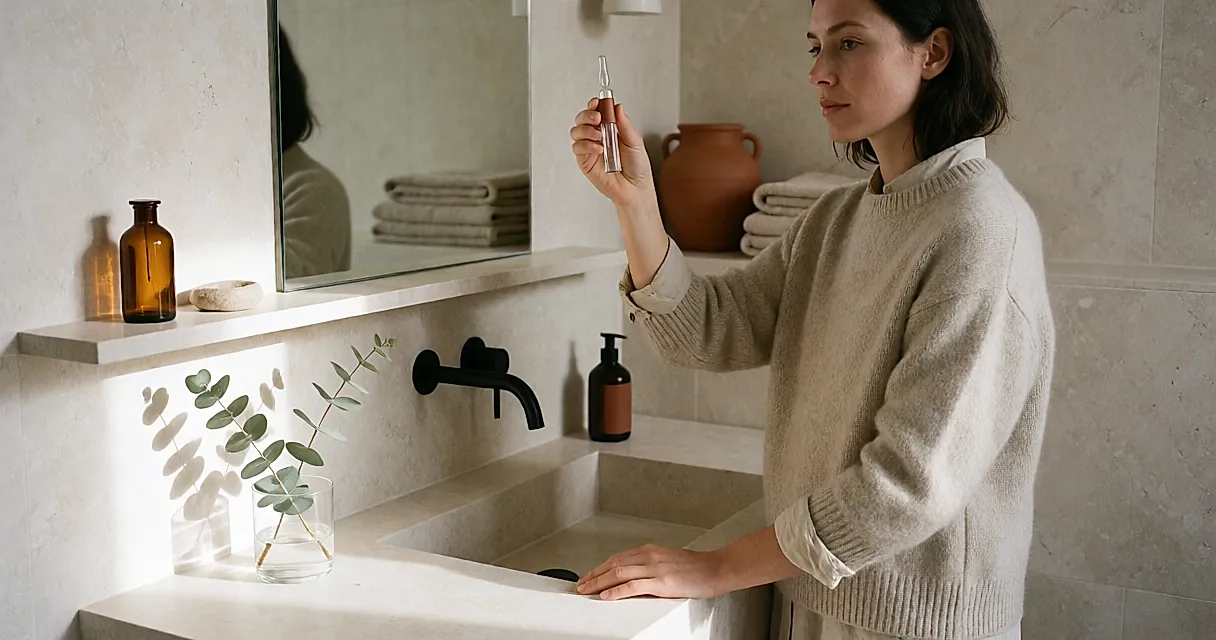
How many bottles of serum have you actually finished? Not opened, not dabbed at once — finished, right down to the last drop. If your answer is hovering around zero, the ampoule has a decent case. The question is what it leaves behind once the glass is empty.
One dose, often with no preservatives
An ampoule is a small glass cylinder you snap open and empty in one go. The logic is simple: the product meets the air only once, during the few seconds it takes to apply. The knock-on effect is that the formula can often do without preservatives — the molecules that stop a product spoiling once the container is open. In other words, an ampoule is often preservative-free thanks to single-dose packaging, but not always; check the ingredients list. For reactive skin that struggles with some of them, that is not a small thing.
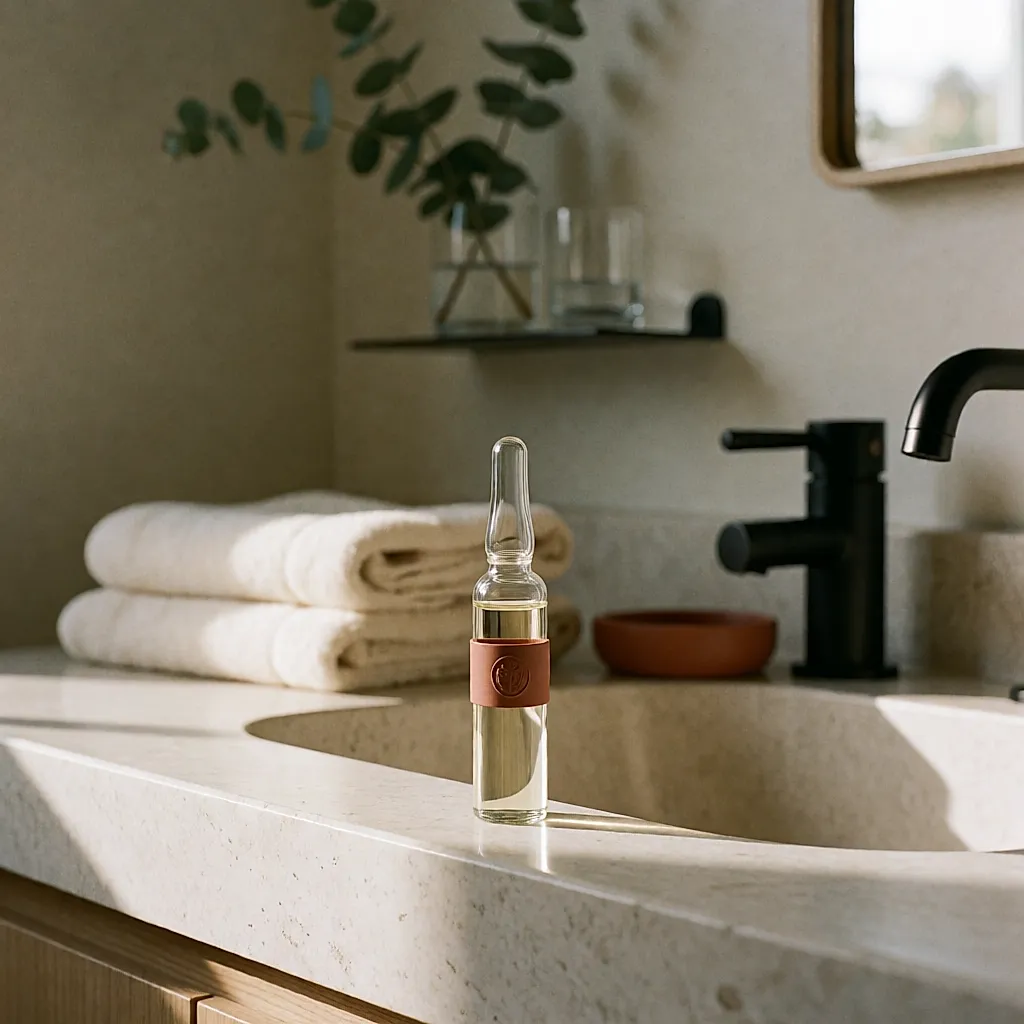
The other argument is the dose. No pump to press four times out of habit, no bottle knocked over because you were looking the other way. You pour, you spread, done. An honest caveat: an ampoule sometimes holds more than your face actually needs. In that case, send the rest down your neck, over your décolletage and onto the backs of your hands — not down the plughole.
The snap, and its little ritual
Opening an ampoule takes thirty seconds and a bit of attention. You slide the top into the little sleeve provided (or a tissue), hold the cylinder upright and snap it with a firm flick. The glass breaks cleanly, a sharp collar is left on the rim, and you have to empty the contents without stabbing yourself. A charming ceremony on a Sunday evening; rather less charming on a Monday at 7.12am, when your coffee is going cold and nobody can find their keys.
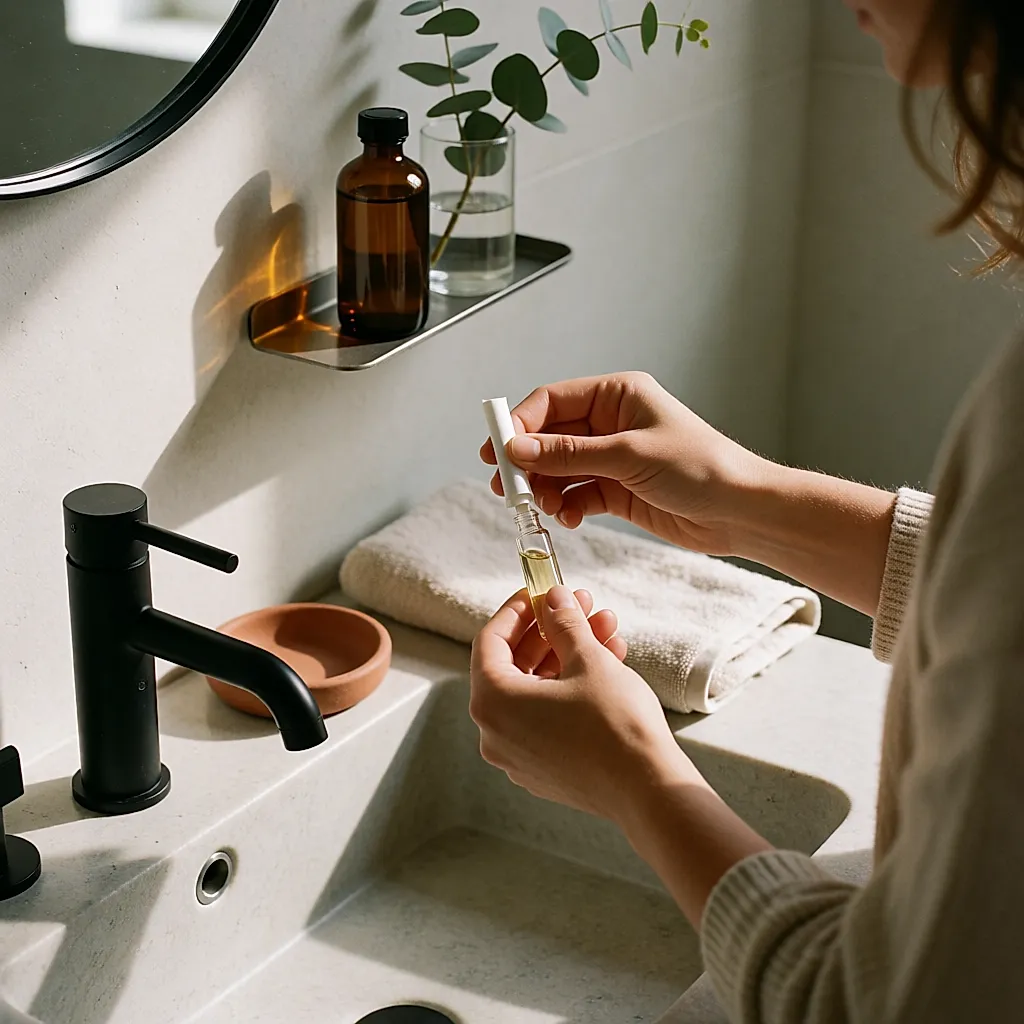
The snap has its unpredictable side too: some ampoules break badly, leave a splinter, and you end up studying your palm over the basin. Nothing dramatic, but it isn't the most forgiving moment of a routine.
Hold the ampoule upright, top pointing up, and always snap along the axis. Once it's open it doesn't close again: use the lot, or spread the surplus over your neck and hands rather than letting it oxidise on the edge of the basin.
The little bit of glass nobody talks about
Here's the awkward part. The ampoule is a single-use container: a glass cylinder, often tucked into a blister and a cardboard sleeve. Depending on what your council collects, small glass containers aren't always accepted in the glass bin — check your local rules, because they vary from one area to the next. And unlike a bottle, it isn't designed to be refilled or returned to the shop: one ampoule, one piece of waste.
The 30ml bottle has its faults (more on those below), but it lasts for months, is often recyclable, and some brands sell refills. So the ledger isn't automatic: an ampoule sold as preservative-free can, over a year, produce more glass than a single bottle you finish. That's the classic false green bargain: you win on the formula and move the waste somewhere else.
The head-to-head with a 30ml bottle
Compare like with like: price per millilitre. An ampoule usually holds 1 to 2ml. A standard bottle holds 30ml — the volume equivalent of fifteen to thirty 1–2ml ampoules, note, not a number of applications. Per millilitre, it's hard to beat a bottle, provided you finish it before the open-jar symbol (6M or 12M) calls time.
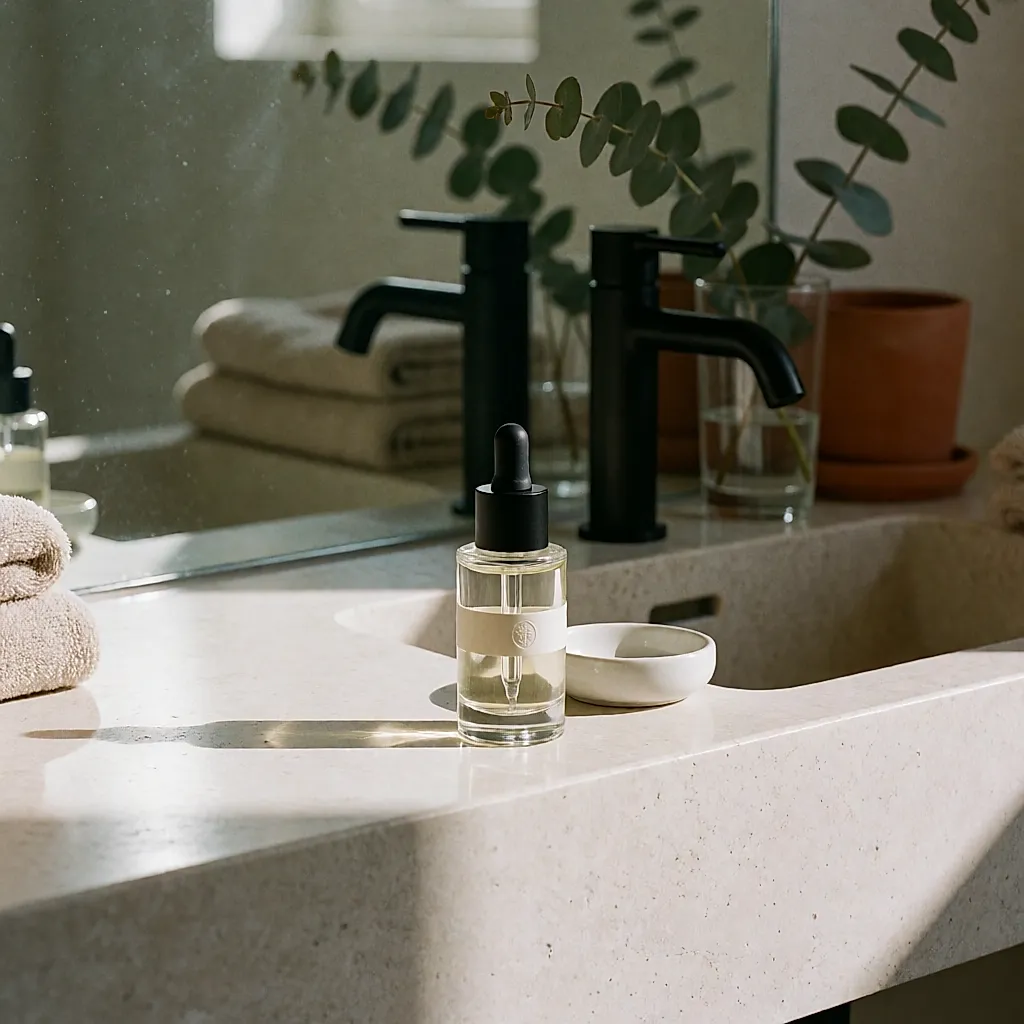
And breakage isn't the only risk: a glass bottle slipping onto a tiled floor is the Sunday-morning disaster. But that one can be rescued — pump, cap, dropper. An ampoule can't. It's a one-off act, which is both its beauty and its limit.
What it costs
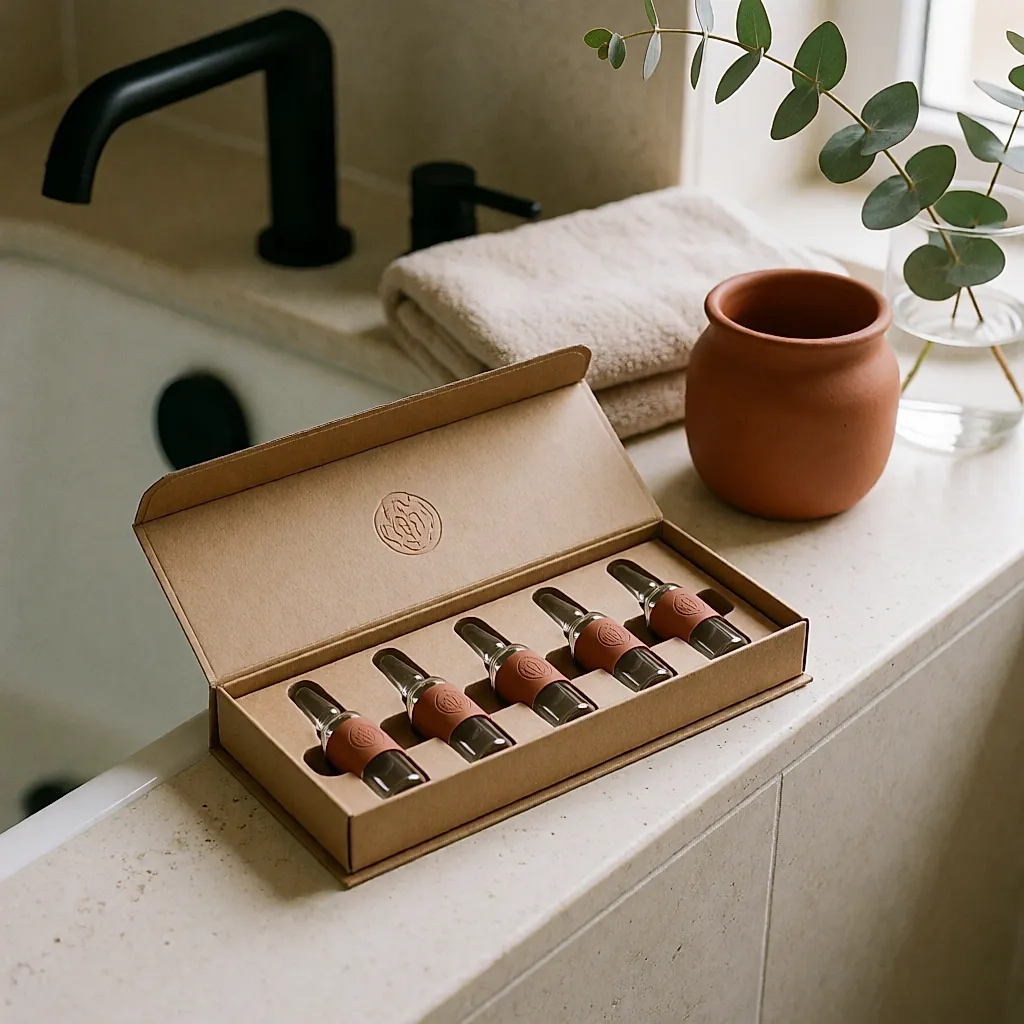
On price, budget roughly £1 to £3 per ampoule, and often £15 to £45 for a box of seven or fourteen depending on the range — from a pharmacy, a beauty hall, a salon or online. Prices vary by retailer, so check before you commit. A 30ml bottle sits at roughly £15 to £80 depending on the brand and the actives, which usually works out cheaper per millilitre. The comparison isn't outrageous, but it deserves a clear head rather than a lit-up display stand.
Where to buy? Christmas gift sets are tempting, but check the price per ampoule: a pretty box can hide ampoules at £4 each once you've done the maths. And be wary of single ampoules sold 'to try' — that's rarely the best deal.
Who it genuinely suits
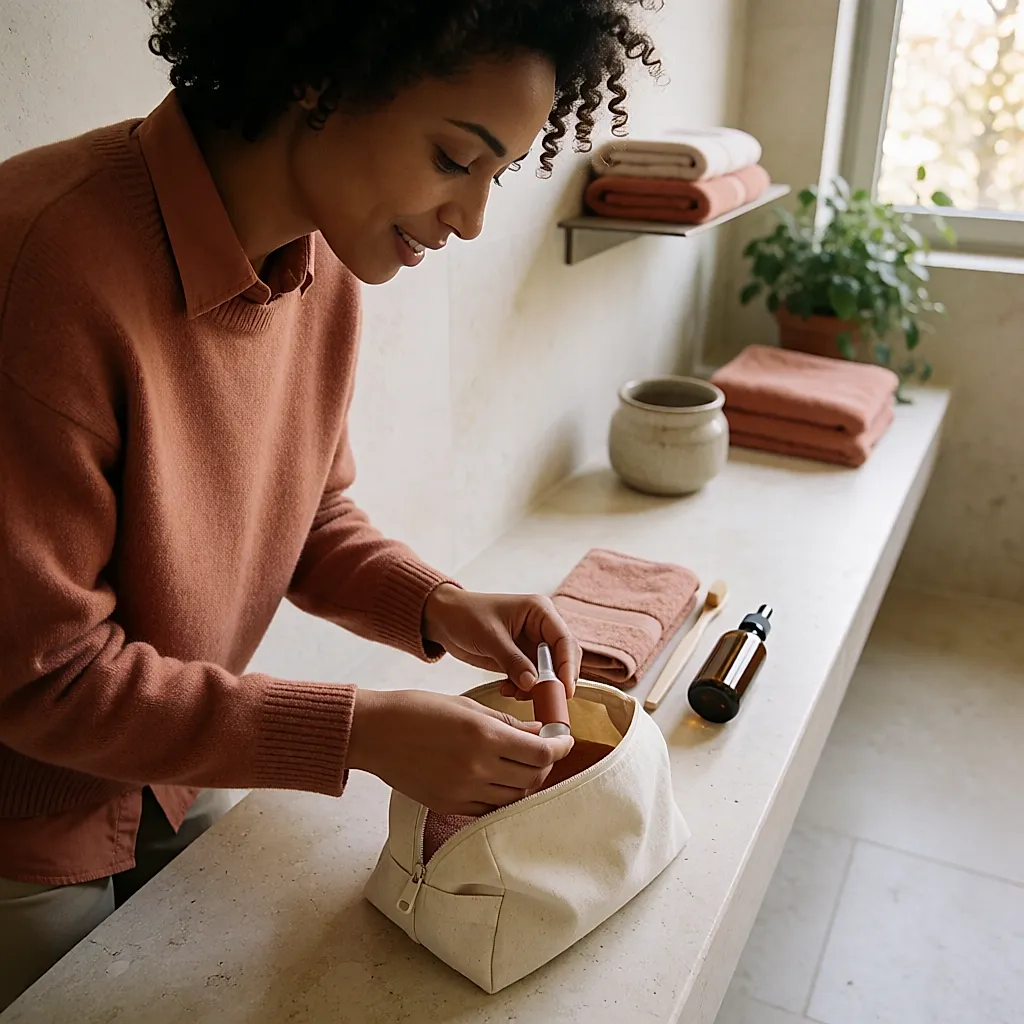
The ampoule is a genuinely useful travel format: one glass cylinder in the wash bag, no leaks, no heavy bottle spilling onto your underwear. It also suits anyone who uses a targeted treatment once a week — a boost before a night out, a recovery product after a weekend outdoors — and who has never finished a bottle in their life. If your skin reacts to certain preservatives, it may be worth a look; on that point a dermatologist's opinion will always be more reliable than a magazine's hunch.
If, on the other hand, you have a daily routine, a bottle you actually finish, and reducing waste matters to you, the ampoule doesn't deliver the peace it promises. The rule that remains is the same as with any product: buy what you're going to finish. An ampoule now and then for the pleasure of the ritual, a bottle for everyday life — the glass can wait.
Comments
Your opinion matters: rate the article, react and reply to comments.
Comments are moderated; AI-assisted comments are flagged. Text emoticons (8-), :-), <3…) are automatically shown as images.