
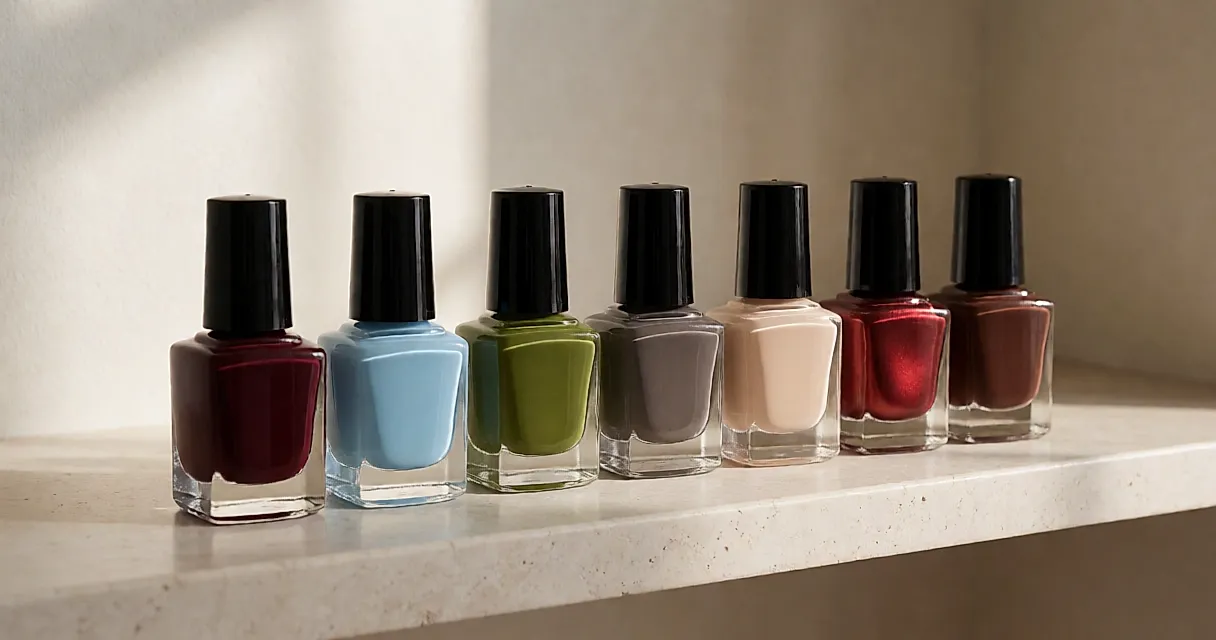
A decade never announces itself with a coat. It starts with a fingernail. A colleague's, on a Tuesday morning, over the photocopier: a near-black burgundy, glossy as a boiled sweet. You couldn't have said why, but you knew at once that this was it.
The nail tells you first
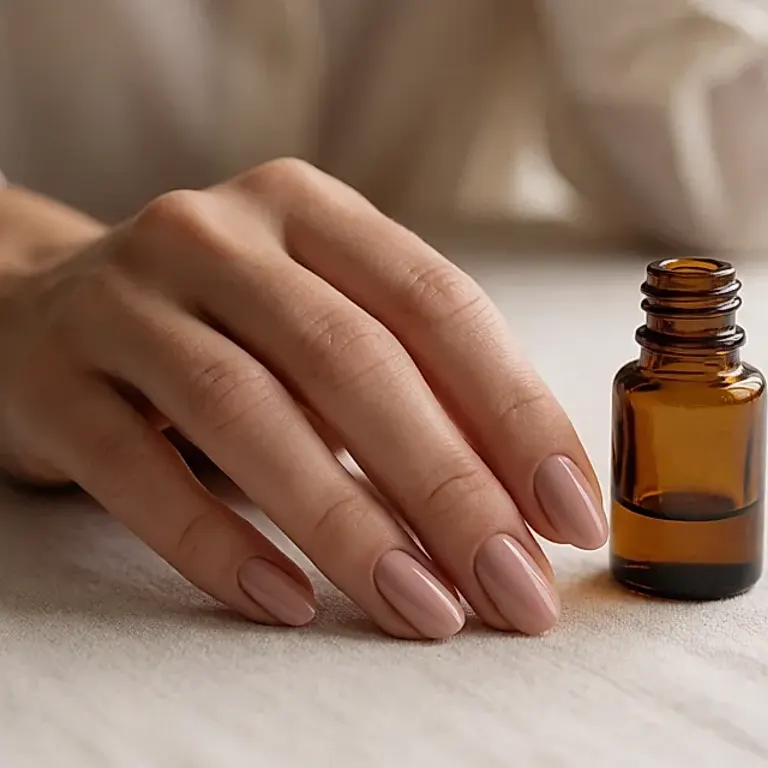
A winter coat costs a few hundred pounds and commits you to a season of wear. A bottle of polish costs the price of two coffees and comes off with remover on a Sunday night, with nobody asking you to justify the choice. Maybe that's why palettes always come back through the hands first: the surface is small, the decision is reversible, and other people's eyes land on it a hundred times a day without ever settling there.
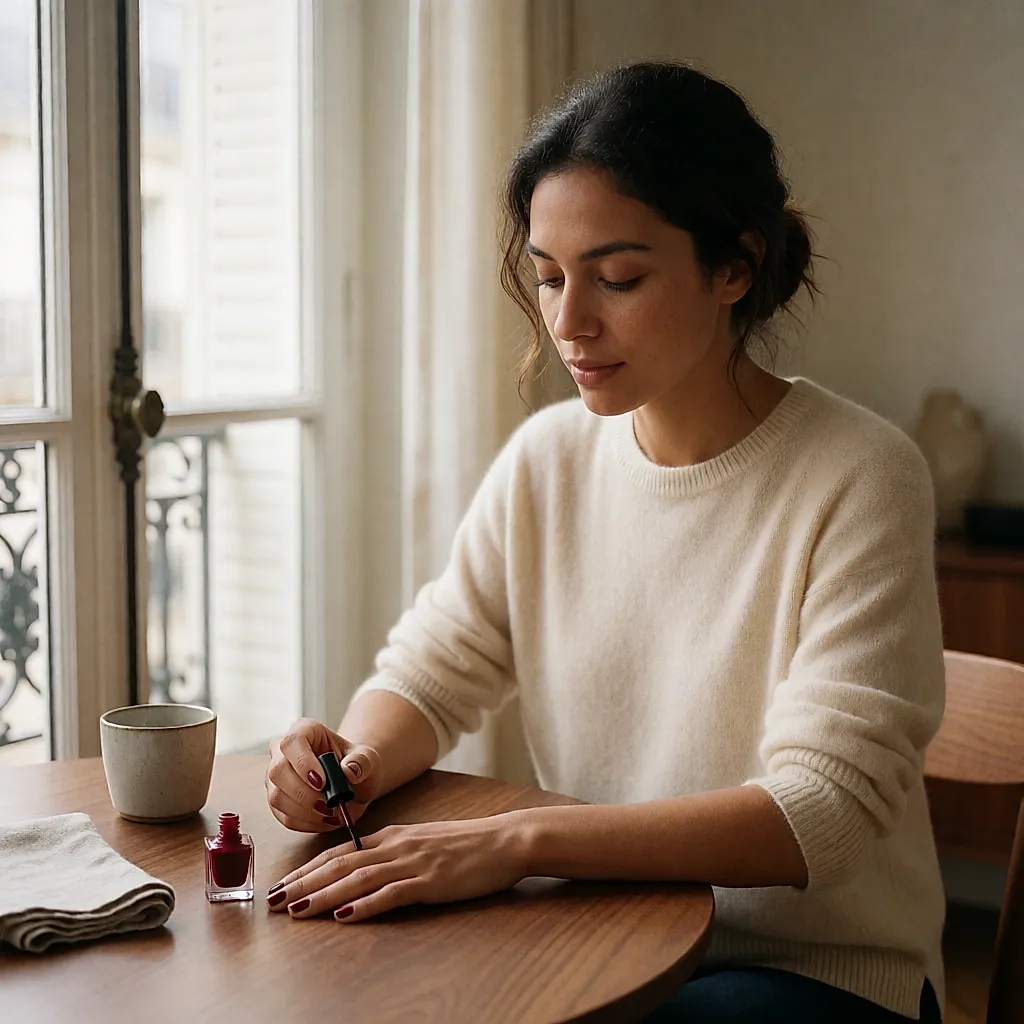
Then there's denim. Jeans are far less forgiving than we are: the cut, the colour, the length, everything shows. The nail, by comparison, tolerates an experiment — a metallic olive green on Tuesday, a milky pink on Friday, and nobody sees a contradiction. It's the only place on the body where a whole decade fits into a few millimetres of spare space.
What's happening right now looks less like a launch than a restock of the shelf. No capsule collection, no countdown, no model across a double-page spread: shades we assumed were packed away in the loft turn up again in the permanent ranges, in their usual spot, between a cherry red and a nude. A brand that reissues a catalogue staple isn't saying "here's the trend"; it's saying "we never really took it away".
Seven shades, one family
The dark red first, the one that came to define the mood of the decade: Rouge Noir by Chanel, a burgundy so dark it borders on black. It has long been a catalogue staple, which is the very definition of an archive piece: not a trend, a wardrobe basic.
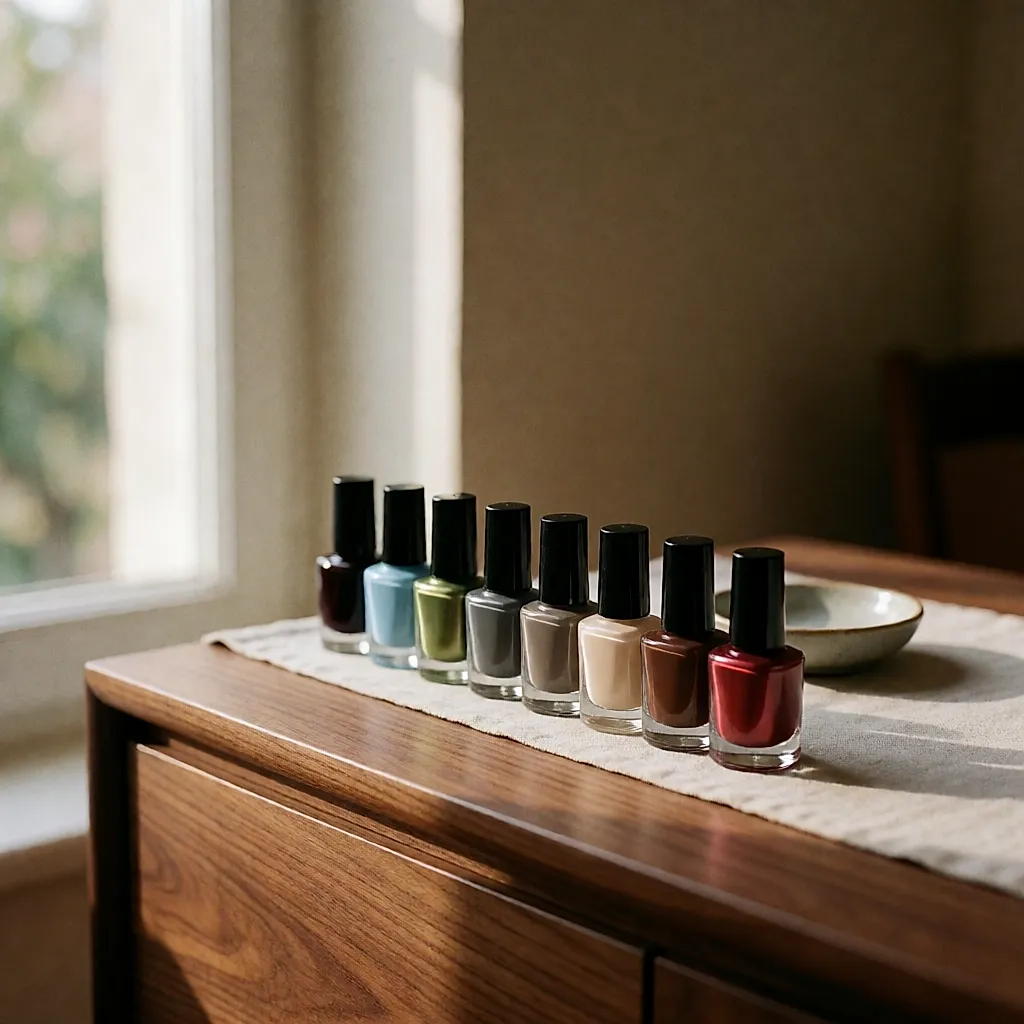
Around it, the rest of the 90s colour card, the one we wore with thin rings and sleeked-down hair. Baby blue, pastel and a little off — honestly, who decided that was a youthful mistake? Green, flat or metallic. Taupe grey, which has the elegance of not needing to prove anything. Milky nude, more milky than nude. Iced brown, a school-era classic. And OPI's metallic cherry red, I'm Not Really a Waitress, a long-standing part of the range: a textbook case of a shade that has stayed alive without needing a poster.
How to spot a comeback nobody announced
A collection gives itself away through its marketing: posters, influencers, sold out fast. A restock gives itself away the opposite way — the shade is there, quietly, and it's still there months later. It's a slow indicator, but far more reliable than paid advertising. If an olive green comes back two seasons running in the permanent range, it's no longer a trend, it's a climate.

Then the awkward question: will it suit you? The darker 90s shades are glossy, so they're easier on short nails than on very long ones, where they quickly take on the air of a wedding invitation. And it's worth saying: not every shade here is equally easy to wear. Baby blue and taupe are the easiest to wear; metallic green is often described as easier in two very thin coats than in one thick one. Take that as a guide to reading the shelf, not as a verdict.
What it costs
On price, the range stays gentle: expect roughly £3 to £6 in supermarkets and pharmacies, around £9 to £15 at beauty retailers for brands such as Essie or OPI, and somewhere near £25 to £30 at the luxury houses, Chanel first among them. In a salon, a simple polish sits between £20 and £40, more with a full manicure, depending on the city and the length.
A word on formula, because there's no point pretending: many conventional polishes still use classic solvent-based formulas, not the most virtuous thing on the shelf. If that's your criterion, look for formulas without certain controversial solvents — the "8-free" or "10-free" claims printed on the bottle — water-based polishes, or settle for three well-chosen shades rather than twelve that dry up at the back of a drawer. It's one beauty category where you can treat yourself to a luxury house for the price of lunch!
The five-minute method: a base coat, two very thin coats (not one thick one), a top coat. Between each layer, wait until the polish no longer feels tacky to the touch — a couple of minutes is enough. And keep your hand flat while it dries: that's what saves you the sheet marks and the Sunday-night rescue job.
There's something reassuring about the way fashion comes back through the fingers rather than down the catwalk. A bottle commits you to nothing, doesn't cost a month's rent and comes off without leaving a trace — almost. What remains is that five-minute gesture on a Sunday night, enough to bring a whole decade into the week. Whether you open the door to it is up to you.

Comments
Your opinion matters: rate the article, react and reply to comments.
Comments are moderated; AI-assisted comments are flagged. Text emoticons (8-), :-), <3…) are automatically shown as images.