
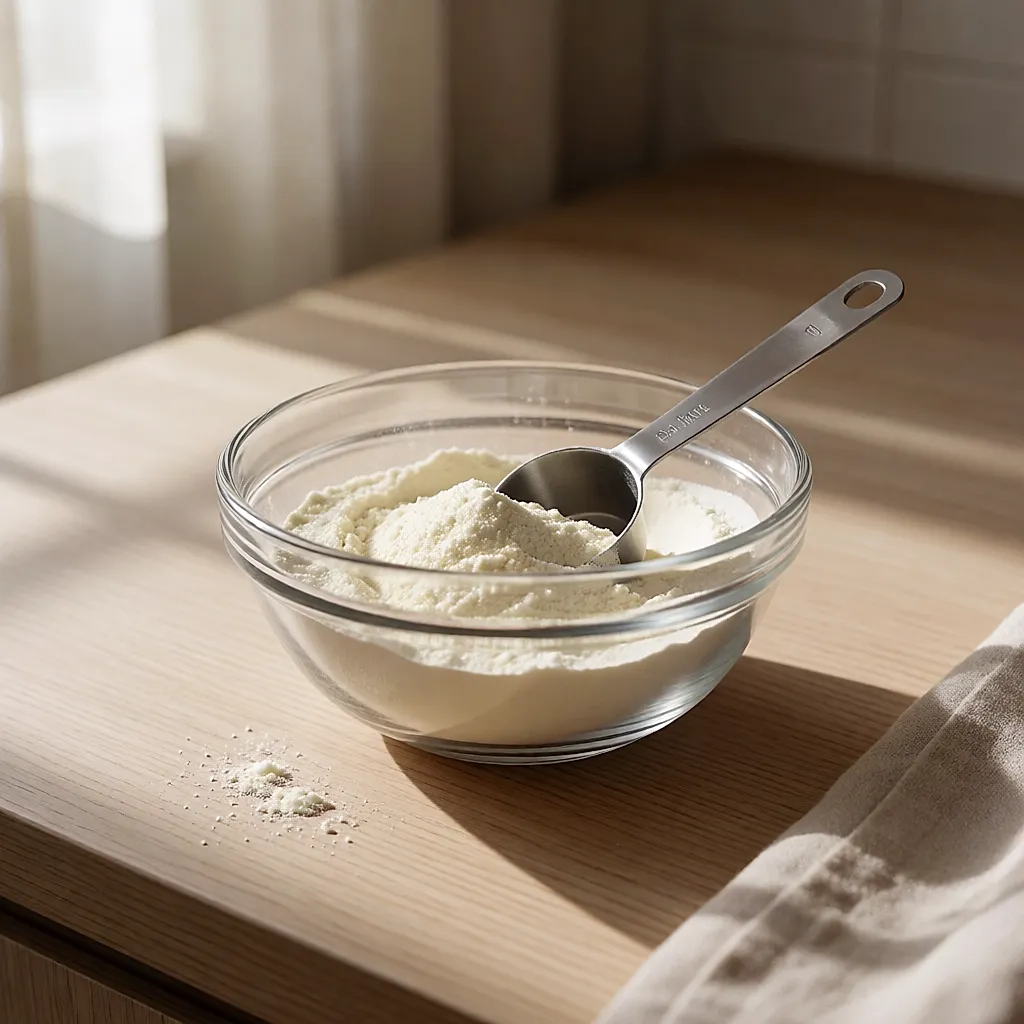
Remember Proti'dose®? The name still lingers in the web's archives. It was a protein powder packaged in sachets, made by Laboratoires EDEL, designed to be stirred into fruit juice or compote. The product is no longer pushed the way it once was, but the method keeps doing the rounds. So it's worth taking a close look at what it offers, and what it really asks of you.

The principle: more protein, fewer calories
The idea comes down to two moves, no more. First, you keep three meals and two snacks, with a deliberately low calorie total. Second, you add two doses of protein powder, to push up the protein share across the day.
The thinking holds together, and it isn't silly. When calories fall, the body readily draws on muscle. A high protein intake, alongside a bit of activity, can help limit that loss — which is also the likely explanation for the appetite-suppressing effect often reported.
A level that low isn't harmless, though. Guidance from the French food safety agency ANSES puts an adult's daily needs at around 1,800 to 2,500 kcal, depending on age, sex and activity level; NHS reference intakes sit at roughly 2,000 kcal for women and 2,500 kcal for men. Dropping well below that isn't something to do alone, and rarely for long. And the results often highlighted at the time came from short follow-ups, which say nothing about what happens afterwards.

Protein quality: from chemical score to DIAAS
The original pitch leaned on the chemical score, the benchmark of the day. Today the thinking centres on DIAAS, a digestibility score for amino acids recommended by the FAO.
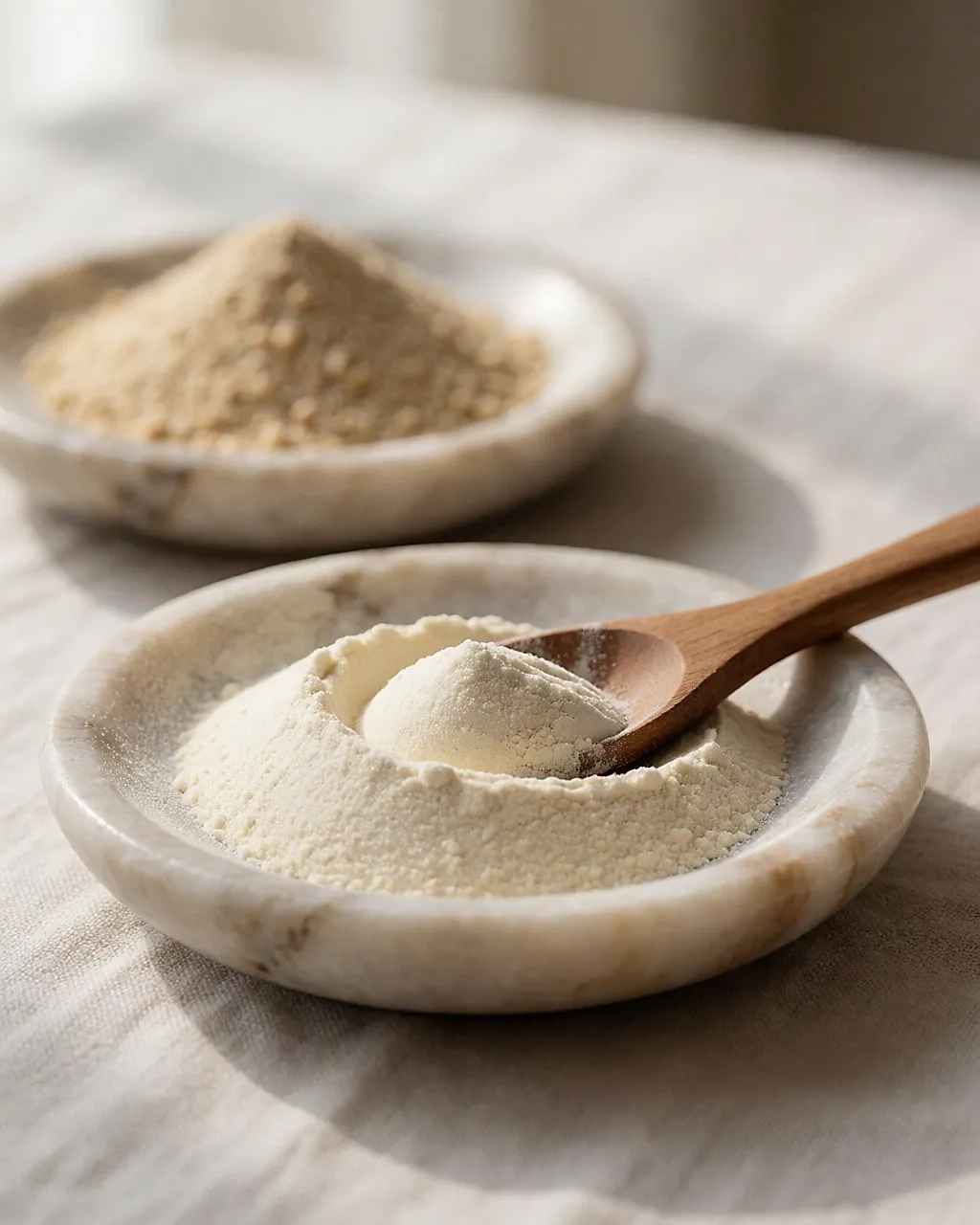
What to take from this: whey contains every essential amino acid, including leucine, and digests well. That's useful when your overall intake is low. On the plant side, the good news is that pea and rice complement each other well, with a grittier texture and a slightly lower score.
This high-protein framework doesn't suit everyone. It's not advised if you have kidney or liver impairment, during pregnancy and breastfeeding, or if you have diabetes and are on medication without medical advice. Supervision by a GP or a registered dietitian isn't a luxury: it's the part of the plan that prevents harm. In practice, speak to a healthcare professional before you start.
Doing it yourself, in practice
Skipping the commercial sachets is possible — as long as you get three things right: the powder, the format, the routine.
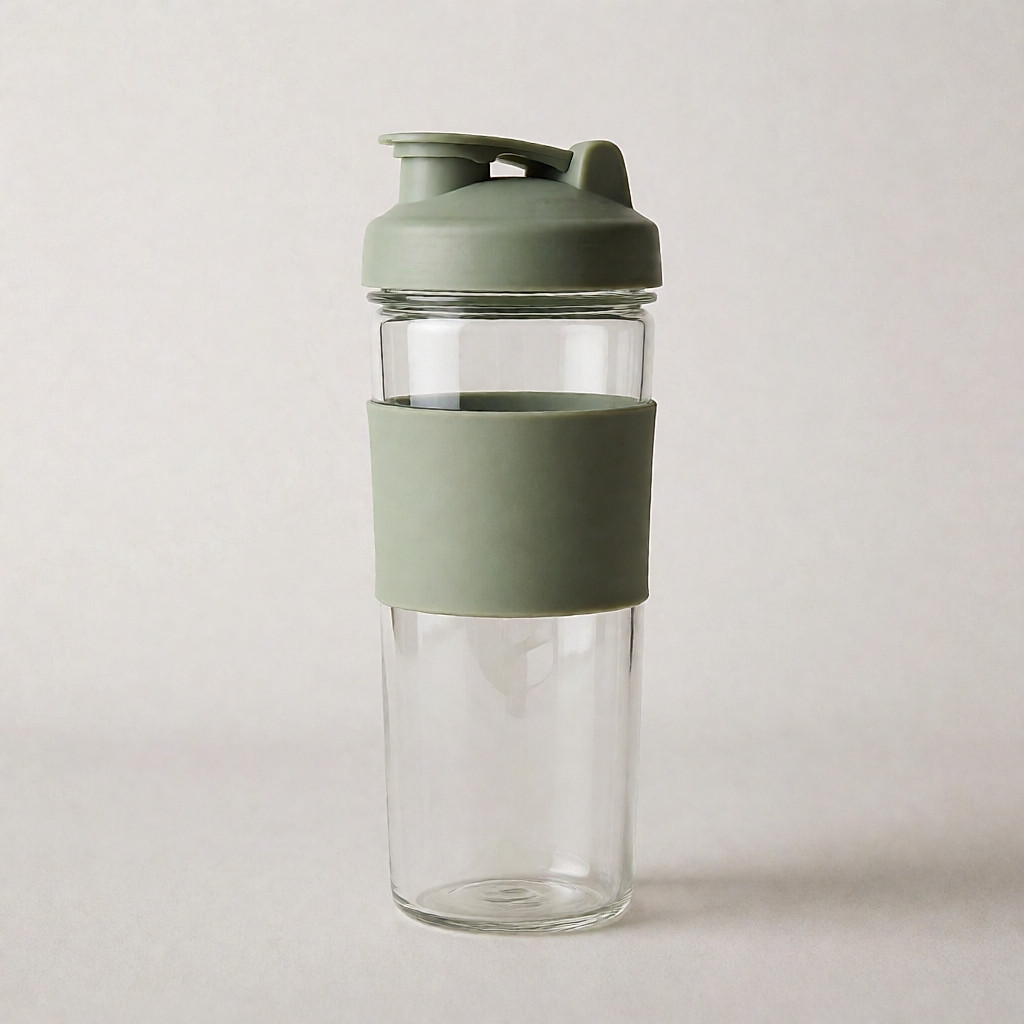
The powder. Start with the protein percentage per serving: an isolate delivers more than a concentrate. Then read the ingredient list — added sugars, sweeteners, flavourings. A short list beats flattering labelling, and that bears repeating.
The format. A fine powder that dissolves without lumps in a cold liquid slips into anything: compote, yoghurt, soup. That, more than the taste, is what keeps a plan going day to day. A glass jar with a scoop can be reused, a refillable kraft pouch cuts down on packaging: practically speaking, we're fans.
**The routine.** The original protocol set out two doses, one in the morning or as a snack, the other in the late afternoon, always paired with fruit or vegetables. For three or four days, write down what you actually eat: that's usually where the sums don't add up.
A word on the body, since we're here. When intake falls too low, skin looks dull, hair and nails weaken, fatigue sets in. These aren't cosmetic issues: they're signals, and they're worth heeding. In practice, remember this: a dietary change on this scale is something you prepare with a professional, not alone in your corner.
Budget
- Standard whey powder, 500 g to 1 kg tub: around £15 to £35 (supermarket, sports nutrition retailer, online).
- Organic isolate, Soil Association certified, in a glass jar or refillable pouch: around £30 to £55.
- Sachet or single-serve formats: £1 to £2 each, pricier per gram of protein.
- Dietitian appointment: free via NHS referral through your GP; private consultations around £50 to £100.
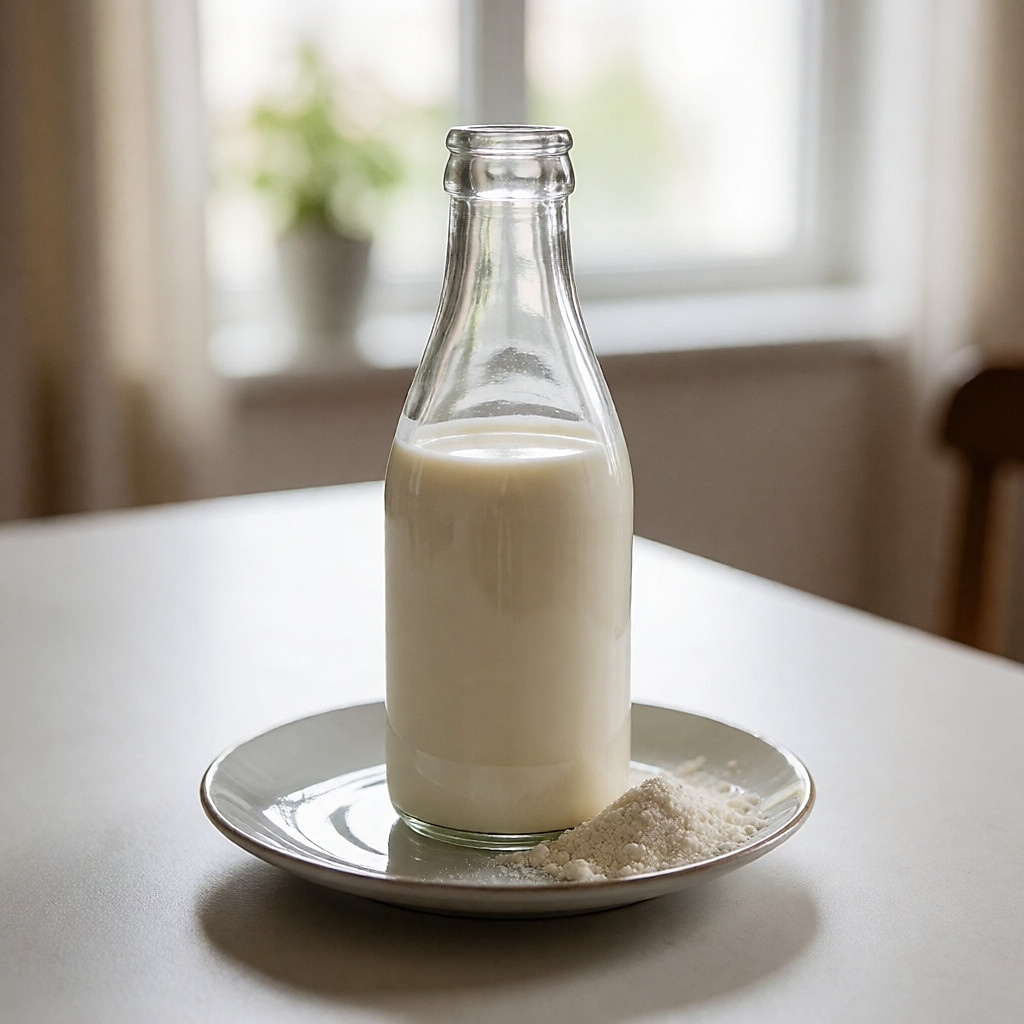
Price varies with the protein content, the origin of the milk, additives and packaging. A glass jar recycles better than a multi-layer pouch, and whey from a British dairy supply chain makes use of a cheese-making by-product — though that doesn't make it a planet-neutral product. If lactose doesn't sit well with you, go for a lactose-free isolate or a pea-rice blend, with its grittier texture: that's the compromise to accept.
Sources
- ANSES, opinion and report on the risk assessment of weight-loss dietary practices, 2010.
- ANSES, dietary guidelines for adults.
- FAO, Dietary protein quality evaluation in human nutrition (DIAAS), 2013.
- EFSA, Dietary Reference Values for protein, 2012.
- NHS, the Eatwell Guide.
Food supplements do not replace a varied, balanced diet and a healthy lifestyle.



Comments
Your opinion matters: rate the article, react and reply to comments.
Comments are moderated; AI-assisted comments are flagged. Text emoticons (8-), :-), <3…) are automatically shown as images.