
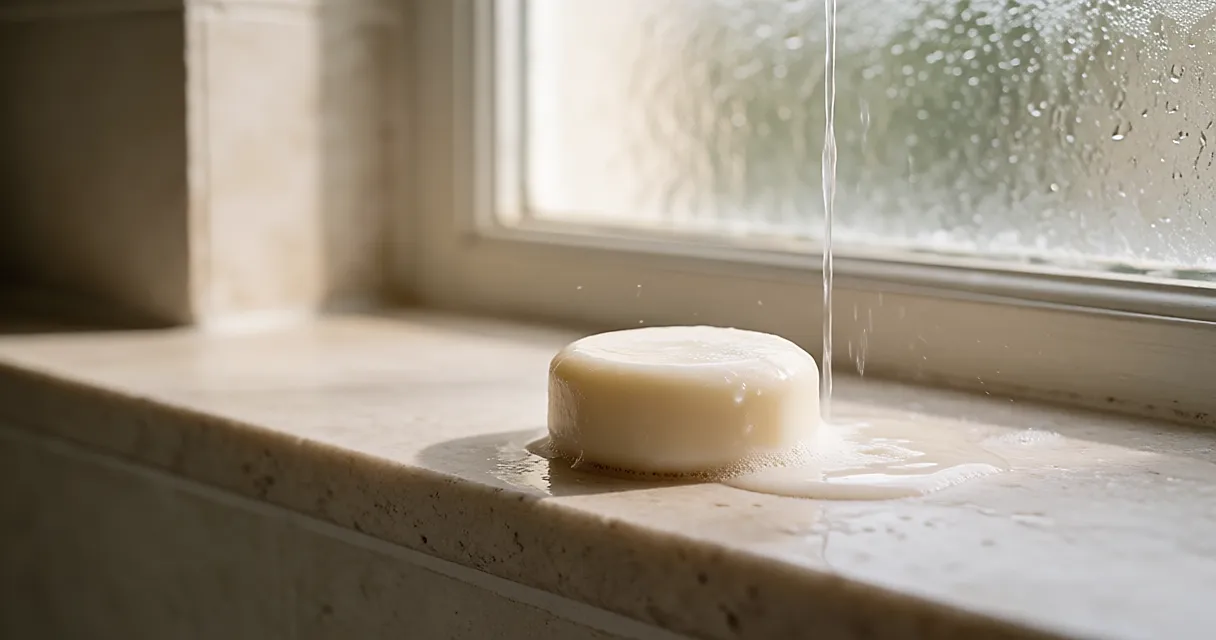
Sunday night, 9.47pm. The conditioner bar slides out of your fingers and heads for the plughole with the stealth of a camping soap. You fish it out, swipe it over your mid-lengths again, rinse, and the comb still catches. A solid conditioner isn't just a bottle-free version of your usual conditioner: it's a different material, so it asks for a different technique.
It's the base that detangles, not good intentions
People tend to pick a conditioner bar for its colour, its scent or its cardboard packaging. Read the base first. Three families do the work: butters (shea, mango), oils (argan, jojoba, coconut) and fatty alcohols — cetearyl alcohol, cetyl alcohol, stearyl alcohol. Don't flinch at the word "alcohol": these have nothing in common with surgical spirit. They're texture and slip agents that make hair easier to comb through.
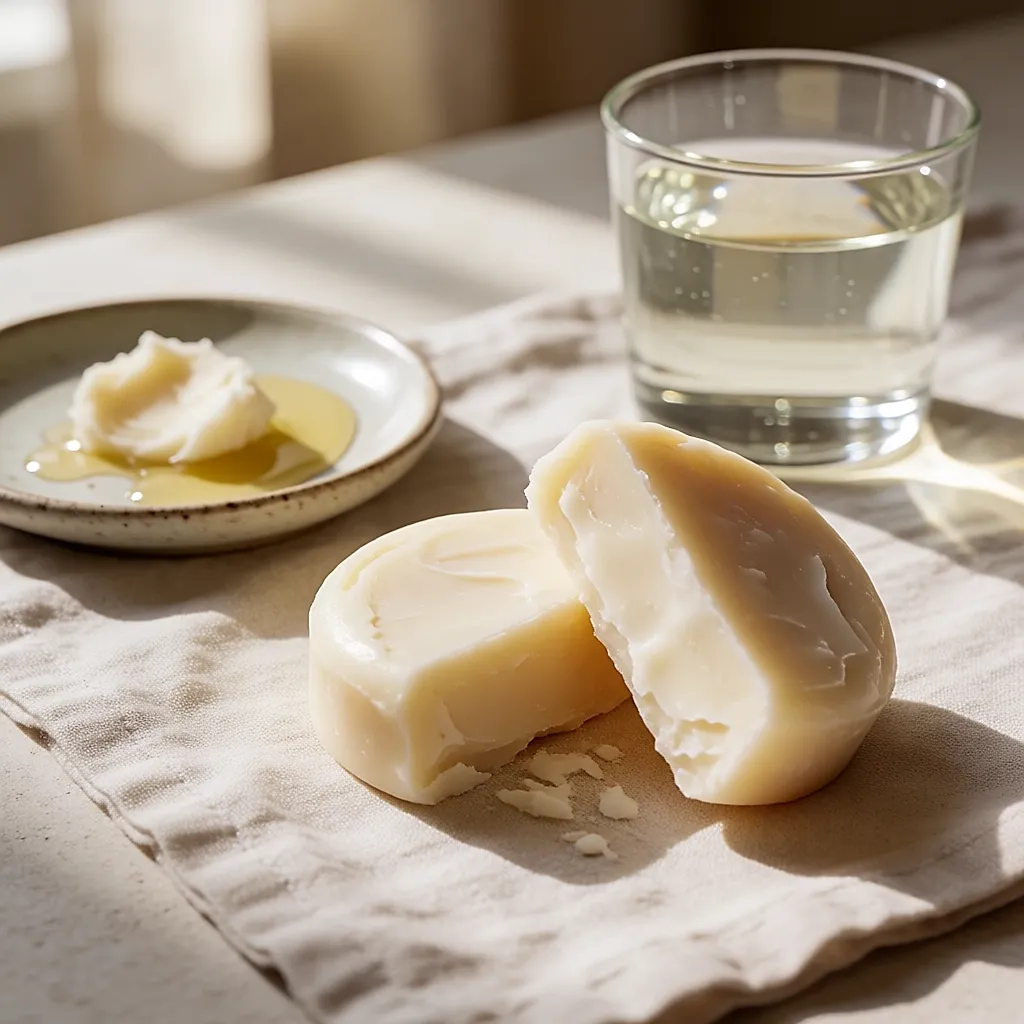
After that, it's all about the ratio. A bar that's very rich in butter will detangle thick, curly or colour-treated hair without effort — and can leave fine hair looking shiny at the roots by the next morning. A lighter formula, high in fatty alcohols and fluid oils, glides well without leaving a film. The trap is thinking you can compensate: two layers of butter don't make fine hair more supple, they make it greasier. The question worth asking before you buy? "Is my hair thirsty, or does it just knot easily?"
The technique: water, more water, and a bit of patience
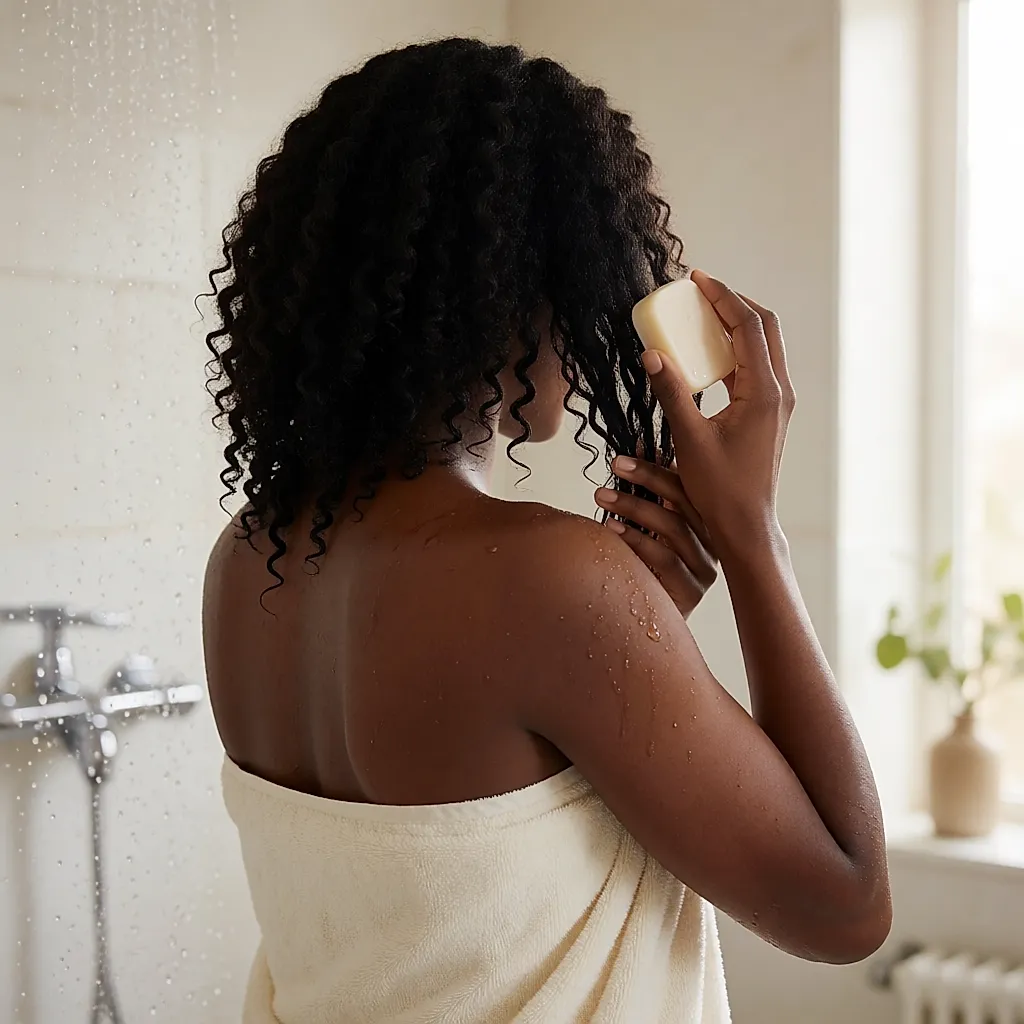
This is where a solid bar changes the rules. On towel-dried hair, swipe the bar two or three times over the mid-lengths and ends — not over your scalp, never over your scalp — then add a splash of water and emulsify it between your palms. The material turns creamy, almost milky. It's that mix of water and product that detangles, not the amount of bar you've deposited.
Then comes the waiting. With a bottle you apply, rinse and you're out. With a bar, you have to let the film settle: give it one to three minutes — that's a rule of thumb from the shower floor, not a prescription — long enough to finish the rest of your routine, for instance. Detangle with your fingers or a wide-tooth comb before rinsing, then rinse for longer than you would with a standard conditioner: a richer material needs more water to shift. You'll have it cracked within two showers, promise.
The real trade-off: less plastic, more time
The environmental gain is instant: no bottle, often just a cardboard sleeve, sometimes no packaging at all. And a bar often lasts several weeks, at two or three washes a week — enough to forget about the aisle for a while. That's not nothing when you think how fast a 200 ml tube ends up in the bin. I don't have a reliable figure for how long the average bar lasts: it depends too much on hair length, how often you wash and how well the bar dries between showers.
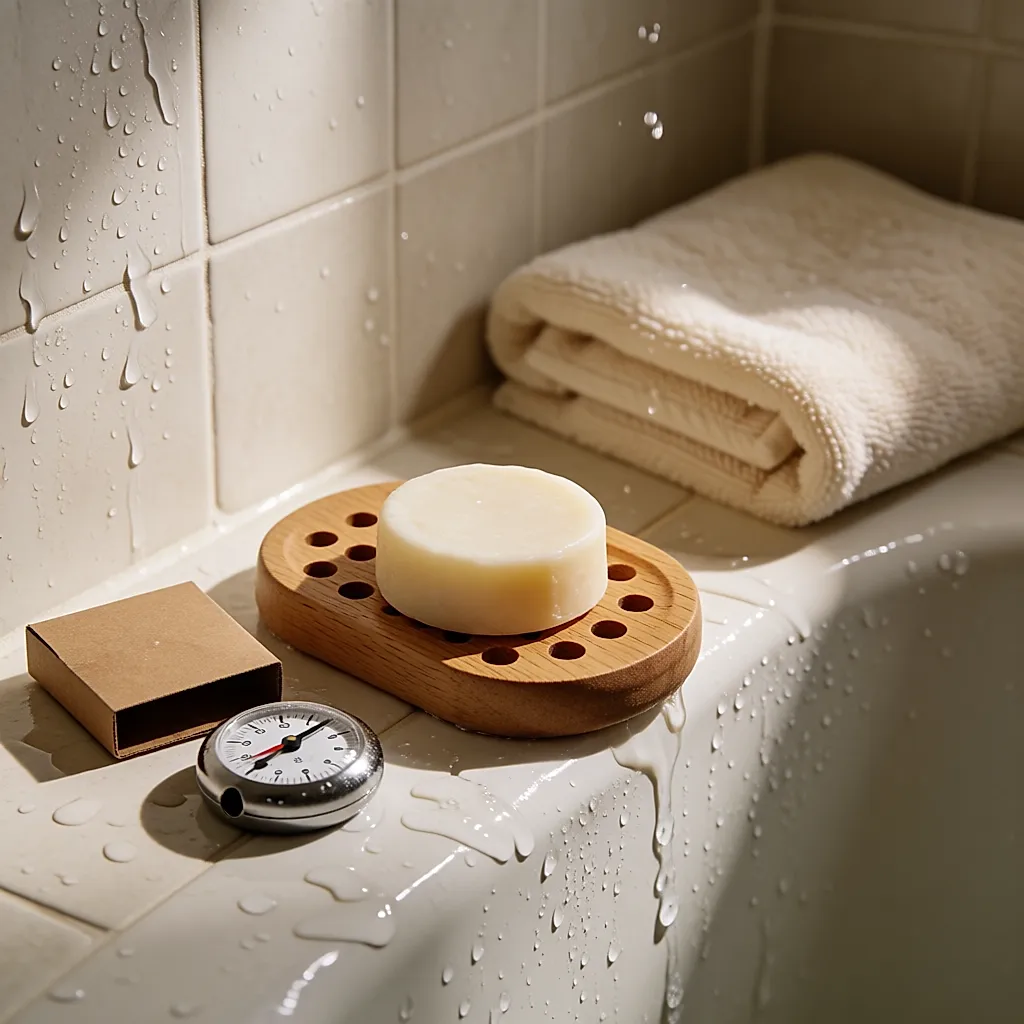
On comfort, let's be honest: between the longer rinse, the bar going soft in the shower tray if it sits under the jet, the draining dish to buy and hard water that demands even more rinsing, it isn't a win for everyone. A solid bar is brilliant when you have somewhere to let it dry and the time to rinse it properly. In a 3 m² bathroom shared by four people on a Monday morning, it's a different story.
What it costs
Expect to pay around £8 to £20 a bar in a health food shop, a pharmacy or online — the smaller formats sit at the bottom of that range, the premium-positioned brands at the top. Add a few pounds for a draining dish or a perforated tin, essential if you want the bar to last more than a month.
And in real use? It depends on how often you wash: a bar that lasts two months often works out cheaper than a tube you replace every month, but there's no point stockpiling three at once — they don't like damp or bathroom shelves.
The palm test. Wet the bar and rub it between your hands: if it turns milky within seconds, that's a good sign for slip. If it stays hard and soapy, you'll have to work harder — and probably rinse for longer. Check the order of the ingredients too: as a rule of thumb, a butter or a fatty alcohol among the main ingredients is a good sign for detangling.
What's left is the rinse, the real issue. This isn't a lazy shortcut: it's what decides whether your hair ends up soft or vaguely tacky at the roots. If you've only got five minutes on a Monday morning, keep your liquid conditioner; the bar can wait until Sunday night, when you've got hot water, a wide-tooth comb and the time to let it sit. The right routine isn't the one that saves the planet in a single shower — it's the one you actually want to repeat.



Comments
Your opinion matters: rate the article, react and reply to comments.
Comments are moderated; AI-assisted comments are flagged. Text emoticons (8-), :-), <3…) are automatically shown as images.