

The pair that kept you warm from November has given up the ghost in February, with a small round hole right where the heel meets the shoe. You had spent a fair amount, and the label proudly said '100% wool'. A promise of warmth, or just hot air?
What the percentage promises
On paper, 100% wool is a lovely promise: warmth without the bin-liner feeling, a fibre that breathes, a wardrobe staple you can wear from November to March. On the itch front, though, the percentage becomes oddly chatty without actually saying much. A very fine wool, such as merino, feels soft against the skin; a more rustic wool, even when it is labelled 100%, turns you into someone quietly scratching under the table. The number says nothing about fibre fineness or treatment—some wools are finished to resist felting in the wash, and that isn't always detailed on the label.

Warmth, on the other hand, is not up for debate: wool insulates, keeps the foot warm and lets skin breathe, even when it is slightly damp. That is already a lot. But a sock is not a jumper: it lives inside a shoe, takes friction and goes through the washing machine far more often than cashmere. The jumper comparison stops at the material.
The heel is the label's blind spot
The heel is the hardest-working area: with every step it rubs against the inside of the shoe, compresses and stretches. Wool, a soft natural fibre, is not known for abrasion resistance, and a '100% wool' label says nothing about knit density or whether the sock has a reinforced heel and toe. The result: a very warm sock can develop a hole exactly where you never looked before buying.
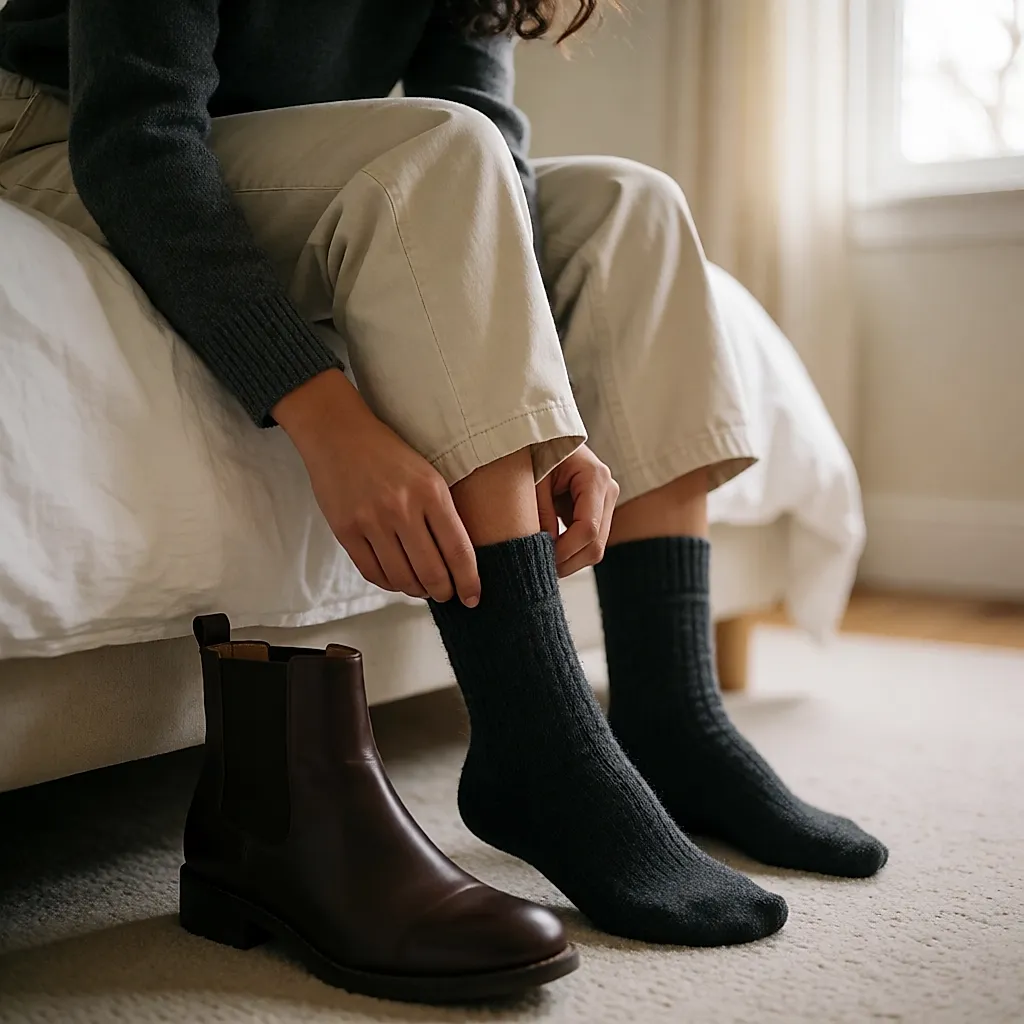
It doesn't have to be a foregone conclusion—it's information. Many socks labelled 'hiking' or 'work' state a reinforced heel and toe, often in another fibre. The trade-off is real: less purity, more durability. Check the exact share in the composition and decide between the warmth of pure wool and the lifespan of a reinforced knit. A cosy pair for the sofa and a pair that faces the pavement every morning have different requirements.
Read the label, then trust your hands
Look for the wool percentage first, but read the rest too: a mention of merino or fine wool is more informative than the number alone. Certified recycled wool is a good find, provided the knit is tight. Then look for heel and toe reinforcement, often spelled out, or recognisable as a denser texture under your fingers. Next comes the cuff: it should hold the calf without marking it. Stretch it, release it and see whether it returns to shape. Too soft and the sock slips down inside a boot; too tight and it leaves a mark for two hours.
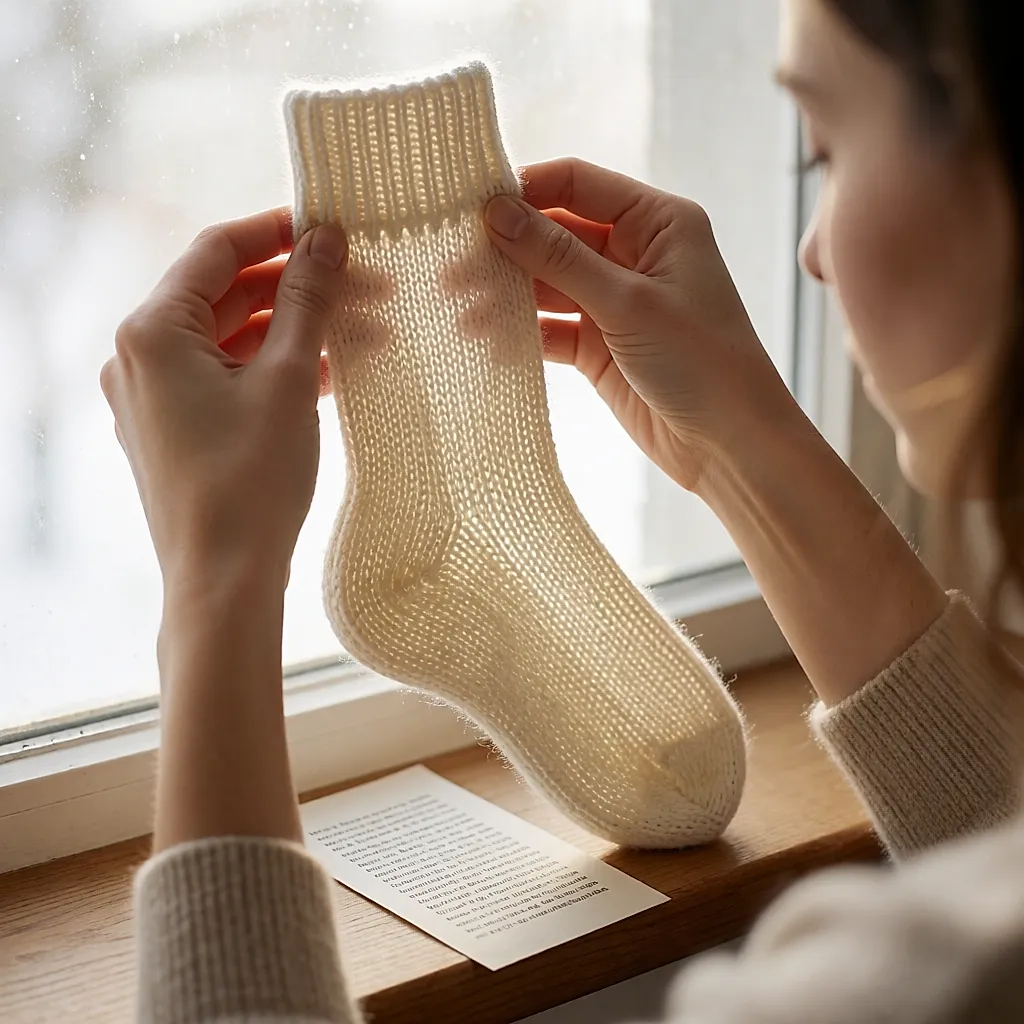
Then there is touch, which tells you more than most sales pitches. A tight knit feels dense, slightly firm; it doesn't stretch like a piece of old bungee cord. Hold it up to the light: if you can see through it, the knit is loose, and the heel won't forgive it. In short, before you fall for a nice colour, turn the sock inside out.
Budget and where to shop
Expect to pay in the region of £8–£15 a pair for a basic wool sock in a supermarket or online, £15–£25 for a finer merino, and £20–£35 from outdoor brands that promise reinforced heels and flat seams. The price rises with fibre fineness, brand reputation and finishing; it says nothing, however, about how long the sock will actually last.
Where to find them? The sports aisles of supermarkets, outdoor shops, haberdasheries and online stores, plus charity shops and end-of-line sales—although second-hand socks require a strong stomach. A well-chosen £10 pair can easily outlast a £30 pair bought for its label.
For care, use a wool cycle with a gentle spin and dry flat. The tumble dryer has no scruples when it comes to wool. And if a heel starts to look thin, darning it with a wool needle will often buy you another season.
A 100% wool sock is not a bad buy: it is a buy that needs reading. Fibre fineness before the percentage, reinforcement before the price, the cuff before the colour—and you will finally know why the heel gave way, or why it will hold.

Comments
Your opinion matters: rate the article, react and reply to comments.
Comments are moderated; AI-assisted comments are flagged. Text emoticons (8-), :-), <3…) are automatically shown as images.