
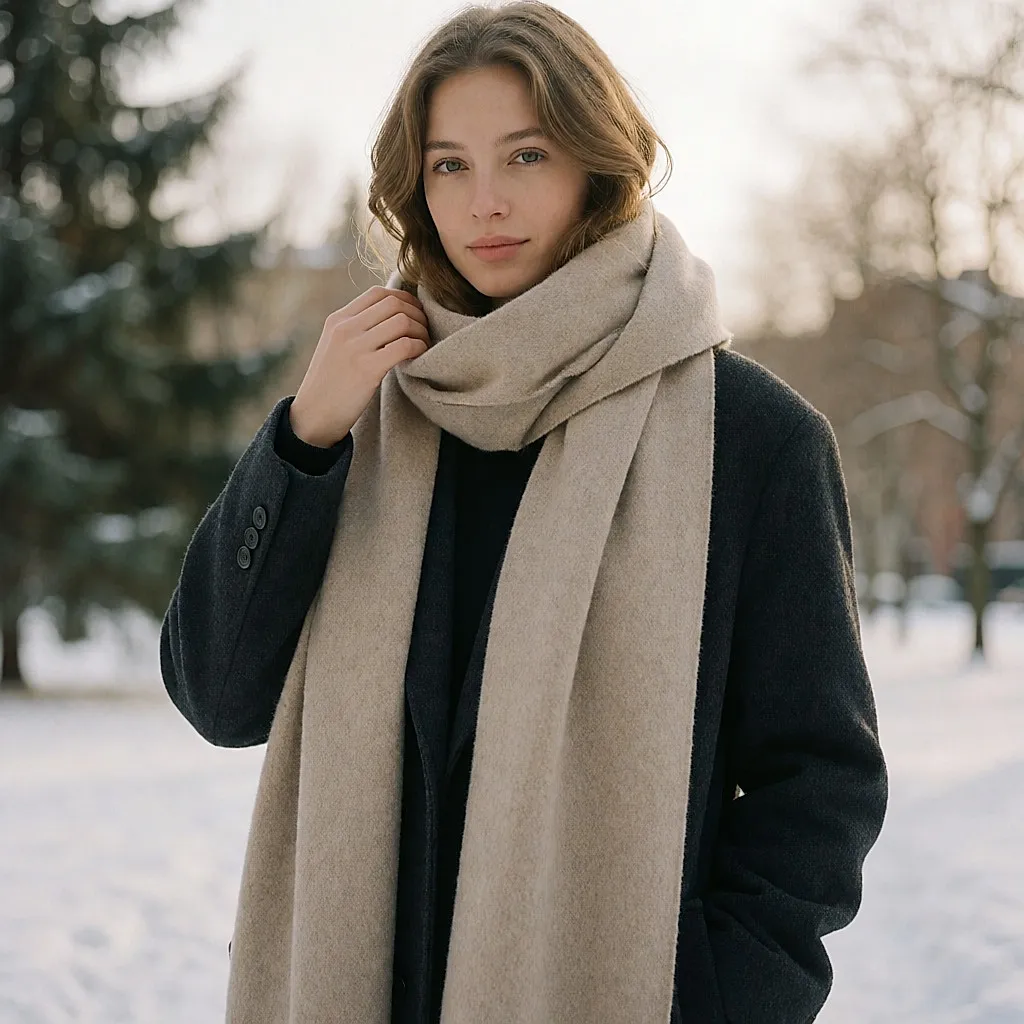
You feel the first real cold at your neck. You open the wardrobe, pull out last year's scarf — and the verdict lands: it droops, it has lost its volume, it no longer looks like much. A successful XXL scarf, though, isn't just a matter of centimetres. It's a question of drape.
The drape starts with the material
Three families deserve your attention. Virgin wool first: wool that has never been reprocessed. Fine merino, Pyrenean wool, long-staple fibre. It's what gives that dense, cosy softness that holds its shape. Alpaca next, recognisable by its sheen and supple drape — lighter in the hand, often softer, but the budget climbs quickly. Then recycled wool blends, increasingly common in collections: re-spun fibres, sometimes a little rougher, but a genuinely low-waste choice. A scarf is the kind of piece you keep for years without really trying.
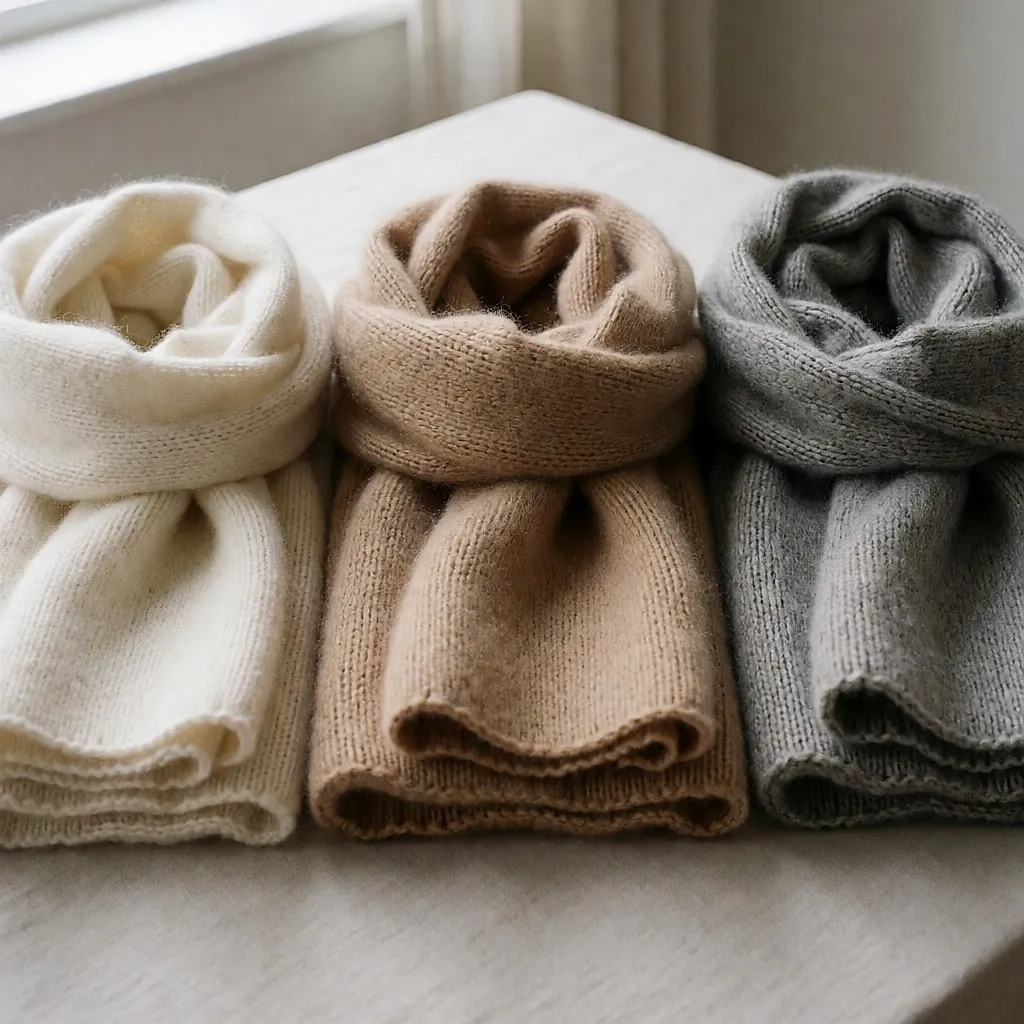
Check the label before you fall for it. When synthetic fibres dominate, the piece often holds its shape less well in wear — and that's when the volume collapses after a few outings. A warning, not a ban: the actual wool content is written in black and white, so it's up to you to read it.
Dense knit or loose knit?
This is the point everyone forgets, and it's the one that changes everything. A loose knit — chunky open knit, blown yarn — looks great in shop-window photos, but it catches on coat buttons, stretches at the shoulders and ends up hanging limp. A dense knit, jersey or dense ribbing, holds its volume, keeps its shape and lets the scarf drape instead of collapsing.
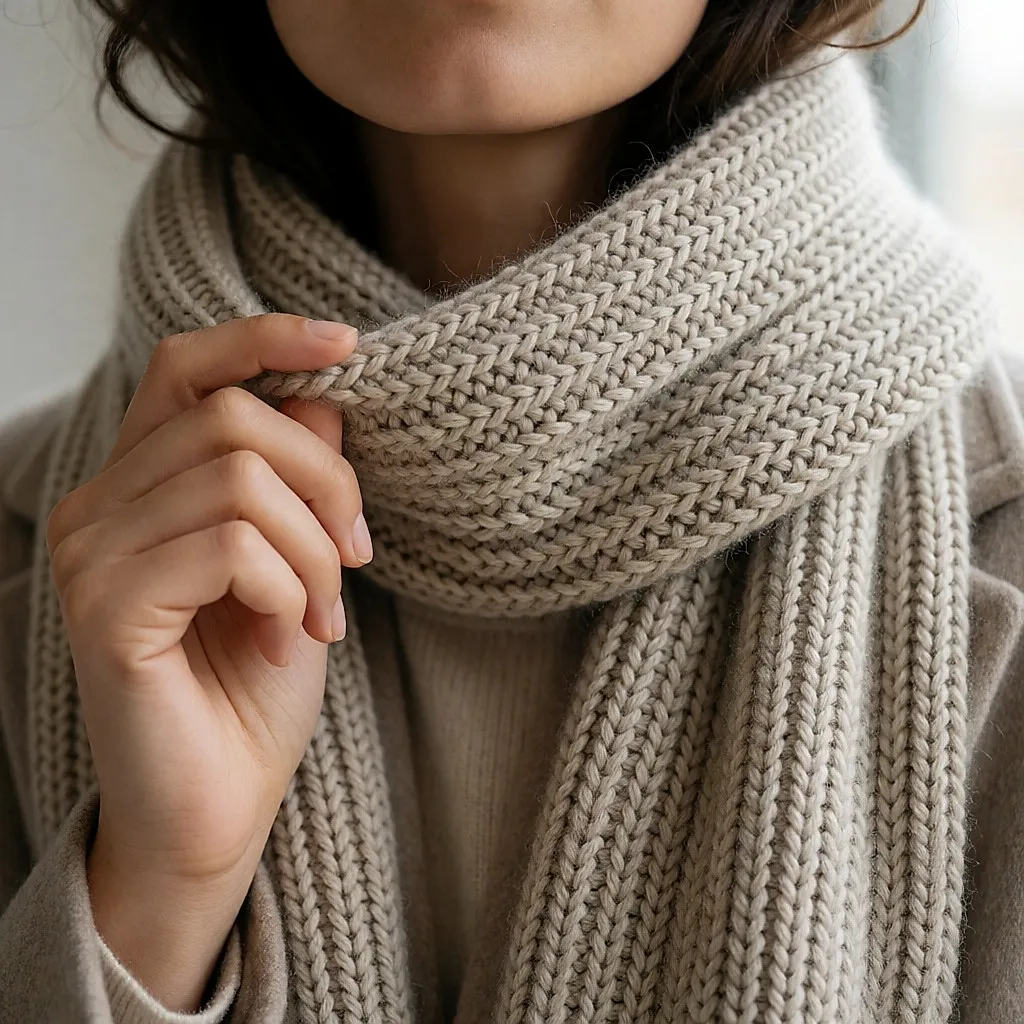
Then there's width. In practice, many advise a width of around 40 to 60 cm. Below that, you've got a neckerchief — pretty, but impossible to drape; the end always ends up where you don't want it. Above that, the scarf starts to wear you: the collar becomes a cushion and the silhouette feels weighed down. In between, there's enough fabric for a loop, a knot or a throw-over without looking as if you've brought your duvet.
Two moves, two looks
The simple knot first — the most underrated. Loop the scarf around your neck, bring both ends to the front and tie a loose knot — never tight. The result: a structured collar, a clean line, the impression that the outfit was actually thought through. It's the move that works with a straight coat and a shirt, where a scarf just dumped around the neck says nothing.
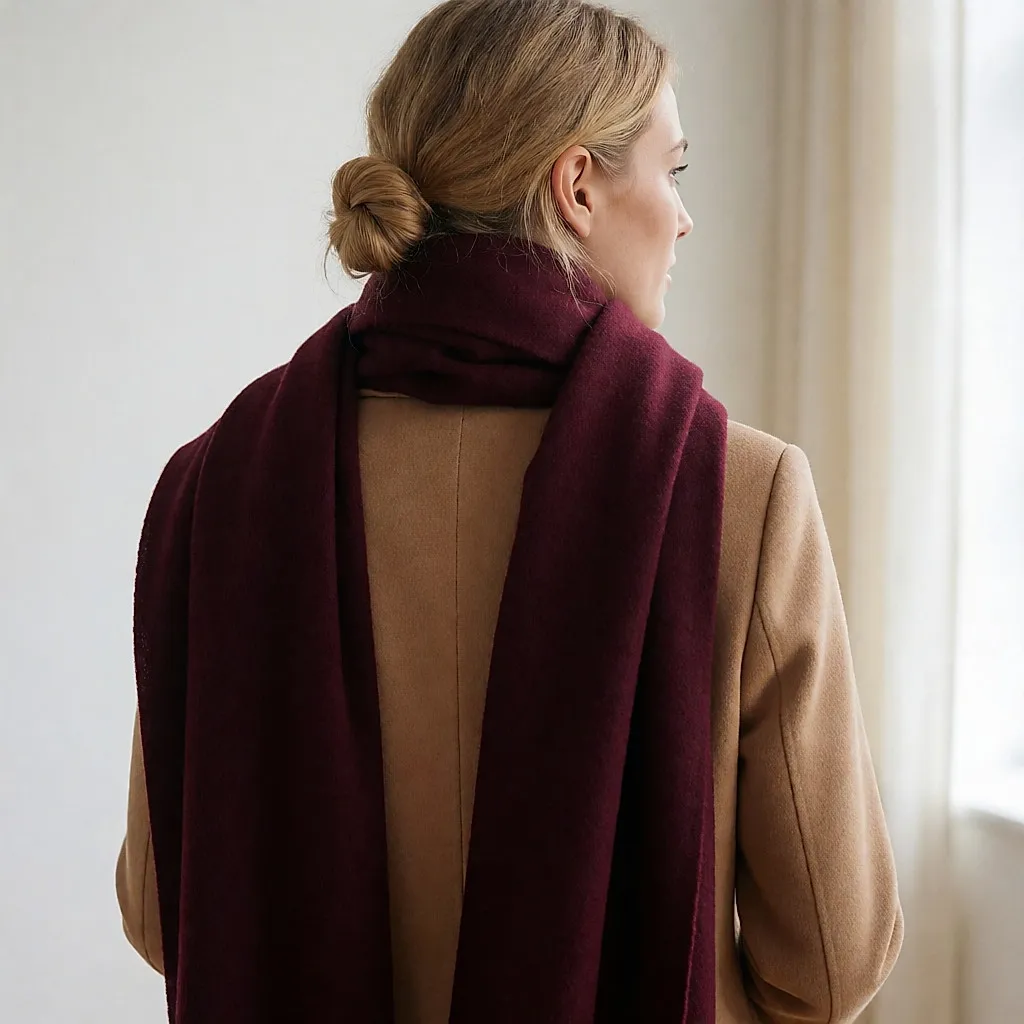
Then the over-one-shoulder drape, for days when you want style without overheating. One end goes over the shoulder, the other falls down your back: the asymmetry breaks up the vertical line, lengthens the silhouette and adds movement to a tonal outfit. One small caveat: on a coat with strong shoulders, the drape slips and you'll spend the journey catching it. On those days, go back to the knot.
How to spot wool that pills less
First instinct: touch. A well-spun wool with long fibres feels dense and slightly springy under the hand, not soapy-soft and limp. Second: gently stretch the knit by a few centimetres, then release. If it springs back without leaving a mark, that's a good sign.
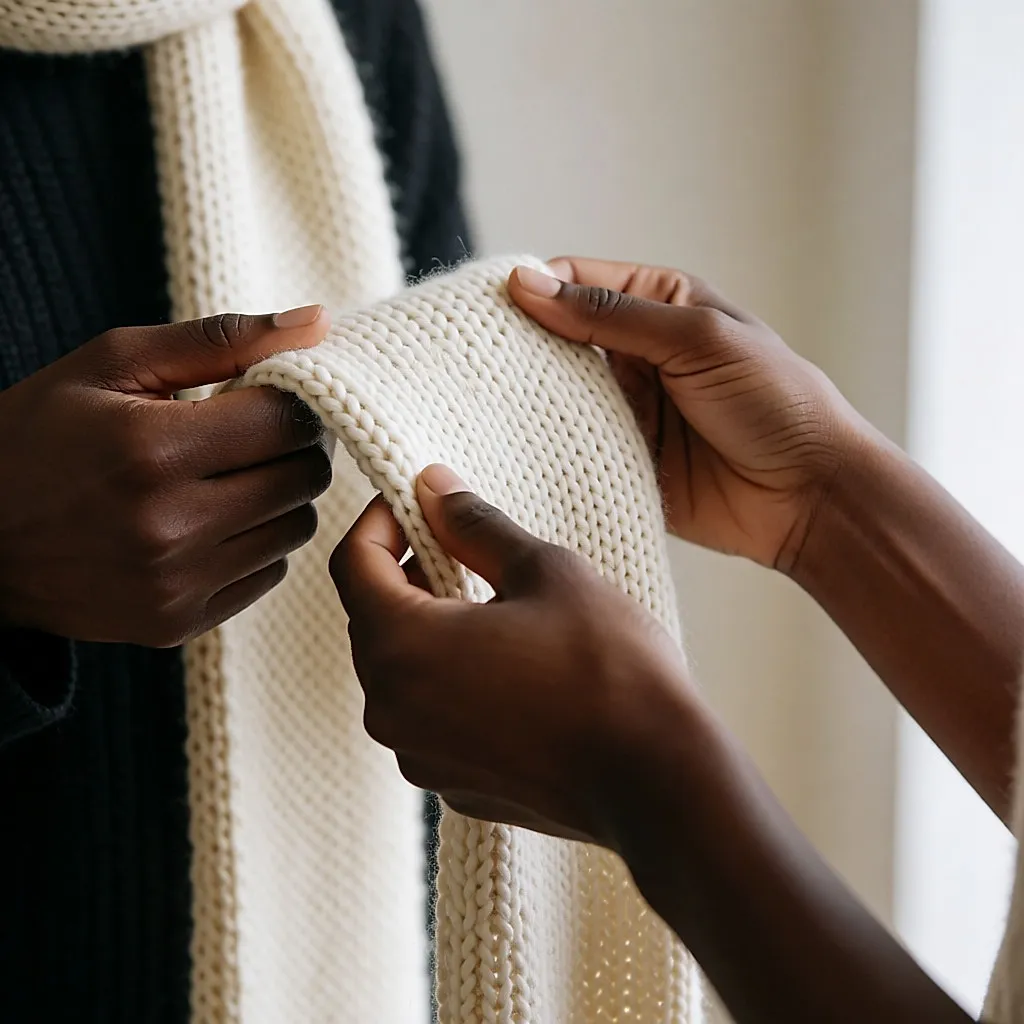
The label, then the scrunch test. Read the composition fibre by fibre before anything else: it's printed there. Then scrunch a small area between your fingers and let it relax. A knit that springs back flat indicates well-spun wool; a patch that stays creased or a thread that frays, walk away. And know this: no wool is completely pill-proof. A good wool pills little, and can be kept in check with a wool comb and a suitable detergent.
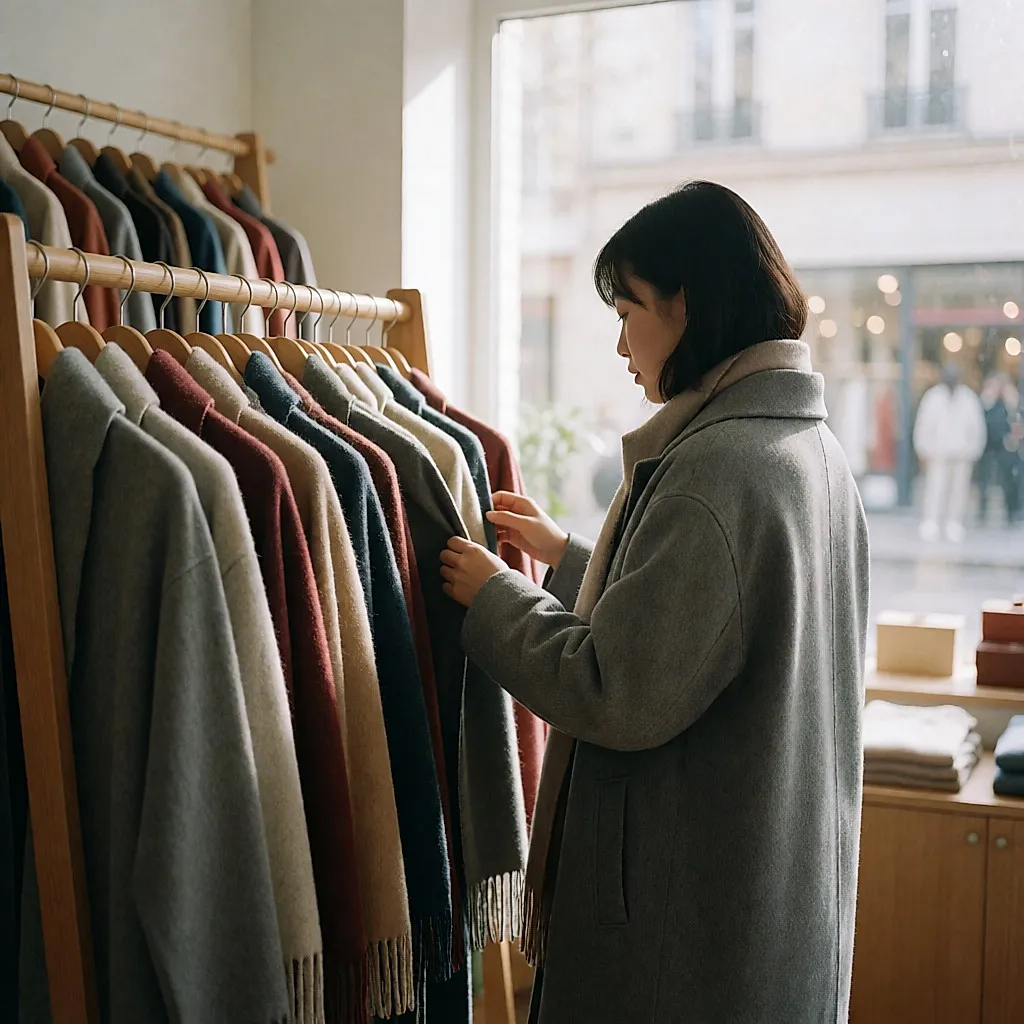
Budget: from £35 to £105 depending on the wool content
In the UK, expect to pay around £35 to £105 for a new XXL scarf, with the price depending mainly on composition. A wool-dominant blend, or recycled wool, often costs £35 to £60; virgin wool or an alpaca blend more often comes in at £60 to £105. Above that, you're into pure alpaca, cashmere or a small-studio piece.
Where you shop affects the price too: a designer-maker market or a local knitwear brand doesn't charge the same as a department store, and British-made knitwear costs a little more — but it often lasts longer. Plan ahead: a wool detergent, a comb, storing it folded rather than hung, and the piece will last you several winters.
Where to find one
For new, head to knitwear brands and local studios: their scarves are often knitted in traceable wools, and you can ask where the fibre comes from. Designer-maker markets and craft fairs are good hunting grounds in October, just as winter collections arrive.
For second-hand, charity shops and re-use centres are full of real wool scarves, often barely worn. The real find is a plain, logo-free piece: it ages better and goes with everything. On resale platforms, ask for a photo of the label and one of the piece laid flat — that's where a pill or a hole shows up.
An XXL scarf that holds its own, then, is an honest material, a dense knit, a width that in practice often sits around 40 to 60 cm, and two moves you've mastered. The rest is comfort. And frankly, a well-draped collar in January is worth every accessory you forget at the bottom of your bag.
Sources
- International Wool Textile Organisation — The global wool sector
- Textile Exchange — Responsible Wool Standard
Comments
Your opinion matters: rate the article, react and reply to comments.
Comments are moderated; AI-assisted comments are flagged. Text emoticons (8-), :-), <3…) are automatically shown as images.