
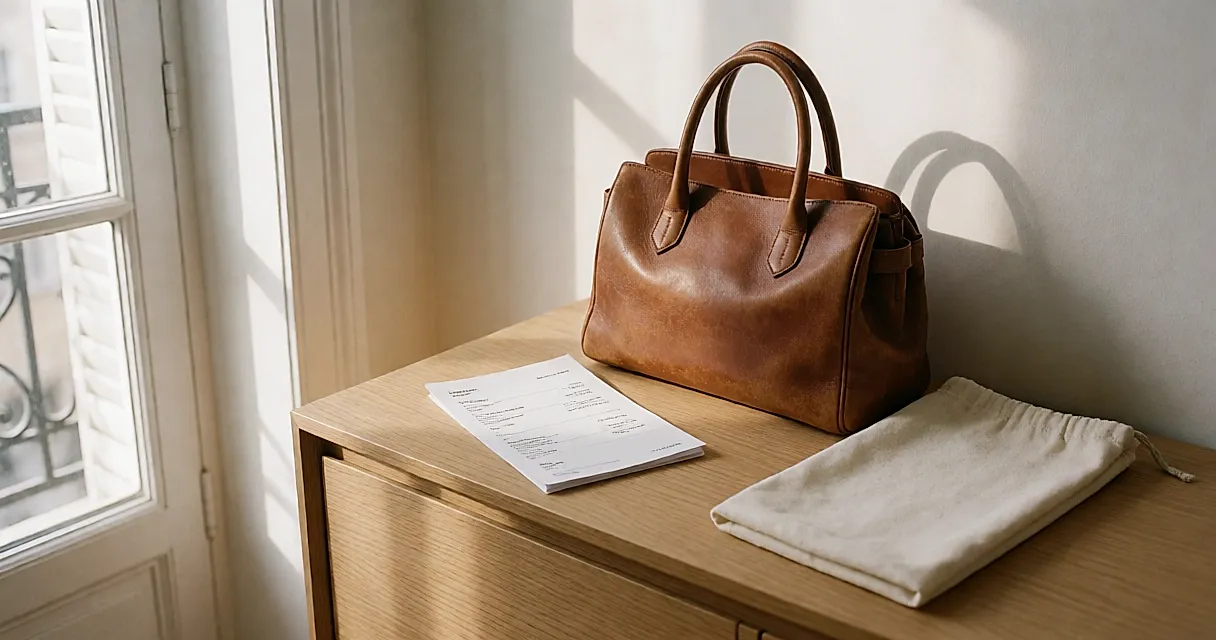
The box was too big, the tissue paper a little creased, and at the bottom, folded in four, was a receipt dated 2019. We were looking for a bag and found an archive. It is remarkable how much difference a couple of centimetres of paper makes to the way you read a second-hand listing, and to the way you pay.
The receipt is the bag’s ID
A till receipt, an invoice, an order email: three formats, one job. The date of purchase, the shop, the exact model and sometimes the reference that goes with it are all details that let you cross-check what you are being told against what was actually sold. A full-grain leather bag bought three years ago from a French boutique does not tell the same story as a model that arrived from who knows where, and that small consistency is often worth more than any amount of sales talk.
A caution, though: a receipt proves the purchase, not the condition. It says nothing about how the bag has been cared for, about scuffed corners, or about whether another bag has been slipped into the dust bag since. And its absence is not proof of dishonesty: who keeps the receipt for a bag bought in 2017, moved twice and lent to a cousin for a season?
What the platform checks, and what it lets through
Depending on the platform and the service, a bag may go through an authentication process, sometimes for a fee, sometimes included once the bag is above a certain value. The level of checking varies: photos from several angles, a look at the stitching, clasp, lining and markings. In other words, the main thing being verified is that the bag is what it claims to be. That is not nothing.
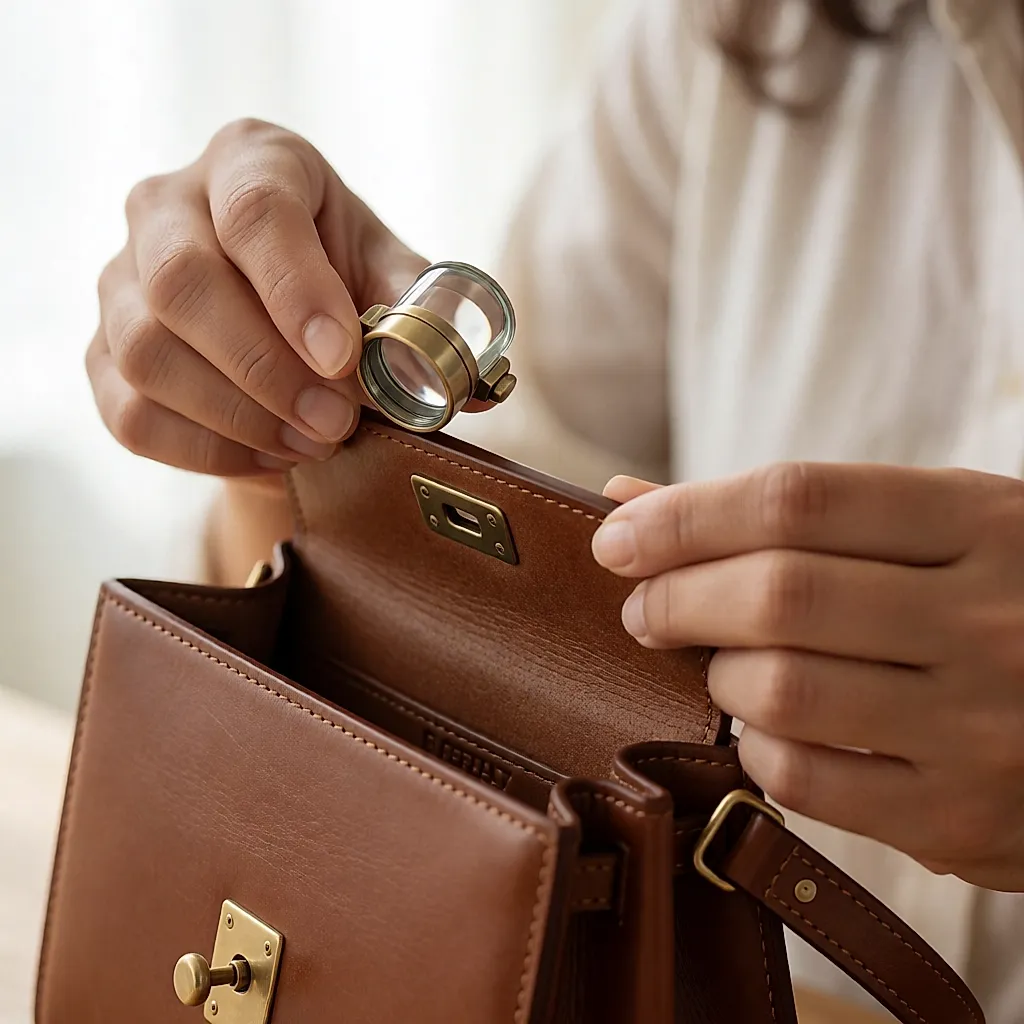
But that check says nothing about real wear, leather softened by three winters, a musty smell or a replaced clasp. Hence the reflex: open the help page before you bid, understand exactly what the check covers, and know what happens if a doubt arises after delivery. A platform that explains its procedure clearly already inspires more confidence than a promise in capital letters.
If you’re selling, build a proof pack
You clear out your wardrobe and come across that bag you paid too much for, wore three times and then forgot. Before you write the listing, gather: the receipt or order email, the dust bag, the box if it has survived, and the card that came with the bag. Then photograph the wear honestly. A close-up of a scuffed corner sells better than an arty blur that leads to the sale being cancelled three days later.
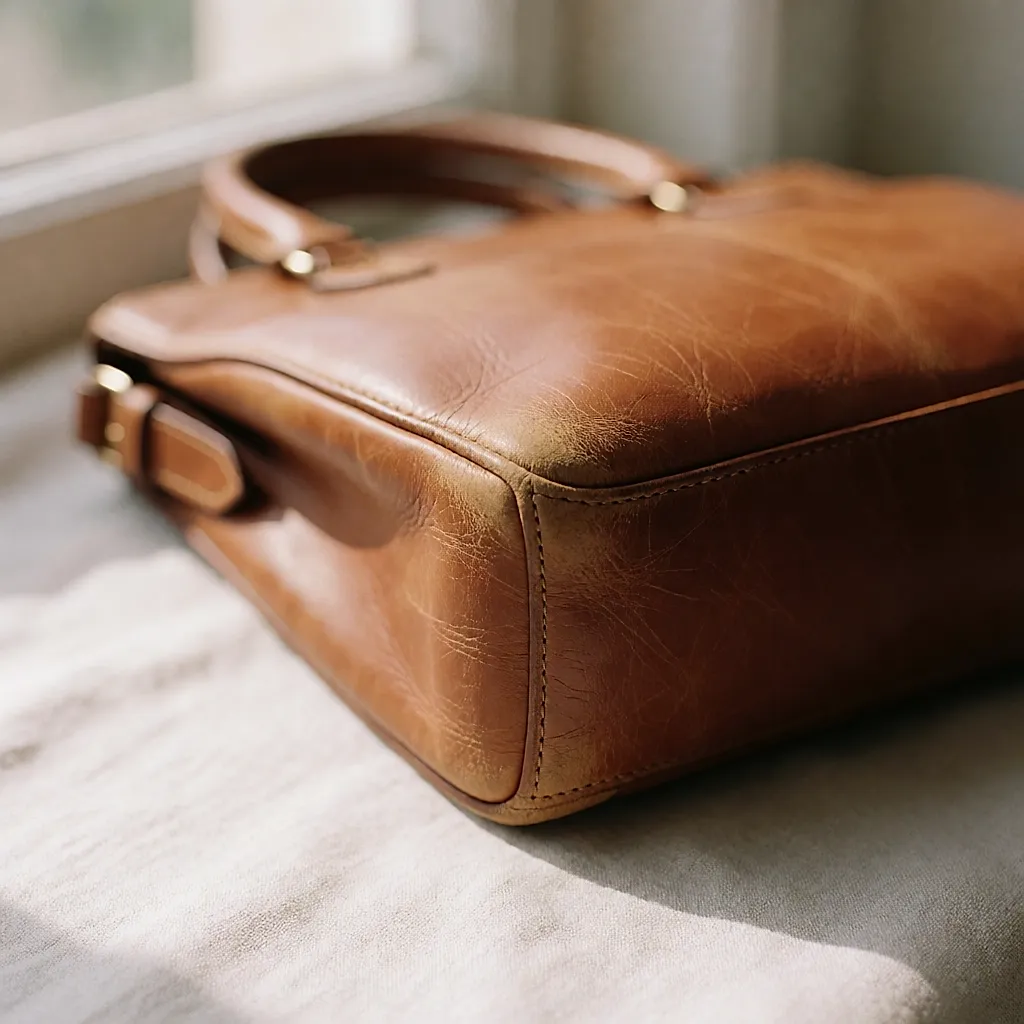
And if the bag has been to the cobbler for a new clasp or to be dyed, say so. People often assume this lowers the value; in fact, many buyers see it as the story of a piece that was looked after rather than abandoned—and that can be reassuring. It is also the most understated gesture there is: make it last, repair it, then pass it on.
If you’re buying, the questions that save time
Before you pay, four questions will often sort the wheat from the chaff. Is the receipt available? Can you send me a close-up photo of the corners, the clasp and the inner label? Has the bag been cleaned, dyed or repaired? And is payment going through the platform? That last point is not an administrative detail: paying off-platform means giving up the protections and dispute process the platform offers, even if other avenues may remain.
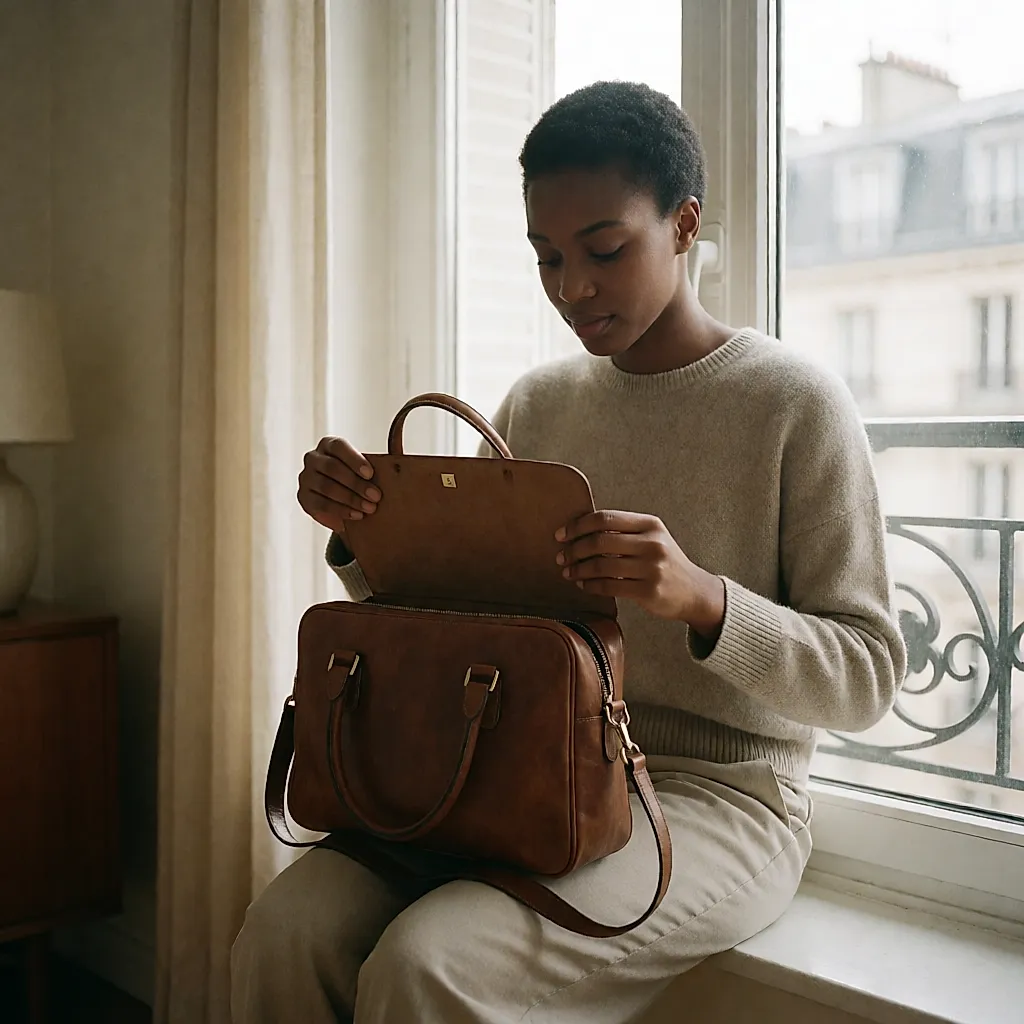
Three warning signs should then make you pause: photos that seem to come from somewhere else (a reverse image search can help you spot a picture that has already been used elsewhere, though it will not guarantee you can identify where it came from), a price that is surprisingly low for the material advertised, and a hurried seller who refuses even one extra photo. Finally, look at the materials list: full-grain leather develops a patina, faux leather can flake, so check how much of the bag is synthetic before you get carried away.
What to budget for peace of mind
As a rough guide, expect to pay £10–£30 for authentication per item, depending on the platform and the value of the bag; sometimes it is included in the service. For the bag itself, a mainstream leather bag bought second-hand often sits between £60 and £250, while a big-name designer piece is more likely to be £400–£1,500 depending on the model and condition. A cobbler’s repair (clasp, stitching, light dyeing) often costs £20–£80.
Where to look? Specialist platforms for choice and checks, nearly-new sales and clothes swaps for a chat and direct contact, and consignment boutiques for trying the bag on. They are more expensive, but you leave with the bag on your arm. And when is it not worth it? If you want a wardrobe jewel with no history at all, second-hand will mostly cost you time and patience.
The four questions to copy and paste before you buy Do you have the receipt or order email? Can you send me photos of the corners, the clasp and the inside label? Has the bag been repaired, cleaned or dyed? Is payment going through the platform?
There is one simple truth left: a second-hand bag is an object that has already lived, and that is exactly what makes it interesting. The receipt is not there to turn the purchase into a dossier, just to save you from that Sunday evening when, under the ceiling light, you wonder whether that pretty grain of leather was really in the listing. Keep your paperwork, ask your questions, and give a second life to what deserves one, without losing your peace of mind.

Comments
Your opinion matters: rate the article, react and reply to comments.
Comments are moderated; AI-assisted comments are flagged. Text emoticons (8-), :-), <3…) are automatically shown as images.