
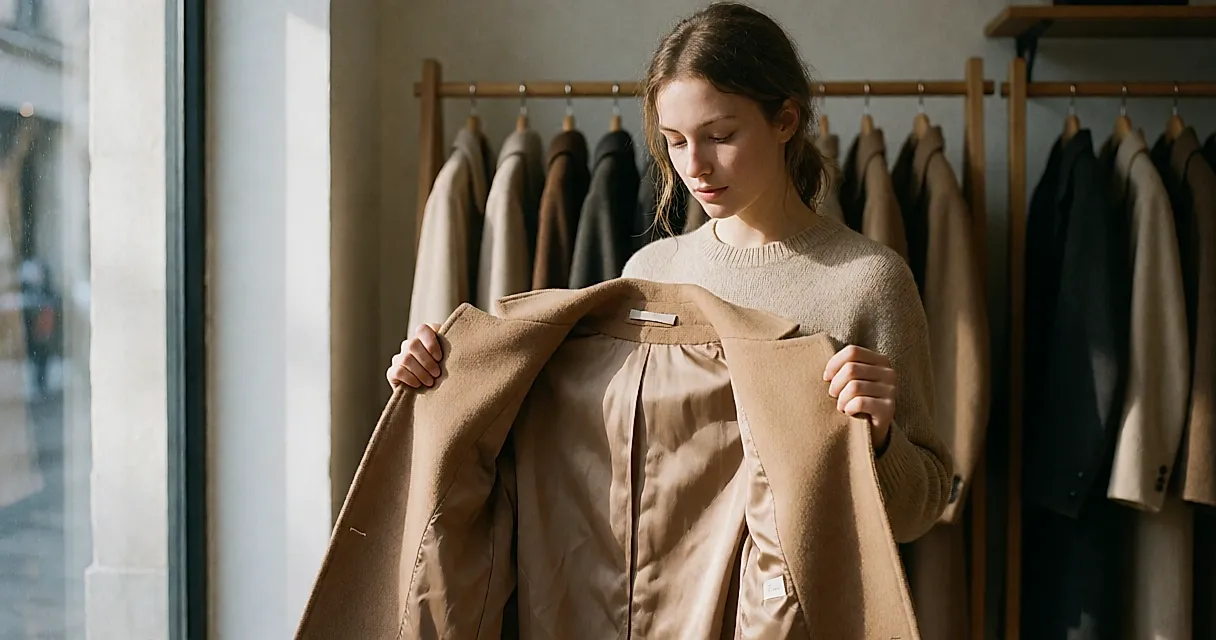
It's there between two jackets: the wool coat in exactly the colour you've been looking for. You lift it off the rail, slide one arm in, and the mirror confirms it: the shape works. Now you need to know what it's hiding under that lovely fabric — because a second-hand coat should be judged inside out, much as you'd lift the bonnet before buying a car.
The lining gives the first clue
Turn it inside out and look at the lining as if it were the main event. Smooth, with no snags under the arms or across the shoulder blades, it marks out a well-made coat: it protects the wool from friction and helps the coat hang cleanly from the shoulders. A lining in shreds under the arms isn't a disaster, though — linings can be replaced, and it's one of the most common alterations on an older coat.
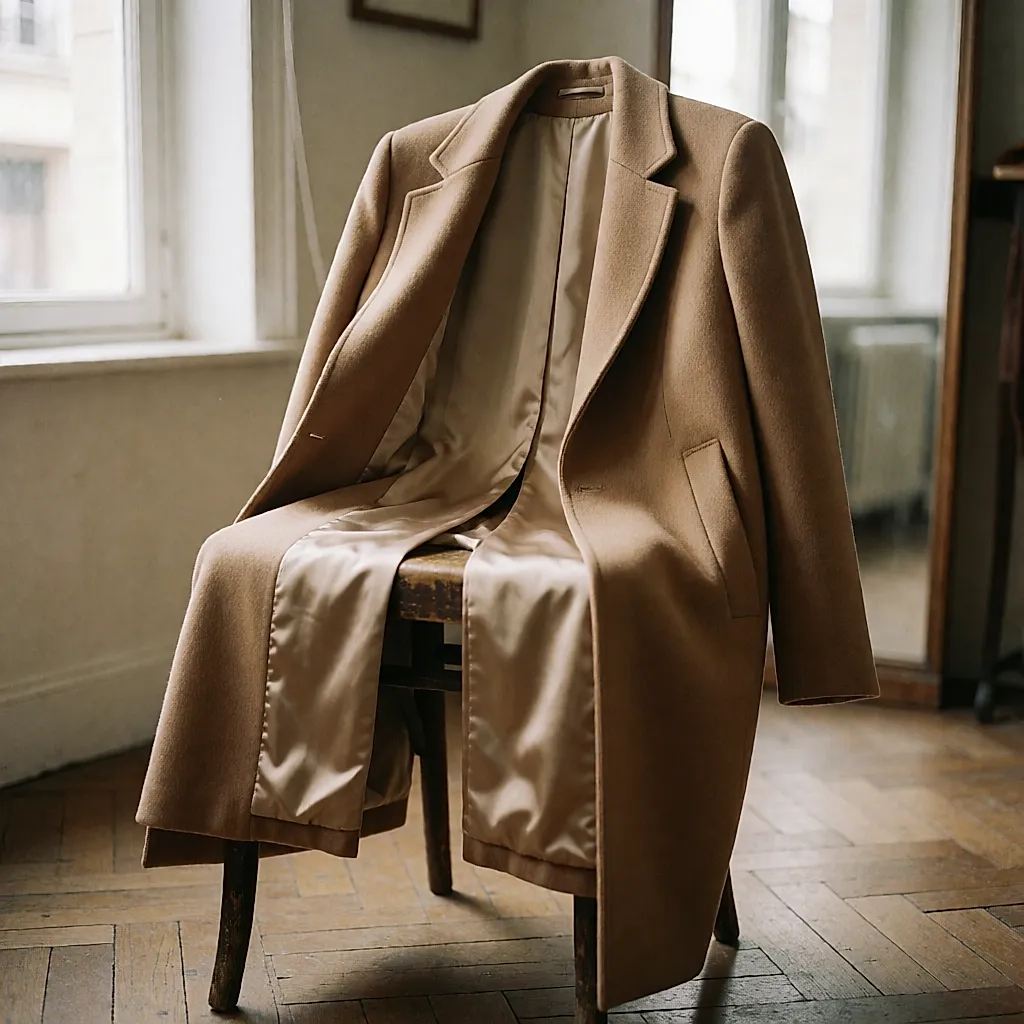
Then check the shoulder seams and hold the fabric to your nose. A lining that has soaked up too much sweat will hold a stubborn smell that dry cleaning can lessen but not erase; that detail isn't paid for in pounds, but in regrets. Glance at the composition label too: a high synthetic content can, depending on the quality of the fabric, affect breathability and how well it holds up over time; judge it by hand, by thickness and by its actual condition.
The armholes show no mercy
This is where wishful thinking stops. The armhole — where the sleeve meets the body — works with every movement: it is the area that rubs, pulls and wears first. Pull back the lining and hold the shoulder seam up to a window: if the wool is thin or worn bald, or if you can see the weave showing through, a worn armhole is usually the point of no return. Rebuilding that area means taking the whole sleeve off, and the bill will often exceed the price of the coat itself.
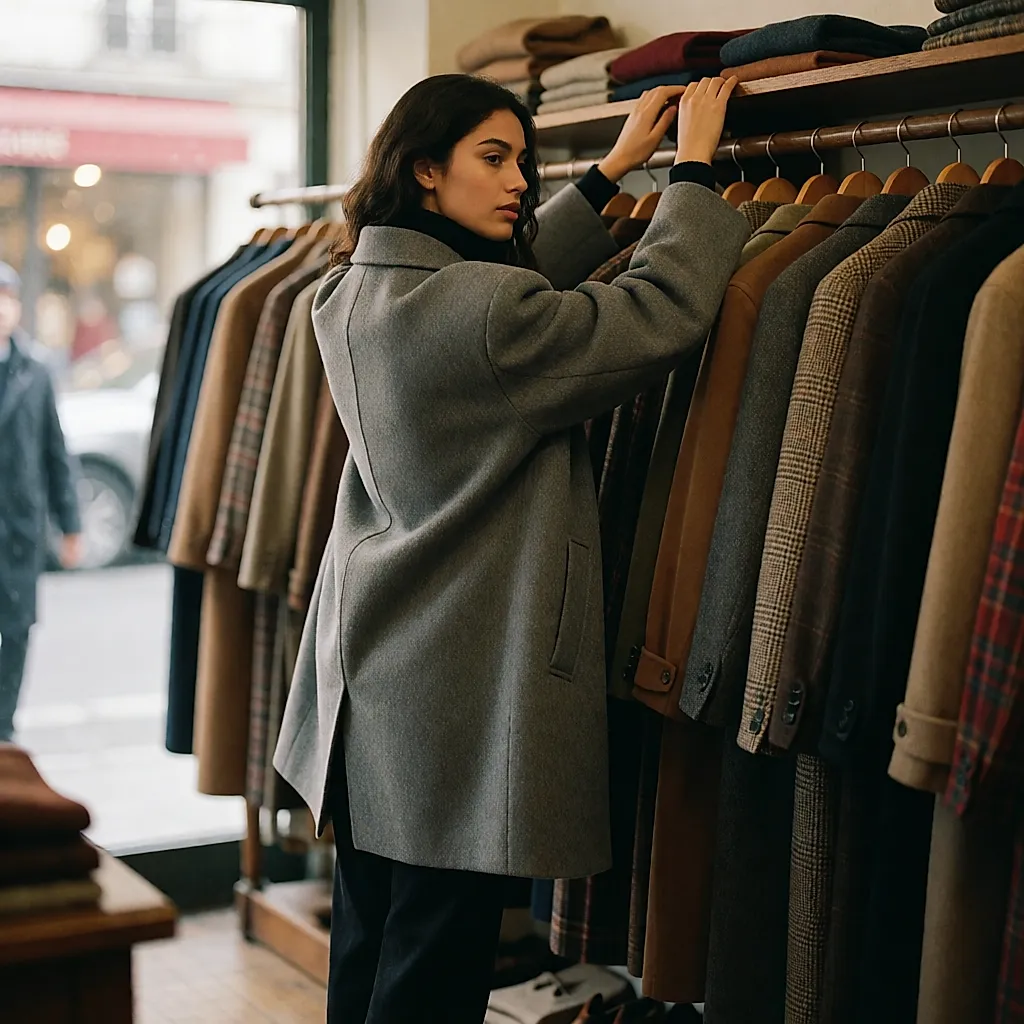
The test that rarely lies: raise your arms. A sound coat follows the movement without a crease; a tired one pulls, gapes, and you feel it immediately across your back. Why this area and not another? Because no seam works harder. That's no reason to put the coat back in anger — it's a reason to move on, or to negotiate seriously.
Elbows and buttonholes bring the price down
Read the elbows in raking light with the coat laid flat: wool that has gone pale or shiny over a few centimetres signals established wear. An internal patch or reinforcement (expect around £15–£30) can buy some time, but a hole can't be talked away. Run your hand over the fabric at the crease of the elbow too: if it feels rough and almost cardboardy, the fibre has already given all it can.
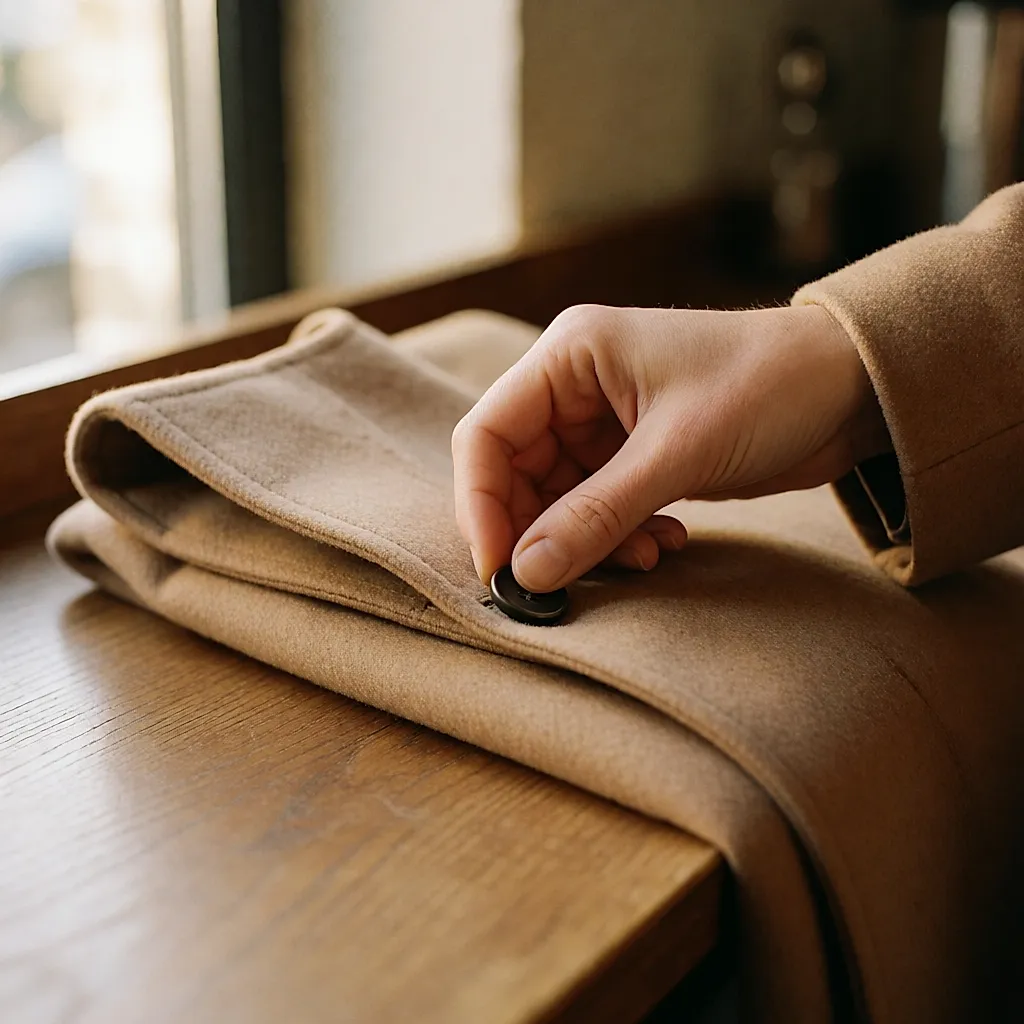
Now the buttonholes. Slip a finger through each one, then test every button. A frayed buttonhole can be reworked by hand, but it is slow and therefore expensive. Missing buttons, by contrast, are very good news: buttons can be replaced for £10–£20, including supply and fitting, and it's a chance to make the coat your own — pale horn on camel, dark wood on navy.
The hem is the easy win at the bottom
Head to the bottom of the coat. A hem that has come undone, frayed thread, an edge marked by a heel? It's next to nothing: a hem can be redone, and it is the cheapest alteration on the list. Use the opportunity to ask for the right length — mid-calf or just below the knee, depending on your height — rather than making do with the previous owner's, who almost certainly didn't have your shoes.

Look at the lining at the bottom too: a long coat trails, picks up water from November pavements and dust from station platforms. Nothing dramatic, but it's a negotiating point, and a vintage-shop seller will often hear it without taking offence.
Work out the total before you fall for it
Take a concrete case. A wool coat at £60 from a vintage shop, with a lining to replace (expect around £50–£90 depending on length) and a hem to take up (£25–£45), will cost you around £135–£195. For the same money, you can sometimes find an immaculate coat in a second-hand shop, from £80 to £200 depending on the brand and condition. The total is what counts, not the price tag!
Conversely, a £25 coat with two buttons to sew back on and a lazy hem is still a good find, even if the bill rises to £60. In charity shops, prices stay low (often £15–£50), but the stock isn't usually sorted by condition: the inspection is down to you. And if you're torn between two pieces, choose the one whose cut and drape already suit you — alterations can fix a length, not a look.
The five-step inspection: turn the coat inside out and read the lining; pull it back to examine the armholes against the light; raise your arms; test every button and buttonhole; finish with the hem and the bottom of the lining. Five minutes, and the verdict is in.
A second-hand coat is a bit like a set-up: you notice the look first and discover the character inside. Turn it inside out, feel it, pull at the lining, raise your arms — five minutes of curiosity beats a round trip to the alterations shop and a hefty bill. And if the inside is clean, the armholes intact and the hem merely lazy, then you're allowed to fall for it: that coat still has plenty of seasons left to keep you warm.

Comments
Your opinion matters: rate the article, react and reply to comments.
Comments are moderated; AI-assisted comments are flagged. Text emoticons (8-), :-), <3…) are automatically shown as images.