
You like a parka, the colour works, the price seems reasonable, and you are already reaching for your card. Before you commit, turn it inside out and check the lining: that is often where the truth lies. A coat deserves as much attention inside as out, and it is usually the side you are not meant to see that often decides how long it will really last.
What the inside tells you
The move takes seconds and few of us do it: turn the parka inside out, the way you would inspect a flat before signing a lease. What are you looking for? The lining first, because it is the part that sits against your jumper, rubs and wears out first. If it feels as thin as tissue paper and is stitched with long, loose stitches, treat that as a warning sign: it is unlikely to wear as well as a densely woven, firmly stitched lining.
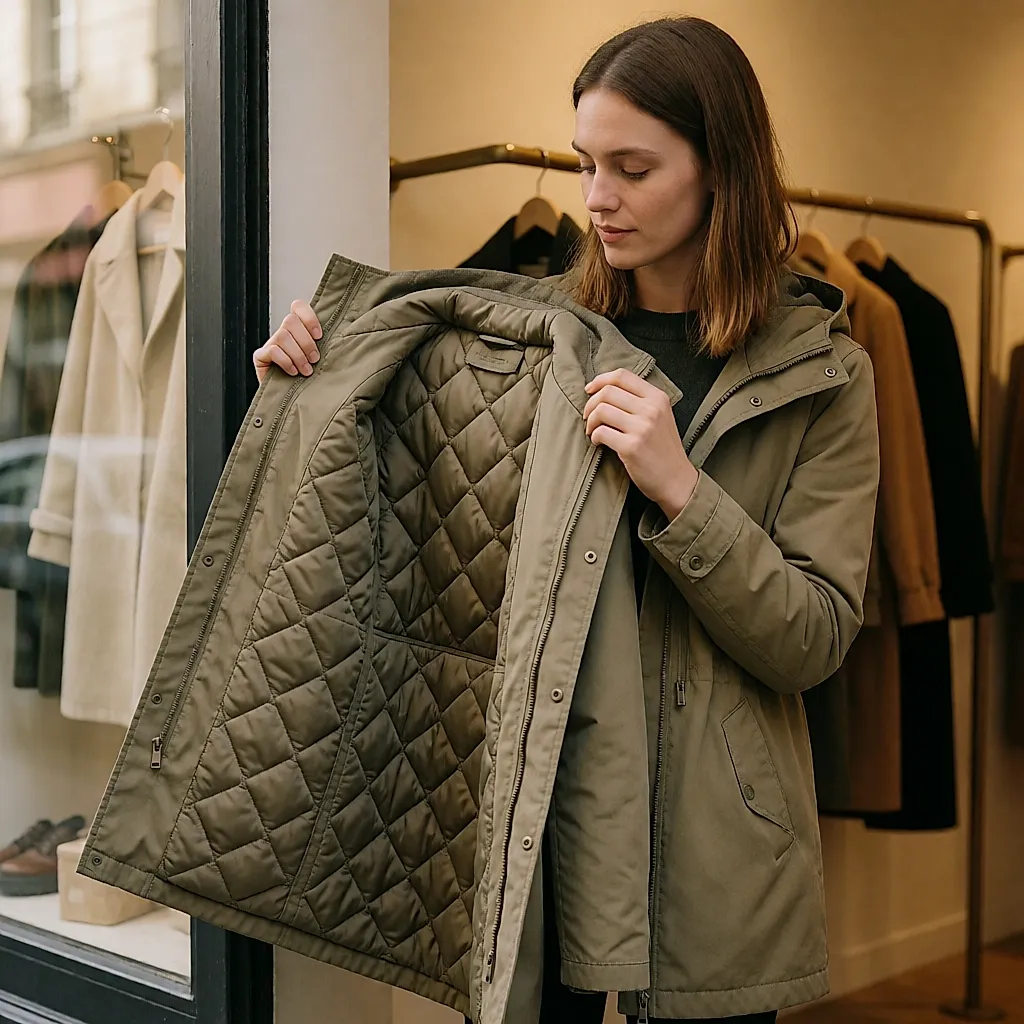
Then check the shoulder and armhole seams, the ones that take the weight of a bag and the everyday wear and tear. Run your hand along the inside: if you can feel a raised, neatly overlocked seam, that is a good sign; a flimsy chain stitch is more likely to unravel. Do not overlook pockets, either. A reinforced inside pocket is the kind of detail you do not see, but it makes all the difference when you are slipping a phone in and out ten times a day.
Check the zip slider before writing off the coat
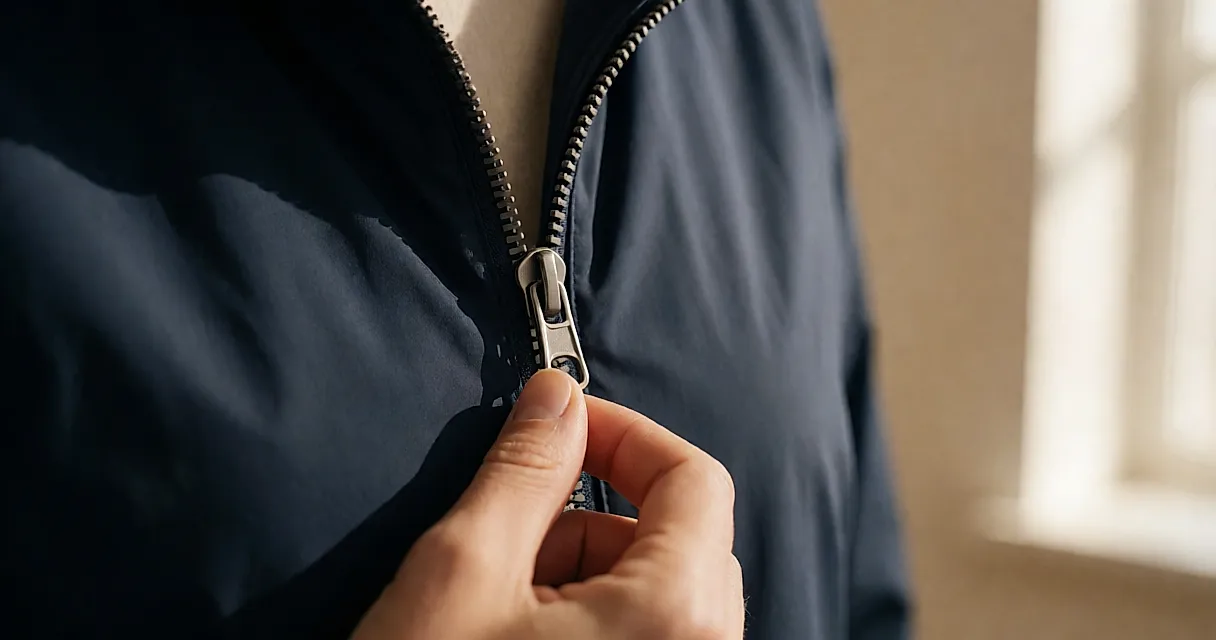
A zip that catches, and the whole coat is written off. Yet it is often not the zip that has failed but the slider, the small piece that glides along and pulls the teeth together. A shoe repairer or alterations shop may be able to replace the slider without touching the rest, keeping the original tape and teeth. Ask for a quote: it can be a cost-effective way to extend a coat's life before you consider replacing it.
What separates a good zip from a fragile one is not written on the label: give the pull tab a gentle tug, check whether the tape is wide and neatly stitched, whether the slider runs smoothly along the full length, and whether the bottom stops hold firm. Zips made by a major Japanese manufacturer such as YKK are sometimes cited as a useful marker, but the name alone is no guarantee. If you are unsure, ask the sales assistant whether the zip is treated as a replaceable wear part. The answer can be revealing.
Where the recycled content really hides
This is where the picture changes. The outer fabric is visible, tactile and easy to sell in a shop window; an organic cotton claim, though, needs checking on the label, while recycled content tends to be hidden in the padding, lining and trims. The RDS (Responsible Down Standard) claim on down deserves a closer look: to know exactly what it covers, check the certification body's official information. With synthetic padding, be wary of the word 'recycled' on its own: the composition label and the percentage of fibres tell you more than a badge. They will not, however, tell you much about how sturdy the coat is or how easily it can be repaired.
Hence the habit worth adopting: read the composition label, not just the nice badge sewn on the sleeve. Two coats labelled 'recycled' can be very different, one with strong seams and a replaceable zip, the other with a lining that may pill quickly. A quick look at the synthetic fibre content is still useful, if only to know what you are actually buying. The rest comes down to observation, not belief.
Get a quote before you replace it
Before you head to the repairer, check whether the retailer offers an after-sales service or a guarantee on the zip. Not all do, but a quick email to customer services could save you the cost of a repair. And you do not need to live next door to such a service: a competent shoe repairer may be able to replace a zip, a press stud or a hood drawcord. In 2026, the real luxury is knowing where to take it.
And before repairing, there is second-hand. On resale apps and sites, a good-quality parka can cost less than a mediocre new one, and it has already proved itself, which counts for something. The only pitfall: test the zip over video and ask for a photo of the lining. A coat is best judged from both sides.
What to expect to pay
On the new market, the figures you see should be treated as ballpark guides, not exhaustive surveys. In practice, a well-made parka or padded coat might sit in the £130 to £350 range; for a more technical or premium piece, expect roughly £350 to £800. These amounts vary by city, range, material and level of finish. Before comparing, look at what is actually included: lining, replaceable zip, certified down, after-sales service. A more expensive coat is not automatically more hard-wearing; inspecting it in store remains your best indicator.
Repairs are quoted case by case: as a rough guide, expect around £20 to £60 to have a slider or zip replaced at a workshop, and £8 to £20 for a zip repair kit if you want to try it yourself. Get a few quotes from shoe repairers or alterations shops, and compare them with the cost of buying second-hand. For a good-quality second-hand parka, budget roughly £35 to £130 depending on condition, brand and style; always check the zip and lining before you commit.
The simple takeaway: a quote and a little close inspection are often worth more than an automatic replacement.
Durability in a coat does not show at first glance. It is at your fingertips, in a slider that glides and a lining that holds up. Next time you turn a parka inside out in a shop, you will at least know what you are holding, and what you might need to repair one day.


Comments
Your opinion matters: rate the article, react and reply to comments.
Comments are moderated; AI-assisted comments are flagged. Text emoticons (8-), :-), <3…) are automatically shown as images.