

Every summer, it's the same scene in the bathroom: out comes the razor, the complaining starts, and we promise ourselves that next year we'll do things differently. Between the wax we can't face melting, the salon appointment we've been putting off for weeks and the regrowth that always turns up at the worst possible moment, finding the right method can feel like a small headache. In recent years, one alternative has carved out a solid place for itself: the electric epilator.
The trouble is, you hear the most contradictory things about them. That they're agony, that they're magic, that they wreck your skin, that the results last for weeks... When you've never tried one, it's hard to know whether the investment — because that's what it is — is really worth it. So we've rounded up the questions that come up most often, to help you see things a little more clearly before you reach for your card.
Does it hurt?
The big question, the one that comes up every time you talk about it with friends — and we get it: does it hurt? Let's not kid ourselves: any hair removal is going to feel unpleasant, because you're pulling the hair out at the root. The real difference lies in the rhythm. Wax goes for a bulk pull — brutal but quick — while an electric epilator works over smaller areas, hair by hair, stretching the sensation out over time. The result: some find it more bearable, precisely because the pain isn't concentrated in one movement, while others would rather get it over with in one go. In truth, it all depends on your pain threshold and the area in question — legs and bikini line are two very different stories.

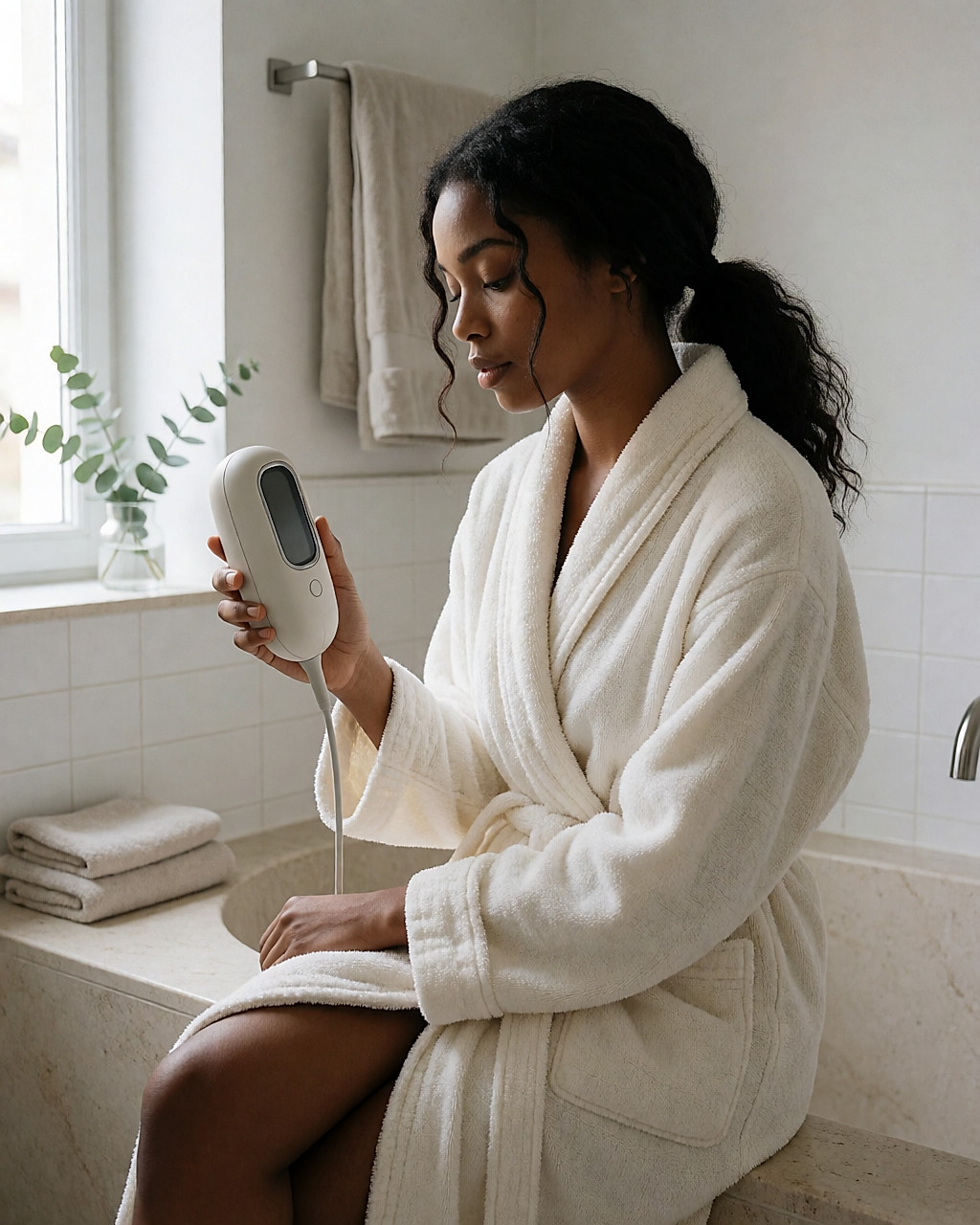
The good news is that brands are falling over themselves to make the whole thing gentler: massaging rollers, cooling strips, and the option to epilate in water. Little features that do help to varying degrees — though they don't work miracles either. The latest generation of devices clearly points towards more comfortable epilation, there's no denying it. And as regular users will tell you: your skin does get used to it, a little. While the first few sessions really sting, you grit your teeth less and less with each use.
The step that changes everything: epilate in the evening, on clean, properly dry skin — or in water if your model allows it — then leave your skin alone until the next day. Moisturise the following day, never the same evening. Your skin will thank you.
Effective, yes — but on certain conditions
Another frequent question, especially from those who've never tried one: does it actually work, or do you end up with stray hairs everywhere? The answer is yes, an electric epilator does work. But there's one thing to know: while it's very convenient — no wax to melt, no sticky fingers, it lives in a drawer — it does demand a proper slot of time. Despite the advances of recent years, a single pass isn't always enough. You need to take your time, go back over certain areas, and often follow up with a touch-up a few days later. Regrowth usually takes several weeks, which explains the impression of missed hairs. And not all hairs are at the same stage when you start: some will still be too short to see or catch.

That said, while a full epilation takes patience, a quick touch-up only takes a few minutes — just enough to run over the areas you missed.
Worth knowing too: recent models are designed to catch increasingly short hairs, but they have their limits. There's no need to wait until hairs reach 5 mm, don't worry, but the device can struggle with very early regrowth. And some users find very fine hairs tricky — sometimes the epilator skips over them entirely.
Ingrown hairs and little bumps: what happens afterwards
Another important point, and we'd rather warn you: ingrown hairs are not uncommon during regrowth. Little bumps form because the hair grows under the skin without managing to break through. This tends to happen with the first few epilations and usually settles down on its own afterwards. To limit the damage, remember to exfoliate your skin regularly in the shower — but avoid exfoliating just before or just after epilation, or you risk irritating it further.
After the device has been over your skin, small red dots also appear on the epilated areas. These aren't ingrown hairs, but micro-trauma from the pulling: nothing to worry about, they fade quickly. Which is why it's worth epilating in the evening, to give your skin time to recover overnight. And if you can do it after a shower, even better: the warmth softens the skin and relaxes the hair, which can make epilation less uncomfortable.

How to choose your epilator
With so many models on the market, it's hard to know where to start. First rule of thumb: an epilator is a long-term buy. It's sometimes better to spend a little more on a good-quality device than to have to replace it after a year or two. After that, it all depends on what you actually need.
Some models come with special heads for narrow areas like the bikini line or underarms — handy if you plan to epilate those yourself. Others go for variable speed, a real bonus on sensitive areas, though those who only epilate their legs may not see the point. As for pain-relief features, it's up to you: epilating in water and massaging rollers are, in our view, what works best. We also like the little built-in light that illuminates the area and stops you missing a hair along the way — it's not as unnecessary as it sounds. And for hygiene, go for a model with a detachable head that can be rinsed under water, to be cleaned after every use.
Budget
On the budget side, it's hard to give a single figure given how wide the range is. An entry-level epilator comes in at around £20, while a top-of-the-range model with multiple heads and a washable head easily climbs past £100. What pushes the price up? Variable speed, interchangeable heads for the bikini line or face, battery life on cordless models, and the stand or storage case included. Where to find them? At high-street retailers, pharmacies, beauty e-commerce sites, and sometimes second-hand if you want to try a model before investing more — just remember to disinfect the head thoroughly before first use.
Sources
- Épilation : ce qu'il faut savoir — Ameli, Assurance Maladie.
- Poils incarnés : reconnaître et prévenir — Vidal.



Comments
Your opinion matters: rate the article, react and reply to comments.
Comments are moderated; AI-assisted comments are flagged. Text emoticons (8-), :-), <3…) are automatically shown as images.