
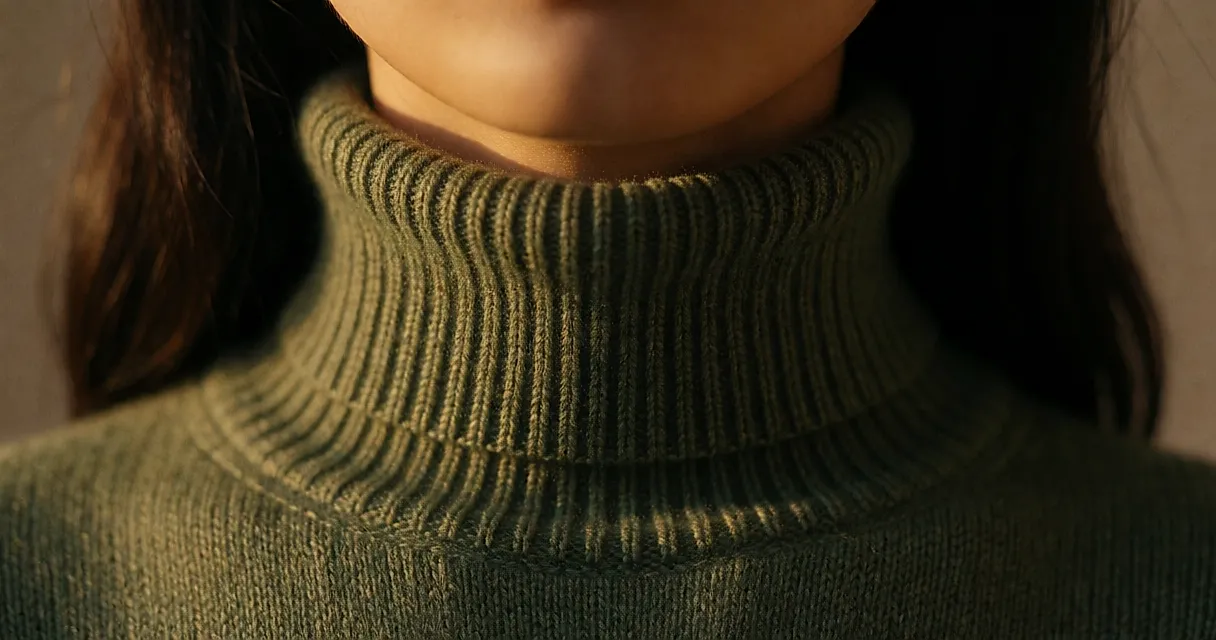
A roll neck is judged in the hand: grab it by the edge, let go, and watch what it does. If it slumps into concertina folds across your chest, you'll spend the winter hoisting it back up every ten minutes. If it springs upright in one piece, you may be holding the jumper that sees you from November to March. The trick is knowing what you're looking at before you start comparing two labels.
Density shows up against the light
Take the jumper, turn the collar towards the window and ease two stitches apart with your fingertips. What are you looking for? Light coming through. A fine, tight gauge lets very little past; a loose knit shows up like a tea strainer. It isn't an exact science, but it's a surprisingly reliable marker when two collars look identical on screen and one costs twice as much as the other.
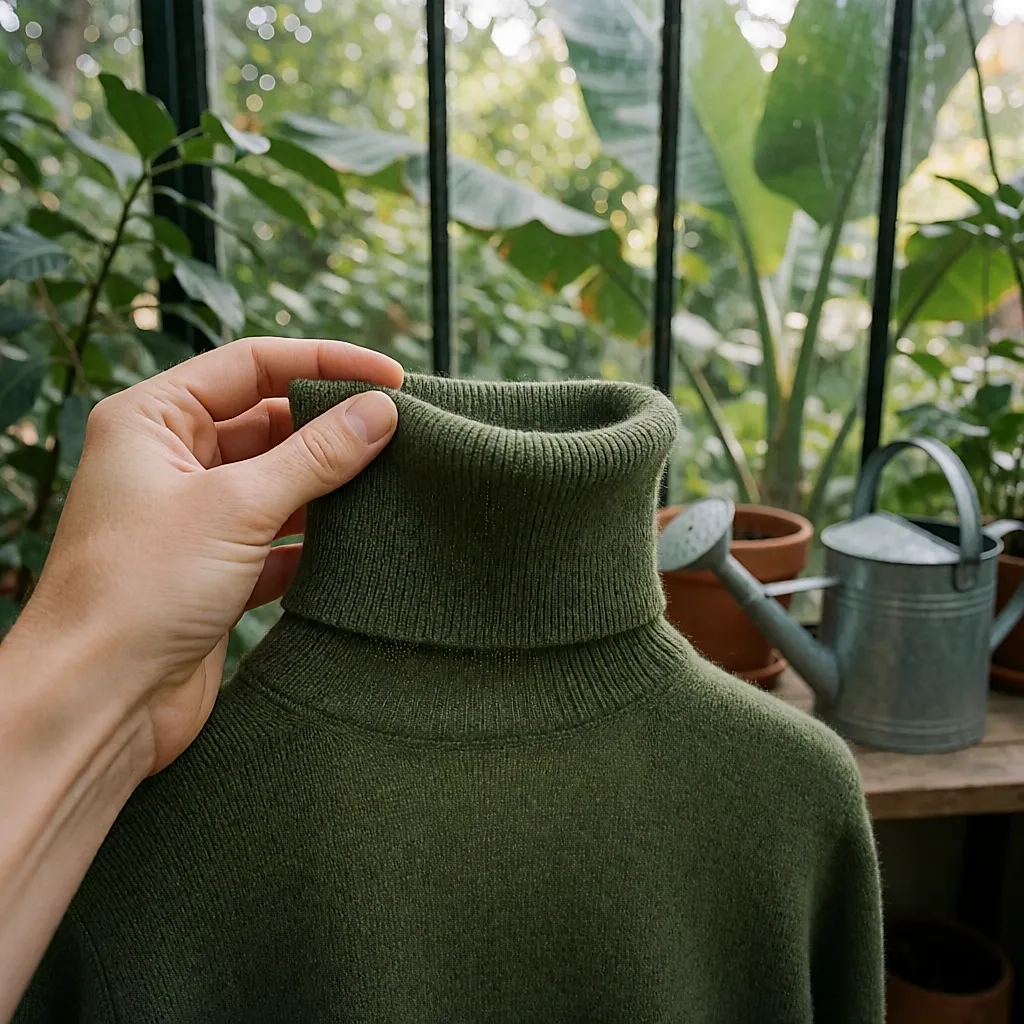
On the fibre front, merino wool is still the safe bet: fine, soft, and it takes up little room under a jacket. Recycled wool often feels more rustic, at a friendlier price. One reflex before you fall in love with it: read the label. A large share of acrylic or polyester can mean a collar that shines under office lighting and pills quickly — just a word of warning, but it saves a lot of disappointment.
The rib, that scaffolding nobody looks at
At the edge of the collar, those little vertical ridges have a name: the rib. If it stops after a couple of centimetres and plain jersey takes over straight away, the collar has no scaffolding — it is likely to flop in no time. The more generous the rib depth, the better the collar holds itself, and the better it ages.
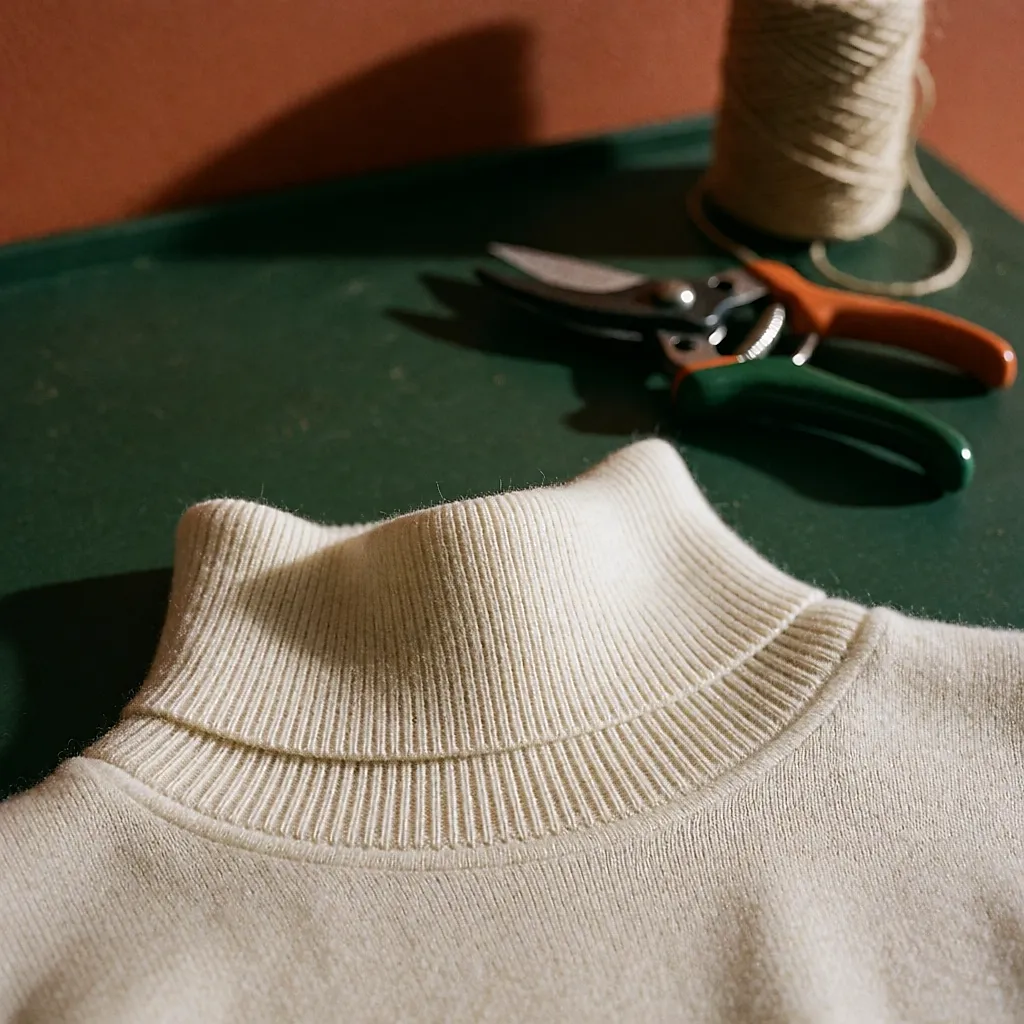
One detail that tells you a lot: are the ribs on the cuffs and the collar from the same family? When a brand cares about finishing, it doesn't cut corners on one edge out of three. And if the collar is lined, is the lining the same fibre? A synthetic inside under soft wool is the kind of compromise you feel in wear.
The pinch test, three seconds well spent
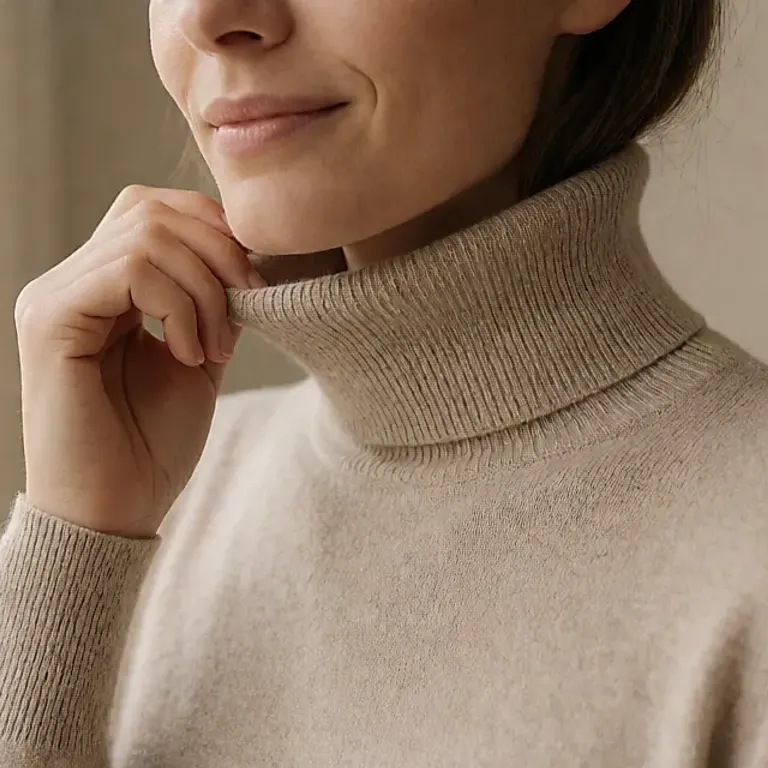
The move takes three seconds: pinch the collar between thumb and forefinger, count to three, let go. If it springs back without holding the crease, the rib has memory. If it stays folded, you know what's coming. This pinch is no substitute for trying it on, but it can stop you buying a collar that's likely to lose its shape too soon, at a comparable price.
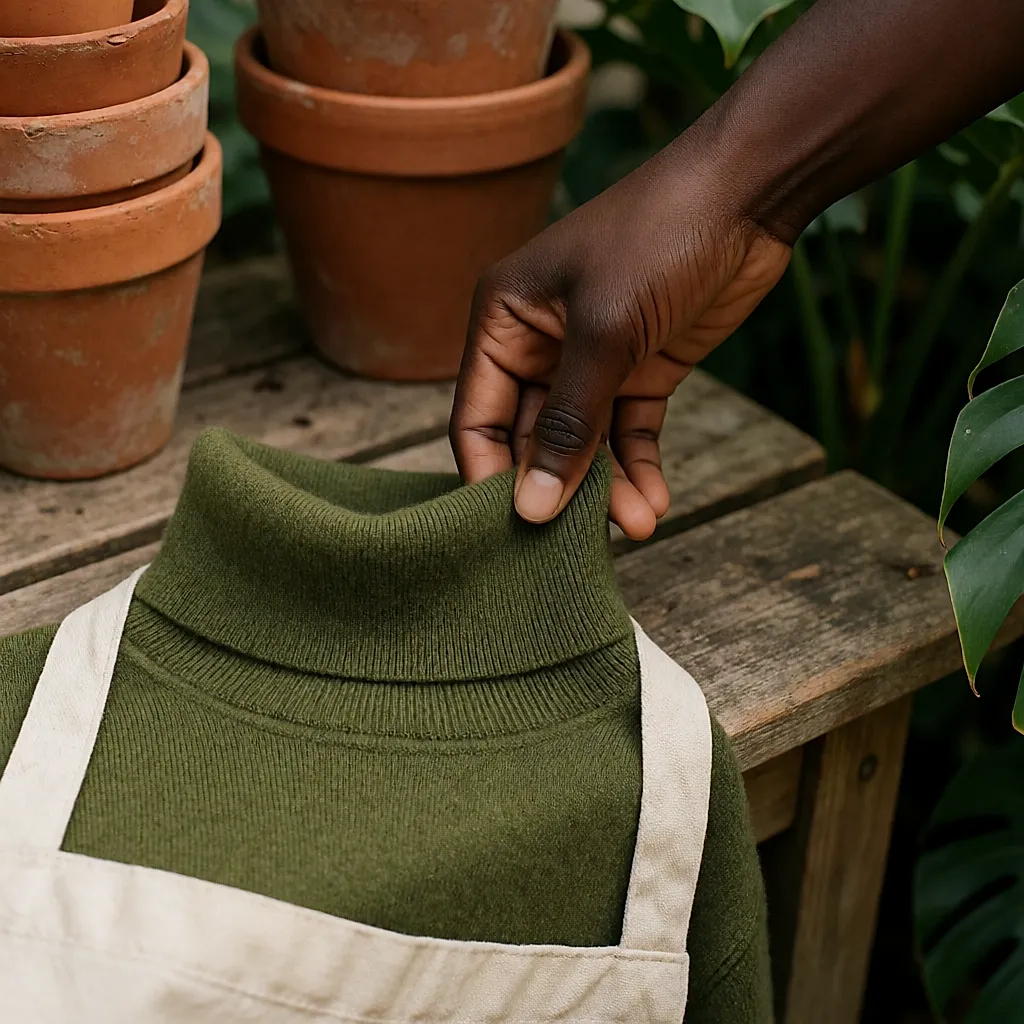
After that, the collar will tell you the rest. A slightly relaxed roll neck is made for slouching: a shoulder slipping down, wide-leg jeans. A collar that collapses completely, on the other hand, won't be rescued by good intentions or an iron.
Folded once, it should stand up on its own
Fold the collar once, then twice. If it sits just under your chin without needing a third roll, the folded length is right. If you have to roll it three times to keep it up, the height is wrong — and you'll spend the day putting it back in place.

Here it all depends on what you want it for. A fine collar, folded once, slips under a blazer without bulk: perfect for the office. A thick, high collar is warm and makes a proper Sunday silhouette. One caveat: if you have a short neck or sloping shoulders, a very high, very thick collar can swamp your line; a finer collar, folded once, tends to flatter more.
The collar-in-hand routine — four moves, thirty seconds: hold it to the light for density, check the rib for hold, pinch for stretch, fold for length. If all four answer well, move on to the fitting room. If not, put the jumper back without a second thought.
What to spend
Expect around £25 to £45 on the high street and at fashion chains: you'll find decent merino there, often in a blend. Between £60 and £130, knitwear labels offer deeper ribs, neater finishing and cleaner cuts. Above £175 you're often paying for the fibre — cashmere, extra-fine merino — as well as European manufacturing and longevity. Do you have to go that high? No, as long as you check the four moves above.
What pushes the price up? The wool content, the fineness of the gauge, where the fibre comes from and where you buy: a neighbourhood boutique doesn't run the same margins as an online retailer. And on the sustainability side, charity shops and vintage are still excellent hunting grounds — old pure-wool collars often hold up better than plenty of new ones.
A roll neck that works isn't the most expensive or the thickest: it's the one you never complain about. It doesn't itch, it doesn't gape, it doesn't make you negotiate with it every morning. So next time you're torn between two at a similar price, go back to the order: density first, then the rib, then the pinch, then the fold. Four moves, and you'll know which of the two will still be with you in March.

Comments
Your opinion matters: rate the article, react and reply to comments.
Comments are moderated; AI-assisted comments are flagged. Text emoticons (8-), :-), <3…) are automatically shown as images.