
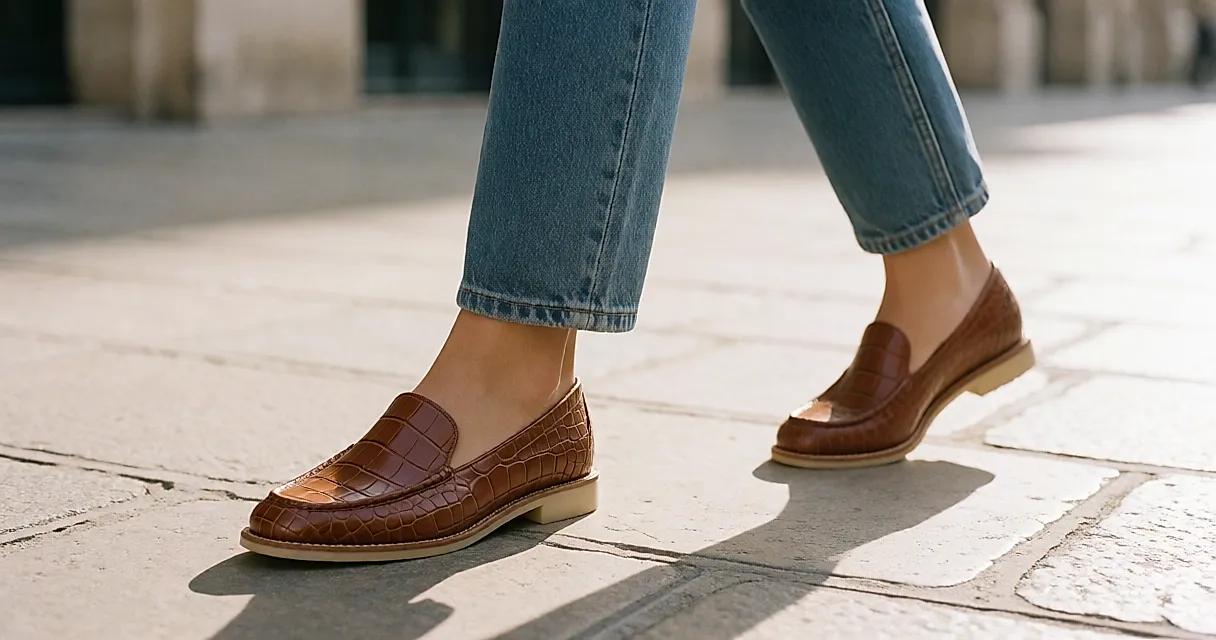
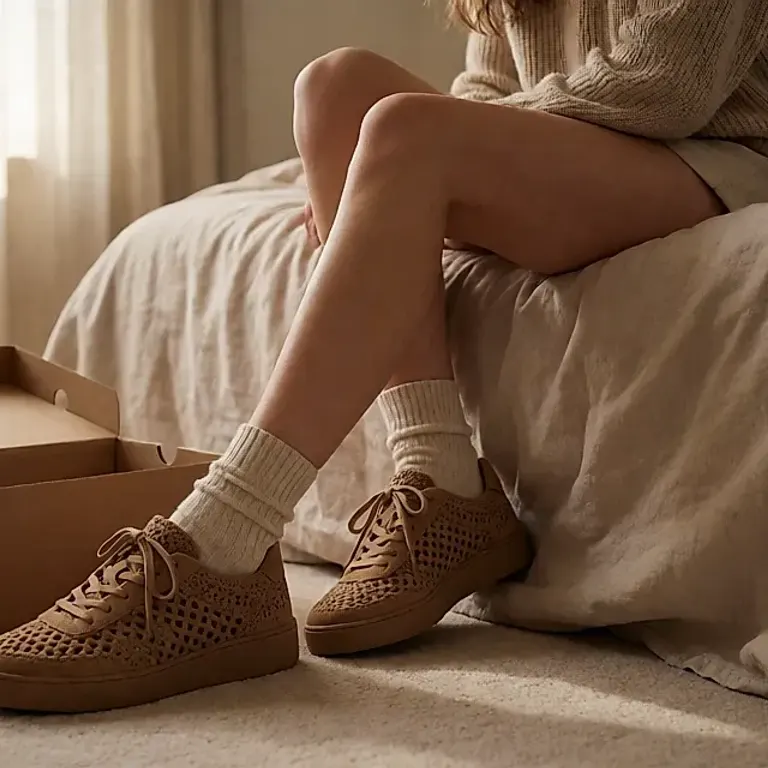
The parcel is open on the bed, the tissue paper is flying, and there in front of you: a shoe with the upper of a loafer, the sole of a ballet flat and the ambitions of a trainer. The label says sport. On the foot, the question is a different one — a loafer in disguise, or a trainer that has swapped its mesh for croc?
Mesh out, croc in
For a few seasons now the trainer has been moulting. Out go the mesh, the reflective strips and the soles that climb ever higher; in come the codes of the city shoe: a one-piece upper, a U-shaped panel across the instep, a strap, and sometimes a stitched welt that nods to leather goods. Embossed croc-print leather finishes the job — not to imitate a man's loafer, but to give relief to an otherwise sober silhouette.
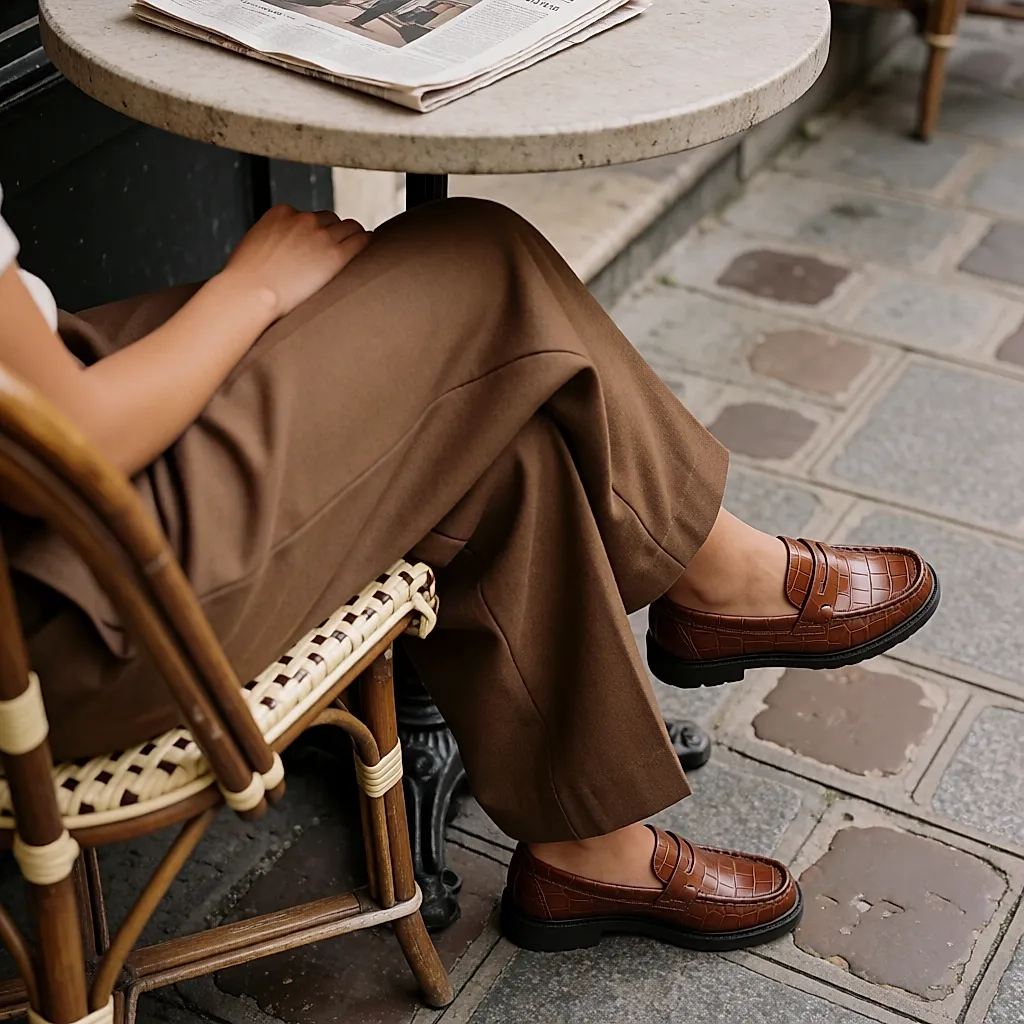
None of this is entirely new: Clarks' Wallabee, a crepe-soled moccasin, has been pounding pavements for decades, and Paraboot is a name often cited for robust stitched leather. What has changed is that these codes have migrated onto trainer shapes, with a deliberately flat sole. The shoe refuses to choose between the office and the weekend. That is exactly what makes it appealing — and exactly what deserves a little caution.
How it actually feels on the foot
A flat sole means very little cushioning: that is construction, not an accident. You feel the pavement, the floor tiles on the Tube, the small rise of a kerb. Some people love that direct contact, others hate it. If you are on your feet all day, settle the question before you pay; and if you are coming from a heavily cushioned trainer, plan a few short outings to get used to them.
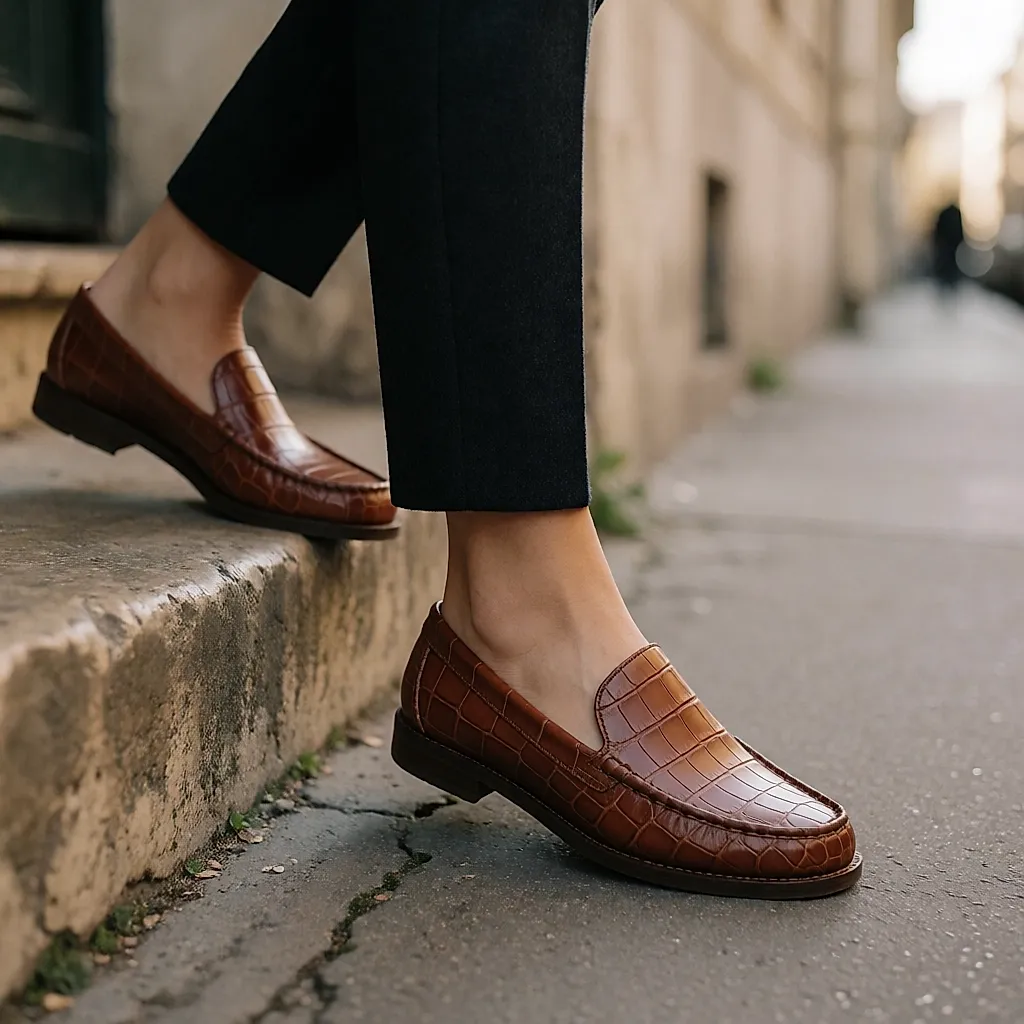
The other variable is the leather. Embossed leather is often stiffer than smooth leather to begin with: it gives very little and is less forgiving of a sizing mistake. For wider feet, the loafer upper — with no laces to pull tight — holds the foot on its own, and it can press on the instep. The only real judge is the try-on, at the end of the day, with the socks you will actually wear.
How to spot a good pair before you buy
Turn the shoe over. A stitched welt joins the upper to the sole: it is a sign of careful construction, and it means a cobbler can resole the pair once the sole wears through. A glued rubber sole made from a fine compound holds up very well but is rarely replaced; a leather sole is elegant and slippery in November rain.
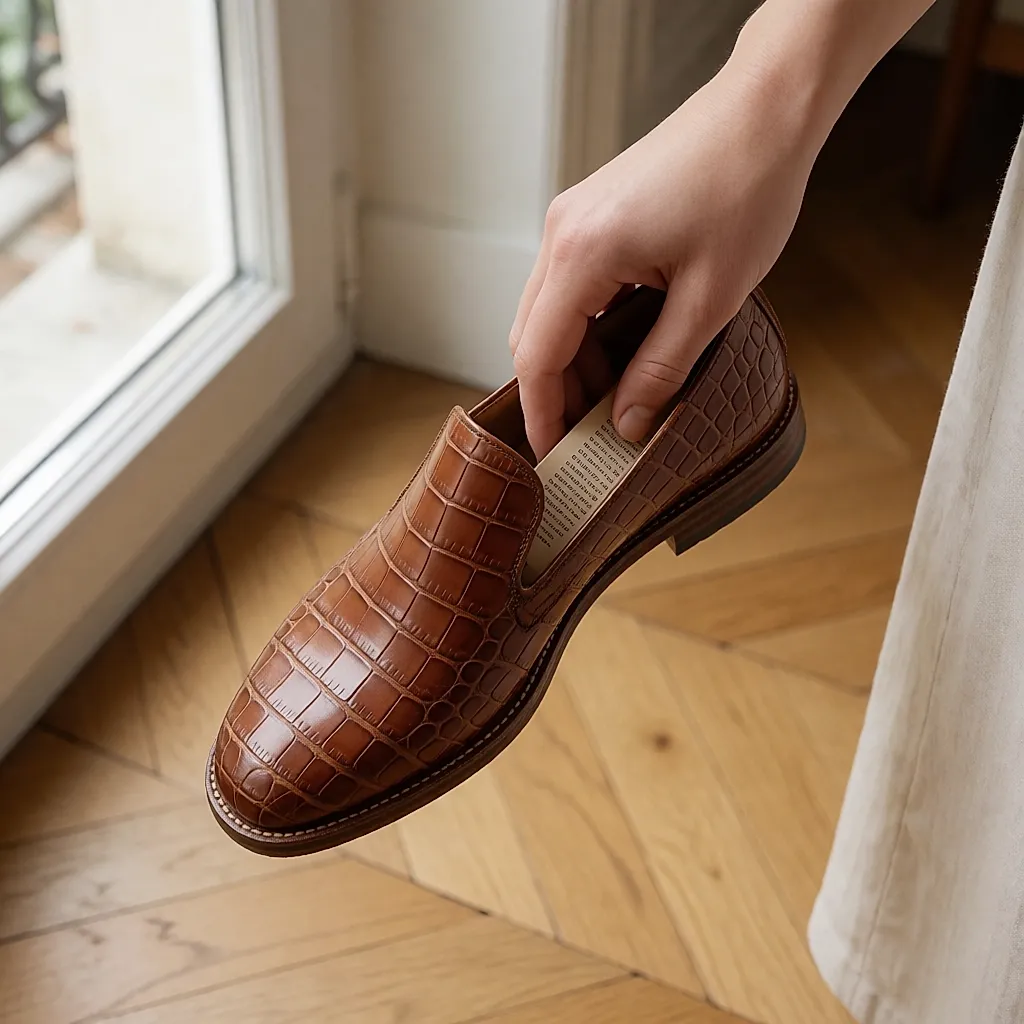
Then look inside: leather lining, removable insole, sensible weight. And read the composition label — check the share of synthetic fibres, lining included, especially on entry-level pairs. Full-grain leather and, where that information is given, vegetable tanning are two markers that make a difference over time.
The three-minute test: put the pair on at the end of the day, with the right socks. Walk, then check two things — does the heel slip? Does your big toe touch the end? If either answer is yes, change size. Embossed leather gives very little and will not do you any favours.
What works with it, what falls flat
Silhouette-wise, this pair works best as a transitional piece. Straight-leg jeans that break on the shoe, wide pleated trousers, a wool midi skirt, a trench: the loafer upper does the job of a smart shoe, the flat sole keeps the look relaxed. A tonal outfit, leather and wool in the same family of browns, works particularly well — that is where the embossed texture earns its keep.

Where it goes wrong is with gym leggings and tracksuits: the contrast between a worked leather upper and a technical fabric reads as a misunderstanding, not a bold choice. And if you want long-distance comfort or a pair for the gym, look elsewhere. The hybrid is a compromise — provided you know what you are asking of it.
Budget
Expect to pay £50 to £100 for a smooth-leather pair, often coated split leather, with a glued sole, in high-street fashion stores and specialist chains. Between £130 and £220 you are into full-grain leather, decent crepe or rubber soles and established shoe brands, at leather-goods shops as well as online retailers. Above £260 you are paying for construction — stitched, carefully embossed leather, European manufacturing — and the promise of a pair that can be resoled.
Prices vary with the city, the leather, the lining and where you buy. Do not forget care: wooden shoe trees (£15 to £25), a nourishing cream (£8 to £18), a resole (£35 to £60 at a cobbler).
So where does it fit in your wardrobe? For the office and short commutes, a pair at £130 to £220 in full-grain leather offers the best balance of cost and wear. To try the shape without committing, £50 to £100 is enough — and second-hand shops are full of crepe-soled loafers doing the same job for a fraction of the price. Then there is the stitched-welt shoe, if you want to wear it for ten years: in that case, buy the shoe trees the same day, or they will never arrive. It is easy to fall for a beautiful pair — it just has to genuinely earn its place.


Comments
Your opinion matters: rate the article, react and reply to comments.
Comments are moderated; AI-assisted comments are flagged. Text emoticons (8-), :-), <3…) are automatically shown as images.