
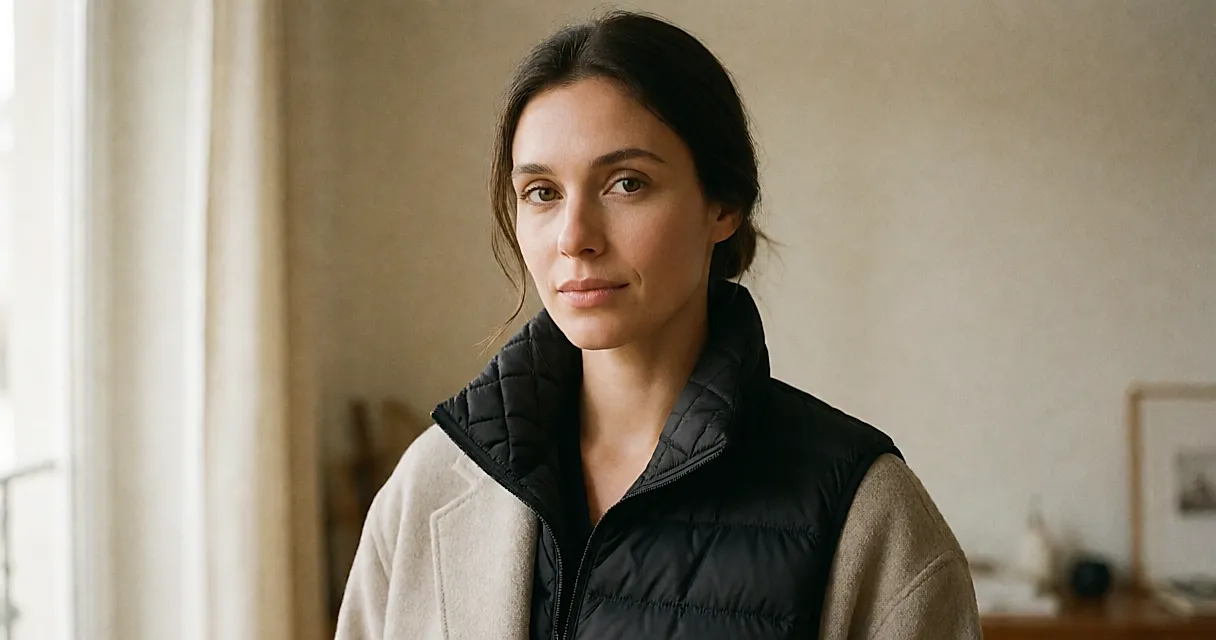
On the hanger, a sleeveless down gilet can look like a slightly puffed-up cardigan — the sort you throw on to go to the shops. Once it’s under a wool coat, it changes status: it traps a layer of warm air across your back and chest without adding sleeves to the layering. That’s why it deserves better than emergency duty. It’s the piece that can save you buying a second coat.
What the fill numbers actually mean
Two numbers describe a down gilet, and they tell you different things. Fill power, measured in cubic inches per ounce (cuin), is the down’s ability to loft and recover its volume: the higher it is, the more warmth you get for very little weight. Fill weight tells you how much down is actually packed between the seams. In practice, a mid-season sleeveless style is lighter, while a winter version carries more down. The two figures are useful guides, not standards.
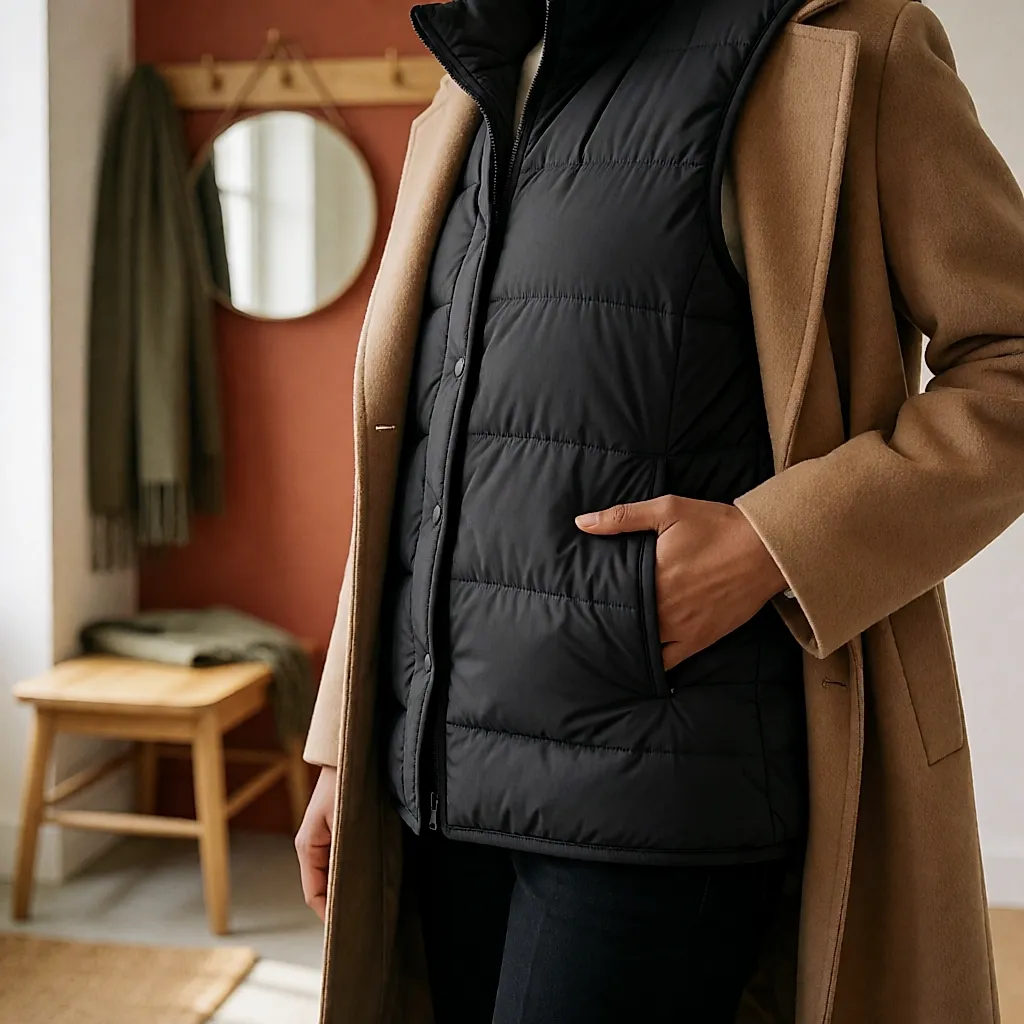
The composition matters too. A fill of 90% down to 10% feather lofts better than a 70/30 mix, where the heavier feathers mainly add bulk. The outer fabric counts as much as the fill: a dense weave blocks wind, while a very fine fabric lets air through. On ethics, look for certified responsible down or recycled down. One small caution: check the share of synthetic fibres in the shell and lining, which can still be the majority even when the fill is natural.
The armhole is the detail to check
It’s the detail that decides whether the piece layers neatly or ruins the line. A low, wide armhole creates a bulge under the coat sleeve: you lift your arm to grab the Tube rail and the whole thing rides up with you. A high armhole, fitted at the shoulder, disappears. You know the type that squeaks under the arm as soon as you move? That’s a cut issue, not your body.
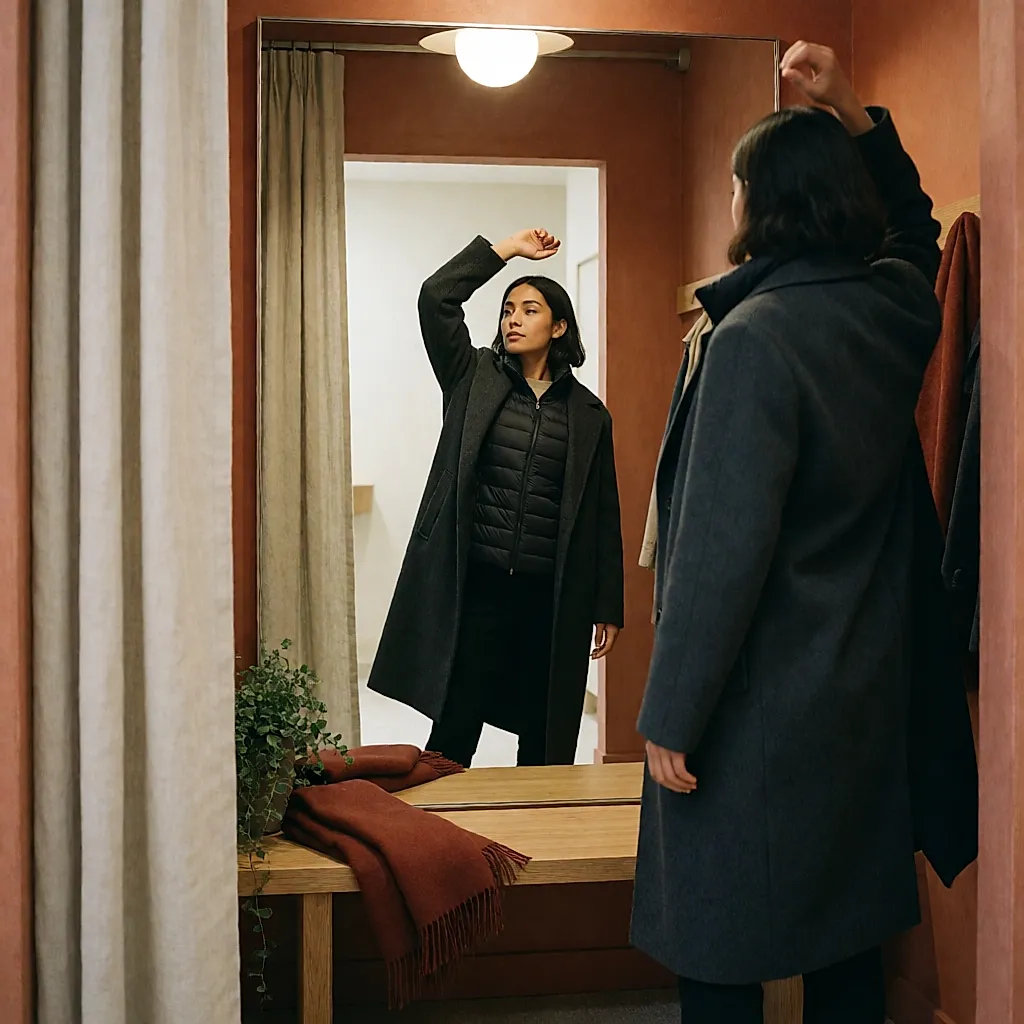
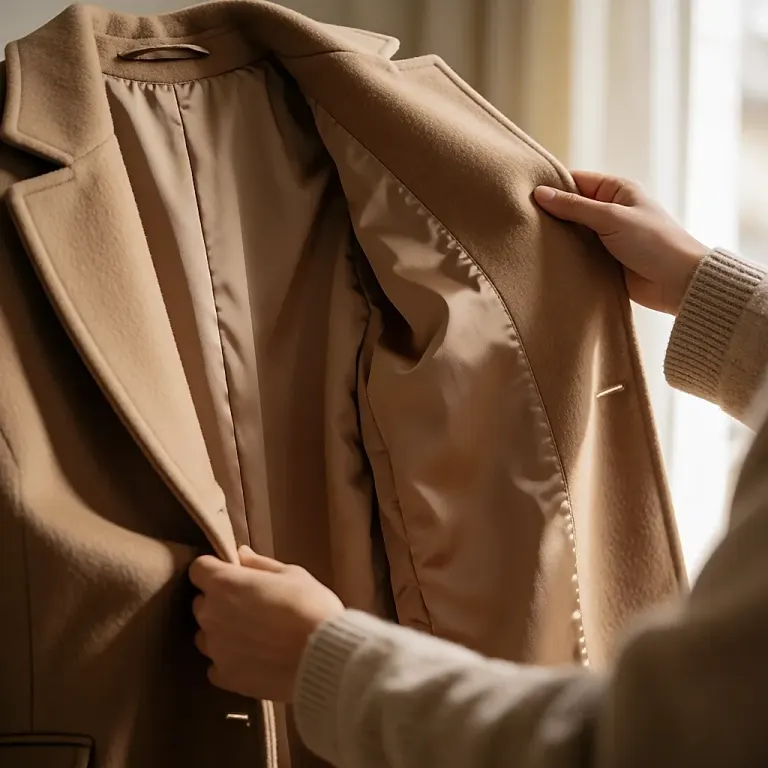
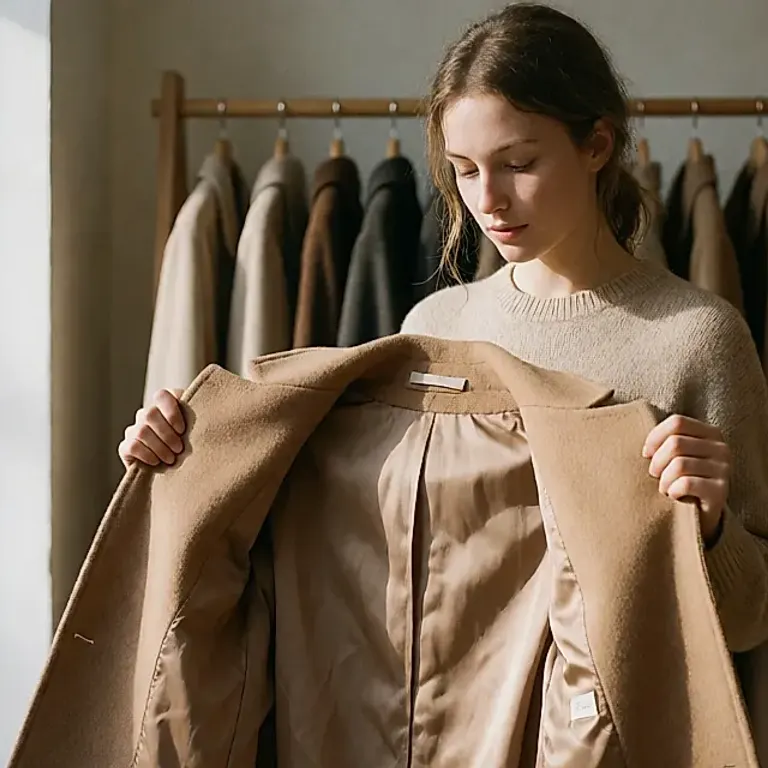
The test is simple: try the gilet on with the coat you already wear. In the fitting room, put both on, lift your arms, sit down. If the coat sleeve pulls or your armpit feels compressed, the layer is too much. Check the shoulder too: a seam that falls beyond the bone creates a bump under the coat, and no amount of layering will fix that.
The hem should stop at the waist
Not a cropped top, not a tunic. A sleeveless down gilet that’s too long rides up at the back when you sit and creates a barrier under the coat; too short, and it lets a draught settle over your lower back. The right length stops at the waist or just above the hips, sits flat and disappears under a mid-length coat.
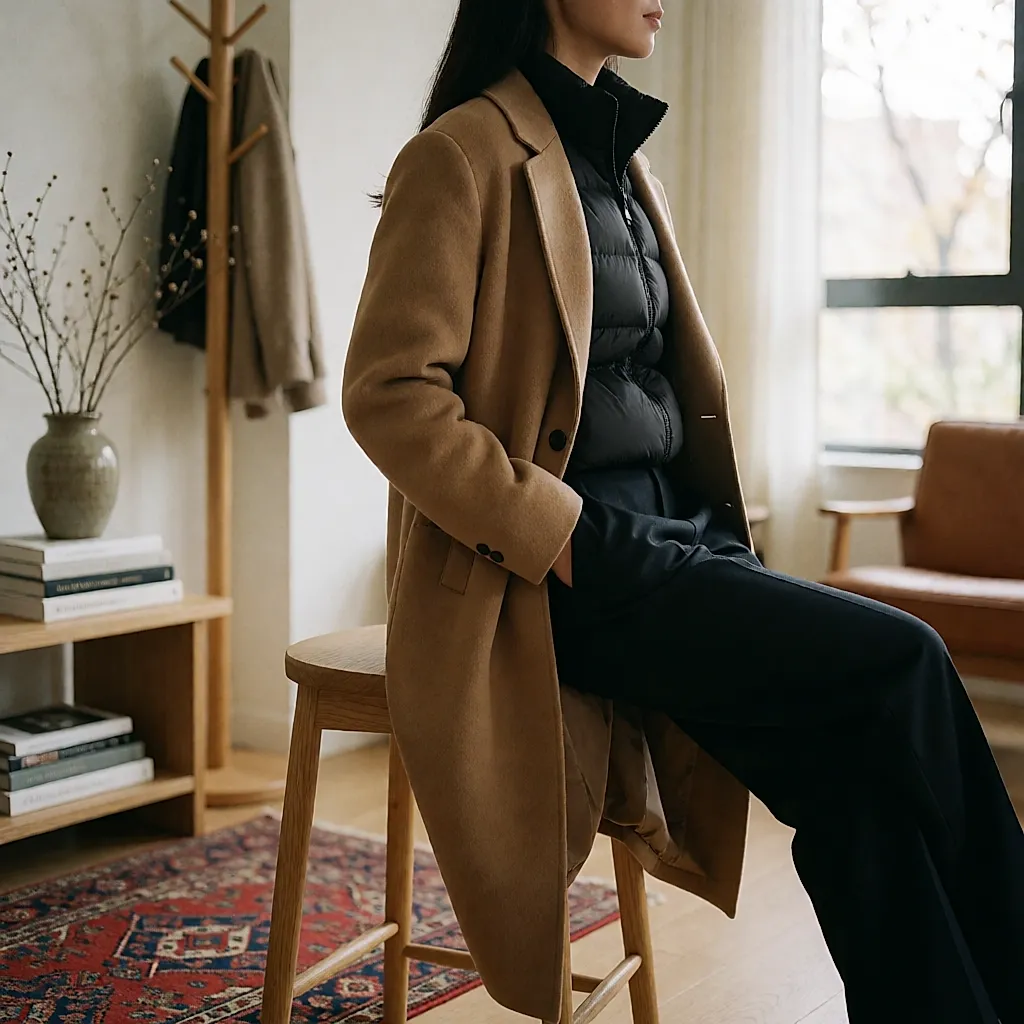
The collar deserves a look too. A full-length zip can be worn open over a roll-neck or zipped up under a coat. Stand collars are warmer, but can add bulk under a chunky scarf — a detail that matters when you really layer up.
Three ways to wear it without looking ready for a hike
Over a fine merino wool knit, under a wool coat, it replaces the thick jumper that makes everything feel tight. With a cotton shirt and jeans, it becomes the extra jacket for commutes that are either too hot or not hot enough. And in mild weather, wear it alone over a knit: that’s when you can judge its cut — and whether it belongs in your wardrobe or in your sports kit.

One layering rule worth remembering: the thinner the base layer, the better the gilet behaves. A thick jumper underneath just adds volume where you wanted warmth.
What to spend
Prices fall into three camps. Entry-level versions, often around £40–£90, make good sense as an extra layer without a big outlay. Outdoor brands and well-made basics tend to sit around £120–£250; at that level, it’s worth checking that the down is traceable and the fabric hard-wearing. Over £450, you’re paying for the label, the cut and sometimes the name — your call, but it’s no longer about warmth.
Where to look: Decathlon and Uniqlo to test the idea without spending a fortune, Patagonia or The North Face for outdoor kit, and resale sites or charity shops for branded pieces at much lower prices. If you buy second-hand, check the seams and make sure the down still fills every baffle.
The three-move fitting-room test. Put the gilet on under your usual coat, then raise your arms above your head (nothing should pull at the armpit), sit down (the hem shouldn’t ride up to your ribs), put your hands in your pockets (your shoulders shouldn’t lift). Three moves, and you’ll know whether it stays in your wardrobe.
In the end, the real question isn’t ‘do I need a sleeveless down gilet?’ but how many winters you’ve spent layering three approximate pieces and wishing for a warmer coat. An entry-level piece that extends the life of a coat you already own is often the best wardrobe maths. Choose your camp: entry-level to test the idea, an outdoor version if you spend a lot of time outside, or second-hand if you like the hunt.

Comments
Your opinion matters: rate the article, react and reply to comments.
Comments are moderated; AI-assisted comments are flagged. Text emoticons (8-), :-), <3…) are automatically shown as images.