
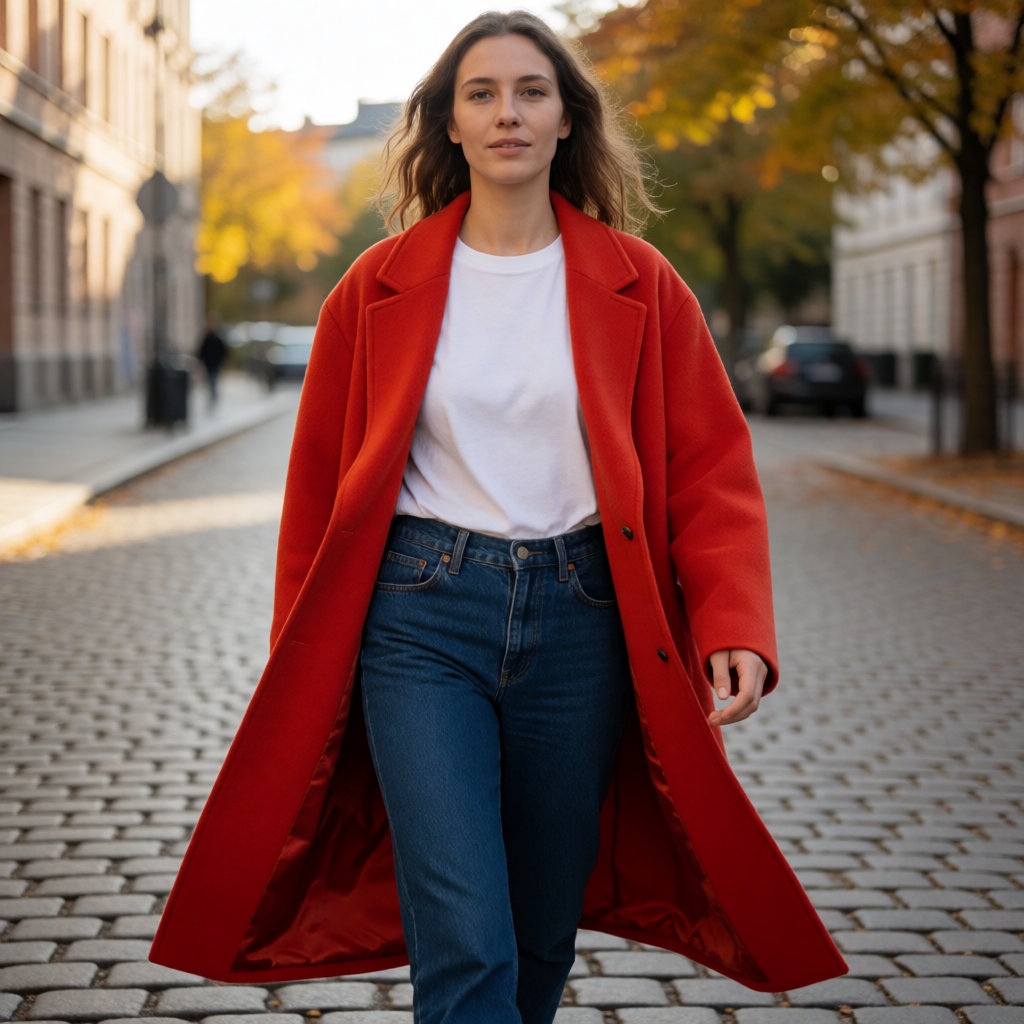
We've all been there: the changing room that's too cramped, unforgiving lighting, and the piece you pull on without much conviction. An oversized tomato-red coat, draped over your shoulders — the kind you imagine is reserved for women who stride around in sky-high heels. First instinct? Put it back. Except three try-ons later, you leave with it. And honestly, what made the outfit work wasn't the coat — it was the raw denim and white tee underneath. That contrast, the one that makes all the difference.
Maximalism is first and foremost about balance
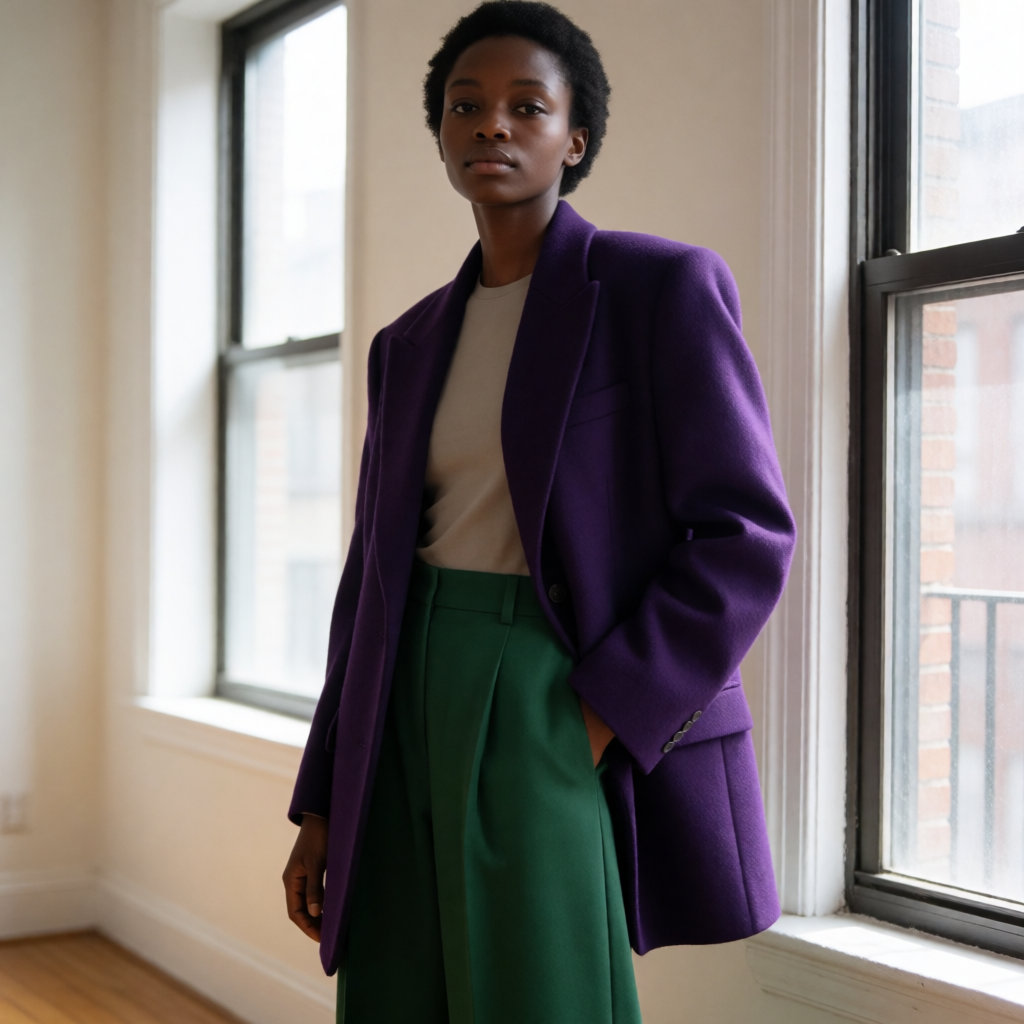
This autumn, silhouettes are getting wider and colours are shouting louder. Deep purple, bottle green, bold red, oversized shoulders, flowing skirts, coats that swallow the silhouette whole. At the same time, the pared-back wardrobe is back with a vengeance: beige, grey, clean lines, one single piece of jewellery. The two coexist perfectly well — they're not in conflict, and thank goodness for that.
Because the truth is, maximalism isn't a style in itself. It's all about balance. Wearing one strong piece has nothing to do with stacking ten of them. And that's usually where the silhouette gets lost, drowned in good intentions.
Pick your side, or own the mix
You have two clear options. The first: out-and-out maximalism. One bright colour, one striking volume, and you build everything else around it. The second: keep things pared back and break the neutrality with a single detail — an orange boot, a colourful bag, a lipstick that pops.

You can switch from one day to the next, but not within the same outfit. Decide where the fun lives: on the garment or on the accessory, never both at once. It's the simplest rule to remember, and the one that saves the most looks.
One standout piece, everything else quiet
This is the move that changes everything. A colourful or voluminous piece becomes readable when the rest of the outfit stays understated. Layering is good; piling on statement pieces, much less so.
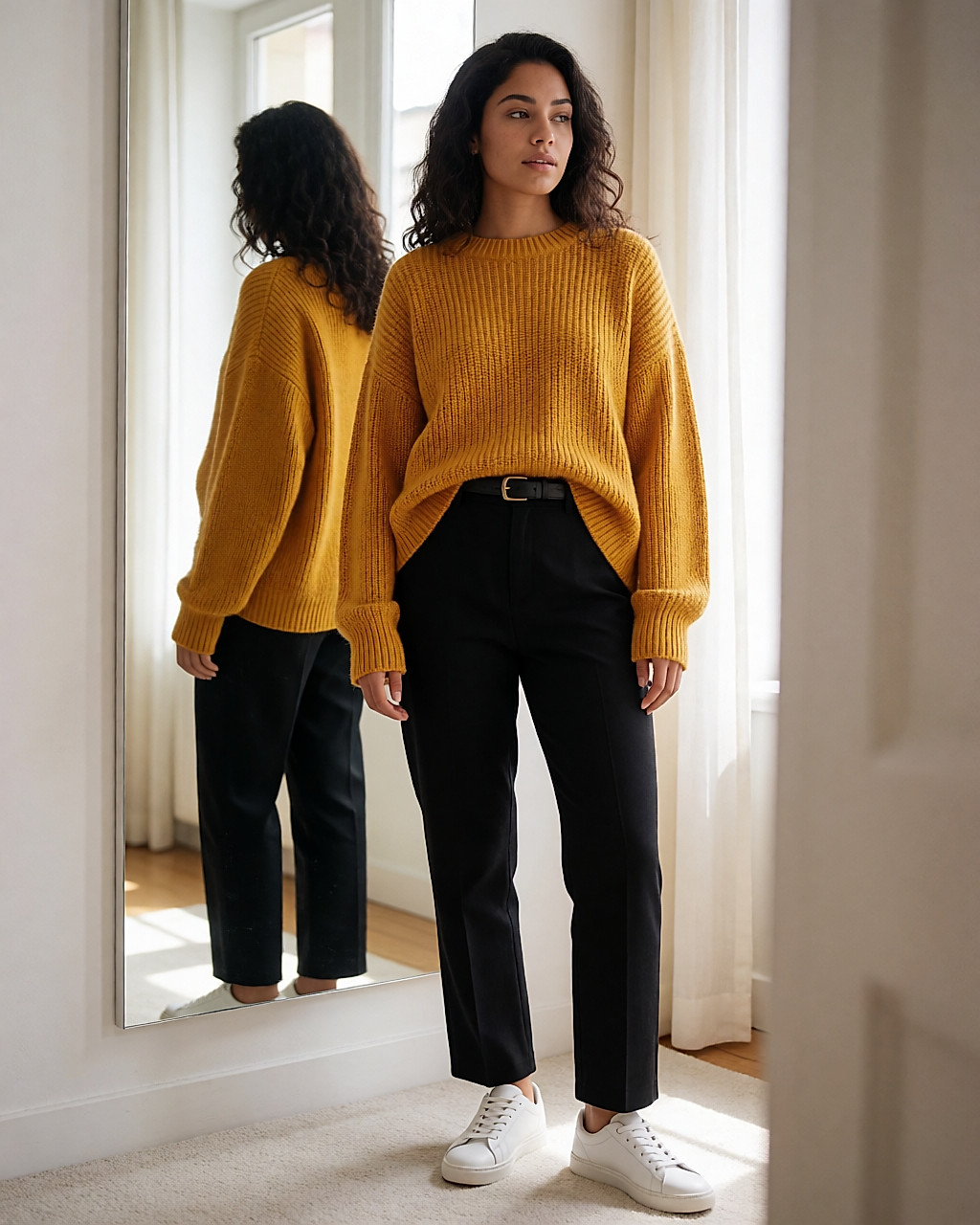
In practice: an oversized mustard-yellow jumper calls for straight black trousers, a slim belt, white trainers or nude heels. A voluminous pleated purple skirt goes with a fitted top in a neutral tone, and no necklace. A structured red jacket wants raw denim, a white tee, a small bag. What to avoid: two prints fighting each other, XXL jewellery over volume, a second bright colour from a different family. If you're set on two colours, keep them close in intensity.
Before you head out, just one question: what's the focal point of my outfit? If you can't answer in a second, take something off. It's usually the extra piece you end up regretting.
Volume: where to place it, where to stop
Volume is a matter of proportion. Widen the top, slim the bottom. Widen the bottom, fit the top. Otherwise, you drown in the fabric.
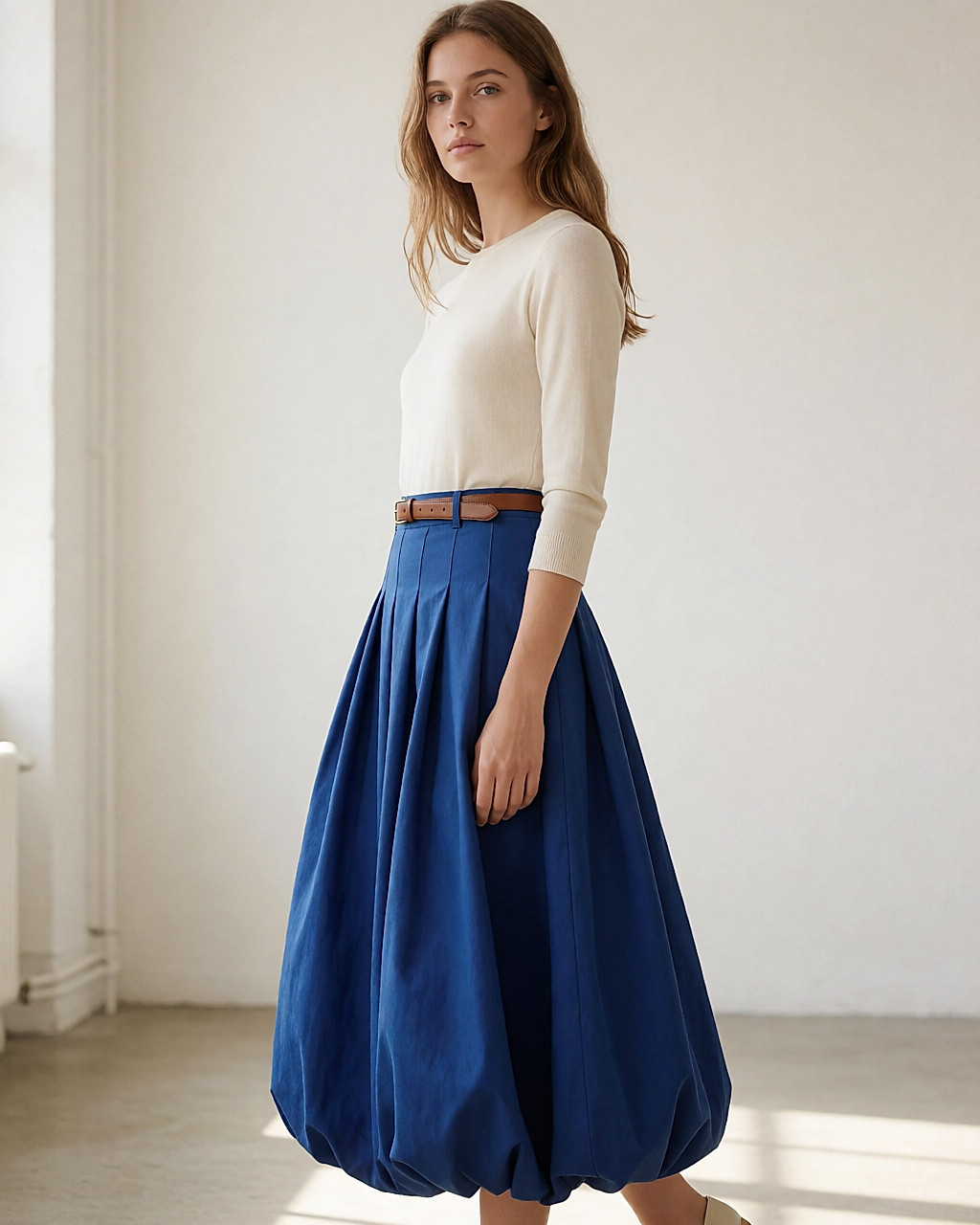
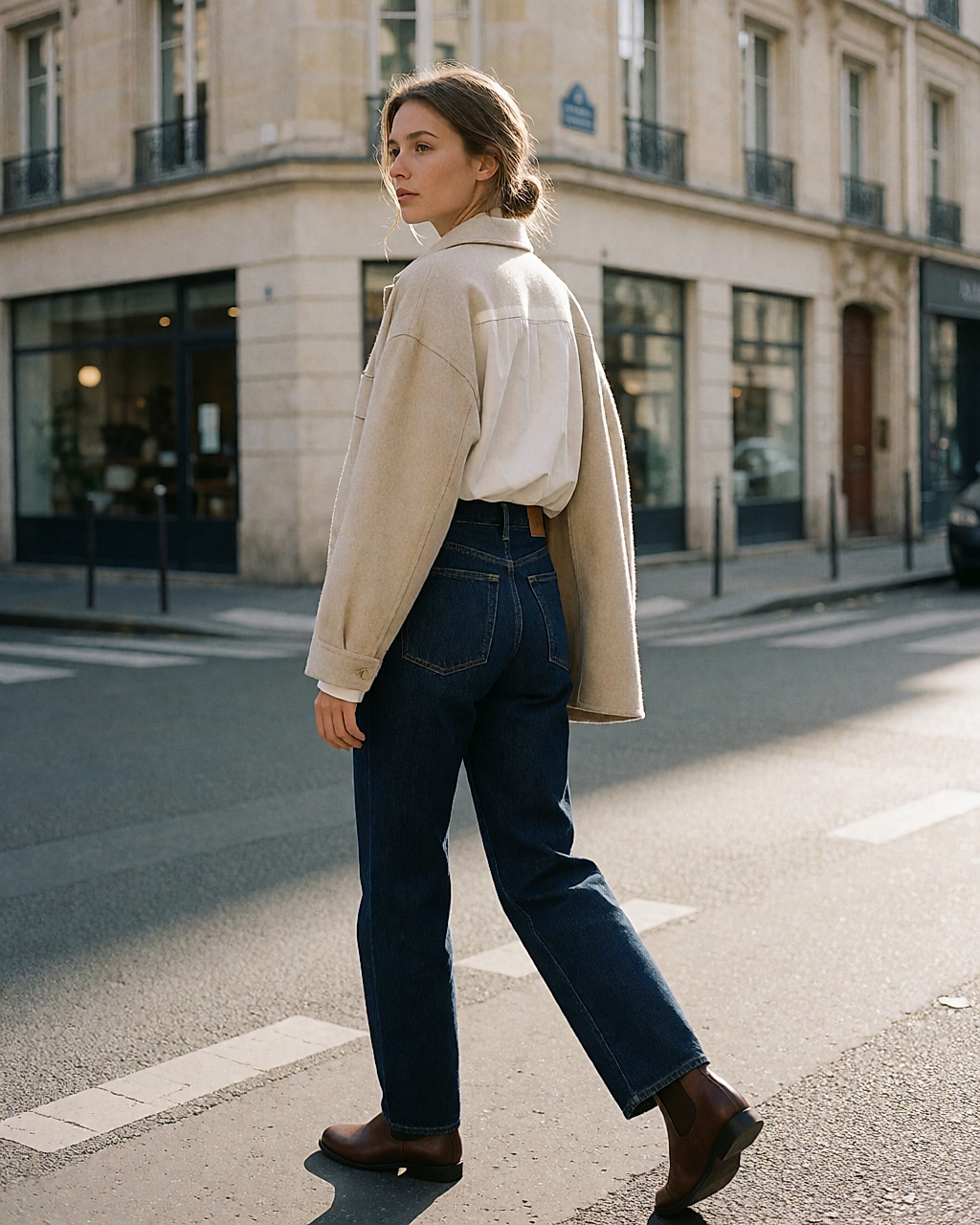
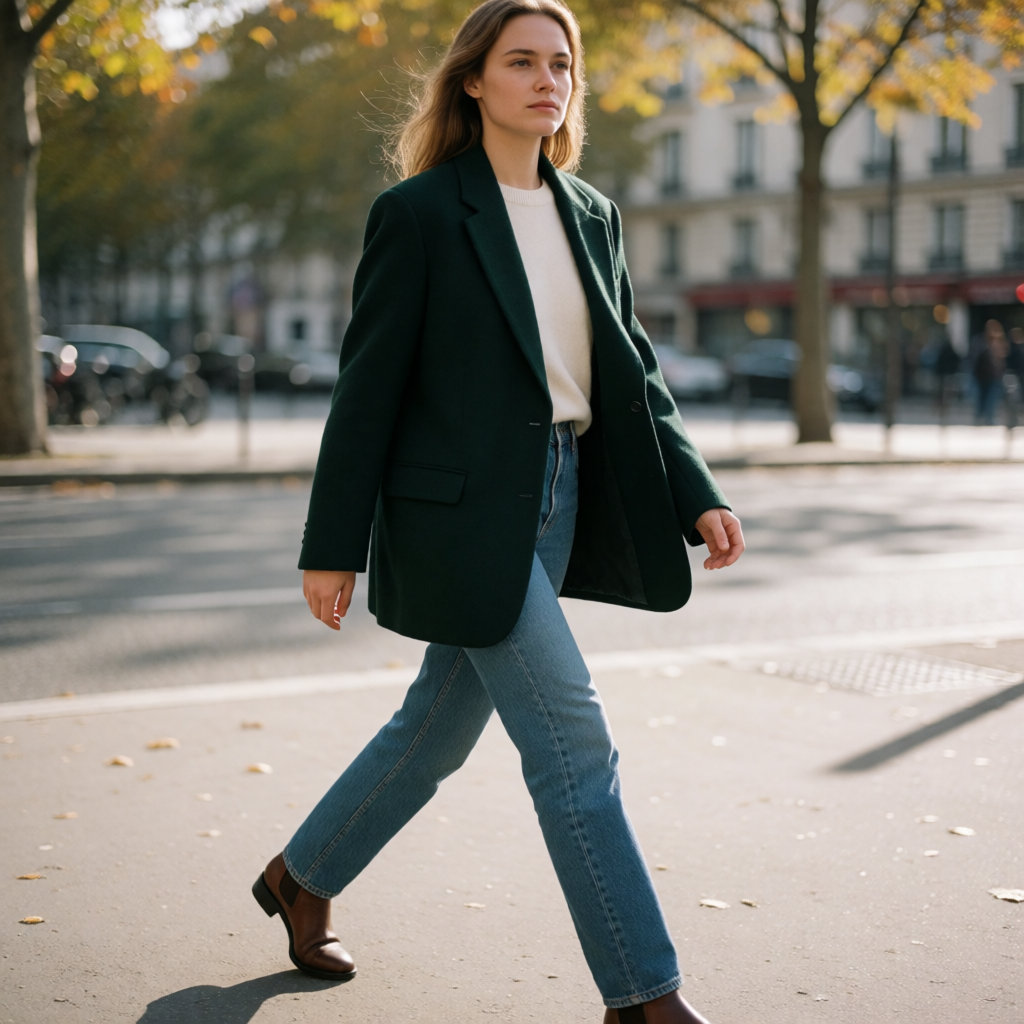
Broad shoulders? They look brilliant with cigarette trousers or raw slim jeans. A balloon skirt? Keep it with a tucked-in top, a simple high neck and a defined belt: nothing more! As for the oversized coat, it falls better worn open, over a close-fitting outfit, than done up over a chunky knit.
Colour: the quick guide
One bright colour per outfit, that's the baseline. If you want to add a second, pick it from the same family or from the neutrals that make it pop: off-white, grey, navy, camel.
Watch out for undertones, too. An orangey red on a cool complexion can clash. Always test the shade near your face before committing to a purchase — a colour that suits you at the chin won't necessarily suit you on the legs, and vice versa.
On the beauty side, two strategies. Either you echo the colour of the garment, with a bold lipstick over a red jacket: it's confident and it works. Or you let the garment do the talking, and stick to fresh skin and mascara. If you do fall for a lipstick, look at formulas based on naturally derived ingredients — refillable or in solid format: the packaging lasts longer and the ingredients list is easier to read.
The three-question test
Before you head out, ask yourself this: what's my standout piece? Is another piece shouting just as loud? And most importantly, do I feel comfortable in this volume, or am I wearing it for the photo? If the answer to the last one is "for the photo", change your outfit. A maximalist look is made to walk down the street, not to balance for thirty seconds.
Budget
It's hard to give a single figure: it all depends on the fabric, the drape and the range. But here are some typical UK prices.
A statement piece — a colourful blazer, a structured jacket — sits between £50 and £150 on the mid-range high street, and more like £130 to £350 if you move up to a good wool. An oversized coat often costs between £100 and £300, more from a designer label. The basics that let everything breathe stay affordable: expect £40 to £100 for raw denim, £12 to £35 for a thick white tee, £50 to £110 for white trainers. On accessories, a colourful boot sits between £70 and £170, a colourful bag between £35 and £130.
Second-hand changes the picture: in charity shops or on resale platforms, a standout piece often lands between £10 and £50. Think about alterations too — hemming, taking in — expect £12 to £35 at a seamstress: on a statement piece, that's often what separates a beautiful drape from a garment that just hangs.
Maximalism is a bit like make-up: the more intense it is, the more precision it demands. One standout piece, everything else quiet — that's the move that changes everything. And honestly, that's exactly what lets you wear a tomato-red coat in XXL without feeling like you're in fancy dress.


Comments
Your opinion matters: rate the article, react and reply to comments.
Comments are moderated; AI-assisted comments are flagged. Text emoticons (8-), :-), <3…) are automatically shown as images.