
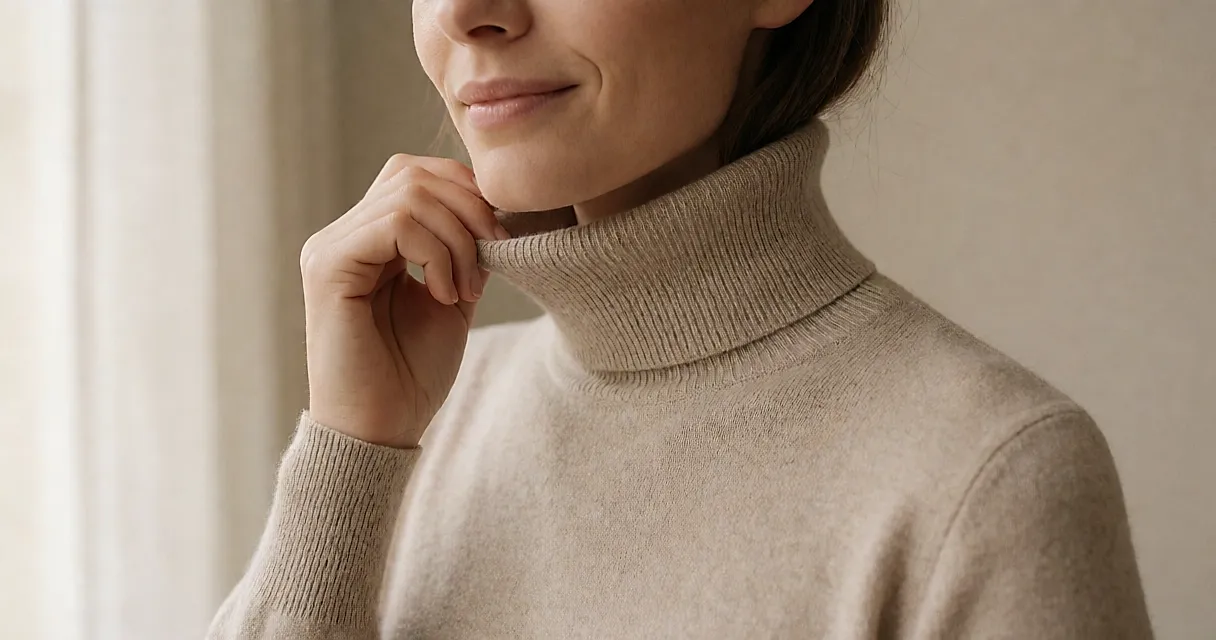
Two roll necks, the same price, the same photograph online. One feels like a kitten-soft scarf around your neck; the other makes you want to scratch your nape every thirty seconds. The difference isn't the word merino printed in large type on the label, but a number in much smaller print: the micron count. And it's a number you can learn to read before you reach for your card.
What a micron measures — and what it doesn't
A micron measures a diameter, not a pedigree: it is one thousandth of a millimetre, and it tells you the diameter of a wool fibre. The smaller the number, the finer, suppler and less noticeable the fibre feels on the skin. Merino, meanwhile, is a breed of sheep whose wool is prized for its fineness. You can see the point: depending on the real fineness of the fibre, you can find a roll neck that feels remarkably soft — or one that wakes up your neck.
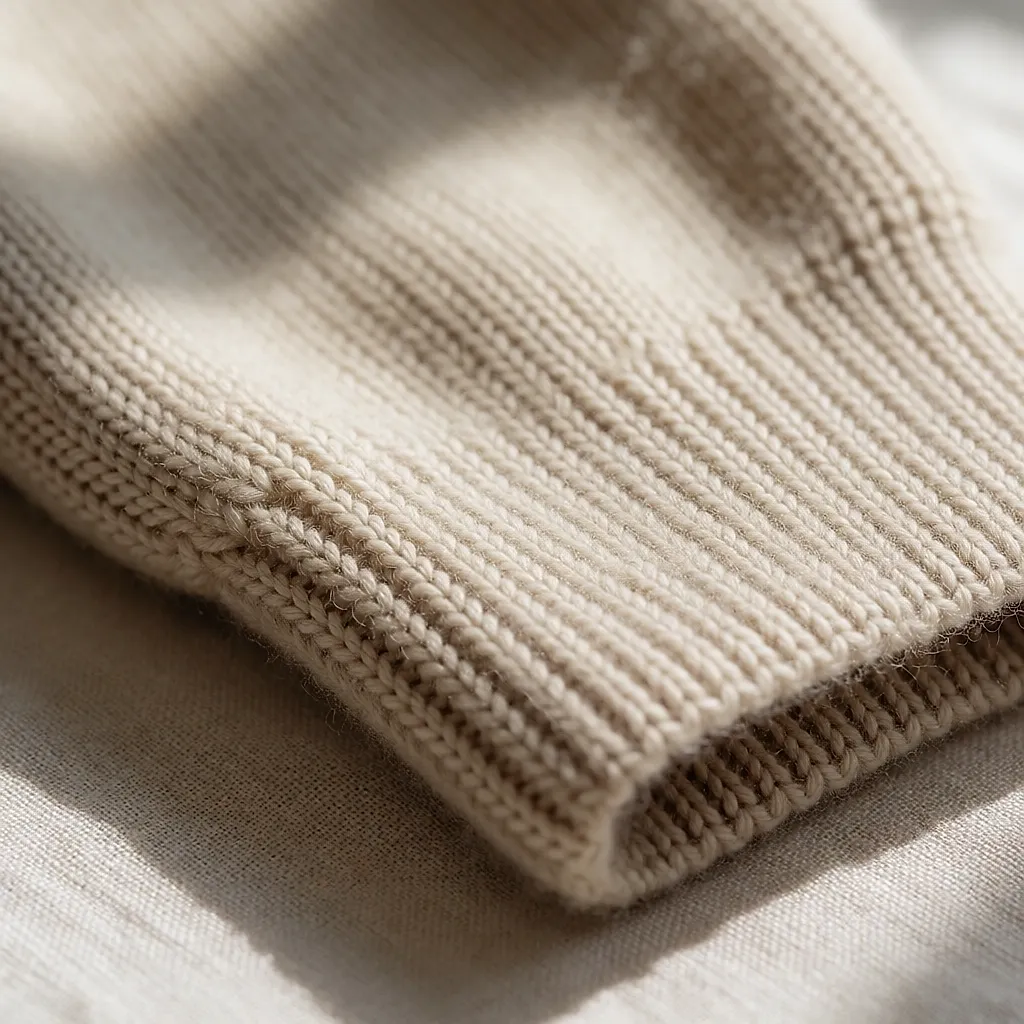
The practical benchmark often cited is 19.5 microns. Below that threshold, a wool jumper is often described as softer against bare skin, with less risk of itching. It is not a guarantee: think of it as a comfort benchmark, and your own skin has the final say.
One subtlety explains a lot of disappointments: an average doesn't tell the whole story. A yarn with a flattering average can still contain a few thicker fibres, and those are the ones you feel. Hence the slightly unfair impression of having bought the same jumper as your neighbour without having the same experience.
Why the same price doesn't guarantee the same feel
Fibre diameter isn't the whole story when it comes to comfort — so what else is at play? Spinning and knitting. A tight knit and a well-twisted yarn leave fewer loose fibre ends sticking out to tickle you. Conversely, a loose, fluffy knit feels delicious in the hand but is often pricklier at the neck, where the skin is thin and you can't fool yourself.
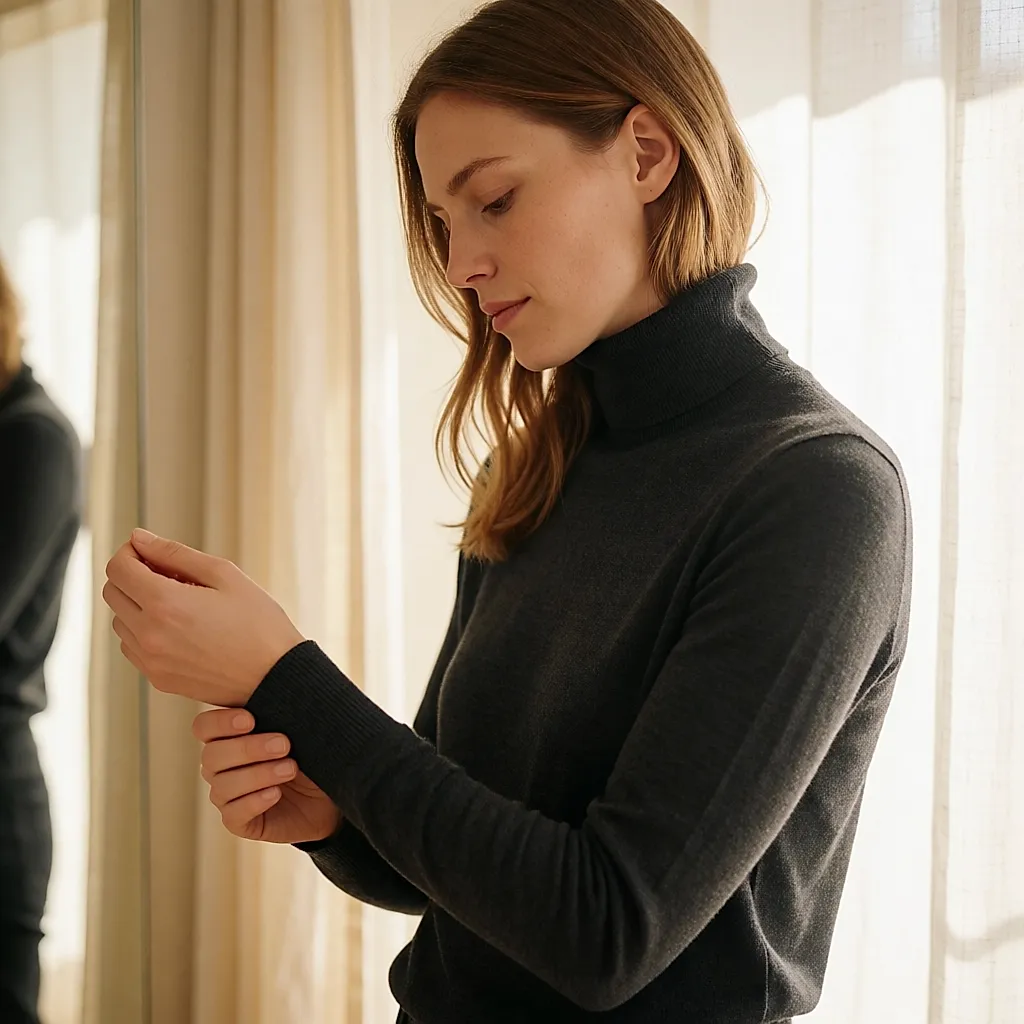
Why does the same style feel heavenly in the changing room and rough the next day? The hand is forgiving; the neck much less so. So rub the collar against your wrist or neck — not your palm, which will always tell you yes.
Acrylic on the label: what to know before you come across it
A cheap 'merino' roll neck often contains some acrylic. It's not just a detail of composition; it changes how the jumper behaves. The blend makes the knit lighter and gives it loft, but it tends to pill, build up static and doesn't handle moisture the way wool does: on a packed train, you feel the difference.
When it comes to care, acrylic dries quickly and washes without drama, but it dislikes a hot iron and often ages less well than wool, which can last for years.
The useful reflex isn't to ban it, but to read the composition before you read the name: the higher the wool content, the more of the qualities you're paying for you actually get.
Three checks in thirty seconds
- The wool percentage, in black and white — not just 'merino' in the product title.
- The micron count, if it is given: below 19.5 microns is a practical benchmark that often favours wearing next to the skin, though it is no guarantee.
- Density: a knit you can stretch without seeing daylight through it will hold up better through the season.
Budget: what you're really paying for
Expect to pay roughly £30–£60 for a fine merino roll neck, often blended, on the high street and in general outdoor ranges. For a 100% merino wool version in an extra-fine yarn, budget more like £70–£150; above £150 you're into very fine yarns and specialist brands. Second-hand, there are genuine finds at £10–£40, provided you check the label and the condition of the elbows.
What makes the price vary? The fineness of the yarn (a 17-micron yarn costs more to produce than a 23-micron one), the wool content, the density of the knit and where you buy it.
A roll neck that doesn't itch isn't just about budget: it's also about reading. At £40, look for density and a minimum wool content; at £120, ask for the percentage and the micron count. And if the label says nothing at all, it often has nothing to say.


Comments
Your opinion matters: rate the article, react and reply to comments.
Comments are moderated; AI-assisted comments are flagged. Text emoticons (8-), :-), <3…) are automatically shown as images.