
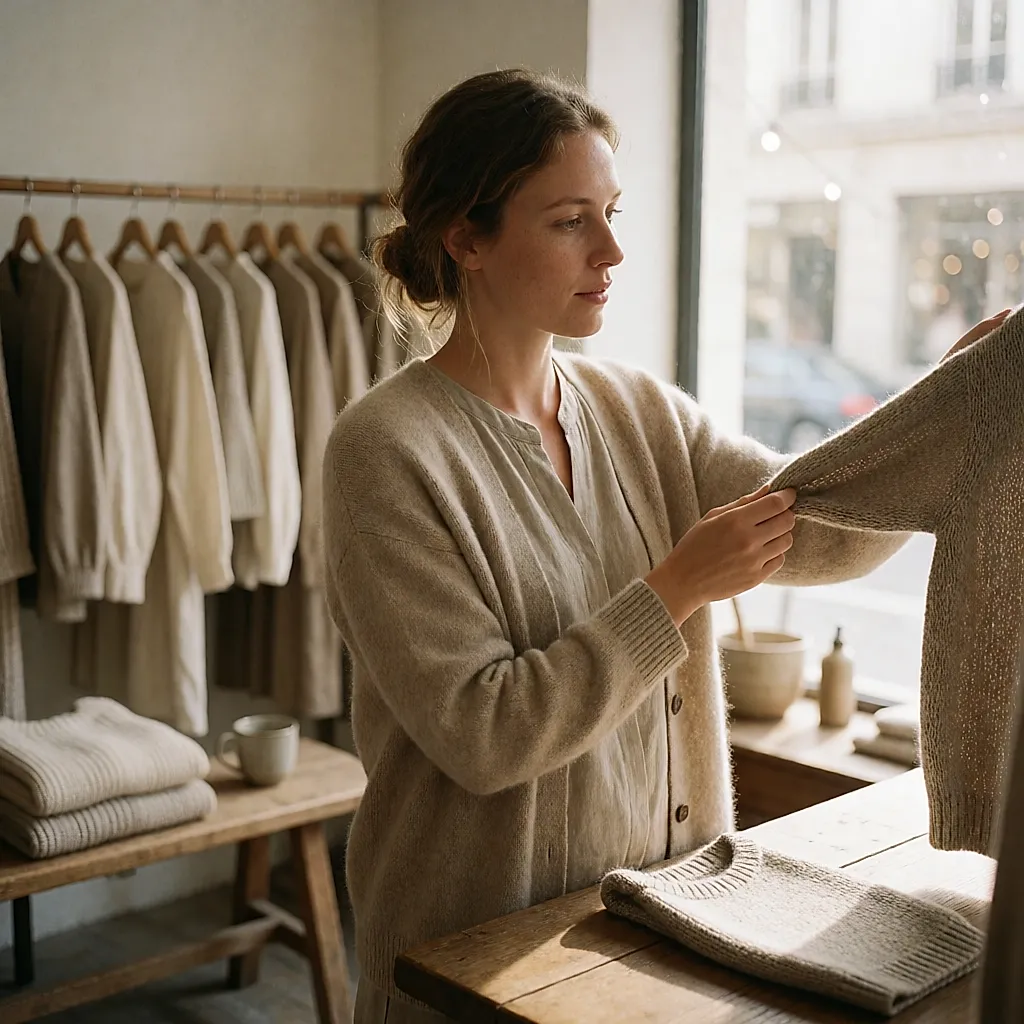
You go in for a pair of straight-leg jeans, a wardrobe basic, a ten-minute errand. You come out with a hem booked for Thursday, two care tips and an invitation to a darning workshop. Nothing in the bag — and yet the distinct feeling of having struck gold.
The till is no longer the only counter
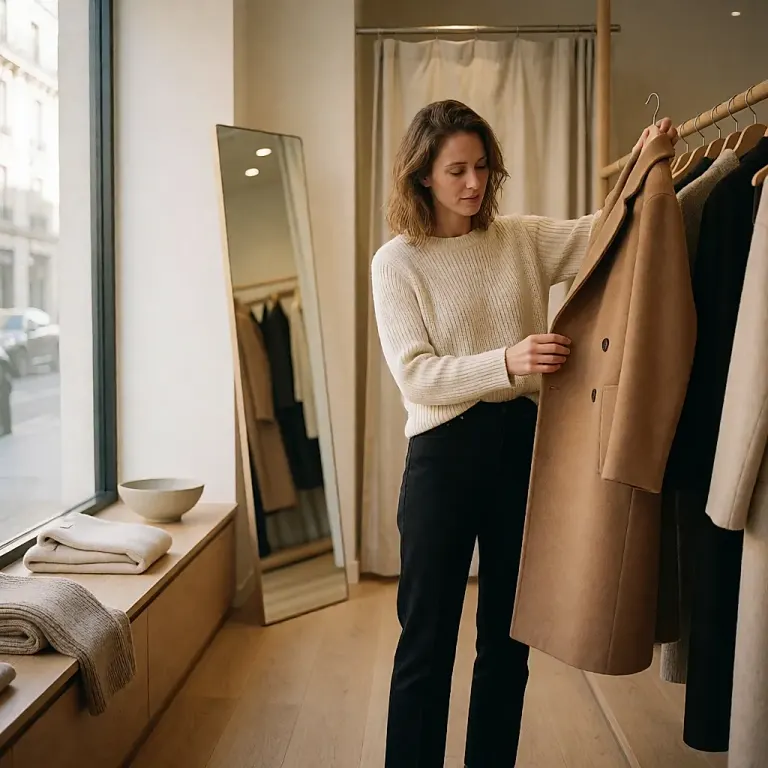
Not long ago, you pushed open a door with one aim: to leave with a bag. The experience now feels more like a visit. You feel the fabric, compare how two pieces fall in the full-length mirror, ask the assistant to call it between a UK 8 and a 10 — and she has time to do it. That slower pace is no longer reserved for the big fashion houses: neighbourhood shops, natural perfume shops and cobblers have set up a corner where you can sit, leaf through something, and wait without guilt. Coming for yourself, before coming to buy.
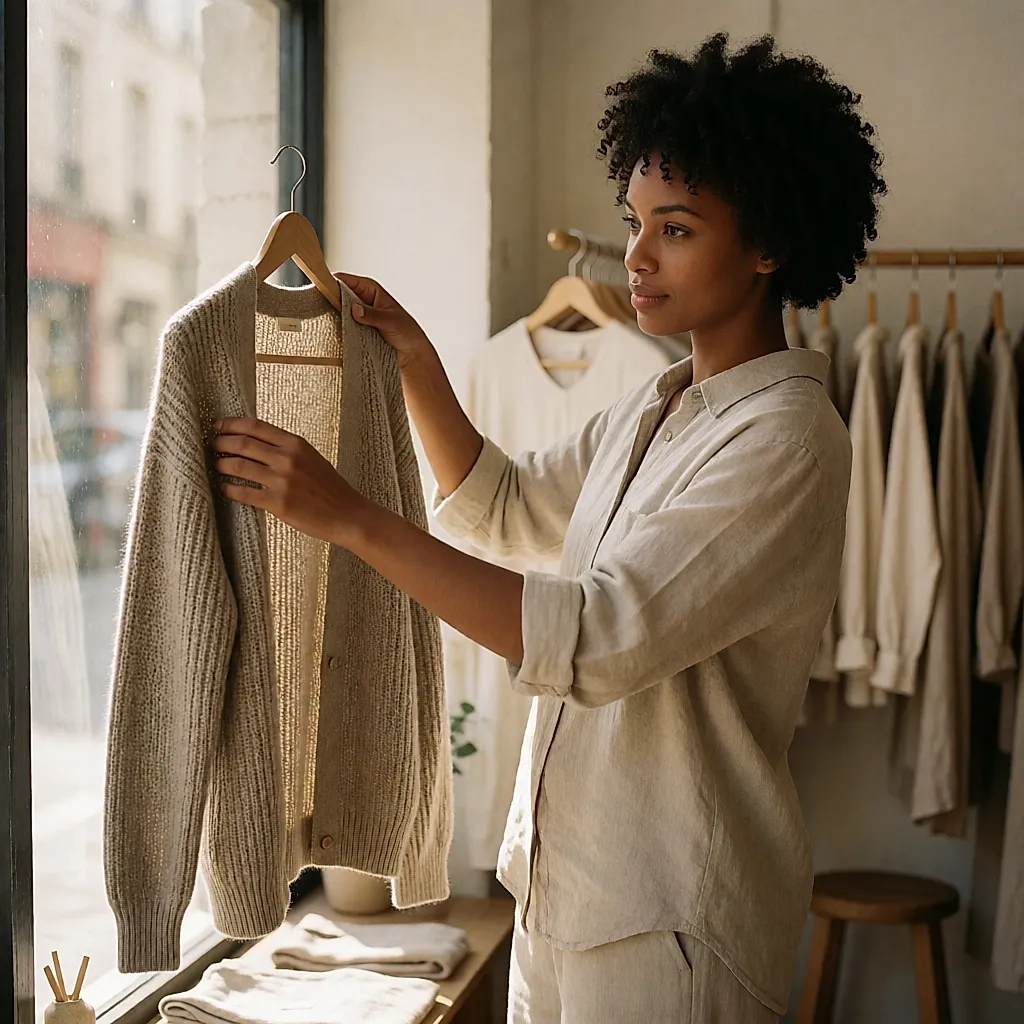
Why this shift? Because we ordered a lot blind, on a screen, between two Tube stops — and returned a lot. The parcel that arrives the day before you leave, the size that forgives less than we do, the fabric that itches once it's on: eventually, we learned. Seeing a seam, folding a jumper, examining it in daylight, is getting information a photo never gives. When building a capsule wardrobe that actually works, that makes a big difference.
Appointments that aren't trying to sell to you
What happens in the best shops comes down to one sentence: service is no longer only about making a purchase, it's about helping you understand. A Saturday darning workshop to rescue the moth-eaten cashmere sleeping at the back of a drawer. A sewing demonstration to see how a hem should hang. A consultation to stop buying the same lipstick three times in the hope that something will change. You leave with know-how, not necessarily with a shopping bag.
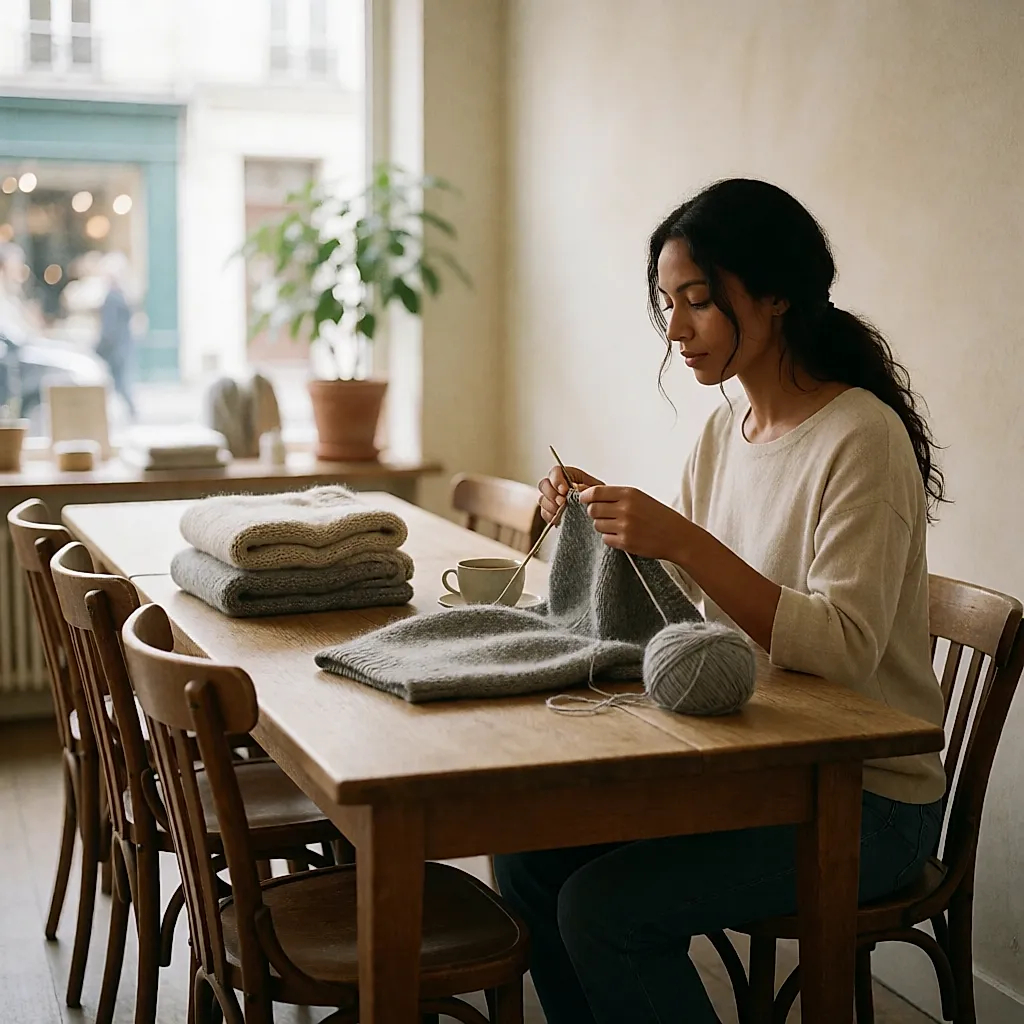
Then there are the group sessions, and this may be the loveliest idea of the lot. A knitting circle, a book club, a shared repair session. You go alone, end up talking to the person next to you, leave with a tip and sometimes a phone number. Retail regains a role it had somewhat forgotten: a place where people cross paths without any obligation to buy. Some beauty shops take it as far as a tea corner and stools, and you soon realise that the main event happens there, not in the aisle.
What this changes in your wardrobe
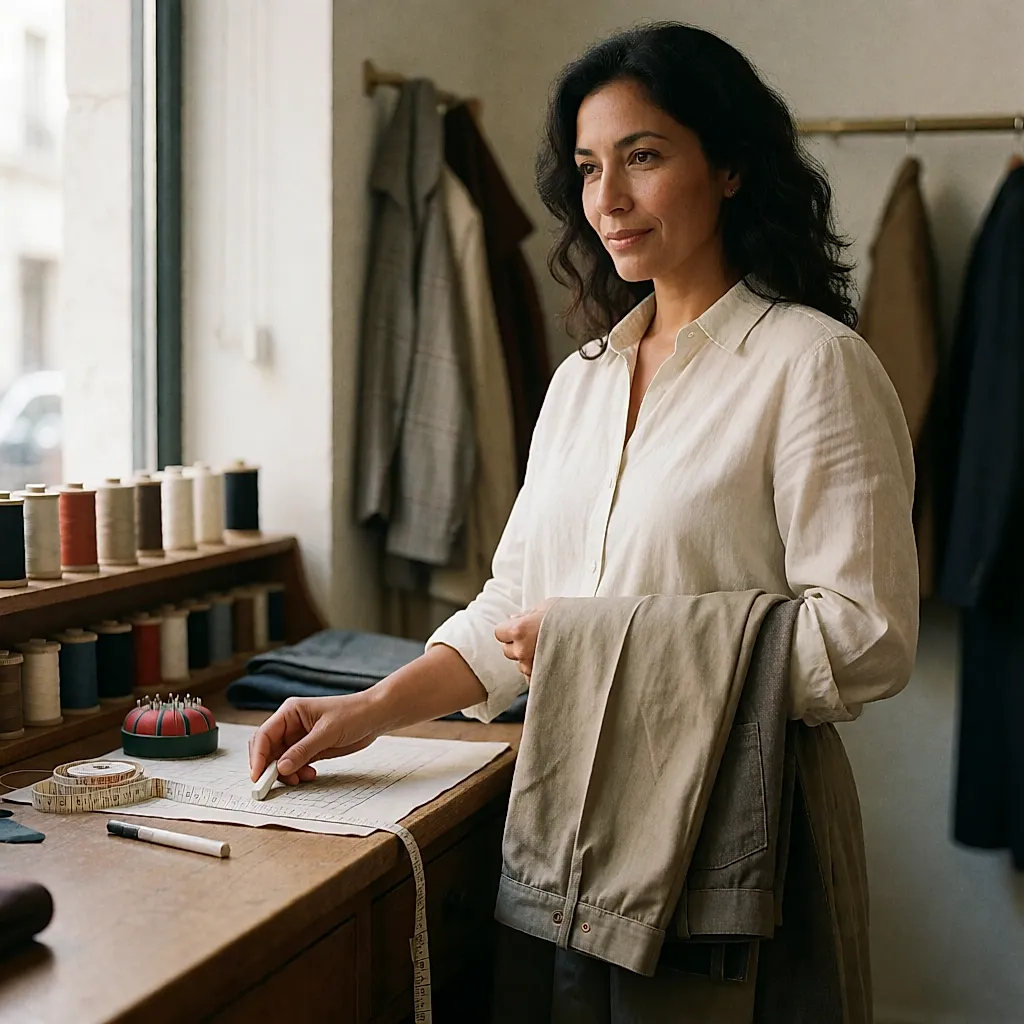
The first time you walk into an alterations workshop, you usually bring something you no longer dare to wear: trousers that are too long, a sleeve that gapes, a temperamental zip. It's the best test there is. Repairing before replacing isn't a pose, it's plain economics — and the quickest way to bring three pieces back into rotation in your wardrobe.
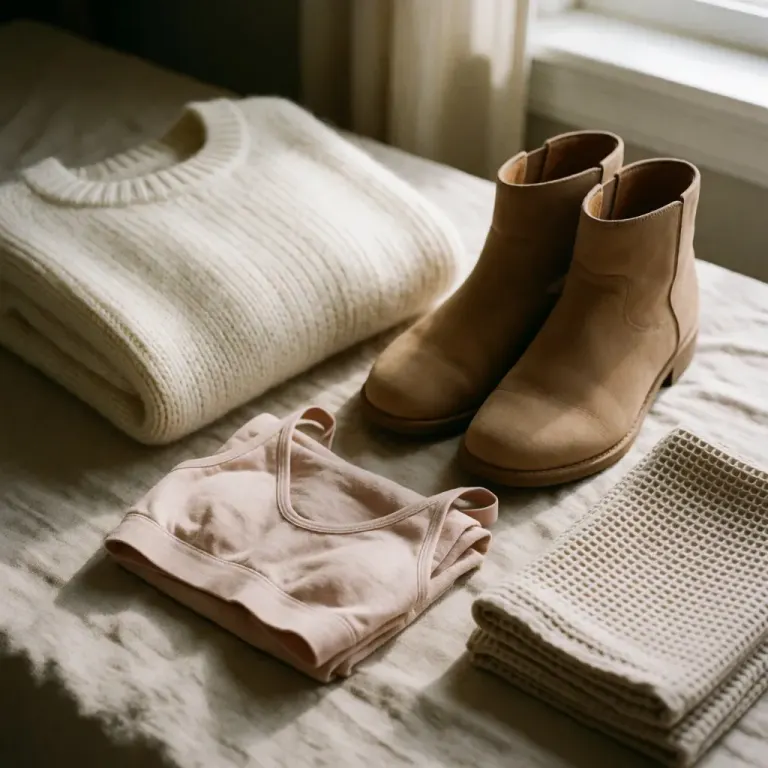
Use the space to do what you never do at home: layer two pieces in front of the mirror, try layering with the shirt you walked in wearing, watch how the piece moves when you take a couple of steps. And take a look at the label. A wool that drapes well, an organic cotton that holds its shape, a linen with natural movement: many natural-fibre pieces are well suited to alteration or repair, but it depends on the fibre, the weave and the condition of the piece. A quick look at the composition is enough — how it holds up over time also depends on the exact fibre, the weave and how you care for it.
Three questions to ask on the way in, without making it feel like an exam — Can this piece be altered, and at what cost? Is there a workshop or repair service linked to the shop? And what exactly is it made of? The answers will often tell you more than the whole window display.
What these appointments really cost
When it comes to prices, it all depends on where and when. A workshop attached to a purchase is very often free; a session open to everyone is usually around £20 to £50, more when it runs for several hours with materials provided. Consultations are often free if you book, but some shops charge, sometimes deducting the fee from a later purchase.
For alterations, budget around £10 to £20 for a simple hem and £15 to £40 for something more involved, such as taking something in or repairing a lining. The city, the fabric and the local expertise can make the price vary by as much as double. At community repair workshops, entry is free or pay-what-you-can depending on the venue: ask locally, because that's often where the best value is.
Deep down, what we come to a shop for may never have been a garment. We come for honest advice, a technique to learn, an hour to ourselves in a week that rarely allows for them. We come wanting to buy less and choose better — to empty the returns boxes a little and fill the wardrobe a little more with pieces we truly love. The rest — the till, the fitting rooms, the flawless head-to-toe look — is just scenery. And that makes you want to push open the door more often.

Comments
Your opinion matters: rate the article, react and reply to comments.
Comments are moderated; AI-assisted comments are flagged. Text emoticons (8-), :-), <3…) are automatically shown as images.