
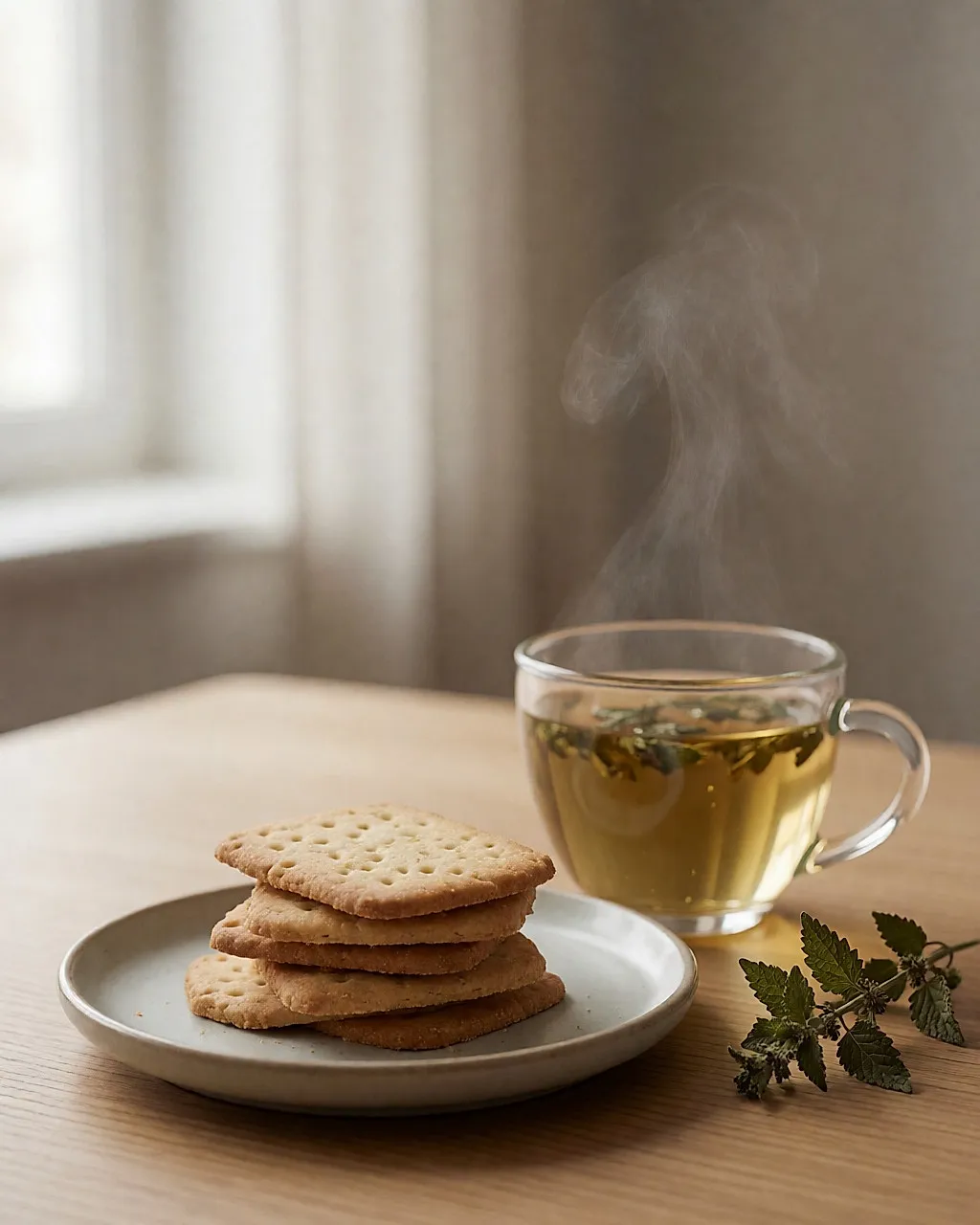
Three biscuits at snack time and anxiety disappears? That was the promise made in the mid-2000s by a French brand of diet pastries. Twenty years on, the idea deserves a calm look, because in this kind of aisle, not everything is equal. We looked at what was really on the plate.
What Naolia offered
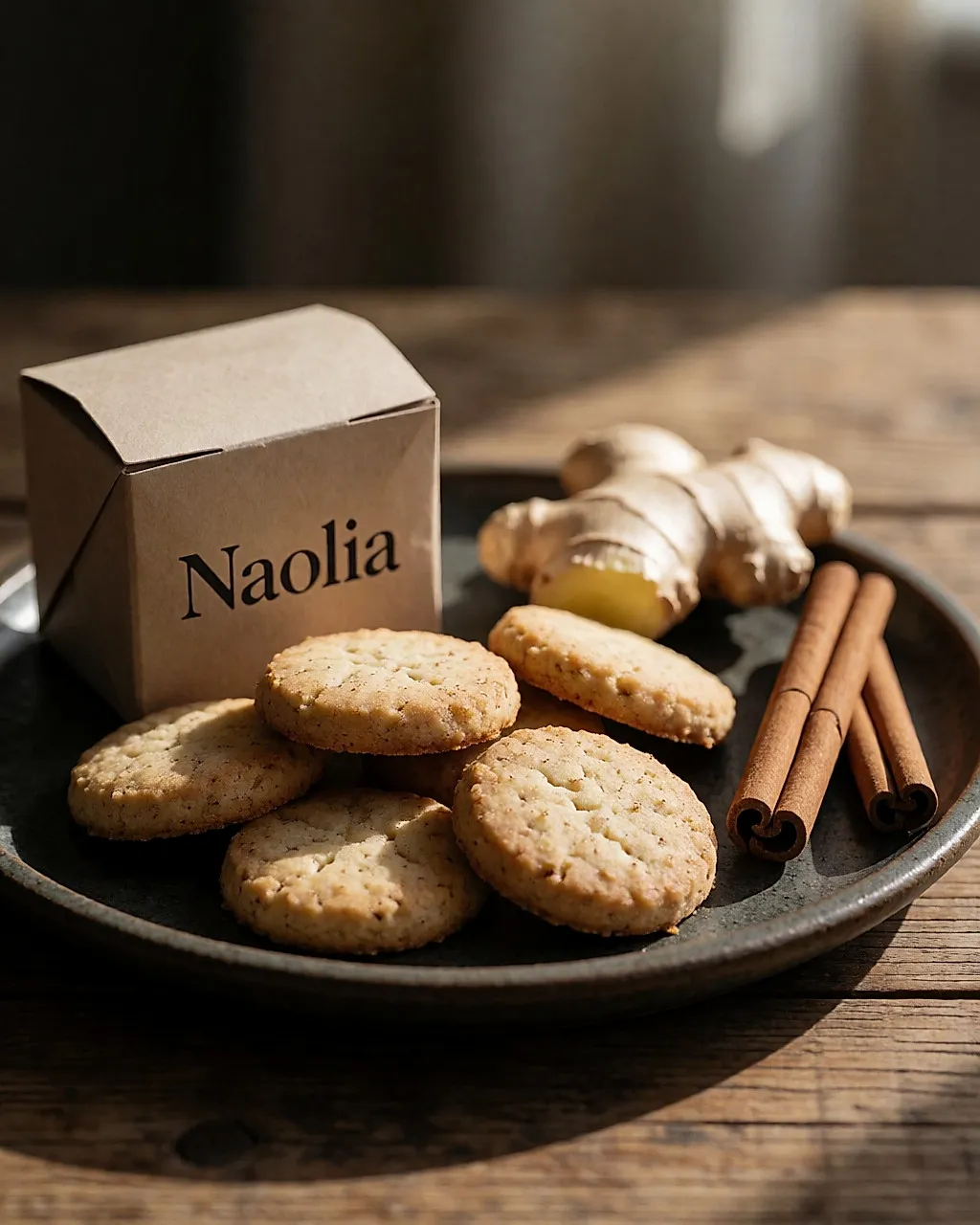
Launched in 2006 by Bénédicte Moulin, a nutritionist and diet-product developer, the brand focused on cakes lower in fat, high in fibre and enriched with plant extracts. Three ranges, three intentions: Zeste Zen and its lemon balm for relaxation, Tonus épicé and its guarana for a boost, Fleur éternelle and its green tea for antioxidants. On flavour, the catalogue went around the world: rose and green tea, cocoa and ginger, lemon and liquorice, mandarin and orange blossom. The whole lot was designed, made and packaged in the Rhône-Alpes region — no less.
The stated ambition: to position itself as an alternative to food supplements without leaving the realm of pleasure. That is the equation to examine closely, ingredient by ingredient. And if you are thinking first about your waistline, remember that a snack is not a catwalk piece: it is an everyday staple, and it needs to hold its place without being asked to change everything.
Lemon balm: traditional use, not proof
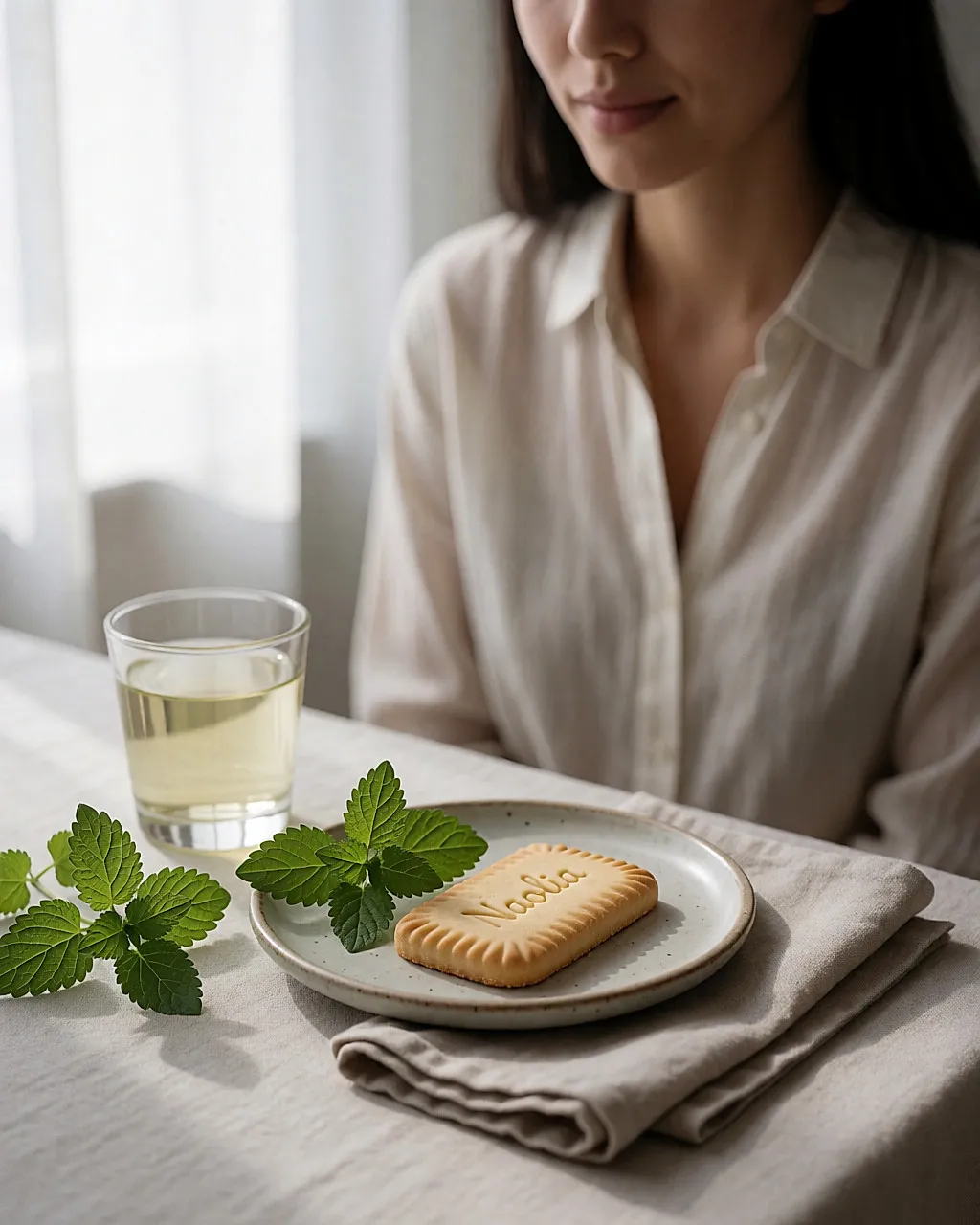
There is an official framework here. The European Medicines Agency monograph recognises the traditional use of lemon balm leaf (Melissa officinalis) to relieve mild symptoms of mental stress and to aid sleep. Traditional means long documented use, not demonstration in robust clinical trials. Current data suggest a real but modest effect, which varies from person to person.
Then there is the question of the delivery format. A biscuit is flour, sugar and a texture that invites another; an infusion carries the plant extract without that baggage. For an evening ritual, one is more restrained than the other — the same logic as a well-chosen outfit: a simple fabric that hangs well beats piling on effects.
Guarana: a question of caffeine
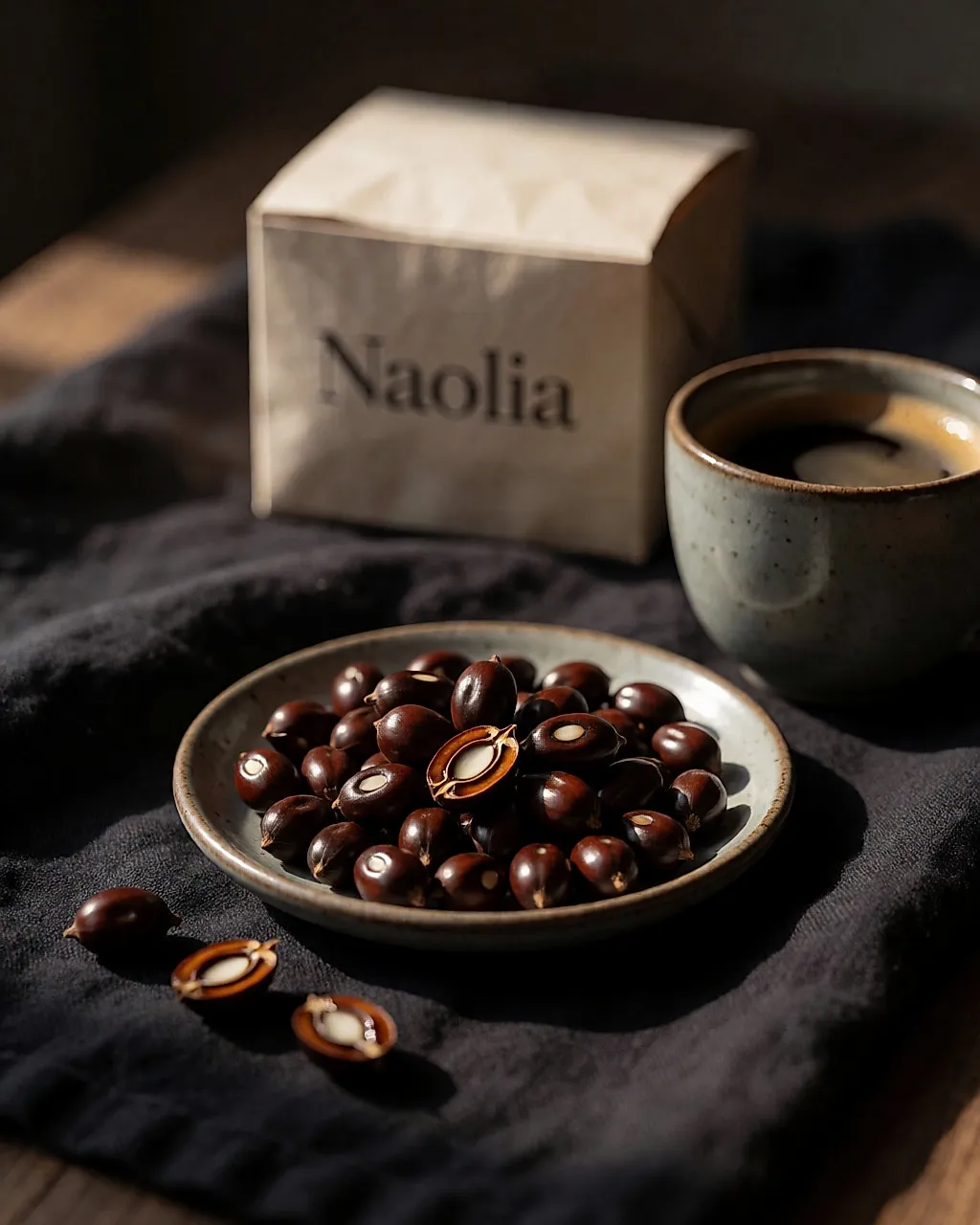
Guarana is a seed rich in caffeine. The useful threshold is known: from 75 mg per serving, caffeine contributes to improved alertness and concentration, and this is an authorised claim in Europe. The Tonus épicé range relied on guarana and its caffeine. Hence the advice to enjoy these cakes earlier in the day: late caffeine delays falling asleep.
In practice, keep one figure in mind. The European Food Safety Authority puts the safe limit at around 400 mg of caffeine a day for a healthy adult, and half that during pregnancy. Coffee, tea, fizzy drinks and energy snacks add up quickly over a day.
Green tea and the anti-ageing promise
This is the weakest point. Green tea polyphenols are indeed antioxidants, but no authorised health claim in Europe links green tea to reduced skin ageing. What is regulated is narrower: vitamin E contributes to protecting cells from oxidative stress, which is not the same promise as 'keeping skin young'. So the presence of an antioxidant in a food guarantees neither an effect on your complexion nor on your waistline.
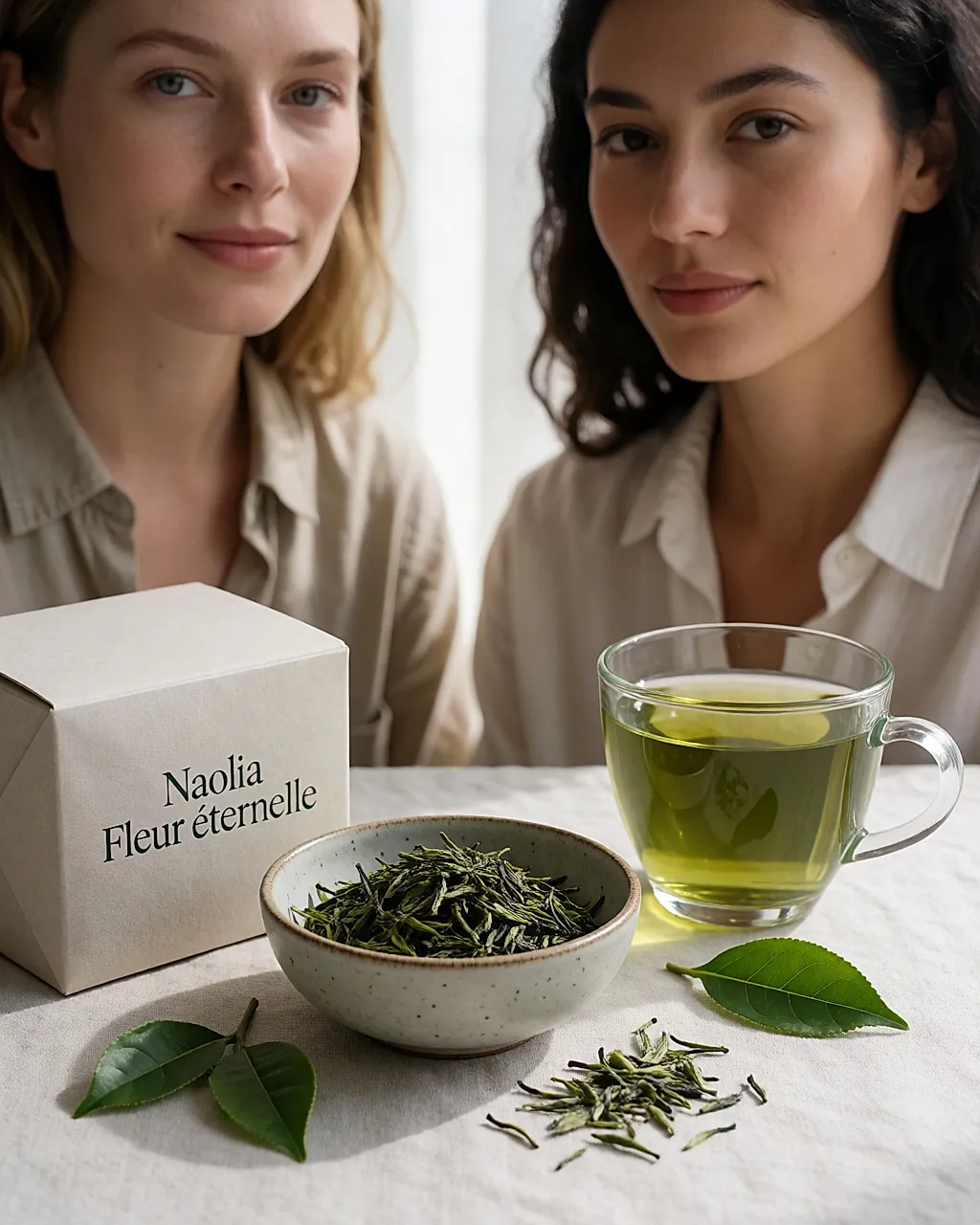
What to have instead of these cakes?
Whether the brand is still active or not, the real question in 2026 is the habit: a pause that breaks up the day, a snack on the go. Three simple options, ideally organic and with minimal packaging.
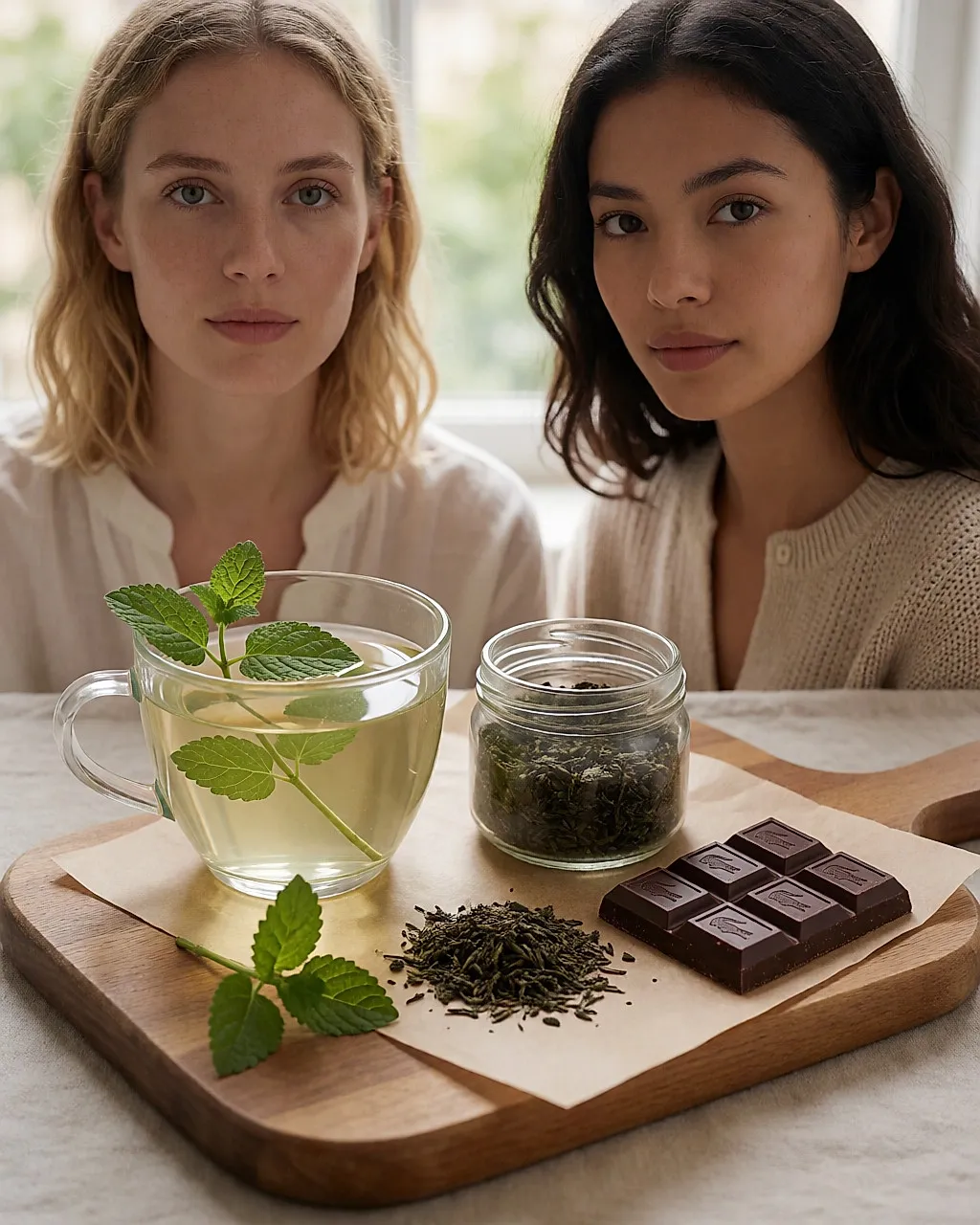
An organic lemon balm infusion, loose or in tea bags. The French AB label — or an equivalent UK organic certification such as the Soil Association — guarantees a set of rules checked by a certification body; a cardboard box and unbleached paper tea bags can be composted at home, with no individual plastic wrappers.
Organic loose-leaf green tea rather than tea bags: less packaging, and you control the dose. An honest compromise: green tea contains caffeine, so avoid it after 3pm if you are sensitive.
A square of organic 70% dark chocolate after a meal. It is pleasure without the promise: it does not treat anything, but it is easy to enjoy late in the evening.
None of these products replaces treatment for insomnia. And if weight loss is on your mind, professional support is better than a biscuit aisle.
Budget
- Organic lemon balm infusion: expect to pay around £3 to £6 for 20 tea bags, and £6 to £12 for 100 g loose (health food shops, refill stores, supermarkets).
- Organic loose-leaf green tea: £8 to £20 for 100 g depending on origin, harvest and farming method (specialist shops, refill stores, online).
- Organic 70% dark chocolate: £2 to £5 for a 100 g bar.
- What moves the price: buying loose, which is cheaper per kilo; organic certification; origin and freshness of the harvest.
Stress and insomnia are not treated with a biscuit. If you have been sleeping badly for more than three weeks, if tiredness is spilling into your days, or if anxiety is stopping you functioning, speak to a healthcare professional: your GP, a psychologist or a midwife. A snack can accompany a ritual; it should never replace proper care.
Sources
- European Medicines Agency (EMA), community monograph on lemon balm leaf, traditional use.
- Regulation (EU) No 432/2012, list of authorised health claims (caffeine, vitamin E).
- European Food Safety Authority (EFSA), scientific opinion on the safety of caffeine, 2015.
- French National Institute of Sleep and Vigilance (INSV), sleep hygiene recommendations; NHS sleep and tiredness guidance for UK readers.
Food supplements do not replace a varied, balanced diet and a healthy lifestyle.



Comments
Your opinion matters: rate the article, react and reply to comments.
Comments are moderated; AI-assisted comments are flagged. Text emoticons (8-), :-), <3…) are automatically shown as images.