
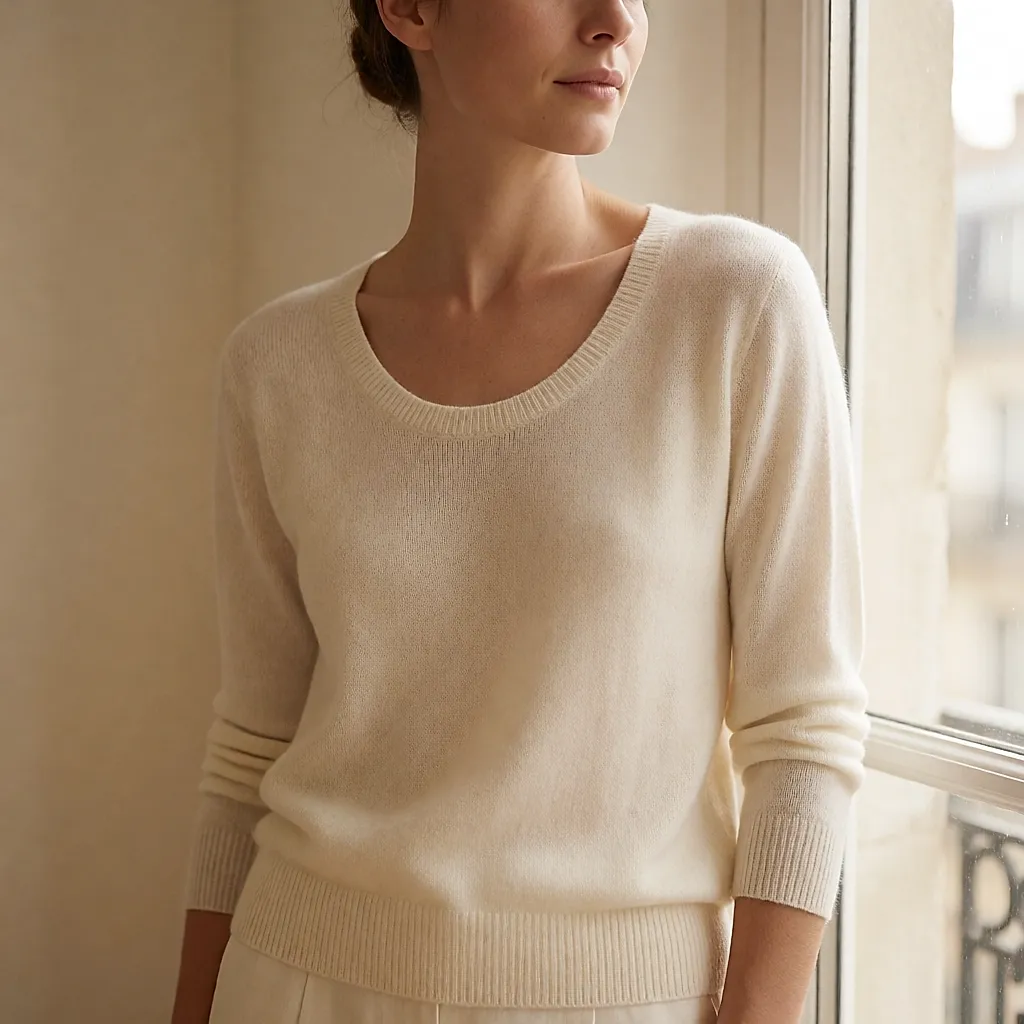
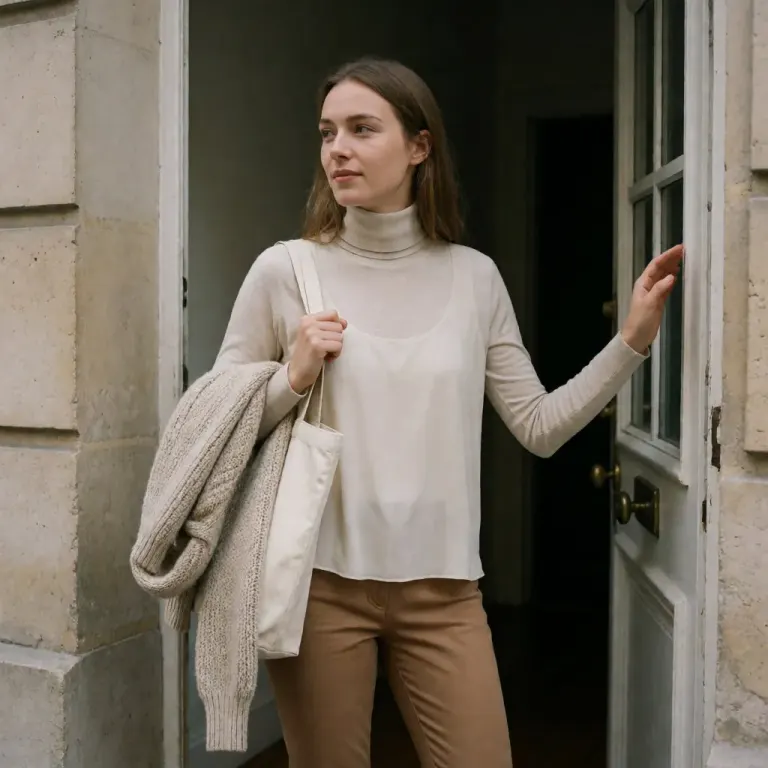
The roll-neck has a rare talent for making an entrance: it arrives in October, gives you a touch of Parisian-novel heroine, and keeps all its promises until the first overheated office. By 2pm, you roll it up, twist it, and seriously consider turning it into a scarf. This season, another knit is quietly gaining ground: the scoop-neck jumper, the one that lets your collarbone breathe — and lets the person wearing it breathe too.
An opening, not a hole
Scooped does not mean plunging. The opening sits a few centimetres below the base of the neck, either rounded or as a softened V, with a hemmed edge that follows the curve. A well-placed scoop neckline stops before the sternum and stays neat when you lean over to grab your bag. Too high and it is no different from a roll-neck; too low and you have to add a layer underneath, losing the whole point.
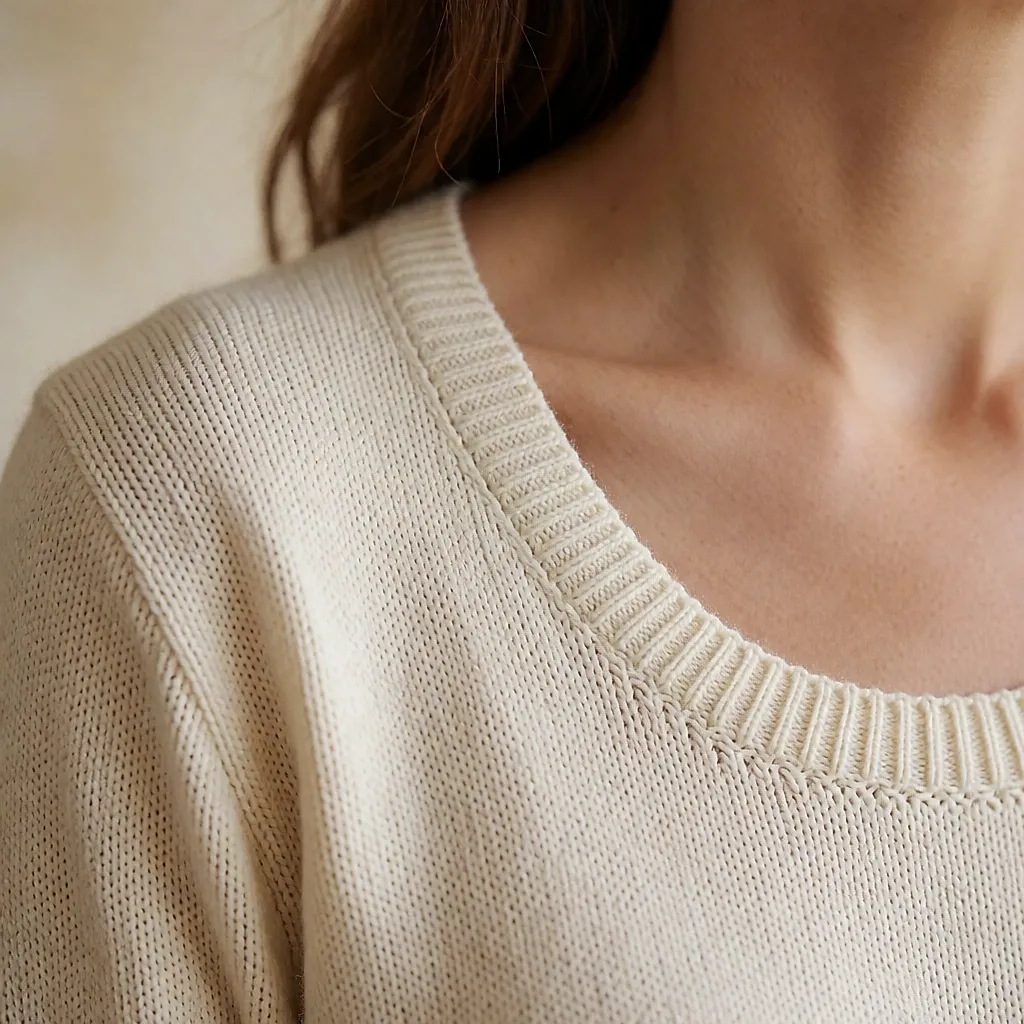
The second thing, easily forgotten in the fitting room: knit density. A tight knit, almost dry to the touch, holds the neckline edge and keeps the line straight; a spongy knit tends to sag with wear and the opening gapes. Also look at how it sits on the shoulder: a set-in seam structures the silhouette; a dropped shoulder seam gives that nonchalant look you want with jeans, but it drags down narrow shoulders.
What the roll-neck loses, what the open neckline gains
Do not write off the roll-neck just yet: in a strong wind it is unbeatable, stands in for a scarf and cuts through the biting cold. Its problem lies elsewhere, in daily life: it has no settings. On an overheated train or in a warm open-plan office, you just have to put up with it. With a scoop neck, you manage the temperature from underneath: a fine T-shirt, a silk camisole, an open shirt, or nothing at all when it is mild.

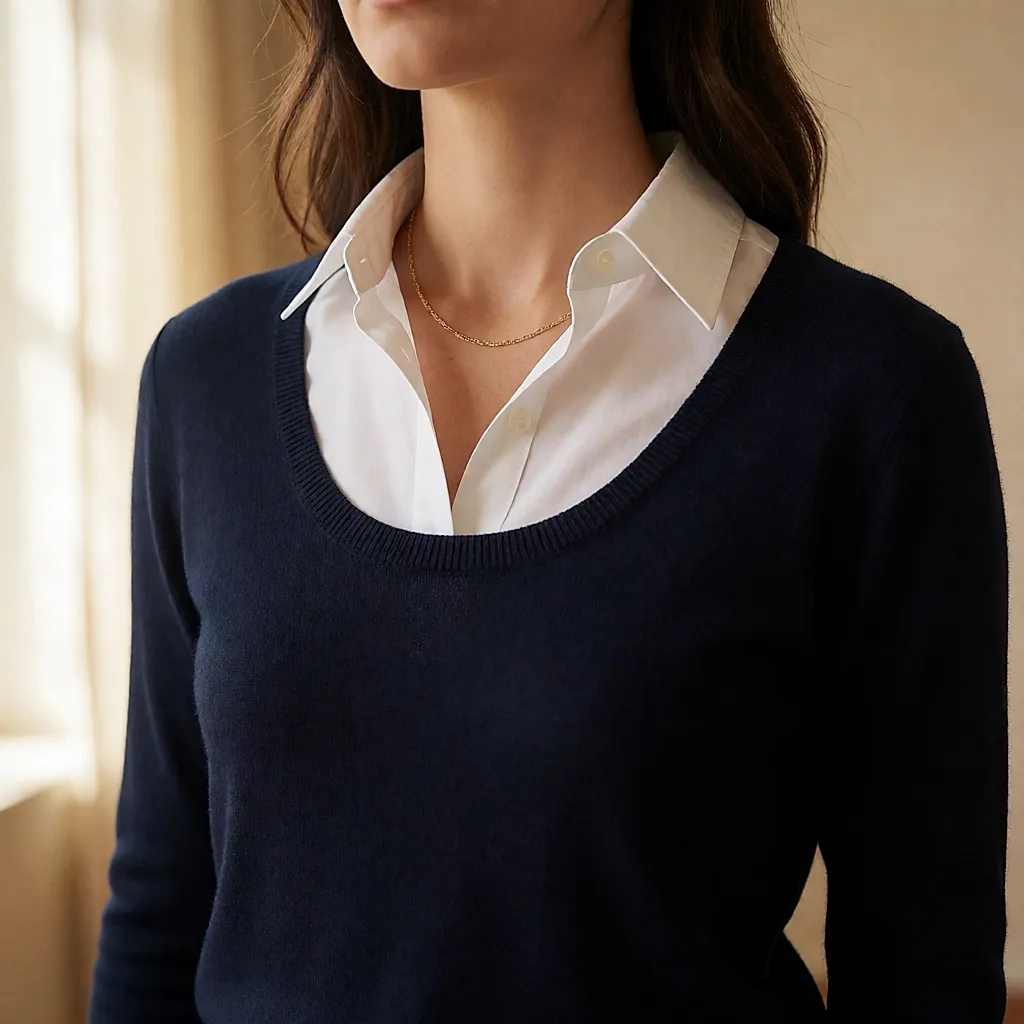
Then comes layering, and that is where the contest is over. A roll-neck and a shirt collar do not mix: two collars quickly fight over the same square centimetre. A scoop neck, by contrast, lets the collar through, frames a fine chain and breathes. On body shape, a moderate V elongates the torso and suits almost everyone; if you have broad shoulders or a fuller bust, choose a narrow rounded neckline rather than a wide V, which will widen the shoulder line further.
How to layer without looking like a pastry stack
The formula is three layers maximum. Underneath, a poplin or oxford shirt with the collar open by one or two buttons: it should show above the scoop neck by a few centimetres, no more. A white crew-neck T-shirt also works, as long as it is fine; a thick jersey and you are in ski-wear. A silk camisole, more discreet, rescues slightly deep necklines without adding bulk.
On top, anything with a lapel or collar: blazer, trench coat, leather jacket. The contrast between soft knit and a structured shoulder does the work for you. In the evening, wear it solo in a head-to-toe look with high-waisted trousers and a short necklace that falls right into the opening. Sleeves pushed up slightly, a watch, and you are done.
The fabrics that keep their promise
Look first for extra-fine merino: the yarn is soft on the skin, holds its shape and does not itch, even on a bare neck. Recycled wool offers an interesting compromise, often a little more rustic to the touch but very good in a tight knit. Cashmere, meanwhile, ticks the softness box, though it is very much a budget decision; it bobbles faster in lightweight qualities, which is annoying right on a neckline you want to stay neat.
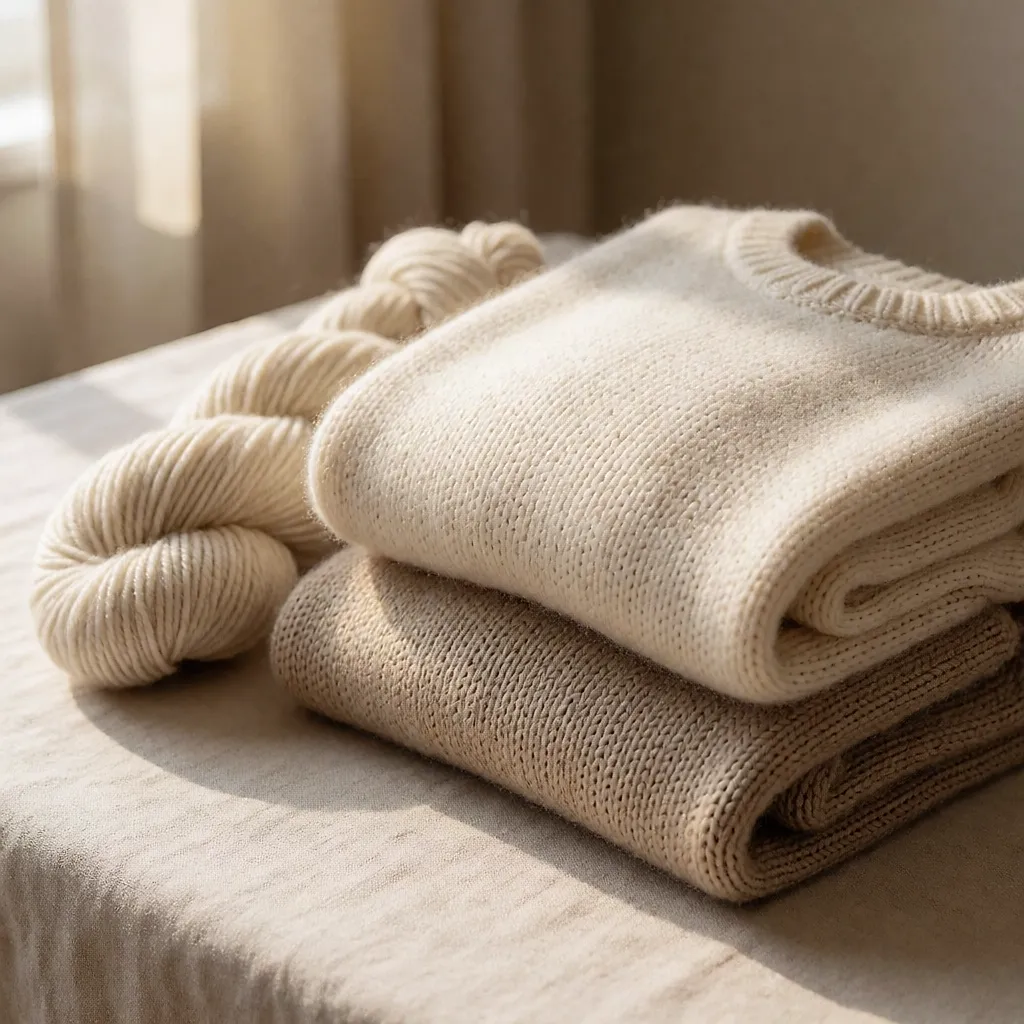
One habit before you get to the till: read the label. A touch of polyamide or elastane helps the knit spring back into shape, but when the synthetic content becomes clearly dominant, the piece can look shiny, bobble or feel clammy depending on the fibre and construction. A good knit lasts for years if you wash it rarely, cold, flat, and remove bobbles with a comb rather than by hand. Before buying new, a trip to a charity shop or a resale platform can turn up good wool finds.
Budget
For a decent merino, expect around £30 to £60 on the high street, £80 to £150 at brands that work with wool all year round, and more like £150 to £300 for cashmere. Second-hand, you can find beautiful knitwear for £10 to £40, provided you are happy to remove a few bobbles. Better a £90 piece worn for three winters than a £25 jumper that ends up as a rag.
What pushes the price up? The fineness of the yarn, where the wool comes from, where it is made, and the finish on the edges. On a tight budget, choose a fine, well-cut merino rather than a fluffy cashmere that will lose its shape on the first wash. As for shops, Uniqlo and M&S have made knitwear a serious category, worth checking in store and online.
In the fitting room, do three moves: raise your arms as if you are reaching for a suitcase, sit down, cross your arms. If the neckline gapes, plunges or turns into a scarf, put it back, no guilt.
The real question remains: should you replace your roll-necks? No. Add a scoop-neck, keep the others for January, and you will see which one you reach for most. It is the kind of piece that slips under a jacket on Monday, over jeans on Sunday, and never asks for effort. Fashion should always be this simple.

Comments
Your opinion matters: rate the article, react and reply to comments.
Comments are moderated; AI-assisted comments are flagged. Text emoticons (8-), :-), <3…) are automatically shown as images.