

Autumn: the fabrics that keep you warm without weighing you down
Tuesday, 7.40am, bus stop. Nine degrees, drizzle, and a forecast promising 21°C by the afternoon. You pulled on your cosy chunky jumper by reflex, and by 2pm it ends up over your arm — you feel hot just looking at it. We've all been there, haven't we?
The real issue isn't the cold. It's the gap between morning and afternoon, the way autumn changes its mind three times a day. And the answer isn't to grit your teeth under a coat that's too heavy: it's in what you wear underneath, in the choice of fabrics and the order of your layers.
Staying warm isn't about piling on volume
What insulates isn't the material itself, it's the air it traps. A tight, dense knit keeps you less warm than a brushed fabric that holds a layer of air between its fibres. That's the whole paradox of layering: we think we need to add weight, when what we need to add is texture.

In reality, we often layer in the wrong order. A thick cotton layer against the skin, then a jumper, then a coat: cotton holds moisture, you sweat on the bus, and the cold sets in as soon as you slow down. The move that changes everything is to start with a fine moisture-wicking layer and finish with a wind-blocking one. Nothing complicated, just an order worth remembering.
The fabrics that keep you warm without turning you into a bundle
Fine merino wool. Warm, breathable, and it doesn't itch when the fibre is good quality. It's an ideal wardrobe basic as a first layer, as a T-shirt or camisole — thin enough to disappear under a roll-neck without adding bulk at the neckline. A good pick, too, for days in overheated indoor spaces, where you quickly regret a heavy knit.
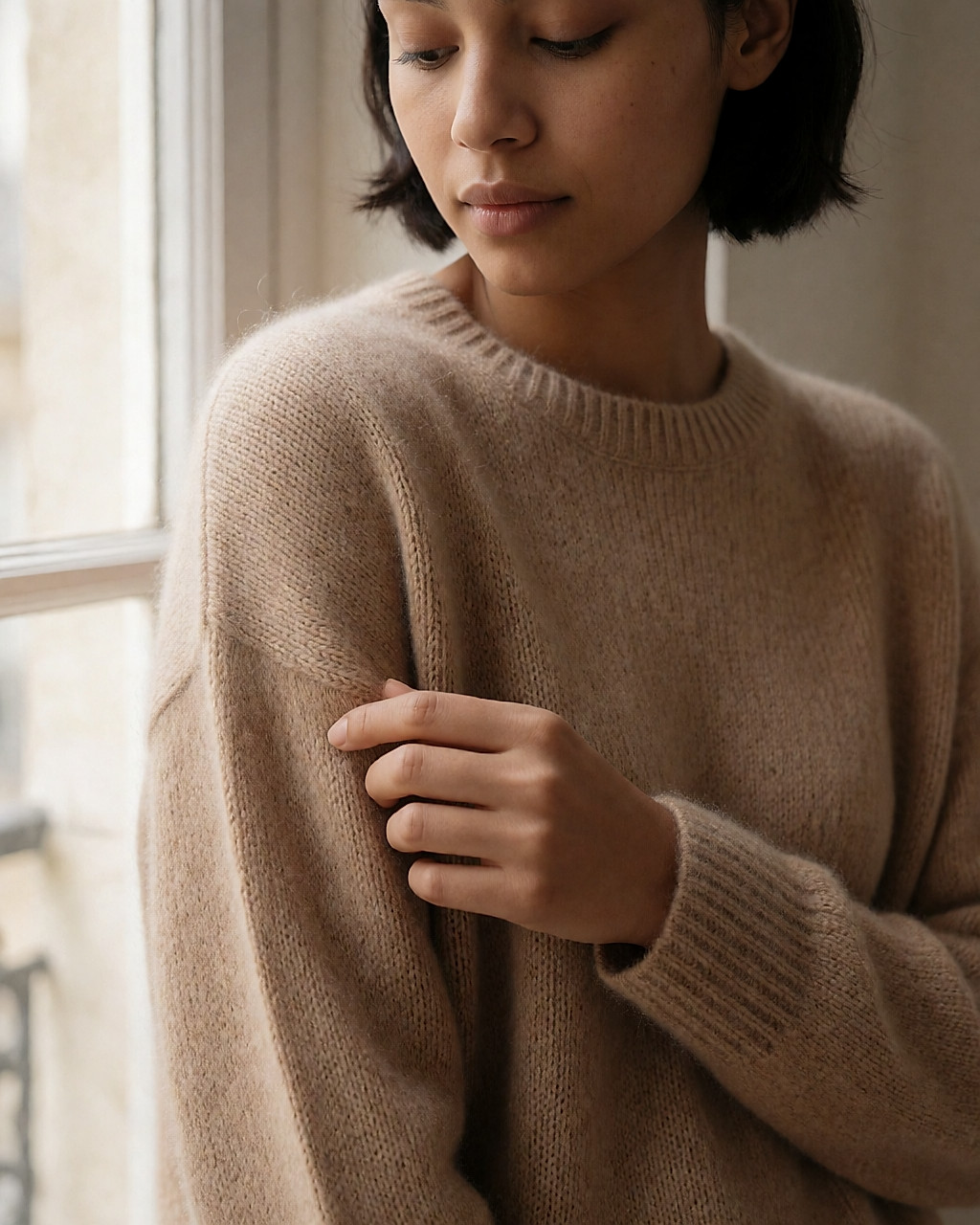
Alpaca and cashmere. Very warm for a tiny weight. A fine, insulating knit can sometimes be enough without piling on cotton layers, and the drape stays soft instead of stiffening the silhouette. The trade-off: the price, and the care (hand wash or wool cycle, dry flat). This is the kind of piece you keep for years if you look after it — for a capsule wardrobe, the investment stands up.
Technical fleece. Light, quick-drying, perfect as a mid-layer on damp days. Less elegant worn on its own, but brilliant as an under-layer!
Fluid fabrics — viscose, Tencel, silk. They won't keep you warm on their own, but they prevent that padded, stuffed look under a knit. This is the piece that slips between two layers and rescues a slightly heavy look.
Layering, layer by layer
Beyond three layers, layering often becomes less practical to regulate.

The base, fine and moisture-wicking: merino, Tencel, or light cotton if you don't sweat much. Then the insulating layer, the knit: wool, alpaca, fleece. Then the outer layer, a windproof or thin waterproof shell, which protects from rain without adding heat — this is often the piece you allow yourself to choose a little statement, with a clean cut, because it's the one people see most.
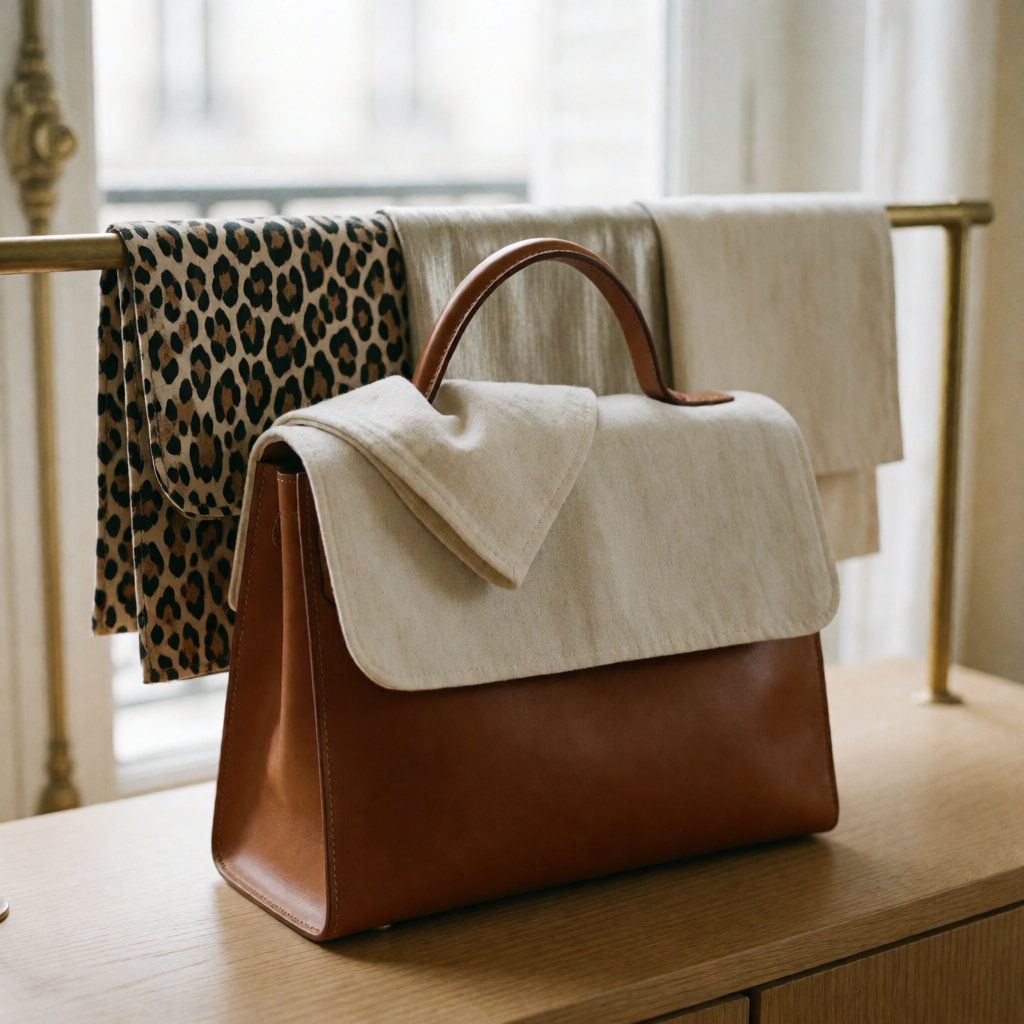
The texture trick that works every time: mix a matte, thick knit with a fluid, satin piece. The contrast of fabrics breaks the 'chunky jumper on chunky jumper' effect and instantly makes an all-autumn look more polished. We love this kind of detail that costs nothing and changes absolutely everything.
When the weather can't decide between rain and bright sunshine
On those days, the strategy is like a travel capsule wardrobe: a light base, an insulating layer that's easy to remove, and a waterproof but breathable outer layer. Avoid non-breathable 100% polyester: it makes you sweat, and you feel cold as soon as you take it off.

One detail that matters, though it's more about impression than a rule: in showers, how colours read depends mainly on the fabric, its finish and the light — it's up to you to see what feels right.
The arms-raised test. Put on your full layered outfit and raise your arms. If the knit rides up to your belly button, the layer underneath is too thick or too short — you'll be tugging at it all day.
Budget
Prices vary widely depending on the material, fibre quality, brand and where you shop. Here are rough UK price ranges. On the second-hand market, you can sometimes find real bargains on good-quality pieces that last several winters.
Merino T-shirt or camisole: roughly £20 to £60. Outdoor retailers, outdoor brands, or second-hand for about half.
Merino wool jumper: £35 to £100 depending on fineness and range. Second-hand, £15 to £35.
Cashmere or alpaca jumper: £70 to £260; prices rise quickly with fibre quality.
Fleece mid-layer: £18 to £50, often cheaper at end of season.
Windproof or thin waterproof jacket: £45 to £170. Breathable styles cost more, but you'll wear them for longer.
Accessories (hat, scarf, gloves): £10 to £45 each.
Where to find them: outdoor specialists, brand websites, high-street fashion stores — and above all second-hand (charity shops, vintage shops, online resale platforms) for wool and cashmere, where you can find real bargains. A low-priced heathered alpaca jumper is often the best find of the season.
Sources
- ADEME — Sustainable fashion: choosing your clothes better, consulted in October 2026.
- Merino Wool — Woolmark: merino fibre and its properties, consulted in October 2026.


Comments
Your opinion matters: rate the article, react and reply to comments.
Comments are moderated; AI-assisted comments are flagged. Text emoticons (8-), :-), <3…) are automatically shown as images.