

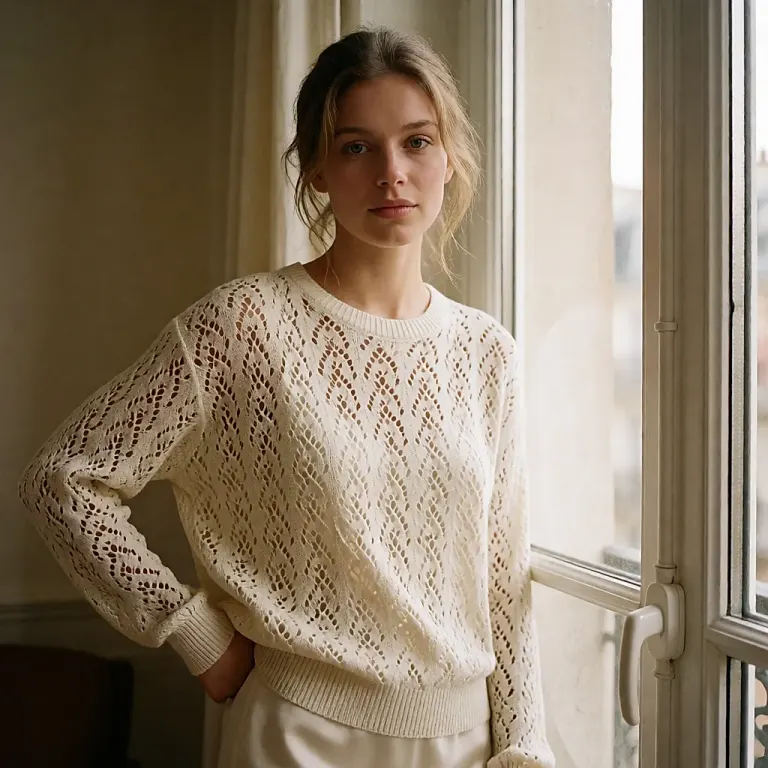
It's 7.42am, you pull on the fine jumper that was supposed to make everything simpler under your coat — and one armhole seam single-handedly ruins your morning. You won't see that detail in a photo, but you feel it the moment you put it on. Seamless knitwear, by contrast, is knitted from a single yarn, from the hem up through the sleeves: nothing to attach, nothing to assemble, and nothing that reminds you it's there every three minutes.
One yarn, from neck to hem
A standard jumper is a construction project: a back, two front panels, two sleeves, knitted flat, cut, then joined. Every join creates a seam; every cut leaves waste. So-called seamless knitwear — whole-garment knitting — flips the order: the machine knits the garment in one go, forming stitches where they're needed, shoulder included. The yarn travels from one edge to the other without going near the cutting table. The promise is twofold: less manufacturing waste, and fewer places where the yarn is stressed until it gives.
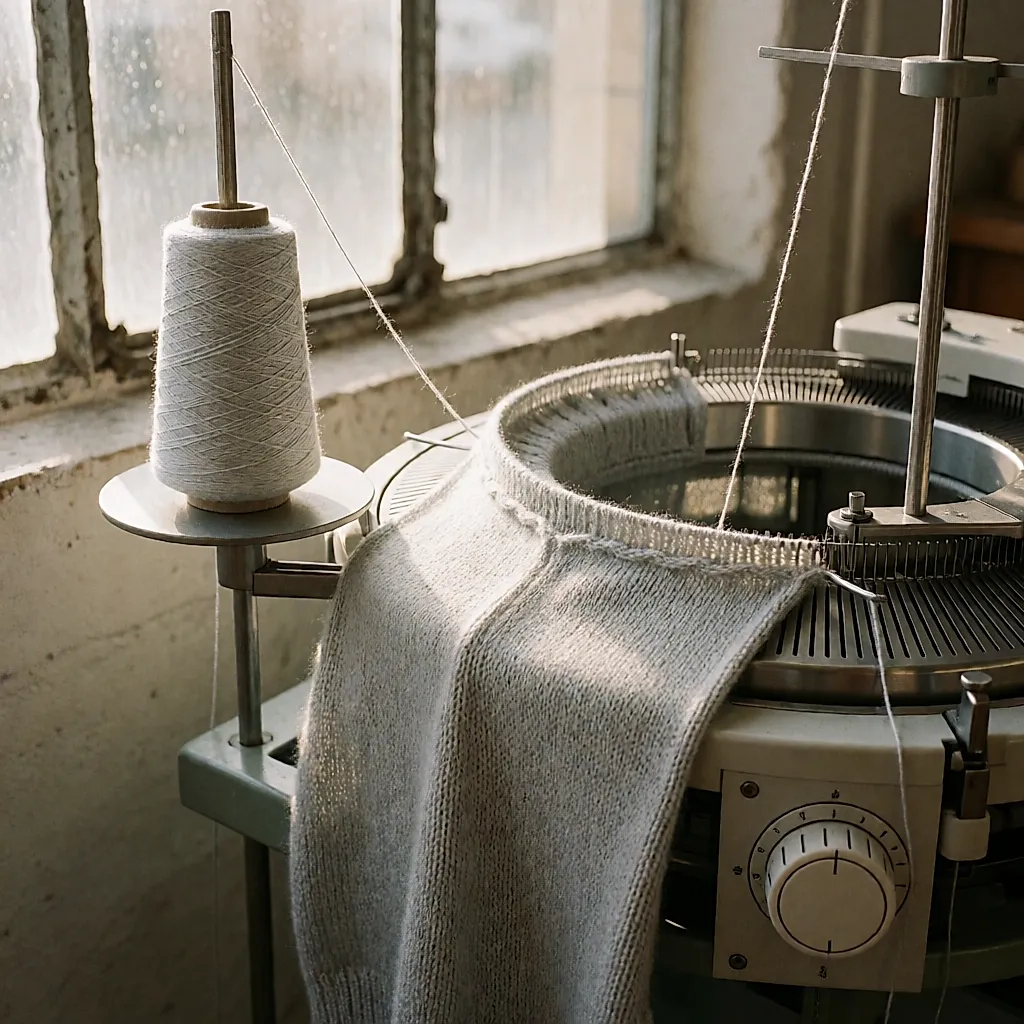
A caveat, because there always is one: 'seamless' doesn't mean 'zero joins'. Depending on the style, there may still be a few discreet linking stitches under the arm. And the technique doesn't make anything virtuous on its own — clever knitting in a poorly chosen wool is still a jumper you'll wear for six months.
What it changes once it's on
It's a mid-season piece, designed for layering. Without a set-in armhole, the shoulder follows your movement instead of creating a break under a jacket; without a side seam, the drape stays soft, with no extra bulk at the waist. A fine knit that slips under a coat without creating bulk, worn over a shirt, over a T-shirt, or on its own with straight-leg jeans.
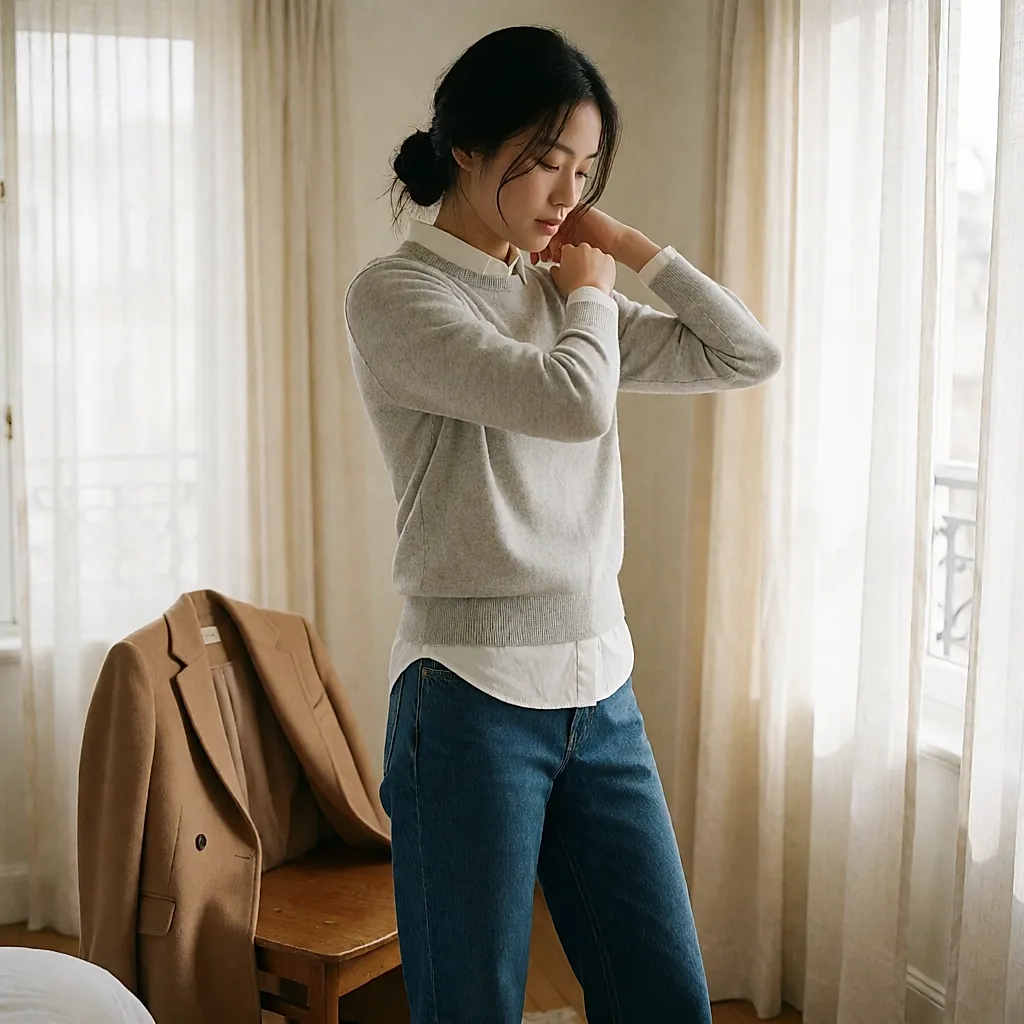
The honest limitations: without seams, there's no structure. The shoulder is soft, almost fluid — ideal for a layering wardrobe, less convincing if you want defined shoulders. And because there's no seam to take in, alterations are tricky: anything that needs adjusting will have to be done in the fitting room, not by a seamstress. Try it with your arms raised, then put your coat on over it. If the shoulder rides up or the hem rolls, sizing down won't rescue the cut.
The merino you'll keep for three winters
Merino is what makes this fineness possible: warm without bulk, breathable, less prickly than standard wool when the fibre is fine. The real question isn't 'is it merino?' but where it comes from. Some labels document traceability and animal welfare — RWS (Responsible Wool Standard), ZQ, mulesing-free claims; recycled merino wool is also available from several European mills. These labels say something about the fibre's origin, not the quality of the knit: look at the hand feel of the knit, its fineness, and how well the ribbing holds.
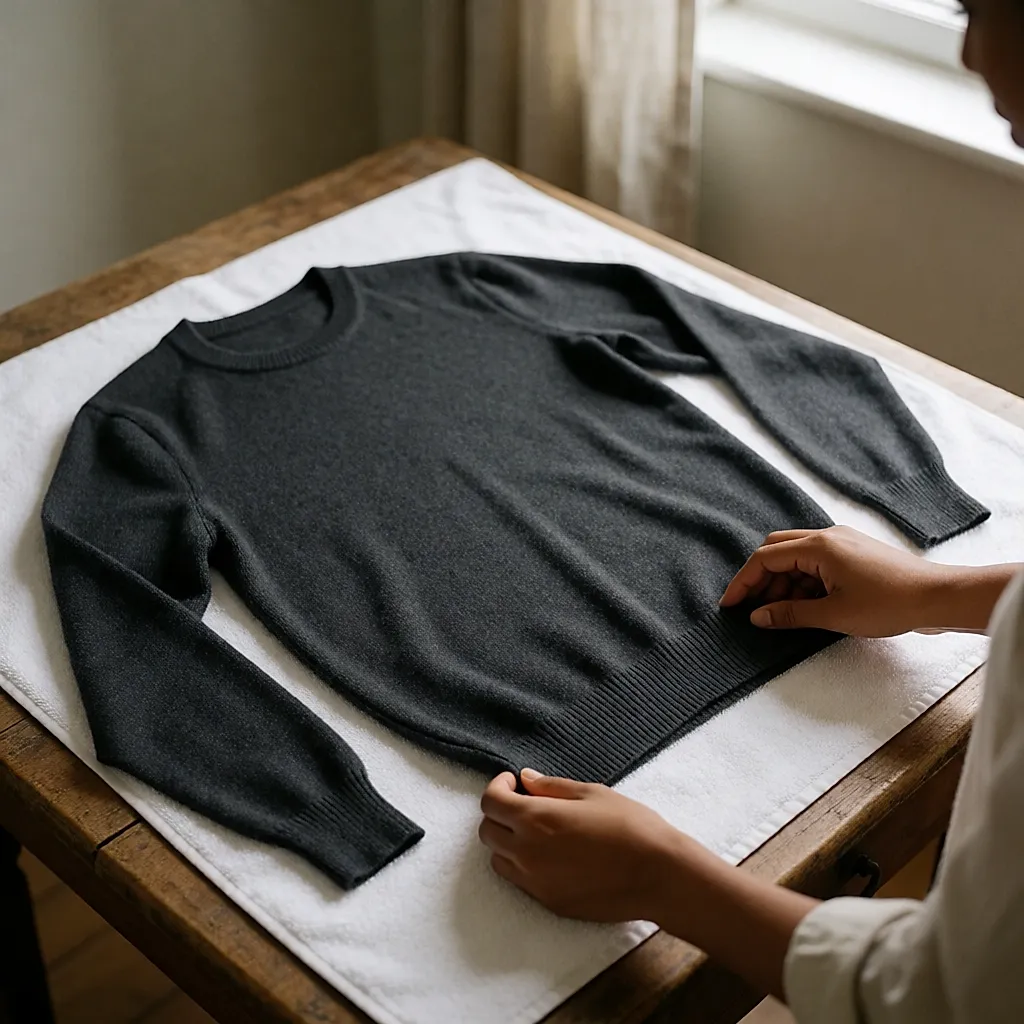
When it comes to care, the one good habit can be summed up in four words: air rather than wash. A merino knit worn next to clean skin recovers very well from a day on a hanger, with a window left ajar. When washing becomes necessary, use the wool cycle, a cold wash, a gentle non-biological detergent, and minimal spin. Then dry flat, in the shade, never on a hanger: wet, the knit distorts under its own weight. Pilling at friction points? A wool comb removes it, no drama.
In the fitting room, two checks before anything else. The ribbed edge: it should spring back when you pull it, without rippling. The shoulder drape: right, with no fold pulling up towards the neck. Also check the composition — beyond a small amount of elastane for shape, a significant share of synthetic fibres has little place in a piece sold as quality knitwear.
Budget: from £80 to £180, and second-hand
In the UK, a seamless merino knit usually sits between £80 and £180. At the lower end: less fine yarns, simple shapes, European knitwear brands and knitting mills that sell direct. Above £130, fibre fineness, yarn length and finishing make the difference. Below £80, read the composition: merino blended with synthetic fibres costs less to produce.
Second-hand is still the best find: budget more like £25 to £60 in charity shops, on resale platforms or in end-of-season private sales. Two things to inspect — the ribbing, which tells you the garment's real age, and the underarm, the first area to wear out. One last detail: seamless knitwear is harder to repair than a standard jumper. A discreet mend by a tailor, yes; opening a side seam, no.
The real smart buy, in the end, is to choose one well and wear it until the question no longer comes up. A fine knit that holds the shoulder, goes under everything, and gets washed two or three times a winter: that's a wardrobe piece that works harder than ten impulse buys. We all cave, of course — but we cave once.

Comments
Your opinion matters: rate the article, react and reply to comments.
Comments are moderated; AI-assisted comments are flagged. Text emoticons (8-), :-), <3…) are automatically shown as images.