
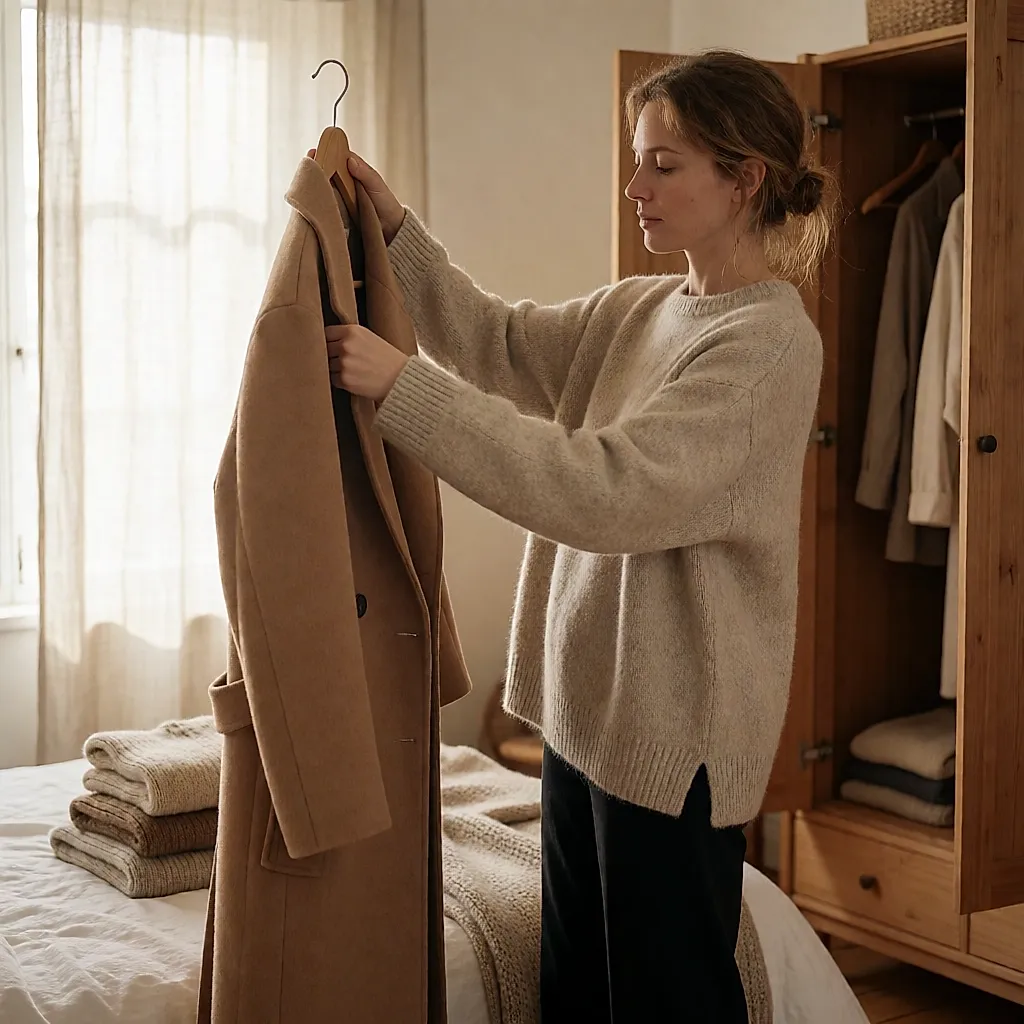
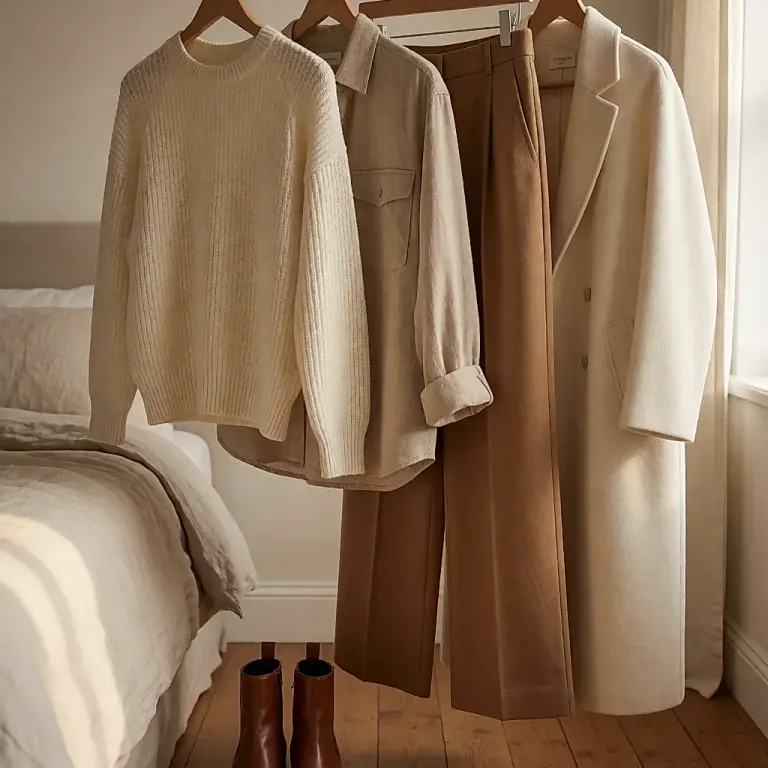
The first coat out of its dust bag smells fusty, your favourite knit has a hole at the elbow, and the rain is threatening before you've decided anything. Mid-October has a knack for it: it shoves your winter wardrobe into the spotlight without a by-your-leave. So rather than piling one more thing onto a shelf that's already overflowing, give yourself an hour, an empty bed and three piles.
Three piles, no mercy
First question to ask of every hanger: did you actually wear it last year? Not “do you still love it” — nobody is being honest in front of a wardrobe. Worn, yes, at least two or three times, in real life, on a Tuesday morning as much as a wet Sunday. Whatever passes that test has earned its place for winter. Everything else goes into the middle pile (to mend) or the right-hand pile (to go).
Name the three piles once and for all: what stays, what gets mended, what goes. After that it's no longer your wants pleading their case — it's the clothes themselves.
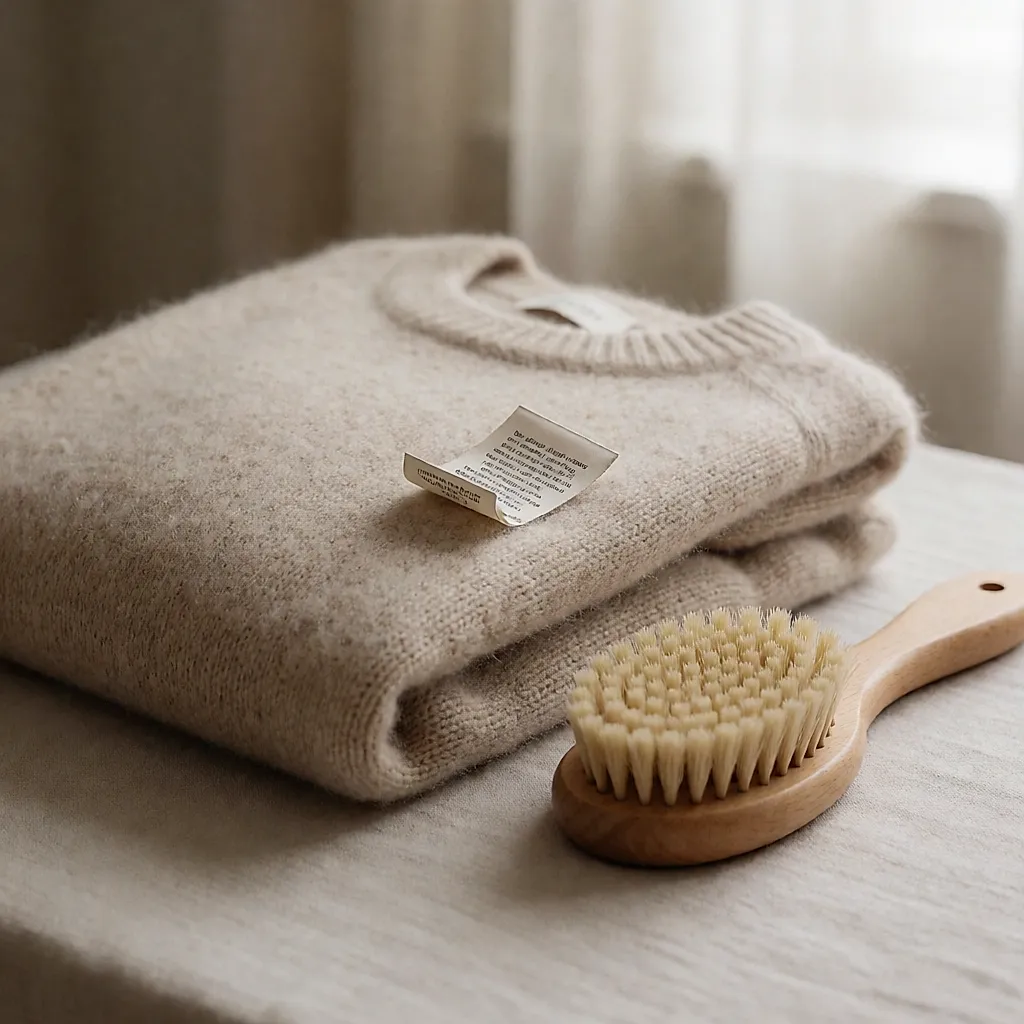
Start with the drape, because it never lies. Hang the piece on its own and step back two paces: if it collapses in on itself, it won't do you any favours. Then the seams — give the shoulder and seat seams a gentle tug. A thread that gives under two fingers will give in public, usually on a Monday morning, in a lift. Then the fabrics: wool pulling threads, a knit that bobbles into great clumps, leather cracking on the surface. One useful habit while you're at it: read the composition label. Longevity depends far more on the quality of the make and the care it gets; as an editorial preference, favour natural fibres and a dense weave.
And the awkward question that settles half of them: did this piece serve a real purpose, or was it about buying the person you wished you were that season? We've all got a blazer in that category. It's allowed to go.
Mend before you say goodbye
Plenty of pieces written off over a detail still have years left in them. A button, a hem that's come down, a zip that catches: ten minutes of attention and it's done. A hole at the elbow of a jumper takes a bit more finesse — a darn, discreet or on show depending on the knit, and the tear becomes a signature rather than a wound.
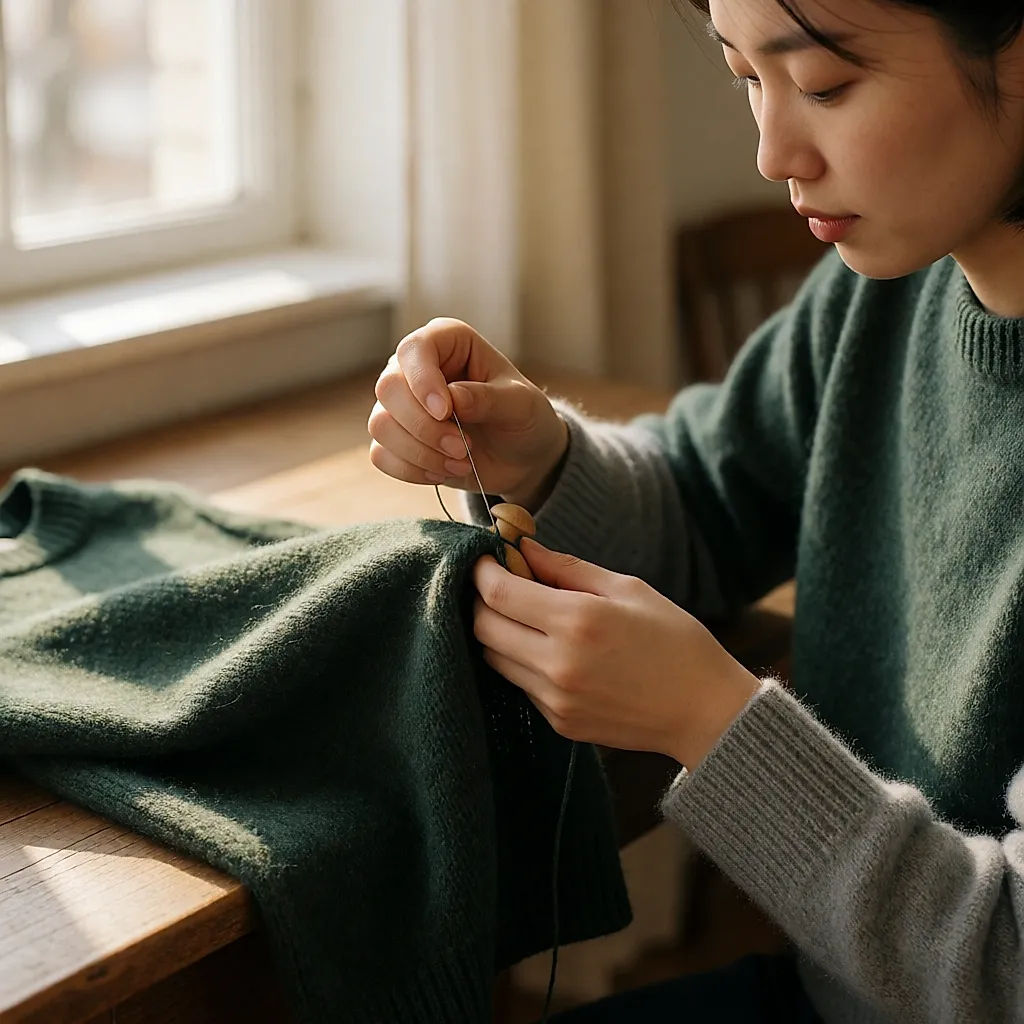
When the job is beyond your skills, the local alterations place performs wonders for far less than a replacement. Budget roughly £12 to £25 for a simple hem, £15 to £40 to darn knitwear or replace a zip, and £40 to £80 to resole a leather shoe, depending on your city and the piece itself. Before you get the card out for something new, that's the number to have in your head.
Wash right, store flat
Knitwear hates three things: heat, agitation and hangers. A wash at 30 °C on a wool cycle, a gentle detergent, minimal spin, then drying flat on a bath towel — that's the routine that keeps a jumper presentable for several winters. Wash less often, air more: between wears, cold air does a perfectly good job.
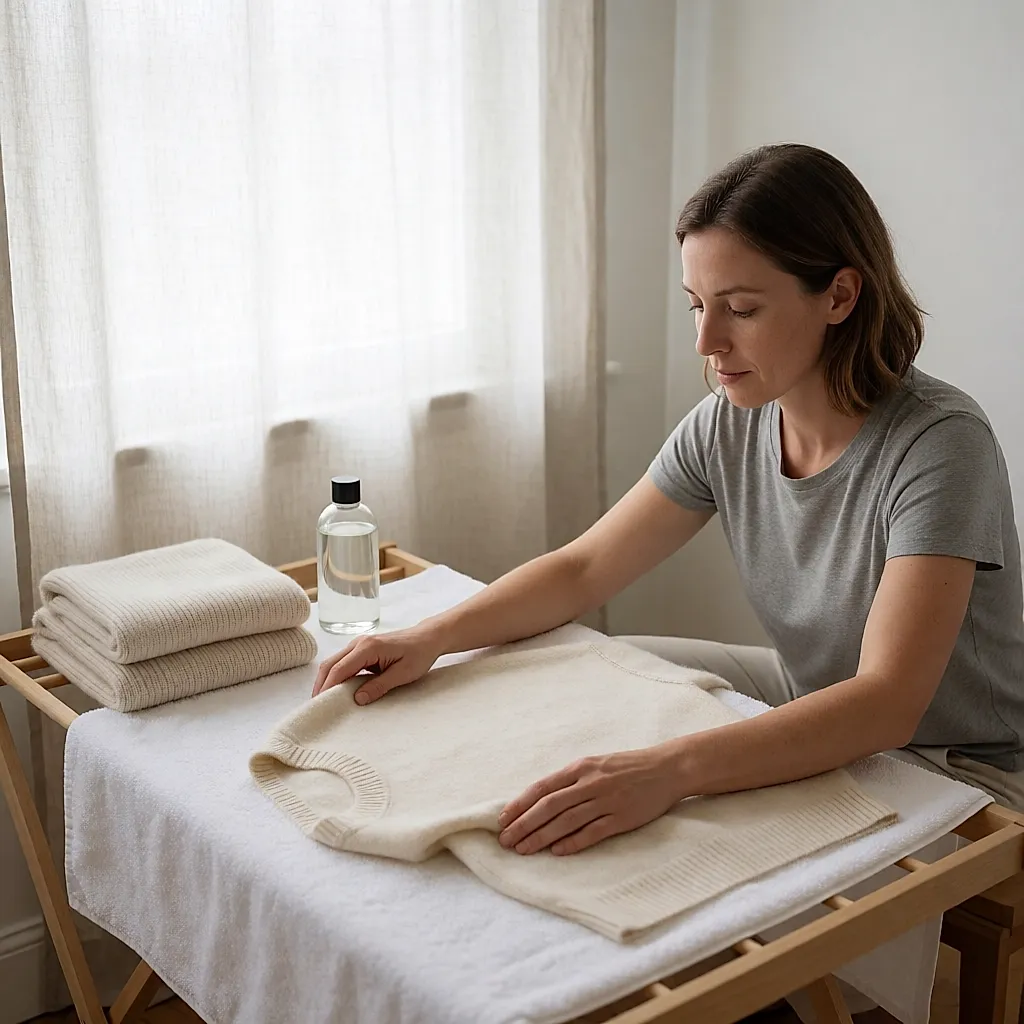
On the storage front, fine knits prefer a flat pile, not too high, rather than hanging, which drags the shoulders out of shape. Coats get brushed along the nap before they go into a fabric bag — plastic makes wool sweat all summer long. And the shoulder season is the moment to check whatever's lurking at the back of the wardrobe that never gets worn.
The undecided bag. For the two or three pieces you can't commit on, a fabric bag stored out of sight until February. If it hasn't so much as crossed your mind by then, the answer has given itself — and you've gained some space.
To shop: only what's missing
Once the sort is done, there's usually one or two pieces genuinely missing. Write them down before you head into town, or the first shop window will decide for you. For a merino wool knit, budget around £60 to £150 at an accessible label; a wool-blend coat, £150 to £400, against £300 to £700 for a well-made pure wool one; vegetable-tanned leather boots, £120 to £300. Second-hand and in charity shops, the same fabrics often drop to £20 to £80, provided you check the seams and lining on the spot.

The real call isn't “how much can I buy” but “what usefully replaces what's gone”. One piece that works with three outfits already in your wardrobe beats three pieces that don't save a single one. A good buy is rarely the flashiest: it's the one you pull on without thinking, two winters running.
Three piles, a bit of thread, an iron and a towel: your autumn wardrobe comes back to life for the price of a Sunday afternoon. The parcel that lands the day you leave can wait its turn — this season, you buy less but you buy right. And faced with a doubtful piece, one final question is enough: how many times did you wear it last year? The answer is almost always more honest than fashion.


Comments
Your opinion matters: rate the article, react and reply to comments.
Comments are moderated; AI-assisted comments are flagged. Text emoticons (8-), :-), <3…) are automatically shown as images.