

Late September, standing in front of an open wardrobe, the phrase arrives all by itself: 'I have nothing to wear.' We know what happens next — a jumper bought in a hurry, and in March, the same realisation, word for word.
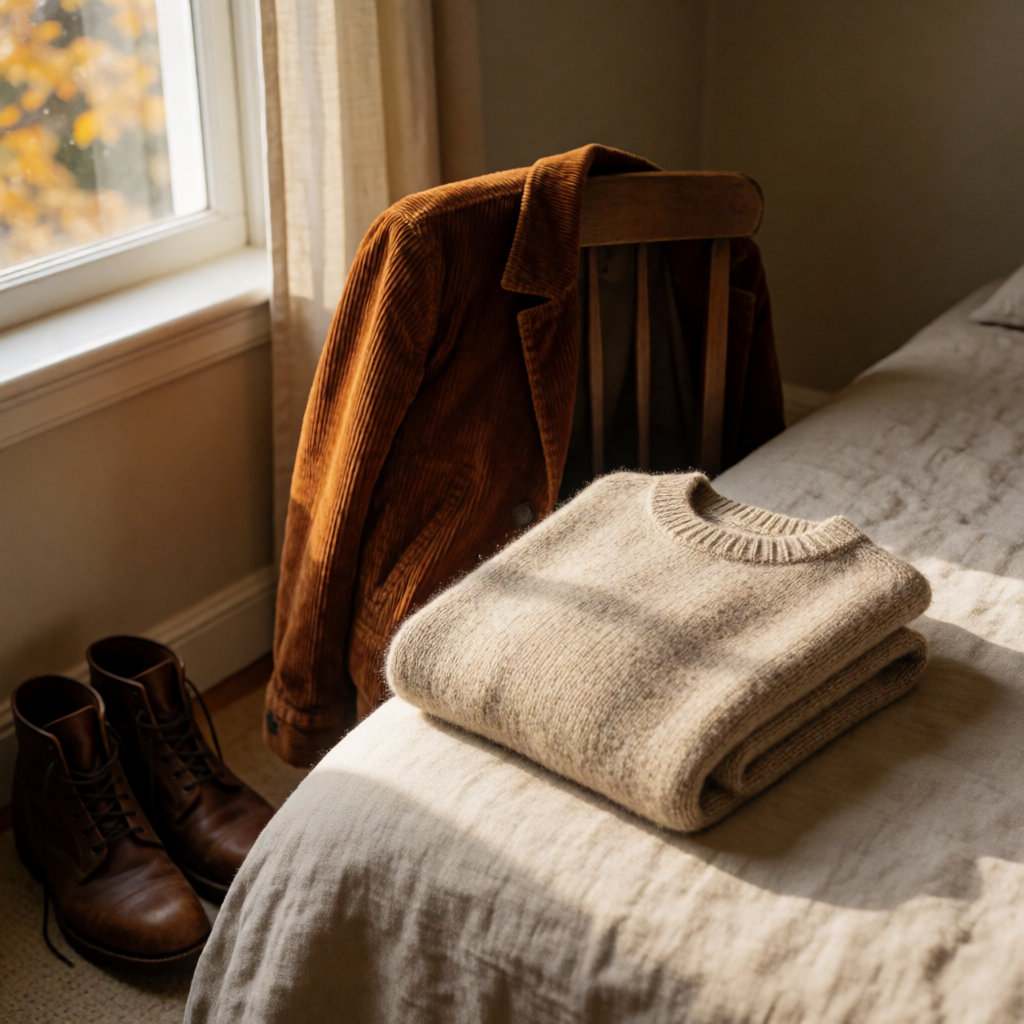
I did that dance for years, too. Then one Sunday, instead of heading into town, I emptied half the wardrobe onto the bed. The verdict: what I actually wore between September and November fitted on one chair. The rest waited patiently, some pieces with the tags still on. That day, something clicked: the problem is almost never the budget, it's the compatibility between what you already own and what you're about to bring into your wardrobe.
The three-outfit test to do before every purchase
Before you give in to a crush, ask one question: how many outfits you already own can this piece be worn with? If the answer is 'one', you'll wear it once. If it's 'three or more', you've found a true staple — one that works all season without boring you.
Second question, as simple as it is effective: will you wear it in September, November and March? A worthwhile mid-season piece is not a one-season piece. That mental workout is what separates a capsule wardrobe from an accumulation of whims.
The five pieces that cover September to March
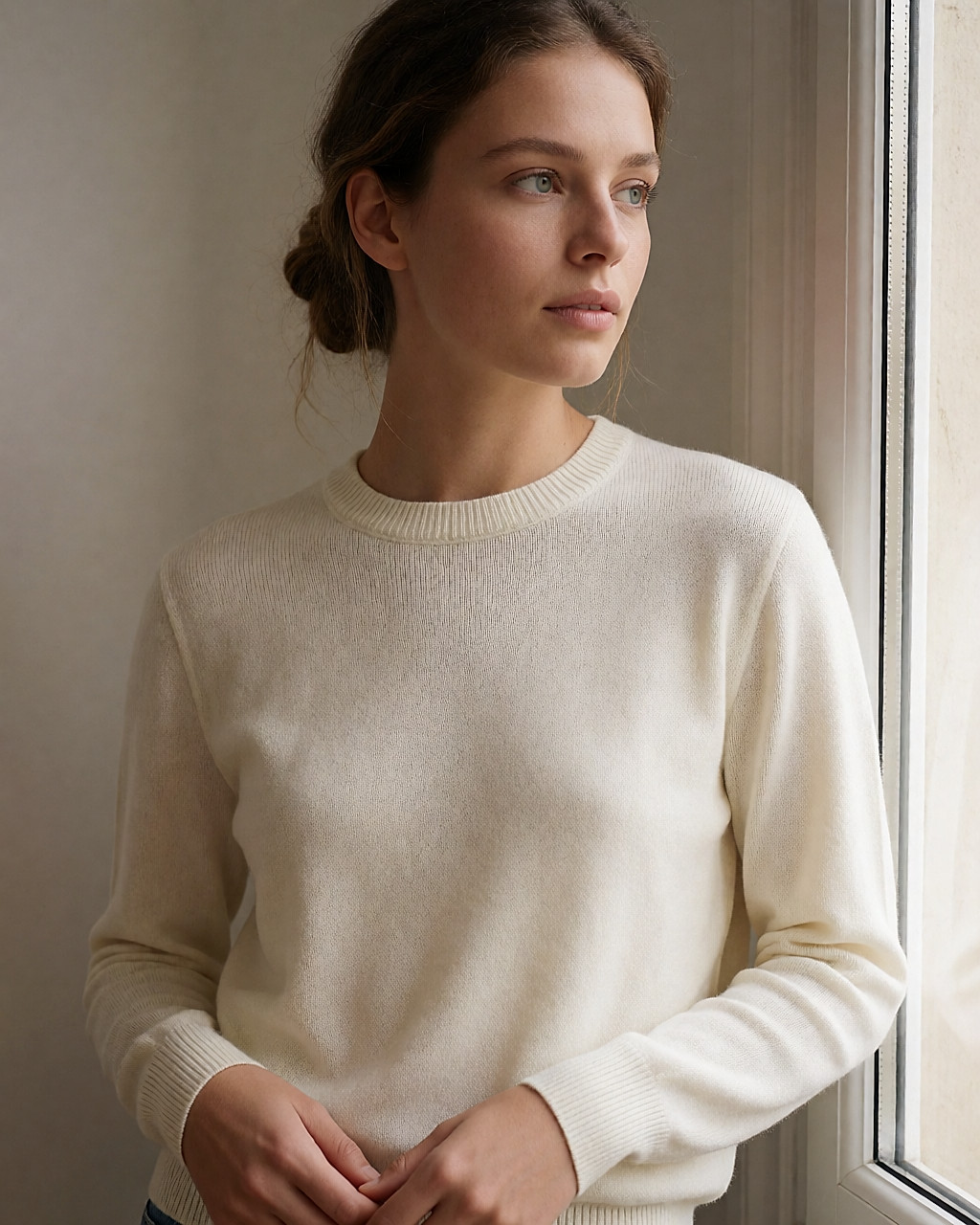
Fine knit. A merino jumper or a wool-cotton blend, straight cut, simple neckline. It's the drape that makes the difference, not the label. Fine enough to wear on its own in September, layered under an overshirt in October, under a coat in January. Check the composition before the brand: it's the hardest-working piece on the list!
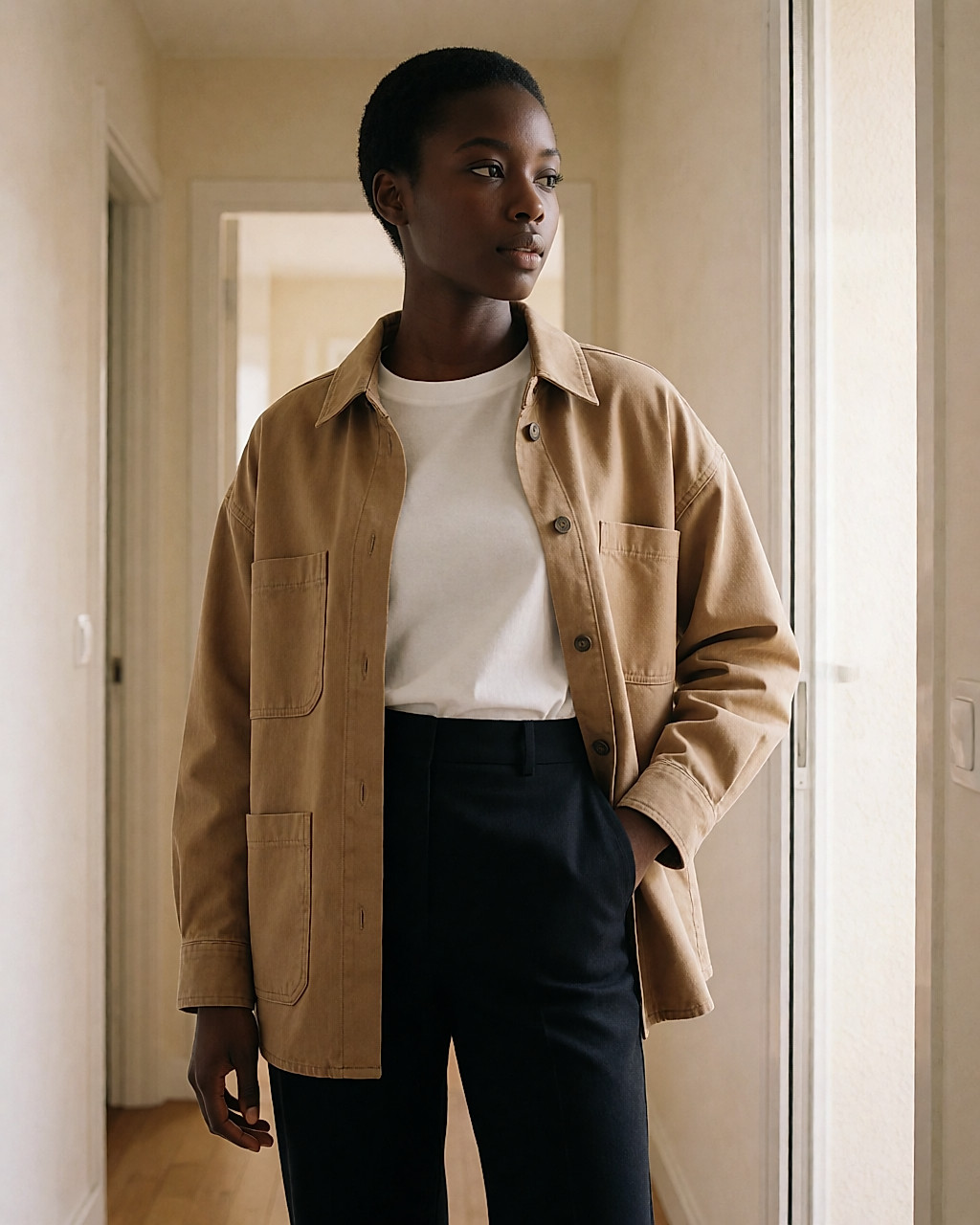
The overshirt. Thick cotton, slightly oversized, worn open or closed. It stands in for a light jacket and works over almost anything, including a summer dress it can carry into October.
High-waisted straight-leg trousers. A slightly heavier fabric, a clean drape. They bridge your summer tops and your chunky winter knits — very often the missing link in an outfit.
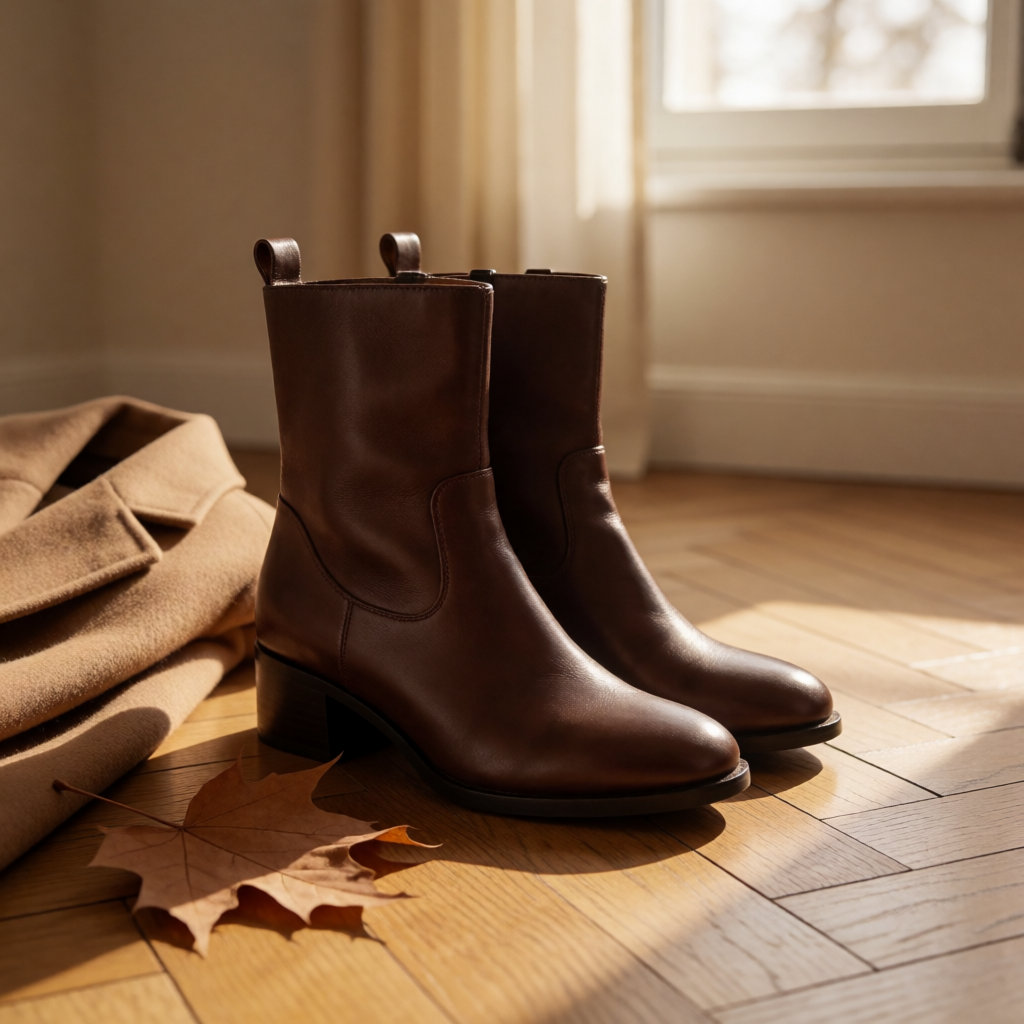
Closed-toe shoes. Low-heeled boots, Derby shoes, chunky loafers. This is where I'd advise spending your budget: in reality, it's the soles that give out first on cheap pairs, not the uppers.
The mid-season coat. A trench or a straight coat in light wool. It needs to go over a knit without pulling at the shoulders: always try it on with a jumper underneath, never in a T-shirt.
No brands here, deliberately. These are categories, not tested products — and that changes everything about how you choose: you're not looking for a specific reference, you're looking for a fabric, a cut, a texture.
The order to buy them in
Not by desire, by logic: bottoms → shoes → knitwear → outer layer → coat. Why this order? Because a beautiful knit won't save an outfit if you have no bottoms to wear with it. And because the two biggest spends (shoes, coat) deserve your budget and your thought once the rest is settled. One purchase a month at most, and you'll have the essentials sorted before winter.
Budget
On the budget side, the ranges are wide — and that's a good thing, because it's not all about the ticket price. Expect around £35 to £95 for a fine knit in wool or a blend, depending on how fine the knit is and the brand. In vintage shops, charity shops or on resale platforms, you can often find pieces for £8 to £25, if you enjoy a good rummage.
A thick cotton overshirt sits between £35 and £80, while high-waisted straight-leg trousers range from £35 to £100. For closed-toe leather shoes with a stitched sole, budget more like £70 to £190: at the cheaper end, the pair is often glued or synthetic, and that's where longevity is decided.
Then there's the coat: £80 to £220 for a trench, £100 to £300 for a light wool coat. What pushes the price up? The proportion of real wool, the construction, the city (London prices aren't the same as elsewhere in the UK), the size of the piece and the care it requires.
Where to look: department stores and high-street retailers for basics; independent brands for fabrics; charity shops, vintage shops and online resale for the rest. And to make things last, your local alterations shop or cobbler, where a hem or heel costs tens of pounds, not hundreds.
How to avoid purchases that end up unworn
The 48-hour rule first: save the piece to your favourites and close the tab. Still thinking about it two days later? It was worth a trip to the fitting room. If not, it was boredom, not desire.
Then the fitting-room photo. Daylight, full length, no retouching. If the image makes you uncomfortable, the fitting-room mirror was lying to you a little. And check the returns policy before you pay: if you hesitate at the till, you'll hesitate even more at home.
The fitting-room checklist, in three questions
- Can you sit down, raise your arms and walk for ten minutes in it?
- Does it go with a bottom you already have at home?
- Would you wear it tomorrow morning, right now?
Three yeses and you go to the till. One no and you put it back.
The one action that changes everything
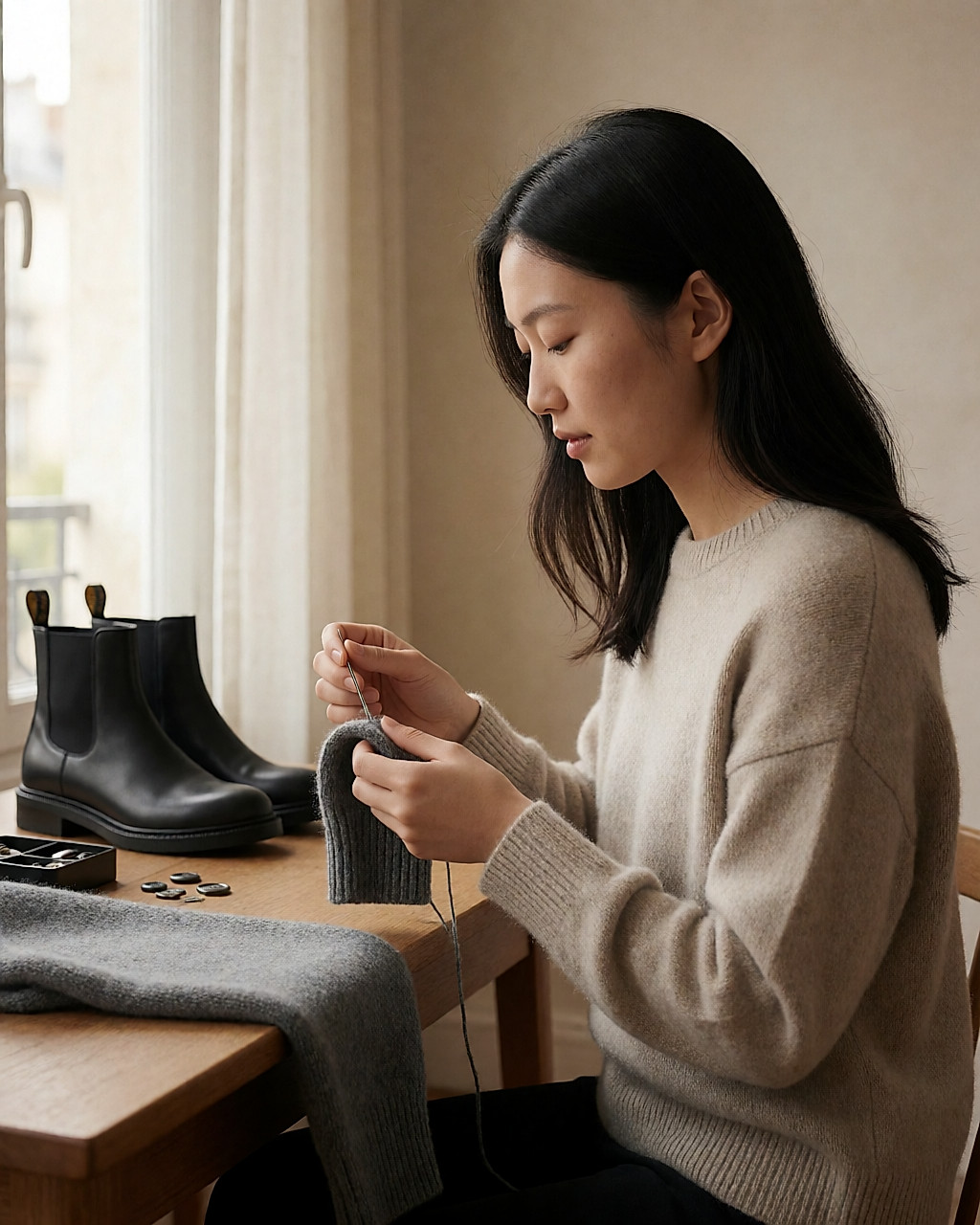
Repair before you replace. A seam, a heel, a button: your local alterations shop often costs less than a new piece, and in the UK repair and re-use have become a bigger part of how we shop, with charity shops, repair cafés and resale platforms making it easier to keep clothes in circulation. A mended jumper or a resoled sole is one more piece in your wardrobe without another penny spent on clothes.
If you only do one thing this week: take out what you actually wore in September, note the five pieces that keep coming back, and build around them. It's not the extra piece that will fill your wardrobe, it's the one that works with what already lives there.
Sources
- WRAP, Textiles 2030 — WRAP.
- Love Your Clothes, WRAP — Love Your Clothes.


Comments
Your opinion matters: rate the article, react and reply to comments.
Comments are moderated; AI-assisted comments are flagged. Text emoticons (8-), :-), <3…) are automatically shown as images.