
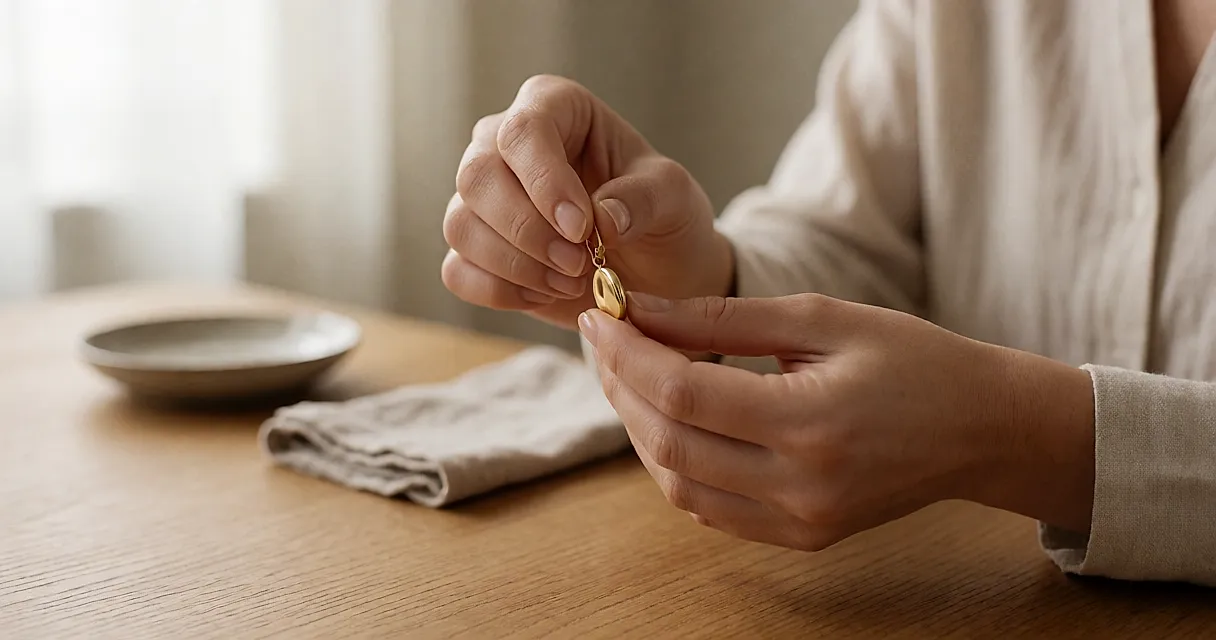
The parcel arrived on a Tuesday, wedged between a full letterbox and the bin. On screen, the pendant shone like something from a catalogue; in your hand, it weighed less than a £2 coin, and its clasp looked like a tired paperclip. You paid for the design. What arrived was the setting and construction — and that is what decides everything.
The photo shows the design, almost never the making
Two pieces of jewellery can look like twins on a product page and have nothing in common in real life. The photograph frames the part you are meant to look at: a star, a drop, a well-centred pearl. It almost never shows the back of the pendant, the inside of the clasp or the soldering on the ring.
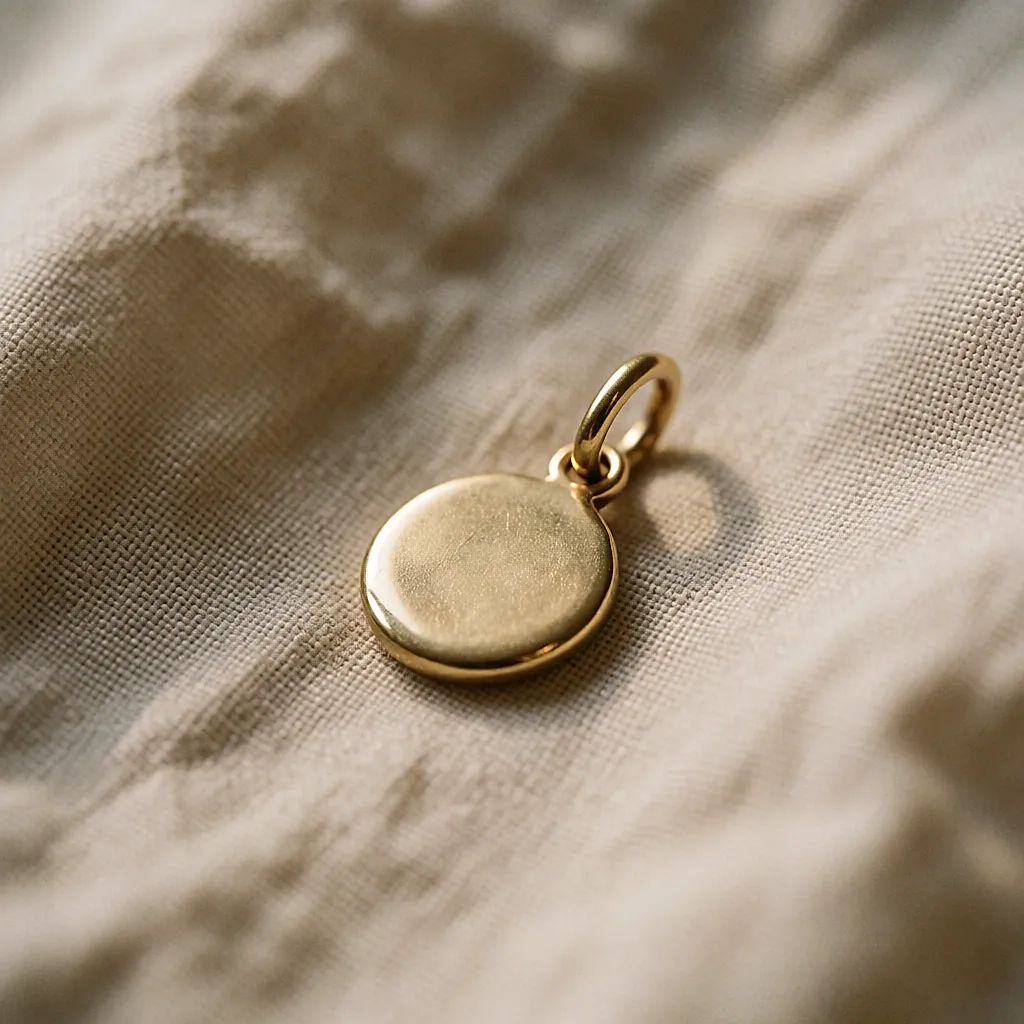
Hence the reflex, in a shop or in front of an online listing: turn the piece over. The back of a piece of jewellery is its ID. An open ring, a messy solder joint, a claw sticking out, and you will know what to expect in three months. Buying at a distance? Ask for a photo of the back. A seller with only one glossy shot already tells you plenty.
How the stone is held, or simply stuck on
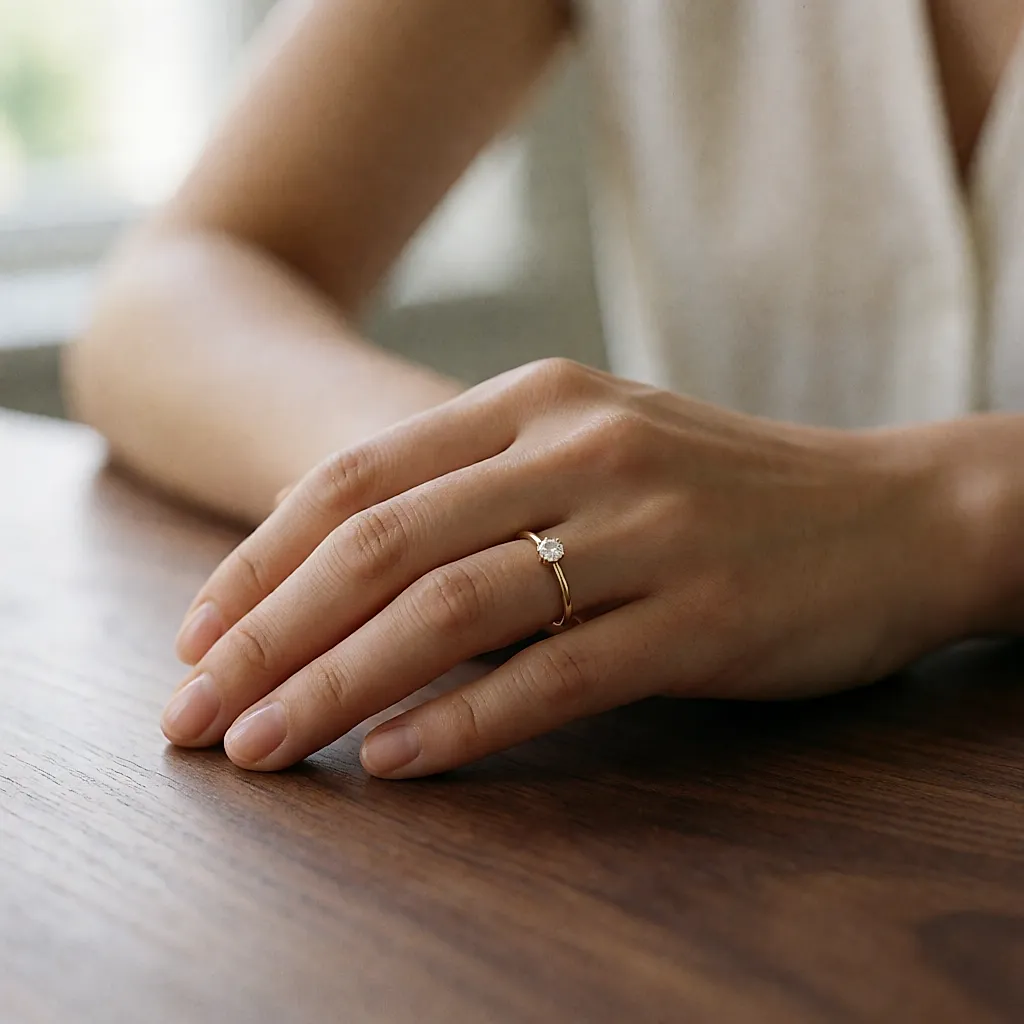
This is where everything is decided, and it is the detail nobody photographs. A faceted stone is held by claws (four, six, sometimes more) or in a closed setting that wraps a rim of metal around it: more discreet, more secure for small stones and everyday jewellery, but slower to set. Claws, on the other hand, catch knitwear, hair and scarves — a classic.
With pearls, the question changes completely. Is the pearl threaded on a pin, or simply glued to its backing? Glue is a fragile setting, and common on cheaper pieces. On a strand, look between two pearls: if there is a small knot of thread between each one, the pearls will not scatter even if the thread breaks. If not, one snap and you are picking them up from the floor.
The clasp everyone forgets to check
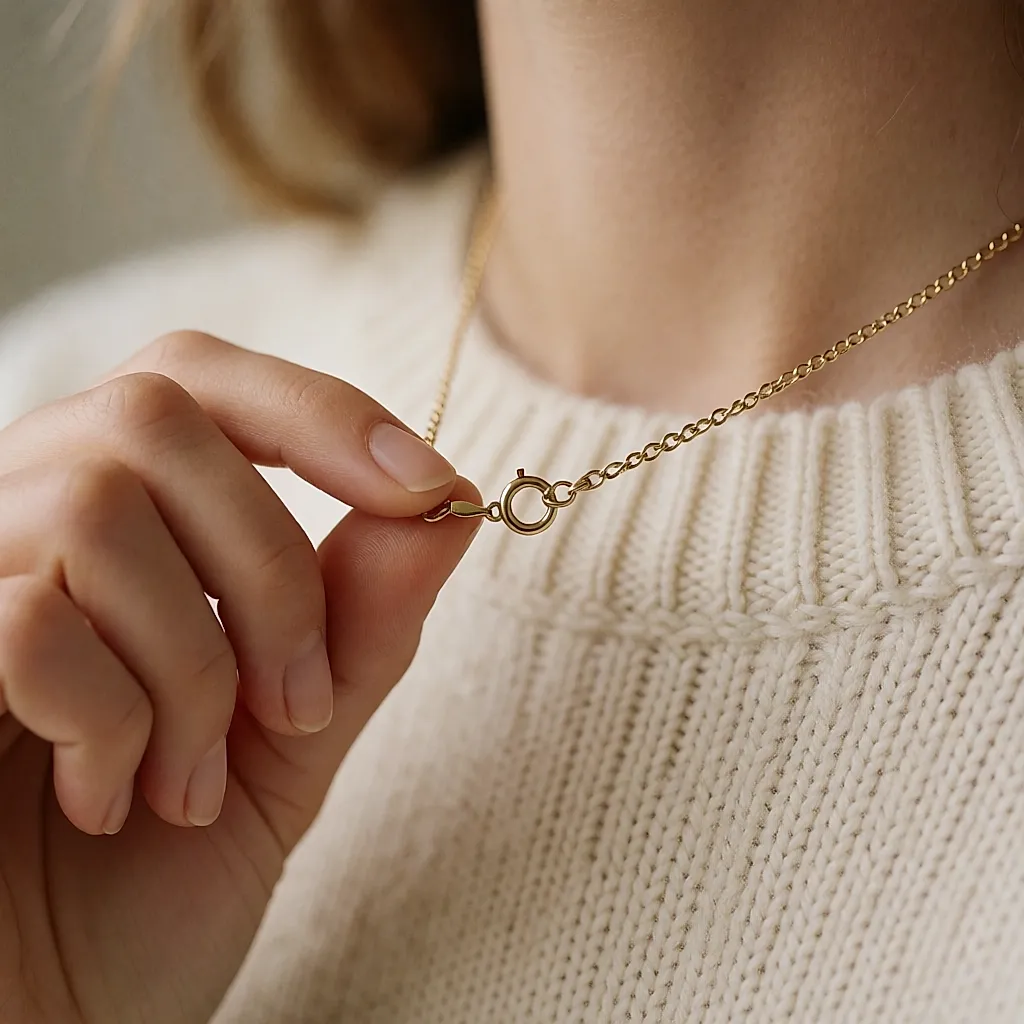
You choose a necklace for its pendant and regret it because of its clasp. The lobster clasp — the little lever hook — can be repaired and replaced without drama. The magnetic clasp comes undone at the first scarf and ends its life in a lift. Between the two, spring-ring and hinged clasps look good, as long as they click shut firmly, with no wobble.
Same logic with earrings: a butterfly back in thin metal often loosens, and a post that is too short will not hold. And if the necklace is going to be worn over different necklines, check for an extender chain. Small detail, big difference on a Monday morning when everything is going wrong.
Weight, what your hand notices before your eye
Weighing a piece of jewellery in a shop feels a bit odd, but still. A bracelet with hollow links is light, sounds hollow when it moves, and distorts faster at the attachment points. That does not mean you should avoid it: on a £20 piece, it is a deliberate choice. On an £80 bracelet, it is a conversation to have with the seller.
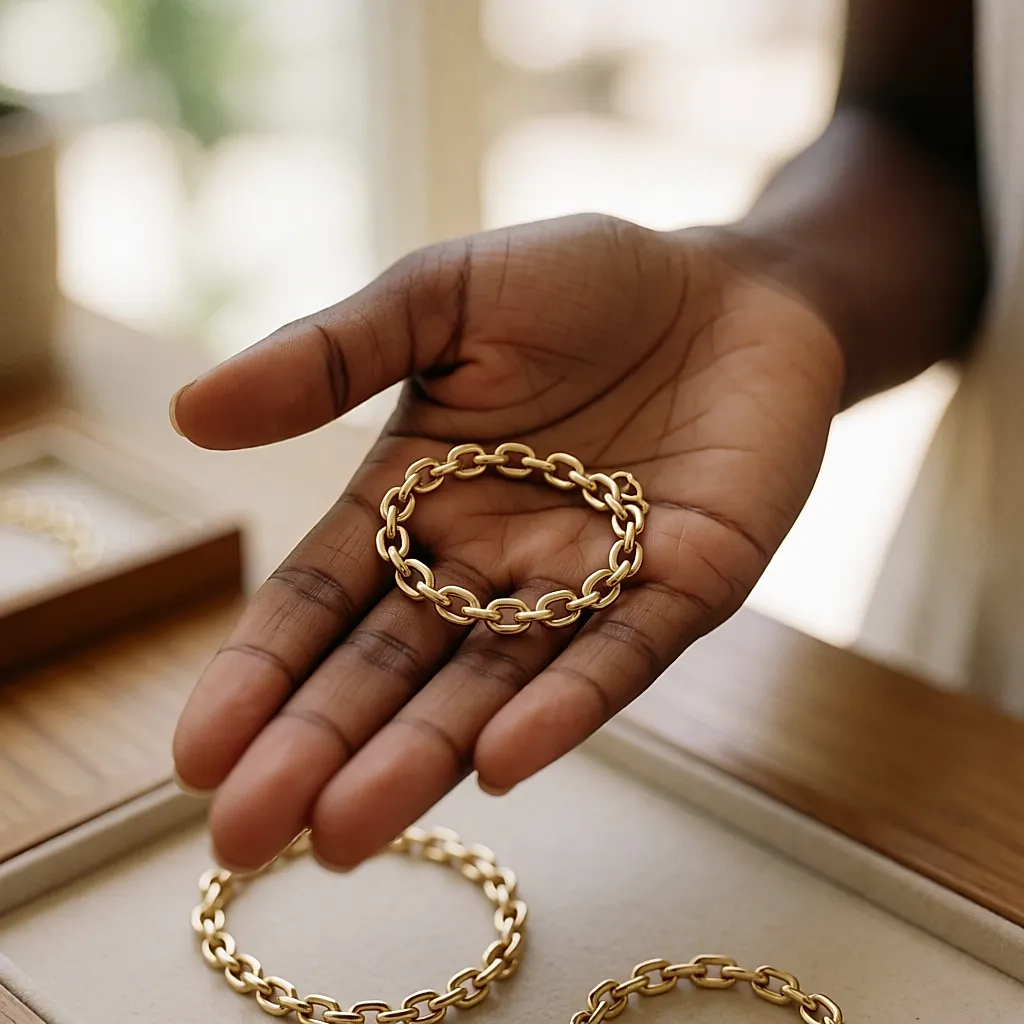
Weight also decides how a bracelet sits. Too light, and it turns so the clasp comes up on top of your wrist; too heavy, and it slides towards the back of your hand. 925 silver (92.5% silver, with the rest an alloy to make it workable) has a density you can feel; gold-plated brass much less so. As for silver tarnishing, that is normal: it cleans up, it is not damage.
What silver, gold plate and brass labels really tell you
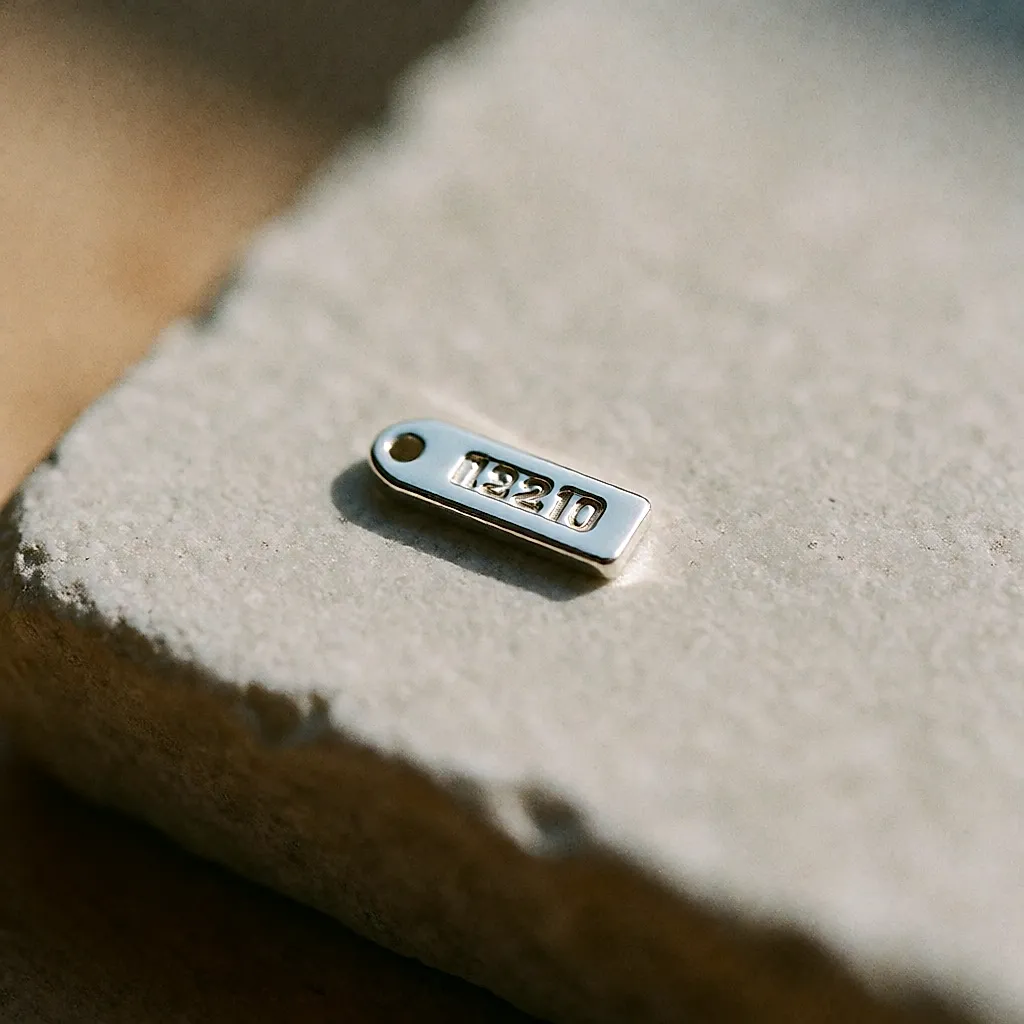
Gold plate is a thin layer of gold over a less precious metal. The label should state the thickness in microns, and the thinner it is, the sooner the brass shows through where it rubs: under a finger, at the edge of a pendant, on rings. Gold-plated brass can be very pretty and last for years if you keep it away from showers, swimming pools and direct perfume. Just know that before you give it as a gift.
Budget
As a rough UK guide, expect around £15–45 for gold-plated brass or well-made costume jewellery — markets, designer-makers at fairs, online shops — £35–130 for gold plate depending on thickness and brand, and £25–100 for 925 silver, with price driven mainly by weight and finish. A cultured pearl set in silver often sits between £20 and £80; a knotted strand goes higher. In a local jeweller or online, the gaps come down to the same things: material, weight and time spent on the setting.
A clean with a jewellery cloth costs a few pounds; replacing a clasp or re-tipping claws often costs £20–50 depending on the piece. Repairs that are worth it on a piece you love, and much less so on a £15 impulse buy.
Three moves in thirty seconds in a shop: turn the piece over and read the back; open and close the clasp three times to feel whether it catches; run your nail around the stone — if it moves, it is not held properly. This is exactly what a jeweller will do if you come back in six months.
A piece you keep for ten years is not necessarily the most expensive or the prettiest in a photo: it is the one whose clasp you never had to watch. So before you fall for the design, give yourself thirty seconds of detective work. Your wrist will thank you.

Comments
Your opinion matters: rate the article, react and reply to comments.
Comments are moderated; AI-assisted comments are flagged. Text emoticons (8-), :-), <3…) are automatically shown as images.