
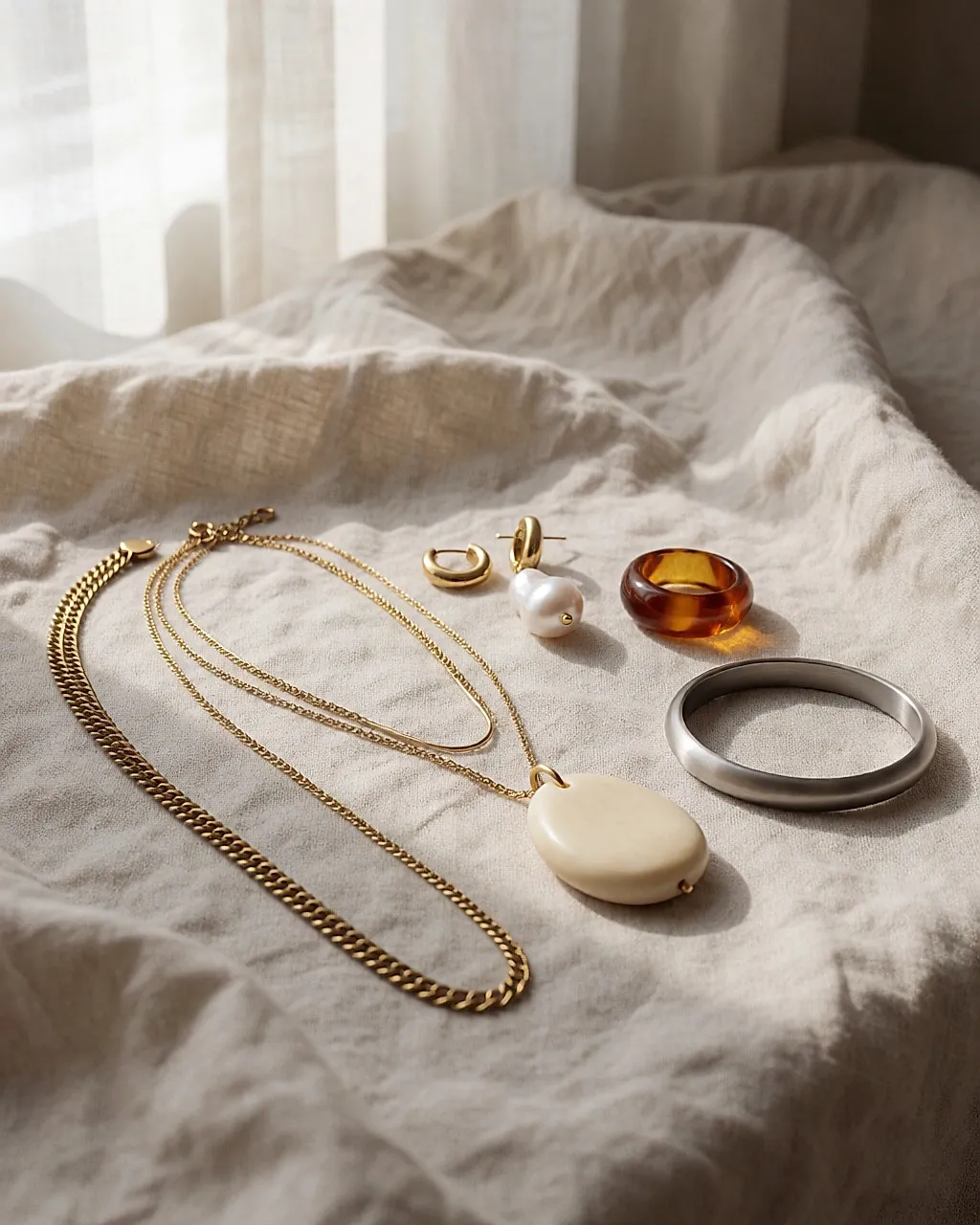
Last week I emptied my jewellery box out over the bed. The damage report: two tarnished necklaces, one orphaned earring and a chain that had left a green mark round my wrist. Let's be honest, costume jewellery is often the first thing we buy on impulse and the last thing we look after. The good news: chosen properly, it shapes a silhouette and finishes an outfit better than a wildly expensive piece. You just have to know where to look.
Materials first, style second
Before the shape, read the composition: that's what decides whether a piece will last three summers or three nights out.
Gold-toned brass and gold plating fill most of the rail. The shine comes from a thin layer of gold laid over a less precious metal, and that layer wears away exactly where the skin rubs. How long it lasts depends on thickness, usually listed in microns: the higher the number, the longer the gold tone holds up.
Stainless steel, by contrast, is usually left untreated. It doesn't flake, and it tends to suit reactive skin well. Any nickel it can release is controlled in the UK by legislation that mirrors EU limits, with a specific threshold for items in prolonged skin contact – worth knowing if your lobes react.
Solid 925 sterling silver costs more up front, but it can be cleaned and kept. There's now recycled silver on the market, plus certified schemes such as Fairmined and the Responsible Jewellery Council for precious metals.
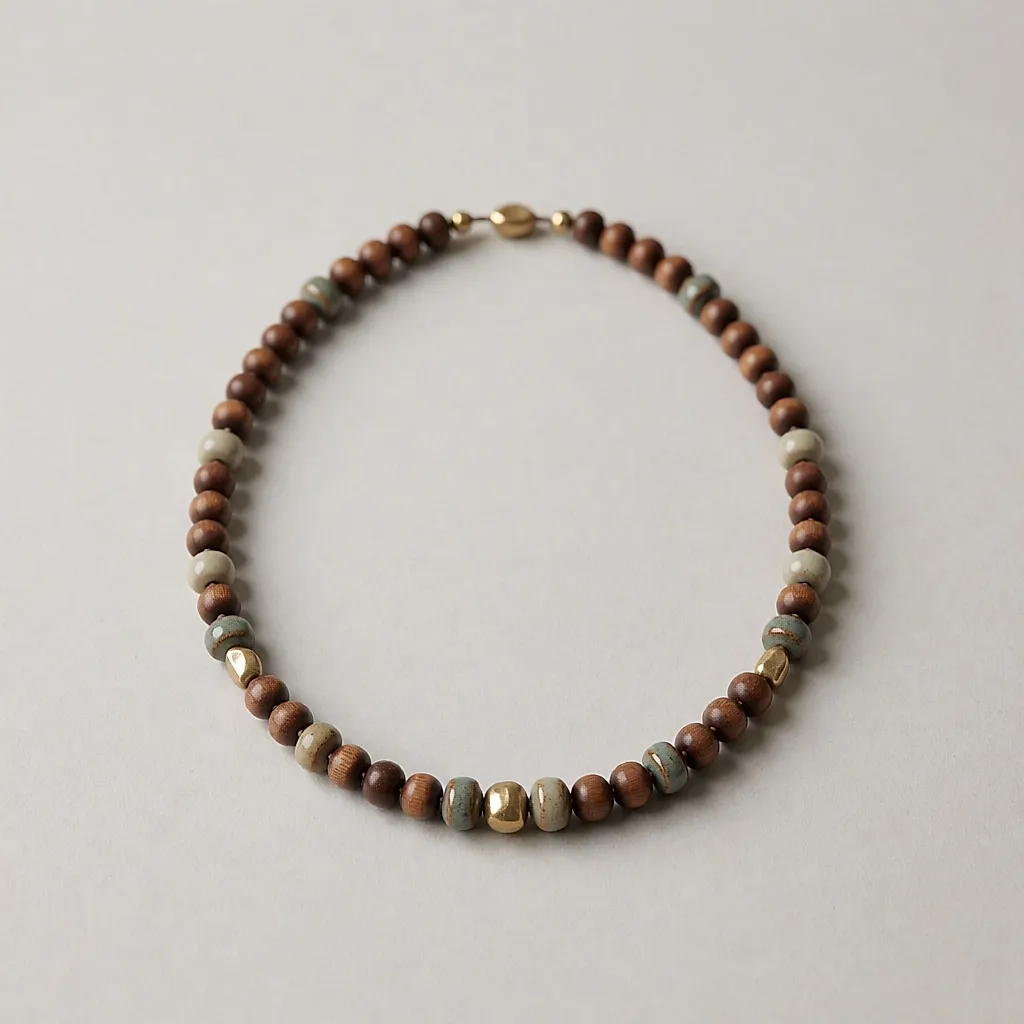
As for lighter materials, wood, tagua – a nut nicknamed vegetable ivory – resin or glass offer a matte texture and an altogether different finish. That said, these pieces are far harder to repair.
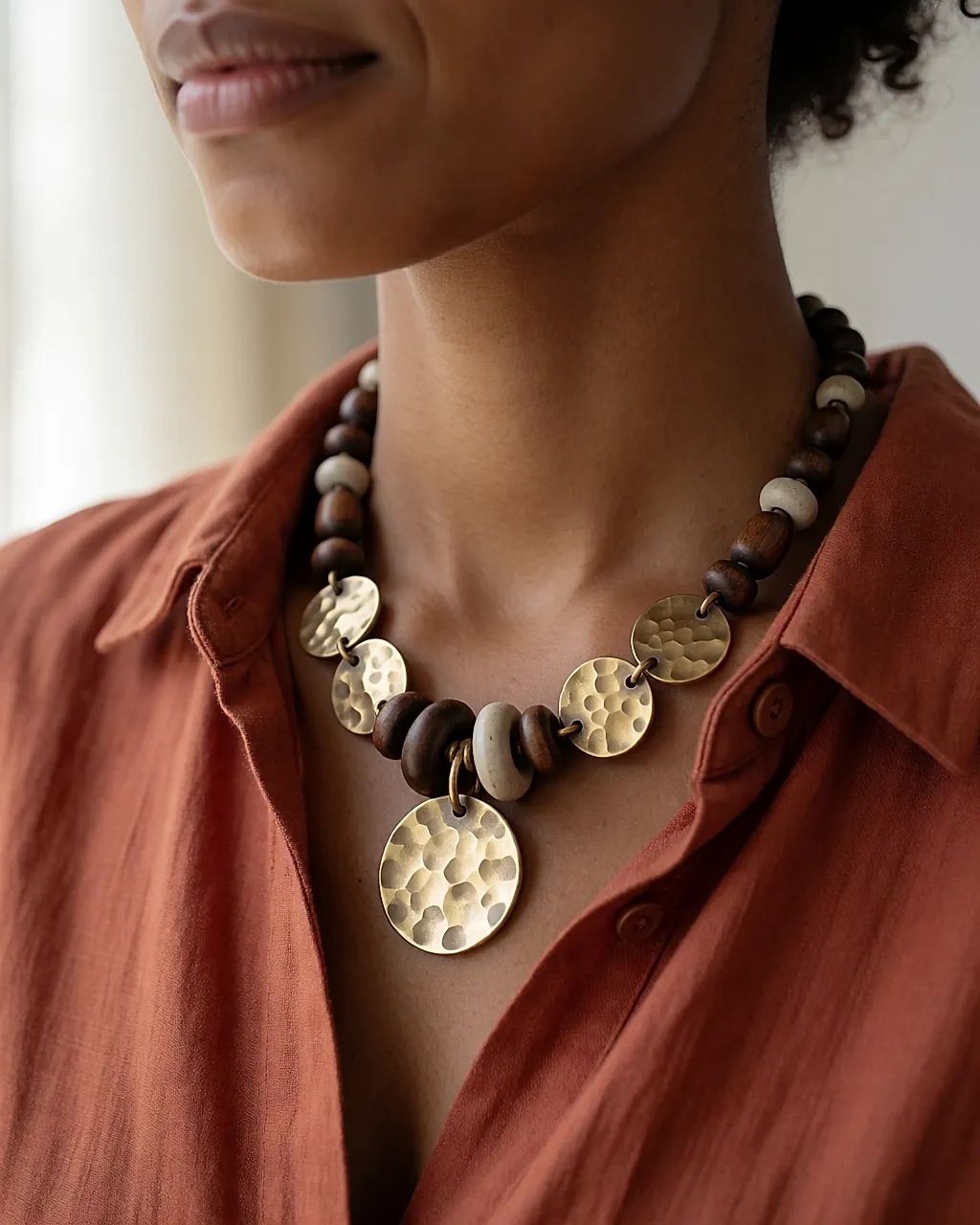
Which piece for which look
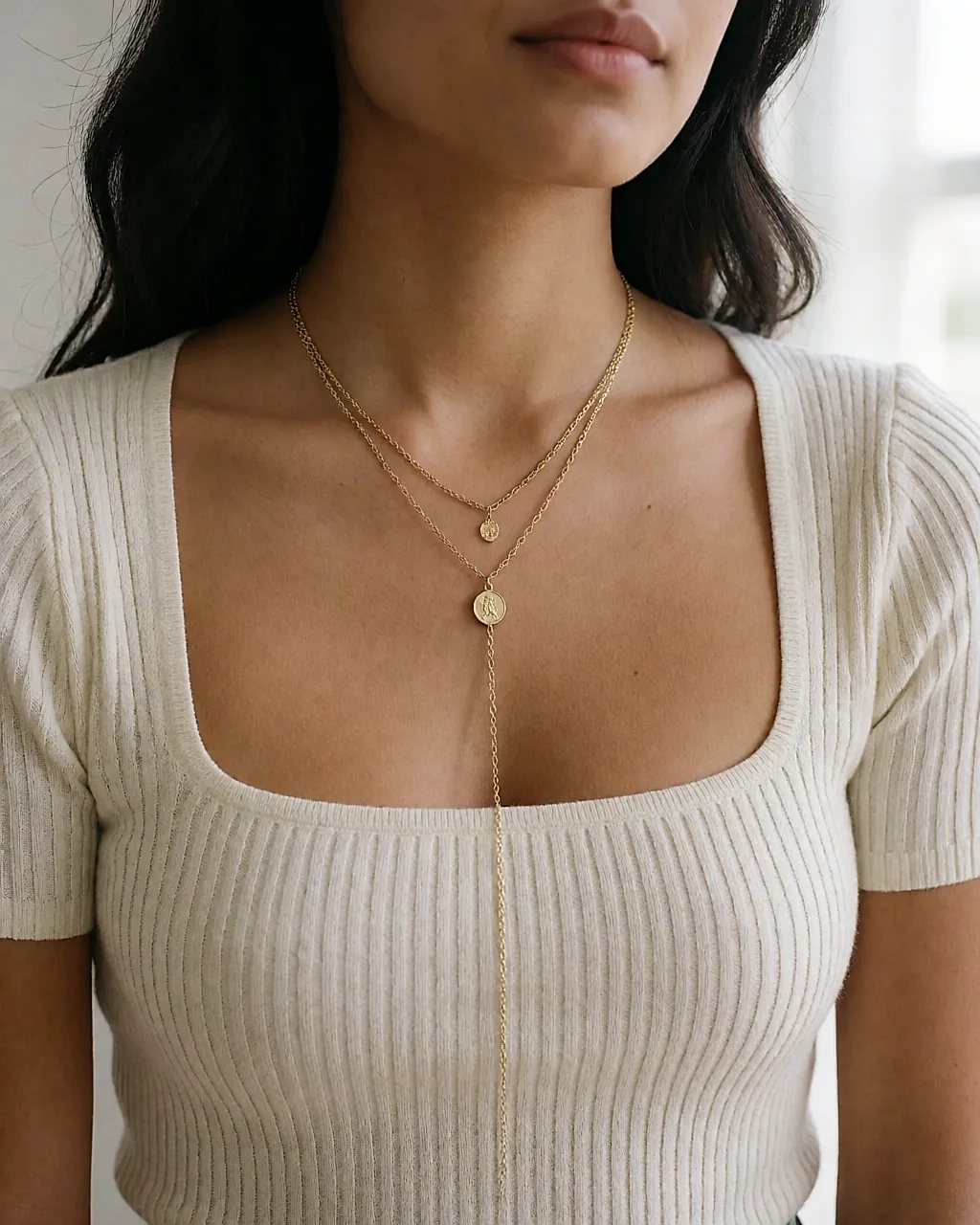
- High neckline or buttoned shirt: a collar-length piece, or two fine chains layered.
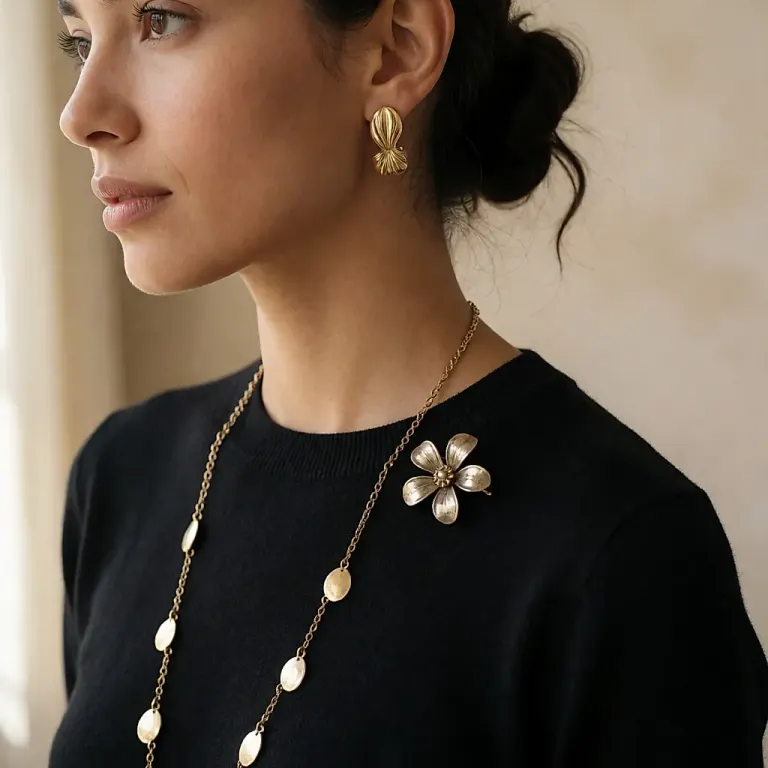
- Open neckline: long earrings and a sautoir, which elongate the silhouette.
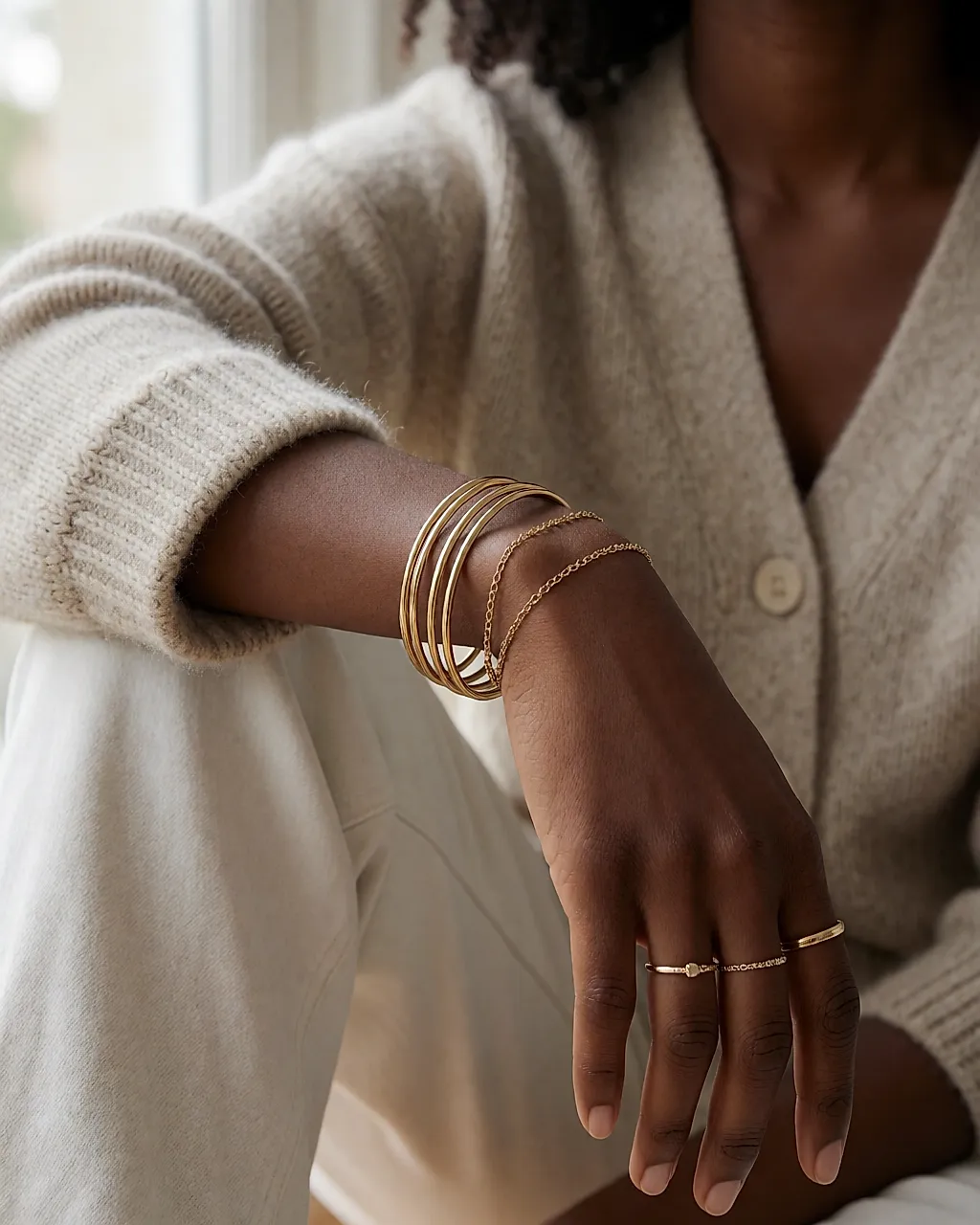
- One-colour look: a single statement piece is enough, with the rest kept understated.

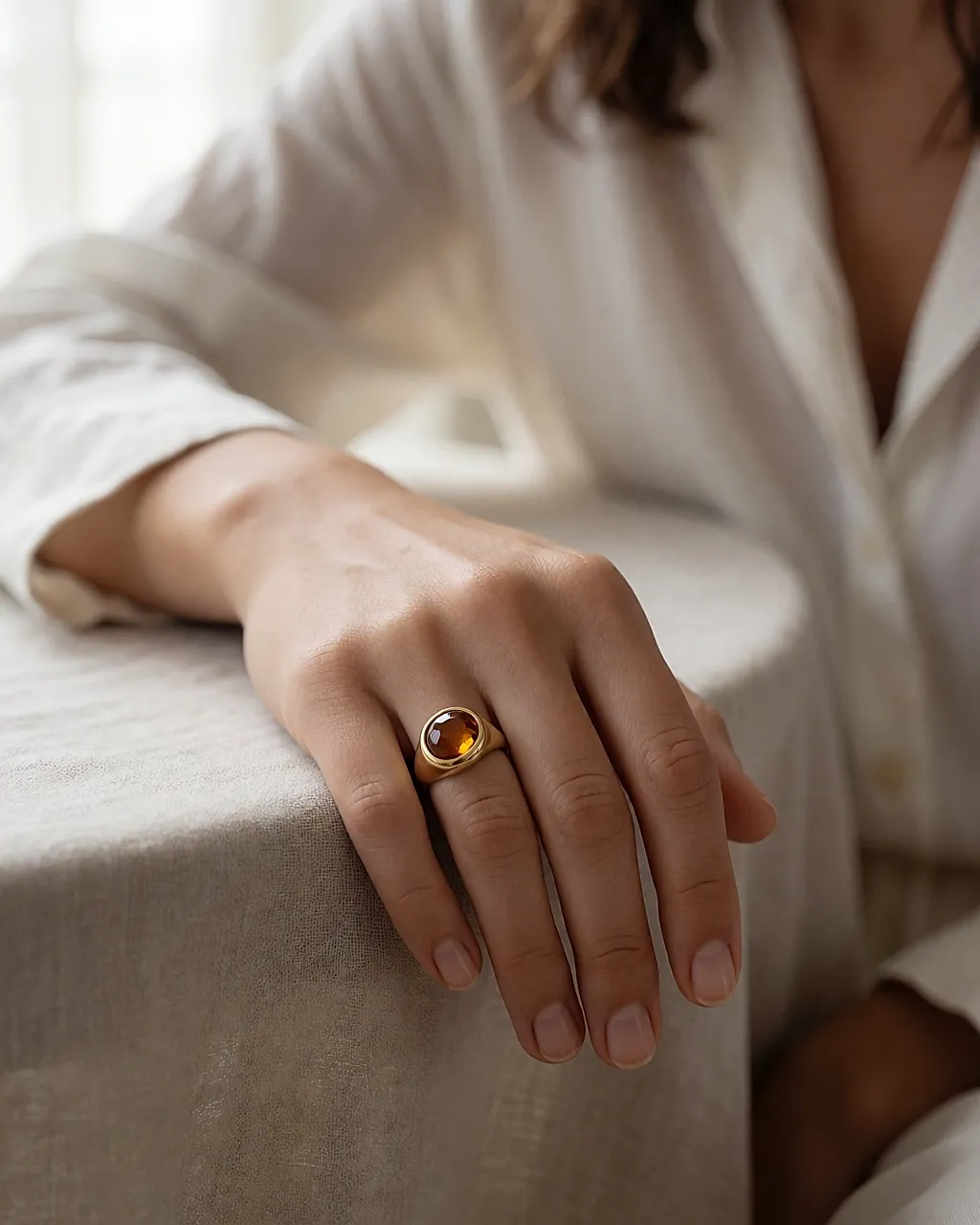
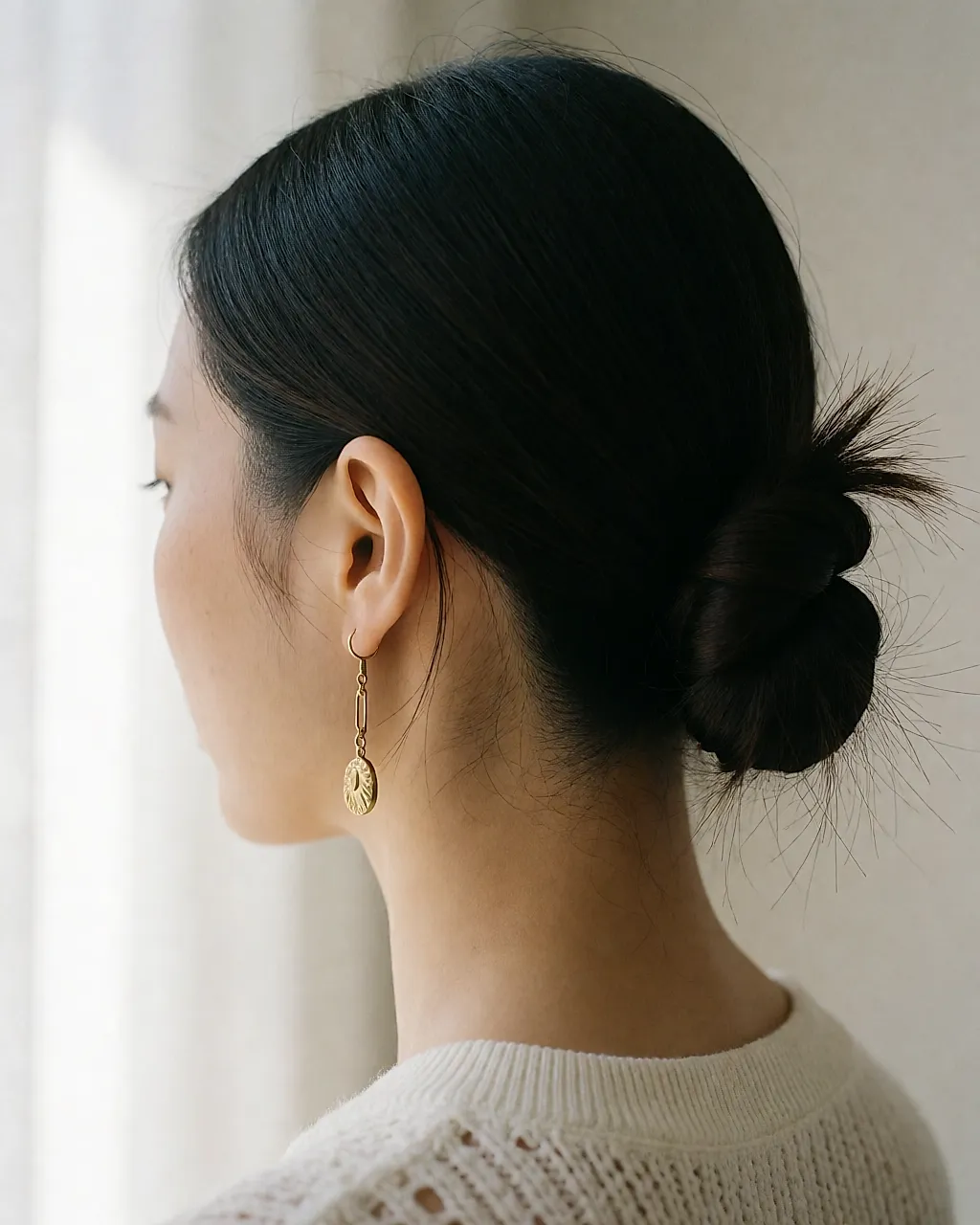
Two practical details that change how a piece wears. A heavy earring can be rescued with a silicone back, which spreads the weight across the lobe. And a clip that won't grip tight enough should be adjusted with pliers, never with your teeth.
Three questions before you pay
- Is the composition printed on the label or the product page?
- Is the plating thickness given in microns?
- Does it scratch against your skin after thirty seconds on?
If the answers stay vague, you're buying one night out, not an accessory.
Budget
I haven't tested these one by one: what follows are ballpark figures for the UK.
Costume earrings: around £5 to £25. Collar-length piece or gold-toned sautoir: £10 to £50. A well-made gold-plated piece: £25 to £80. Recycled 925 silver chain, UK-made: £50 to £150.
What moves the price? The material, the plating thickness, whether it's made locally or imported, whether there's a certification, and of course the brand. Where to find them: high-street fashion and department stores, costume jewellers in town centres, makers at markets and online, and traditional jewellers for solid silver. End-of-season sales bring prices down, but narrow the choice of finishes.
Looking after it – the habit that changes everything
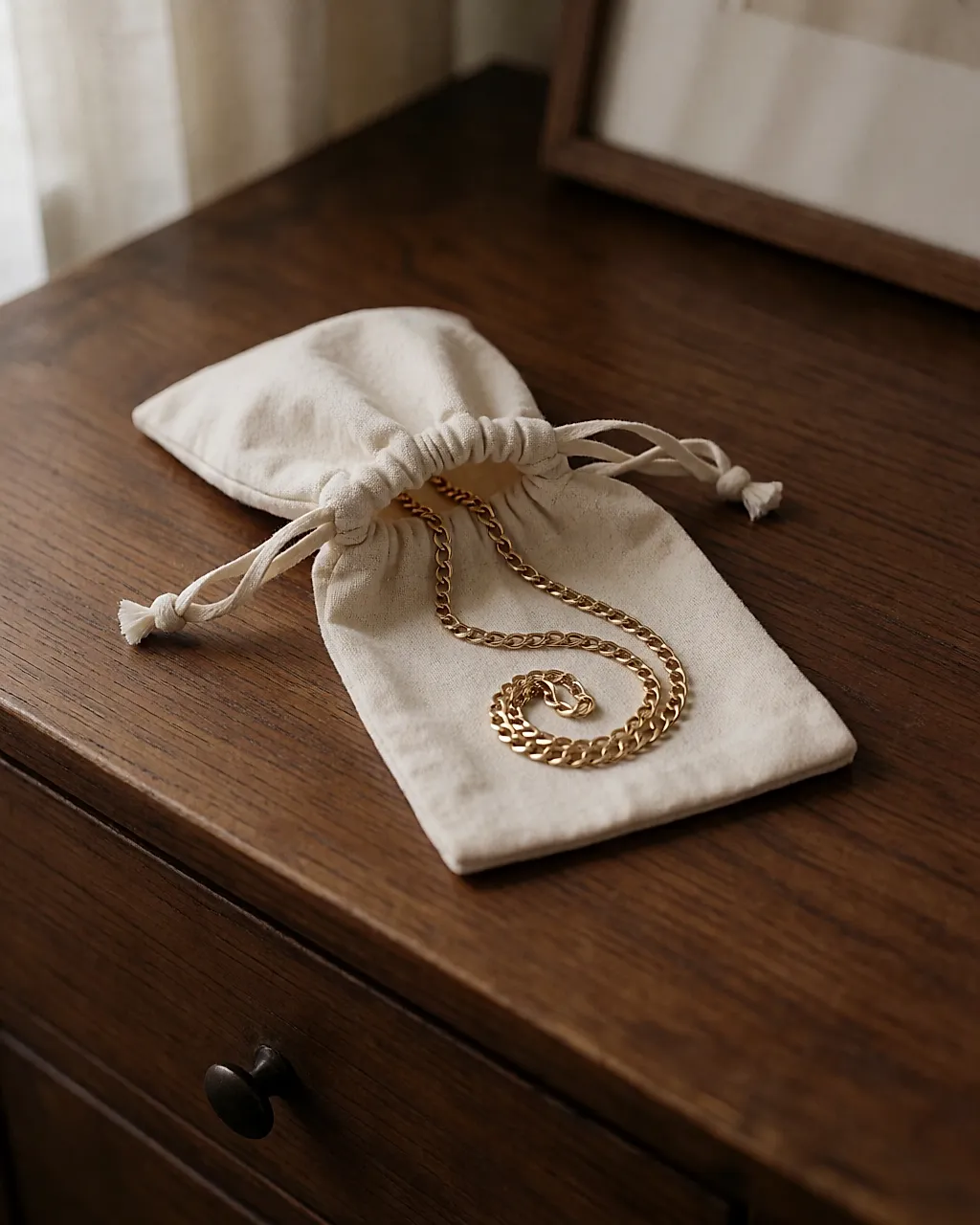
Wipe with a soft cloth after every wear. Take pieces off before a shower, perfume, moisturiser or the pool: that's where gold tone goes fastest. Store loose in a cotton pouch rather than a plastic bag. And forget homemade bicarbonate-of-soda remedies on plated pieces: they attack the gold layer.
One last useful habit: note the brand and model whenever a piece catches your eye. A broken clasp can often be replaced for a few pounds by a repairer, as long as you can track down the reference.
Sources
- Fairmined, certification for artisanal and small-scale gold – fairmined.org
- Responsible Jewellery Council, jewellery industry standards – responsiblejewellery.com
- ECHA (European Chemicals Agency), nickel restriction in jewellery – echa.europa.eu; the equivalent limit is retained in UK law under UK REACH.

Comments
Your opinion matters: rate the article, react and reply to comments.
Comments are moderated; AI-assisted comments are flagged. Text emoticons (8-), :-), <3…) are automatically shown as images.