
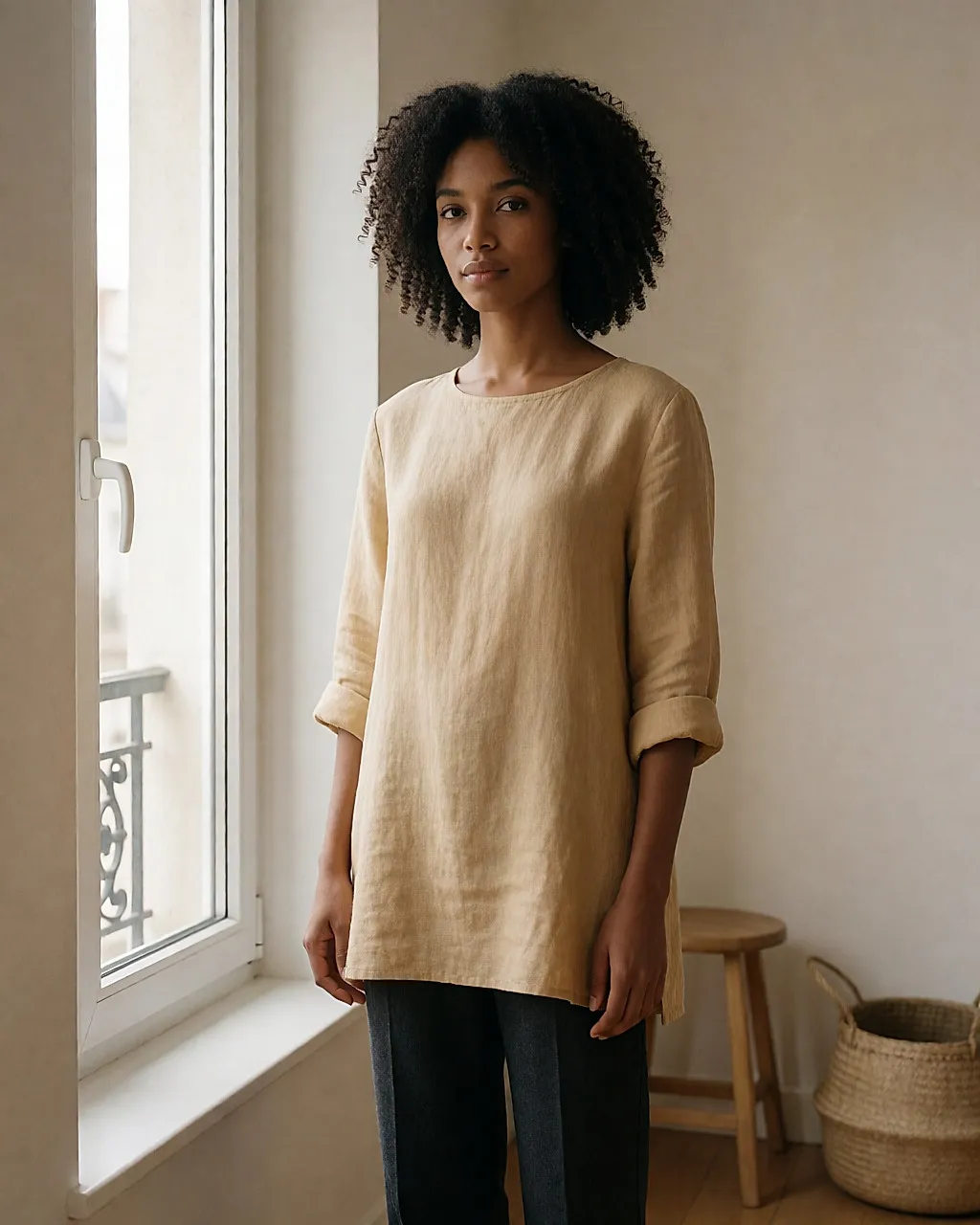
You open your wardrobe and there it is again: the tunic you bought on impulse, too long to pass as a top, too short to pass as a dress. So it ends up at the bottom of the jumper pile. The problem is almost never the piece itself — it's the cut, the fabric and the way you wear it. So let's start from the beginning: length, drape, print, certifications and budget included.
Getting the length right starts with drape
First visual check: stand with your arms by your sides; the hem should stop above the knee without ballooning around the hips. A fluid tunic cut at mid-thigh lengthens the leg; the same length in heavy sweatshirting weighs down the silhouette. Drape matters more than the centimetres printed on the label, and it is what decides whether the piece works.
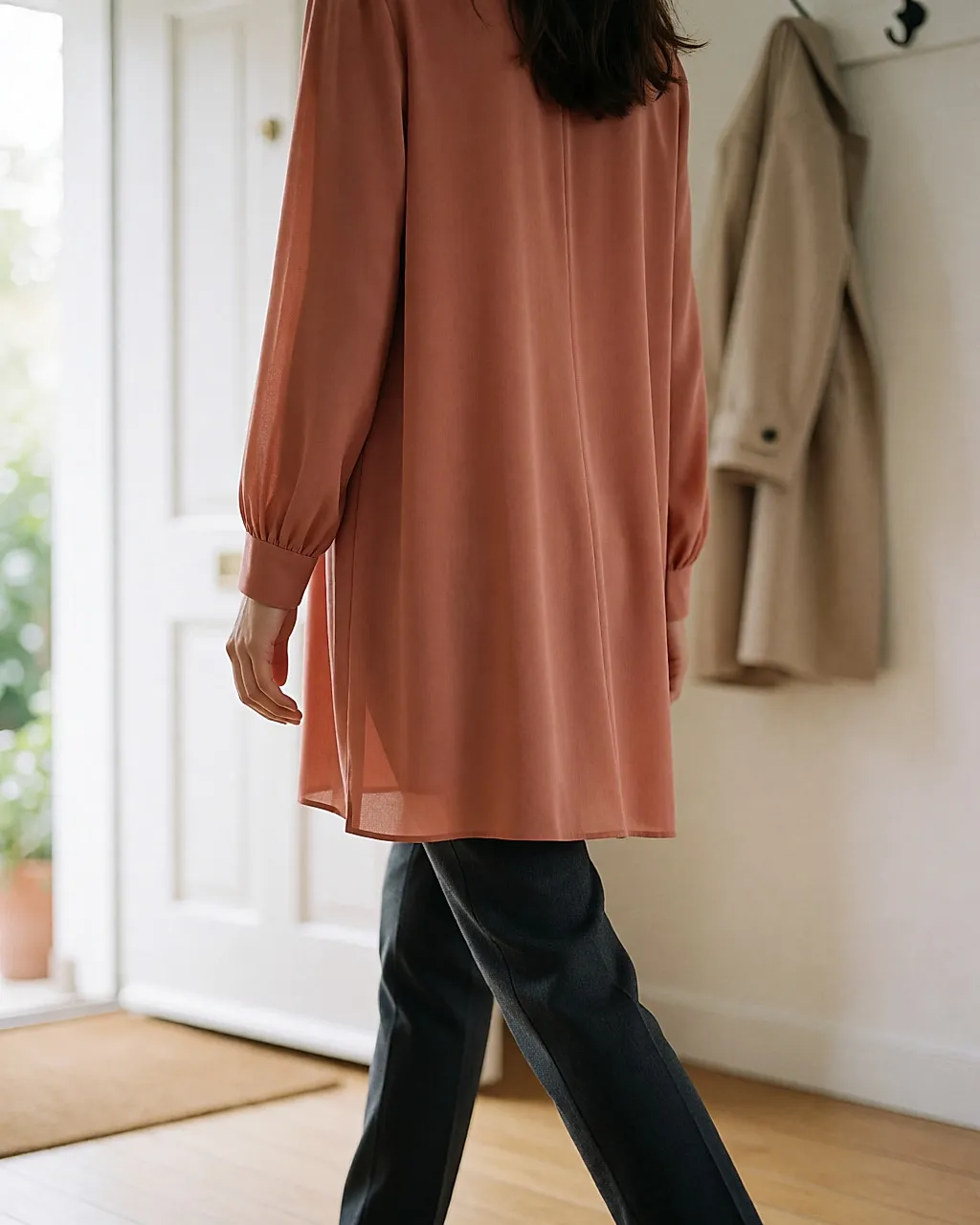
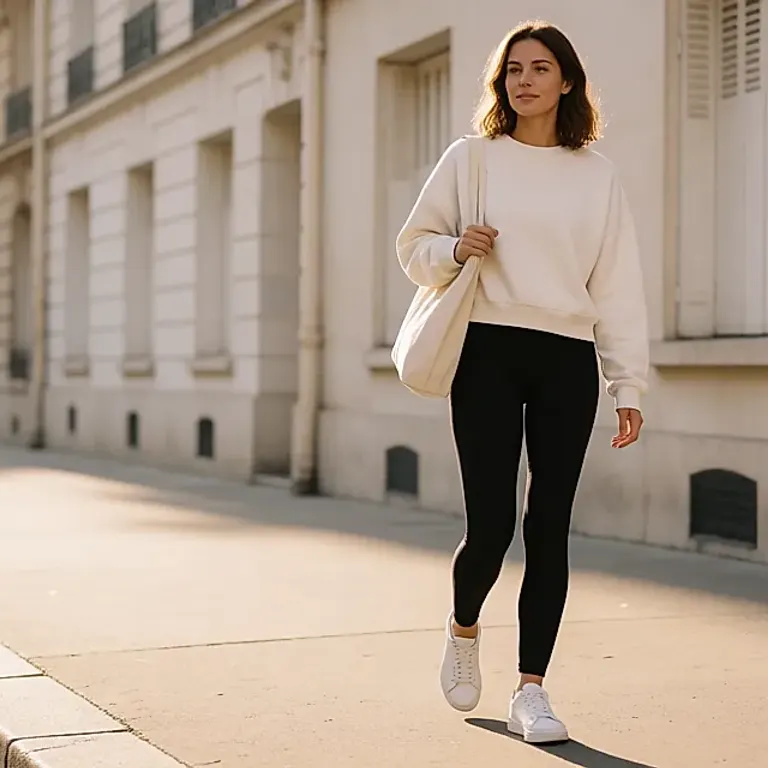
If the tunic is still too short to wear alone, go for layering: opaque leggings, high-waisted cycling shorts or straight-leg trousers in tones close to the tunic. The line stays continuous, the silhouette gains height and nothing shows. It is the styling move that does most of the work, and it costs nothing.
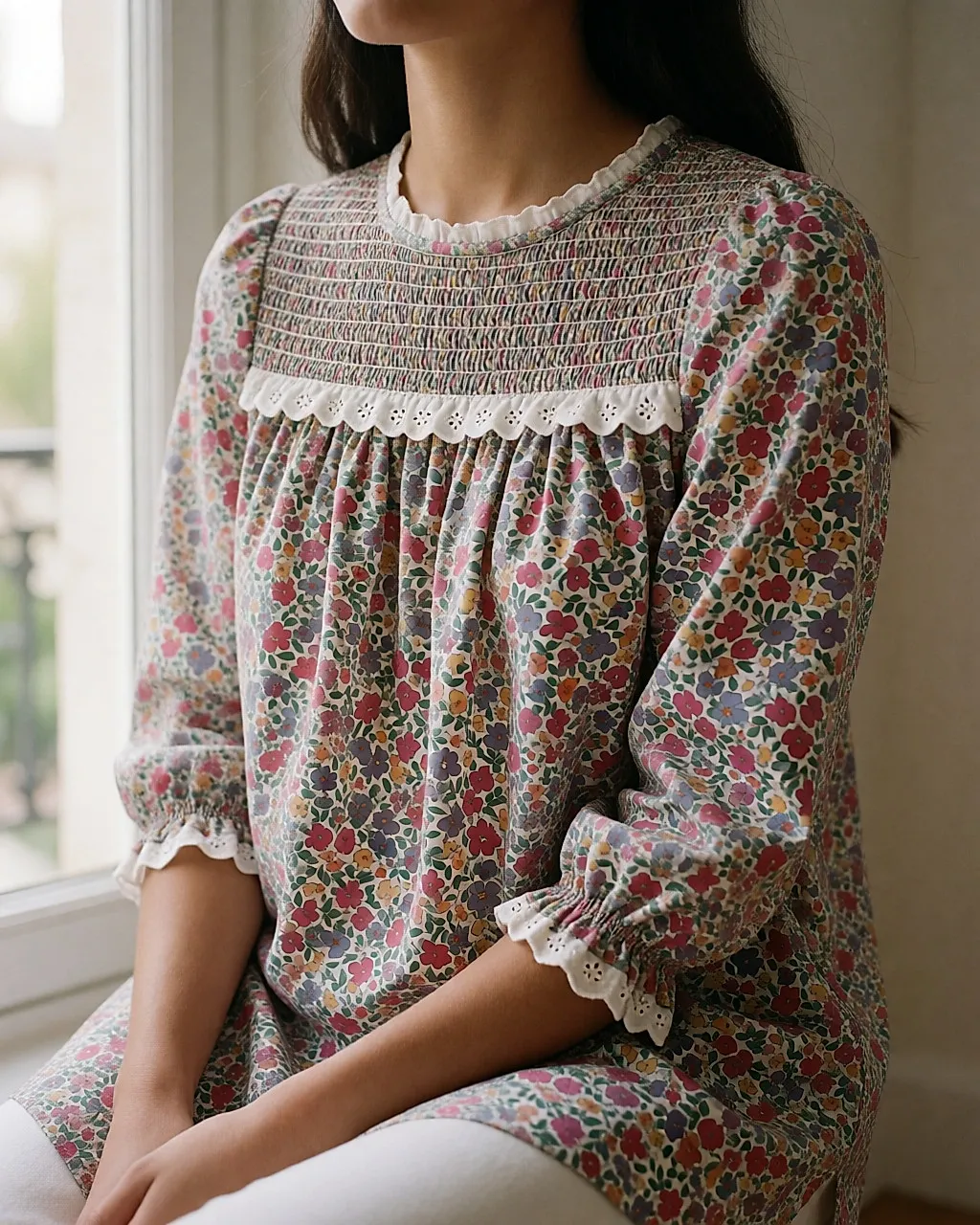
A romantic look with ditsy florals, lace and ruffles
Liberty print — now used as a catch-all for ditsy florals — remains the simplest route to a romantic look. Add broderie anglaise, a few ruffles or smocking at the bust. But beware the full look: ditsy florals, lace, ruffles and a bow in the same outfit quickly overload the silhouette. Choose one strong element, keep the rest plain, and the piece can breathe.
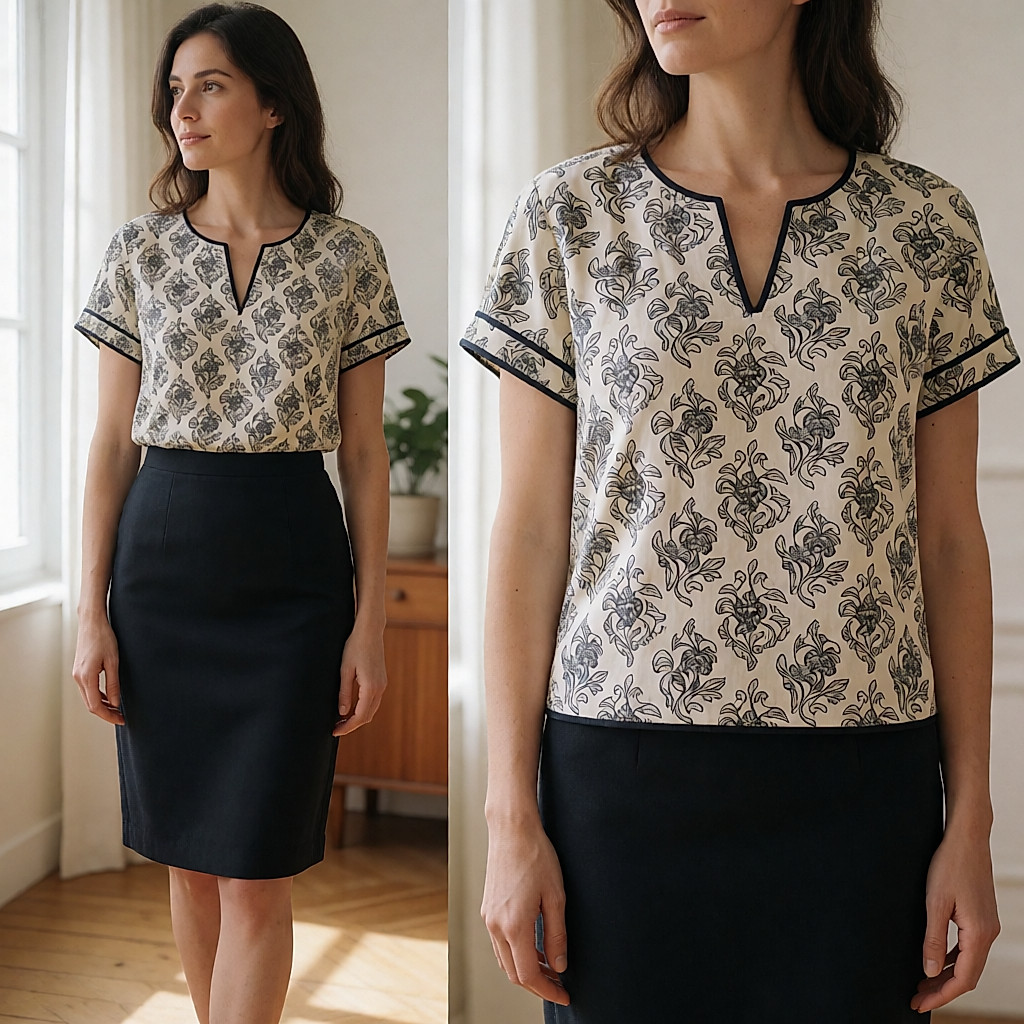
When the print does the talking
Drawn portraits, illustrations, graphic prints: these motifs turn a tunic into a character piece. In practice, they work best with a dark bottom — skinny trousers, straight-leg trousers or a pencil skirt — and structured shoes, whether court shoes, Derby shoes or ankle boots, to offset the softness. If the print speaks loudly, keep the rest of the wardrobe quiet.
Dressed-up tunics
Lace, pleats, draping, satin, matte sequins: plenty of ways to dress up a tunic without veering into costume. The contrast between a fluid fabric and a slightly close-fitting cut does all the work. Keep accessories restrained: a clutch and a long necklace, or two wide bracelets, and you are accessorised without overloading the look.
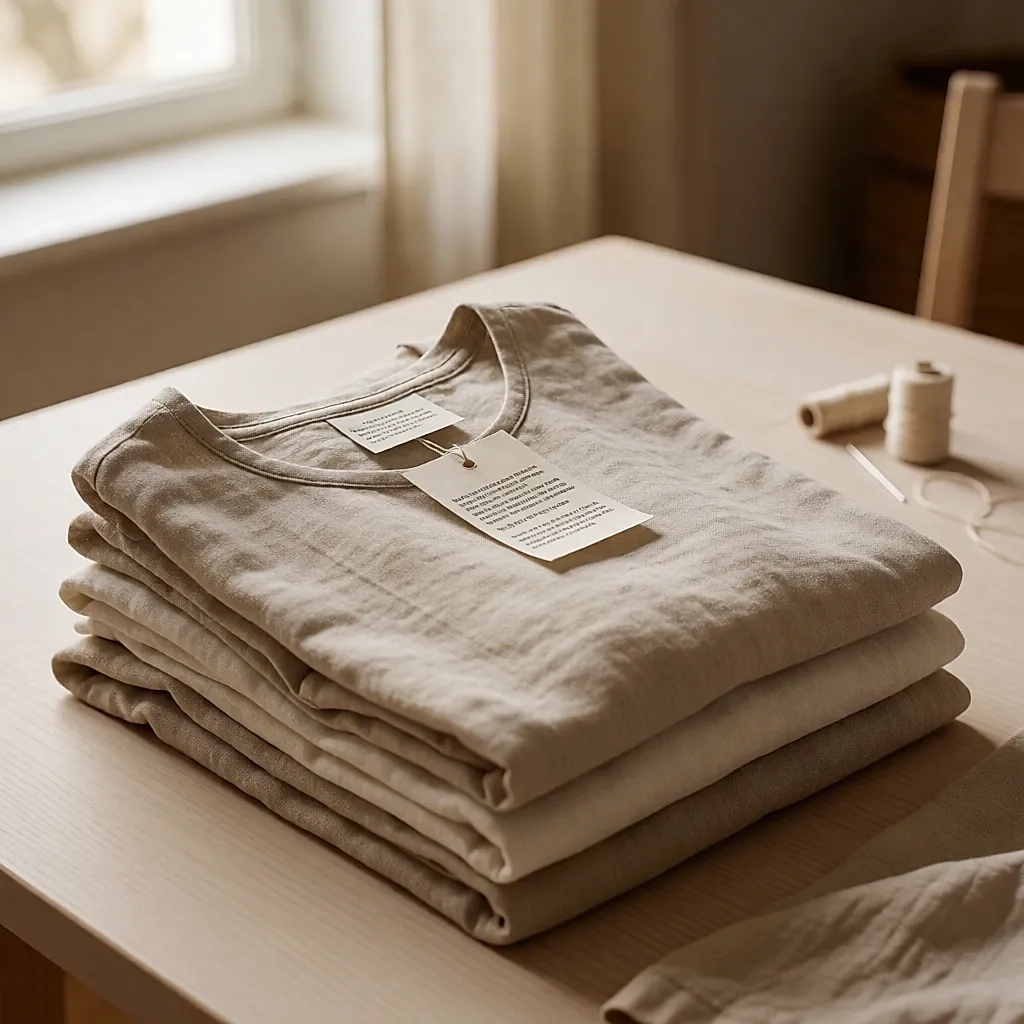
Before you get to the till, turn over the label and read three things: the composition (how much natural or regenerated cellulose fibre it contains), the care instructions (wash at 30°C, dry flat) and whether there is a certification. Certified organic cotton, or linen with a named certification: these are verifiable criteria. A green-sounding buzzword with no named certification proves nothing.
Fabric, certifications and end of life
What lasts is what can be repaired and passed on. The GOTS label covers the share of organic fibres, chemical use and labour conditions throughout the supply chain. OEKO-TEX Standard 100 limits undesirable substances in the finished product, but does not guarantee the origin of the fibre: the two do not say the same thing, and it is worth knowing that before paying more for a piece. The EU Ecolabel, meanwhile, uses life-cycle criteria. None of these labels makes a garment virtuous on its own — how often you wear it and how long it lasts do the rest. At end of life, think charity shops, online resale or textile banks at your local household waste and recycling centre.
Budget
As a rough guide, expect around £10–£30 on a mainstream high-street chain, more like £30–£70 for a mid-range tunic, and £60–£150 for a certified organic or linen piece. Second-hand, £5–£30 depending on condition and brand. An alteration — hem, taking it in, shortening the sleeves — sits around £10–£25, and often saves a badly cut piece; far cheaper than buying new. The differences come mainly from the fabric, the complexity of the pattern-cutting and the sales channel: a town-centre chain, a brand's own website, a charity shop or a resale platform.
Comments
Your opinion matters: rate the article, react and reply to comments.
Comments are moderated; AI-assisted comments are flagged. Text emoticons (8-), :-), <3…) are automatically shown as images.