
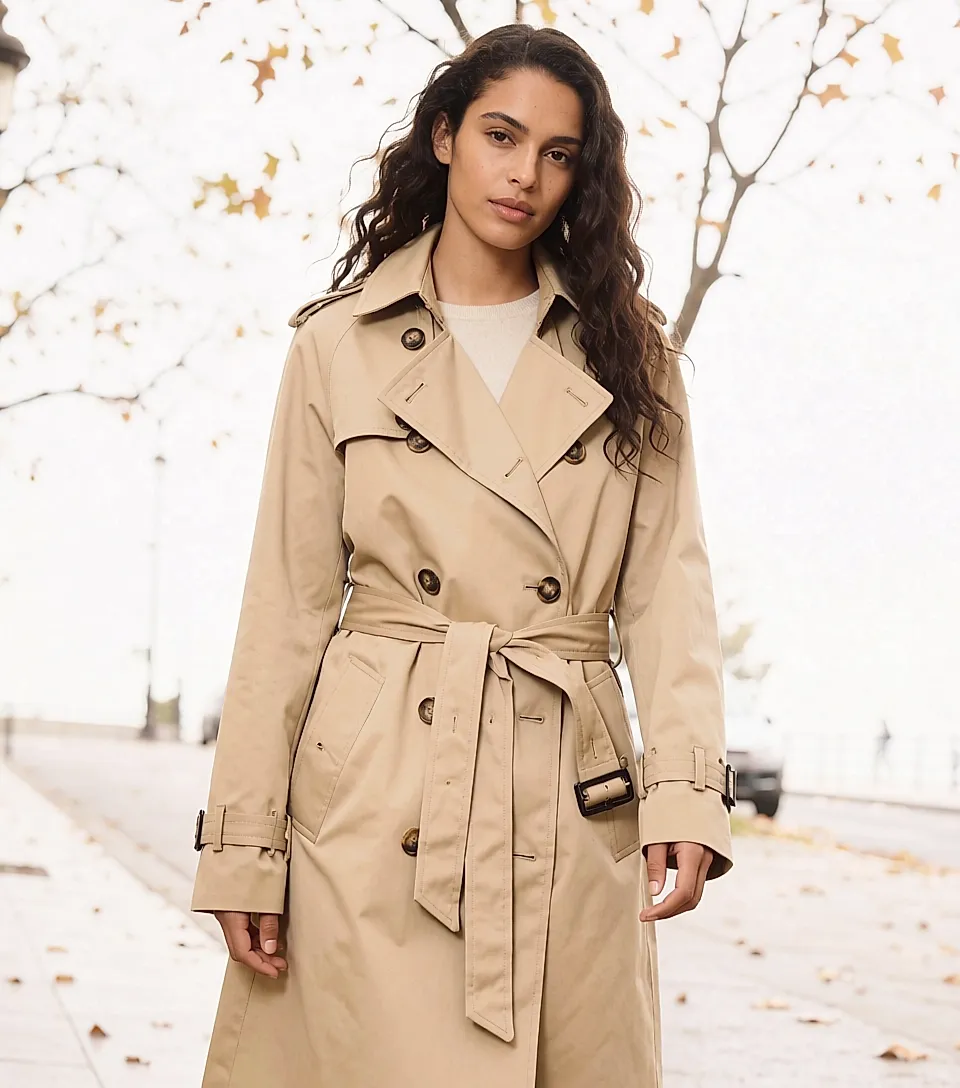
A September morning, the thermometer at 13°C and a sky that can't make up its mind: you know the scene. Too cool for a light jacket, too mild to dig out the parka. That is exactly the trench coat's moment. In a century it has gone from the trenches to the pavement without ever really leaving our shoulders, becoming a staple that slots easily into an already full wardrobe.
Born in the rain
The story starts with Thomas Burberry, the British clothier behind gabardine: a tightly woven fabric that keeps out showers and wind without weighing down the silhouette. At the start of the First World War, he turned it into a coat for officers, with a double-breasted front, epaulettes, a belt and deep pockets. The name stuck, since trench refers to the battlefield trenches. After 1918 the piece left the front for the city, and it has stayed ever since.
Fabric, cut and drape: what you notice straight away
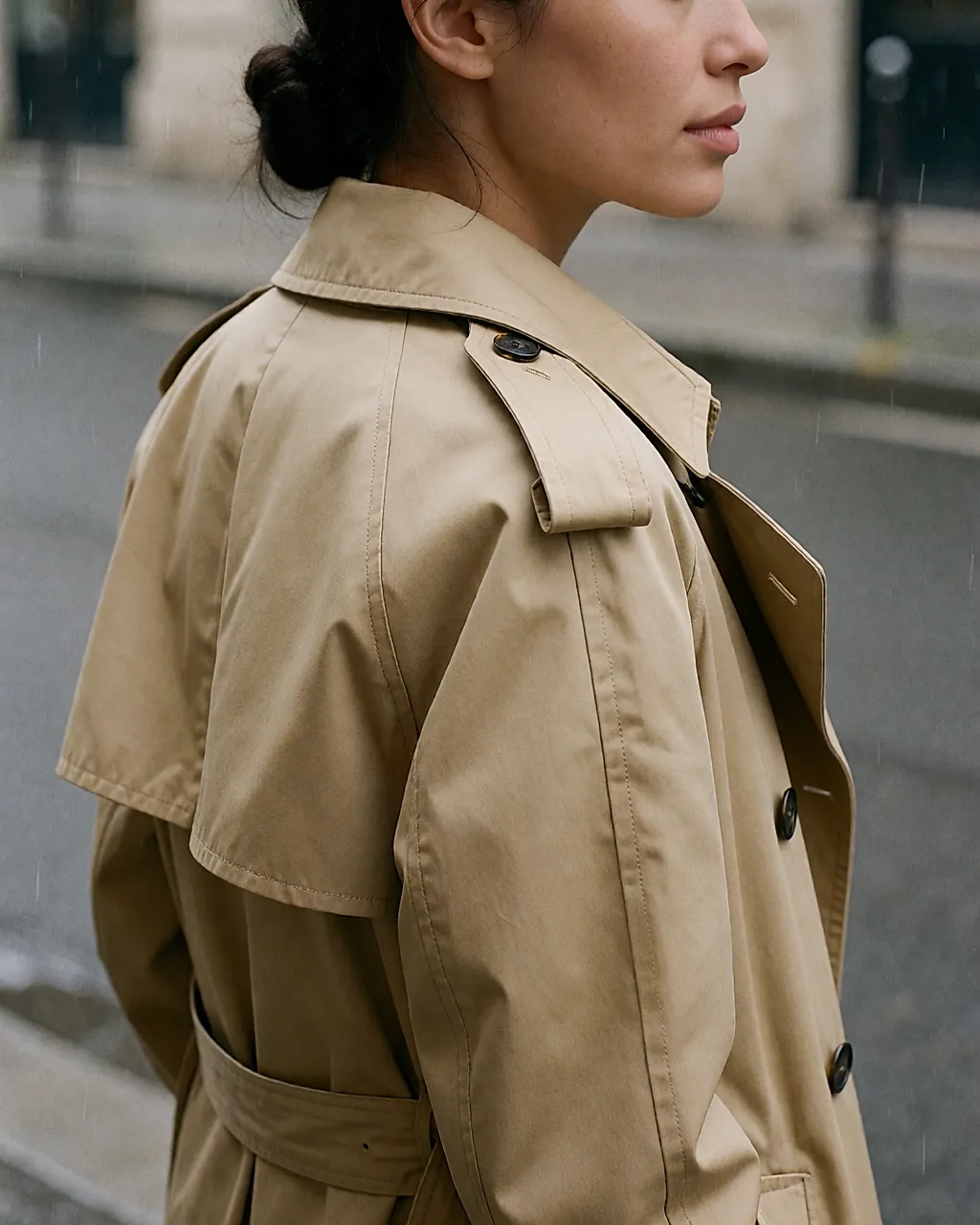
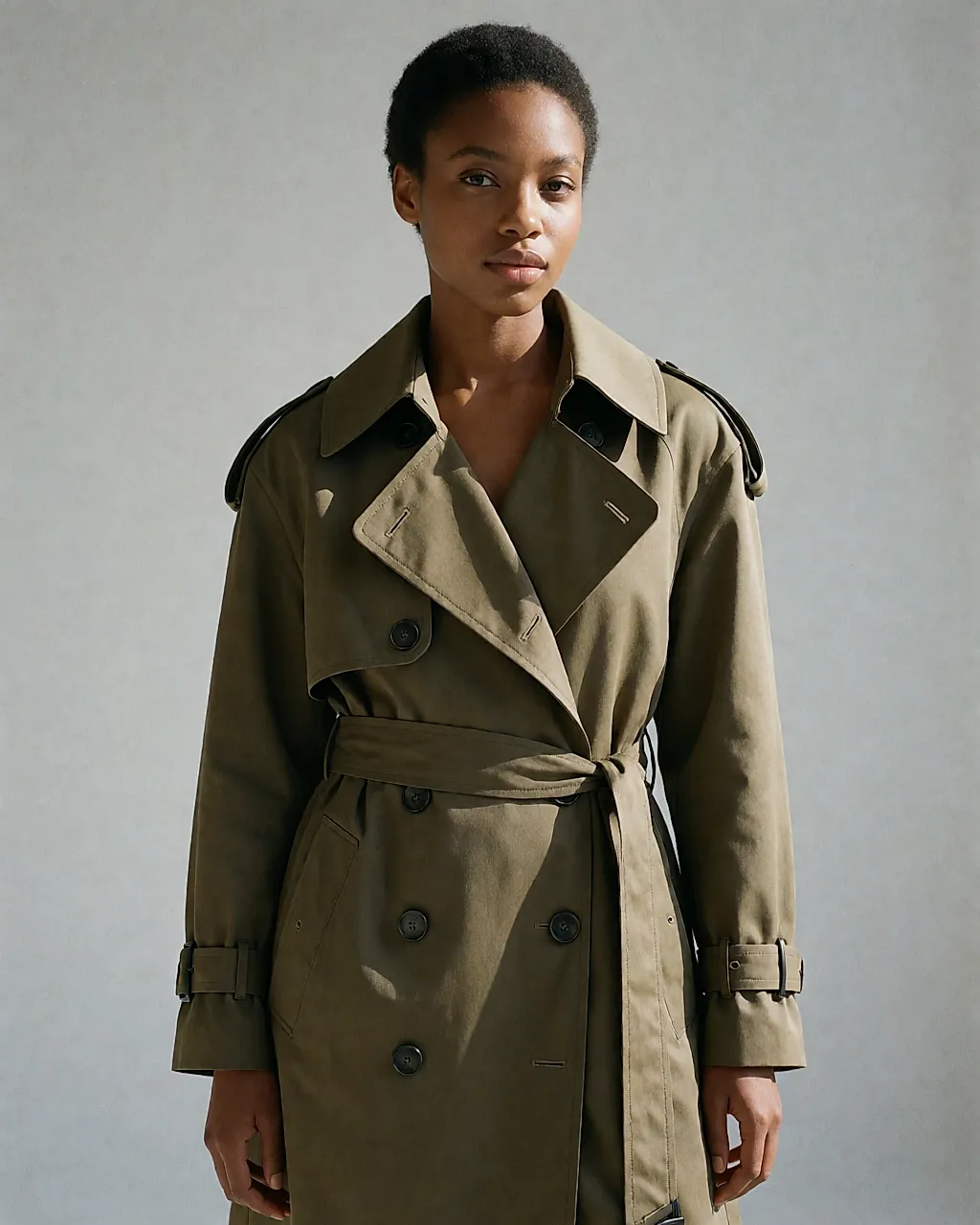
Before you look at the brand, look at the fabric. A dense cotton gabardine gives a clean, firm drape, develops a patina and tends to age better than a synthetic-heavy blend, which can quickly go shiny and hold creases. Turn the coat inside out and read the label: a high synthetic content is also obvious to the touch, a crunchy texture that can crease easily when you sit down.
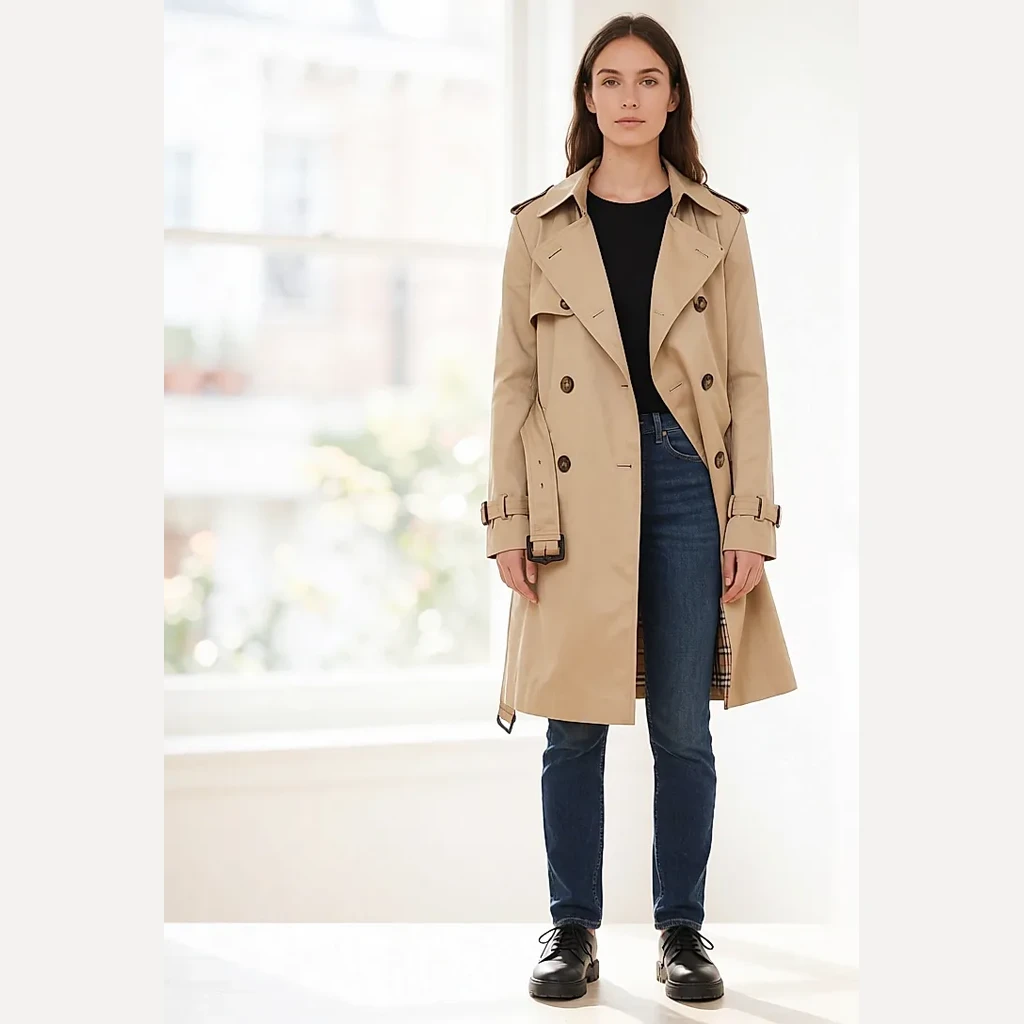
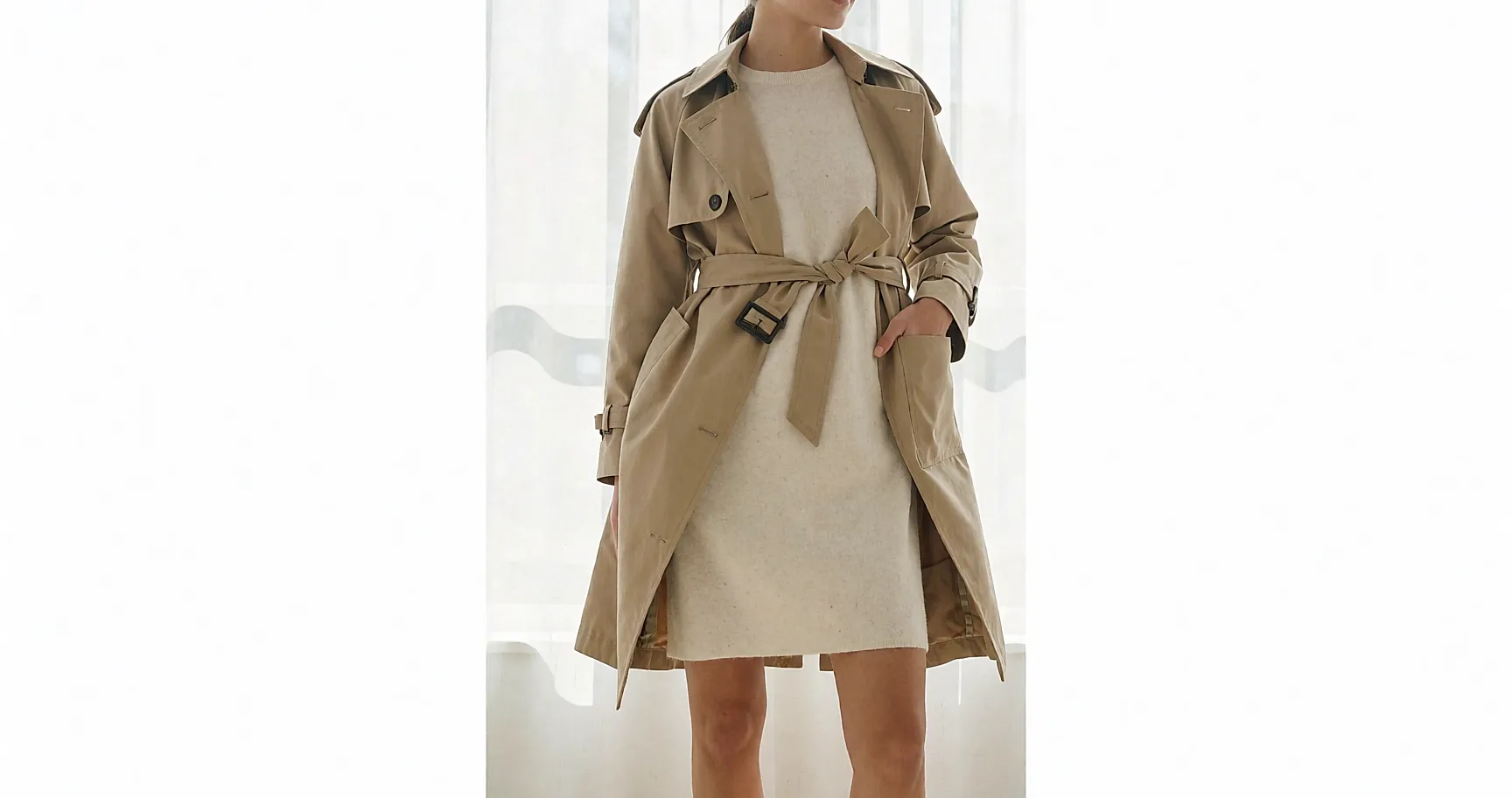
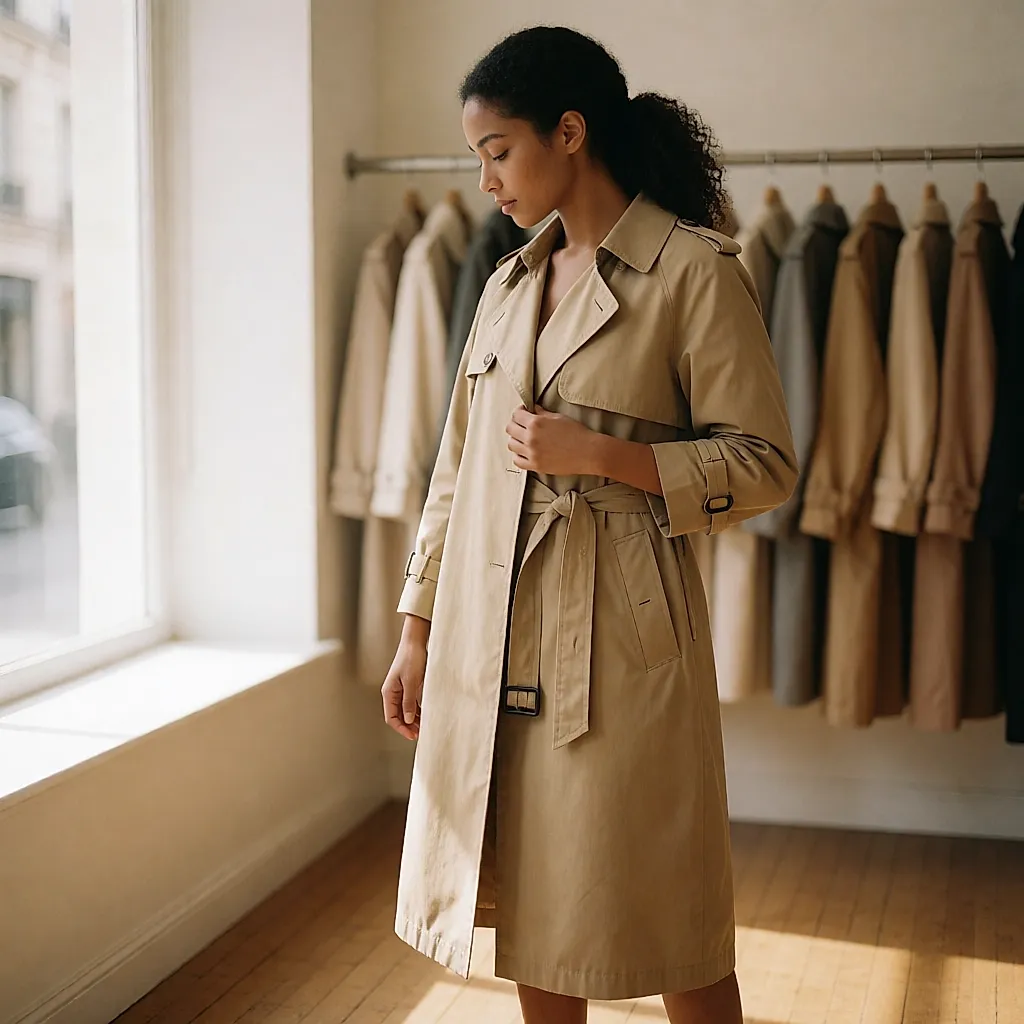
Then there is the question of shoulders and length. The armhole should let you raise your arms without pulling. Above the knee, a trench coat shortens the silhouette; at mid-calf, it lengthens it. If in doubt, knee-length remains a versatile compromise for a staple you will wear for several seasons.
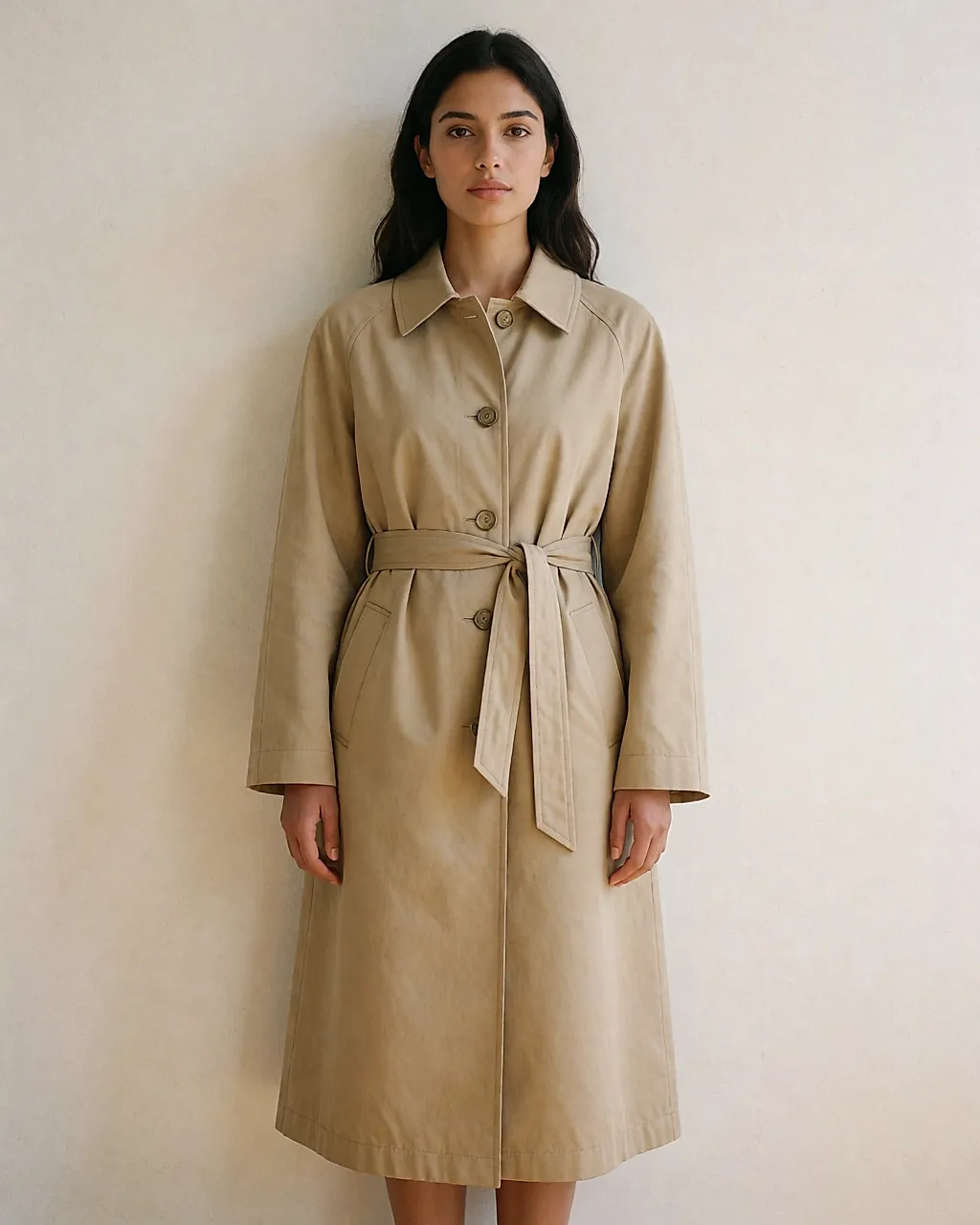
How to wear it without looking like a detective
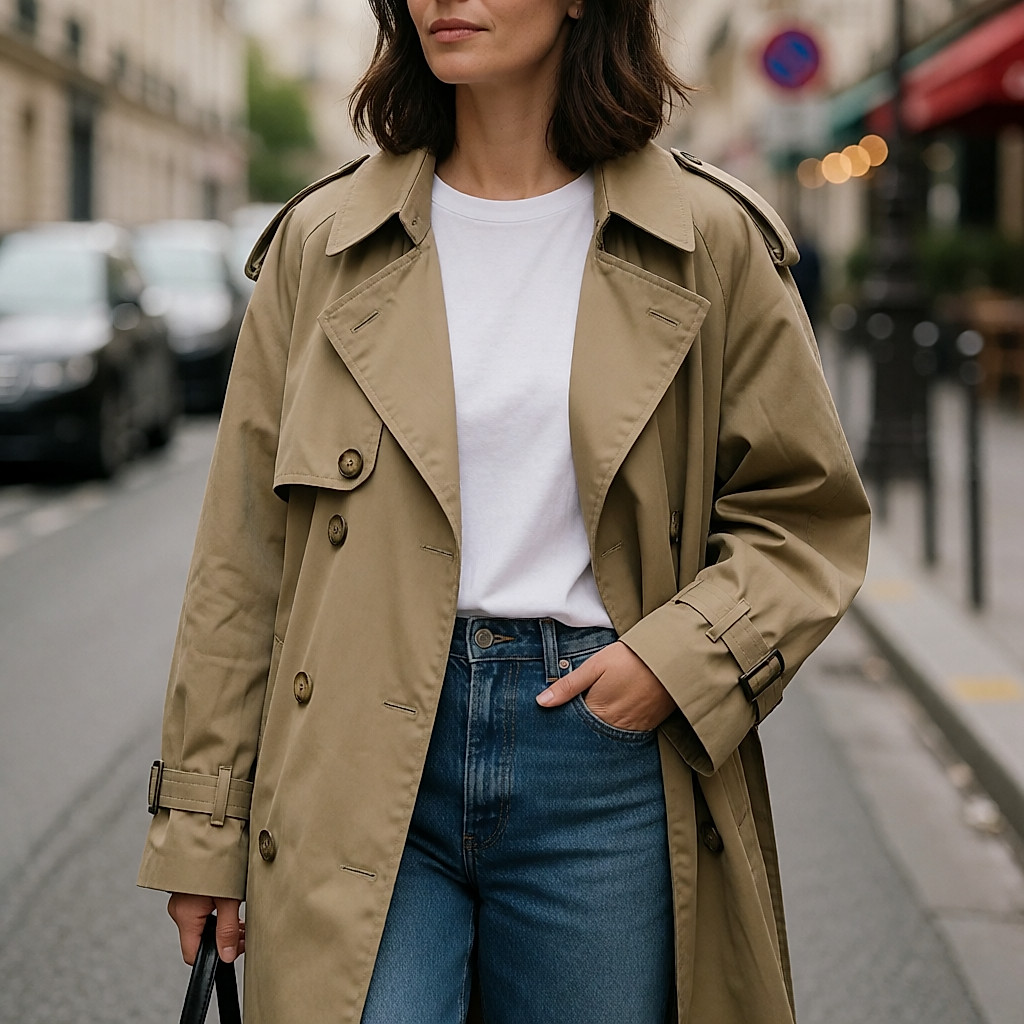
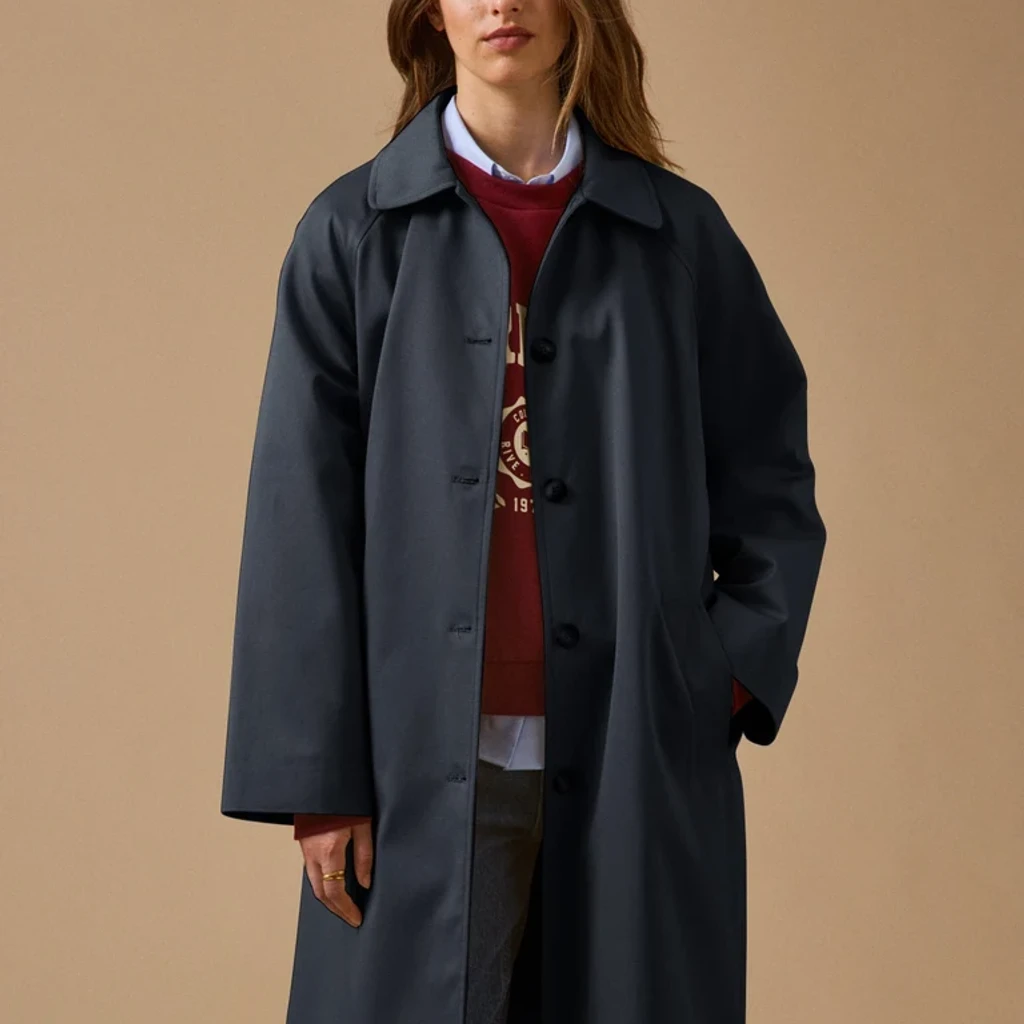
A trench coat layers effortlessly. Buttoned and belted over a dress or fine knit, it works as a complete look. Worn open over a hoodie and jeans, it softens a streetwear outfit. To make it a statement piece, choose a discreet print — checks, chevron prints — and keep the rest understated. Knot the belt rather than buckling it, push the sleeves up slightly: two small gestures are enough to finish the outfit without trying too hard.
Organic cotton, labels, second-hand
When it comes to fabric, a few certifications are worth more than a marketing line. The GOTS label certifies an organic textile chain, from field to finished product. OEKO-TEX Standard 100 certifies that the product has been tested and meets limits for certain substances, but it says nothing about the origin of the fibres. GRS sets rules for the share of recycled material. None of them makes a trench coat last forever: they document only part of how it was made. Second-hand is often a lower-impact choice, because it extends the life of a coat that has already been produced.
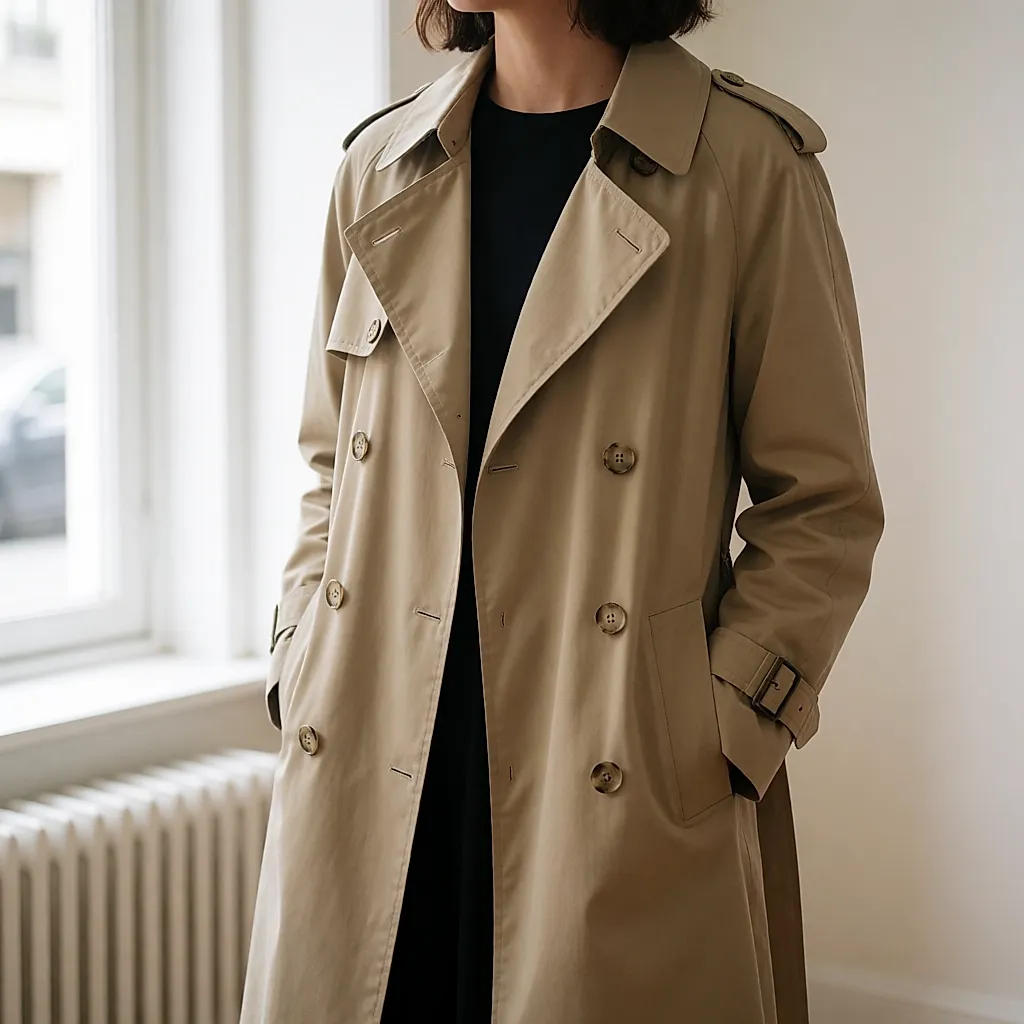
Test the drape in store: try the trench coat on over the jacket or jumper you will actually wear with it. A coat that fails this test will end up in the wardrobe, even if it looks good on the hanger.
Budget
Expect to pay roughly £40 to £75 for a polyester trench coat from a high-street retailer or ordered online: the cut may hold up, but the fabric can crease quickly. Between about £100 and £250, you move into cotton gabardine, sometimes organic, from mid-range brands, both in shops and online. Above £350, you are mainly paying for the fabric, make and pattern-cutting. The price depends on the fibre, where it was made, how complex the details are (tabs, lining, seams) and the sales channel. Second-hand, prices often sit between £20 and £100 depending on condition and brand.


Comments
Your opinion matters: rate the article, react and reply to comments.
Comments are moderated; AI-assisted comments are flagged. Text emoticons (8-), :-), <3…) are automatically shown as images.