

The strap that came with your smartwatch does the job, and that's already a lot to ask of it. That grey silicone that picks up the fluorescent light and sticks to your wrist at the first hint of sweat – you put up with it out of habit, rarely out of any real fondness. The case itself can stay the same for years: everything happens at the strap end.
The lug width: the number to know by heart
Get out a ruler marked in millimetres. Measure the gap between the two lugs of the case – the little claws that hold the strap in place. That's the lug width. It's often 18, 20 or 22 mm, sometimes 16 mm on slimmer cases. A strap that's too narrow shifts about and squeaks; too wide and it won't go in at all. Who wants to be fiddling about with that?
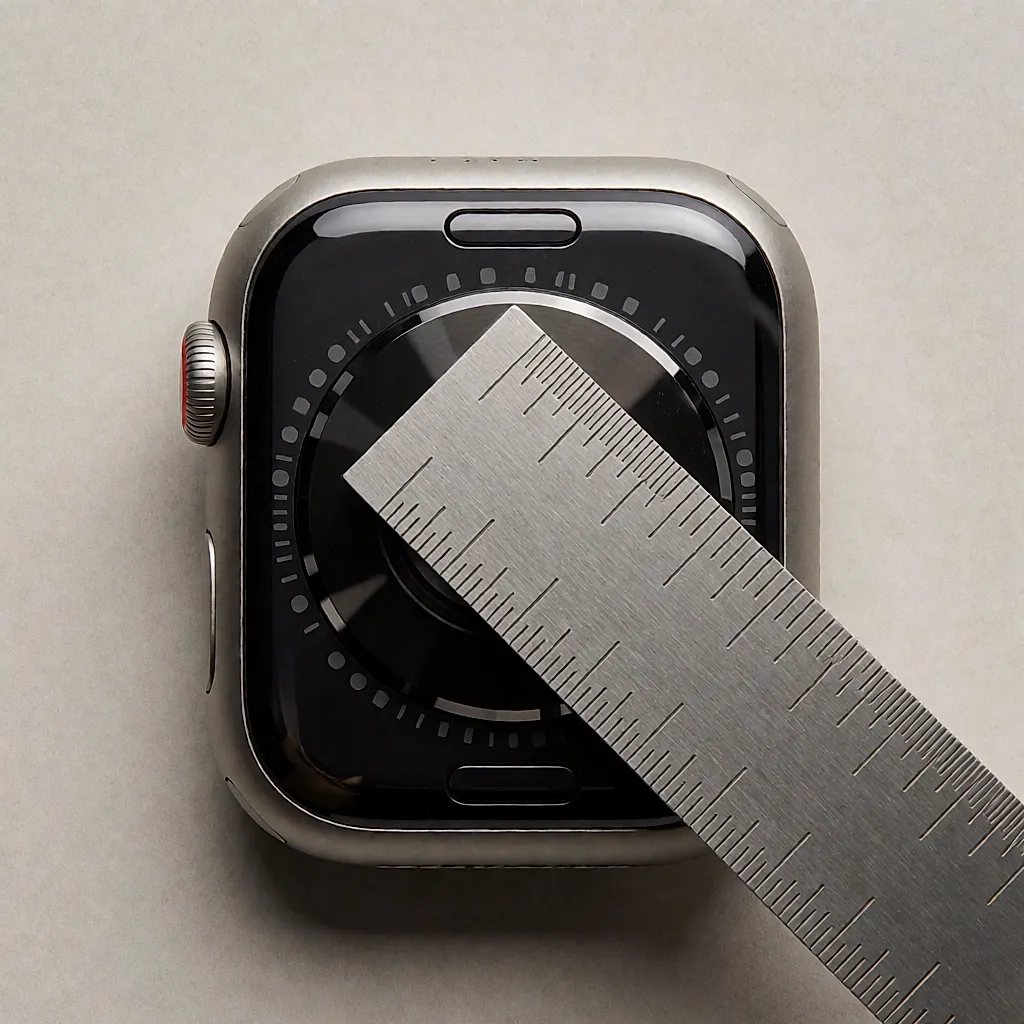
Second check, less obvious: the thickness of the strap where it slots in, and the shape of the ends. Some cases need curved ends, others a cut-out around the case back. Have a look at the back of your watch before you order: a lovely strap that's been cut wrong will end up in the drawer of mistakes.
The fitting system splits the market in two
On one side, the classic spring bar: two pins you compress, a small screwdriver or a well-placed fingernail, and the strap comes off. It's the watchmaking standard, and many strap makers offer it. On the other, proprietary systems – Apple's or Garmin's, for instance – where the strap attaches with a mechanism specific to the brand. Very comfortable, but they take you back to the brand's own catalogue, or to an adaptor.
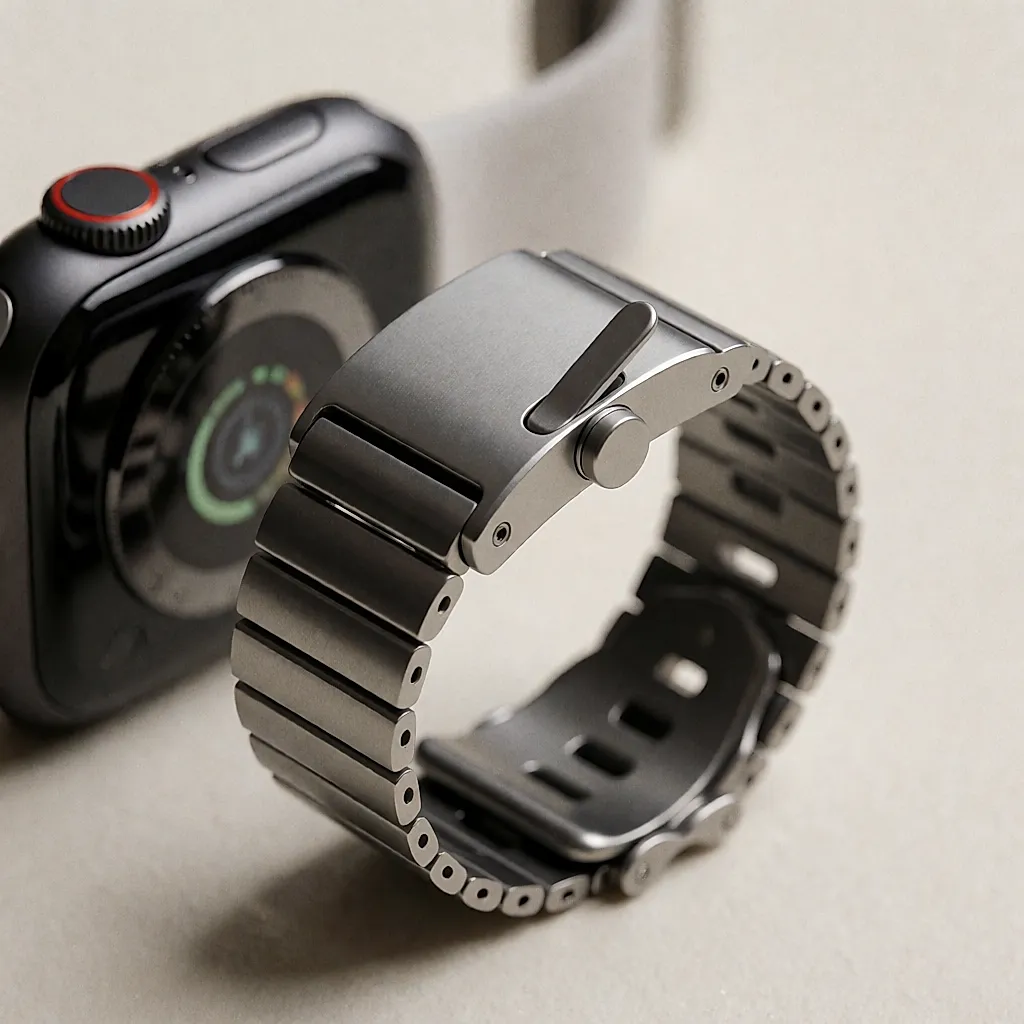
That second route isn't a punishment: adaptors exist and can hold up well. Just check that they're listed for your exact case, and not for 'a recent smartwatch'. An approximate adaptor is the sort of detail that announces itself the moment you take off your jacket.
The case stays as water-resistant as it was; the strap doesn't
Let's be clear: changing the strap doesn't usually compromise the case's water-resistance rating. What does change is your relationship with water. Wet leather takes hours to dry, stiffens and goes pale at the creases. If you swim with your watch on, better to know that before you order.
And if the watch is designed for swimming, a third-party strap hasn't necessarily been tested for it. So leather stays for dry days – office, dinner, weekend – and the original goes back on for the pool. It's no great hardship: two straps worn in rotation tend to wear out more slowly.
Leather, steel, textile: each has its own real life
Leather is the one that makes the difference. On a black case, tan or cognac warms up the whole thing and gives your wrist the look of a classic watch. It develops a patina, ages well, and hates exercise – save it for days when you're not running for the bus. Look for vegetable tanning where it's stated: the leather takes on a nicer patina, and the smell is less chemical.
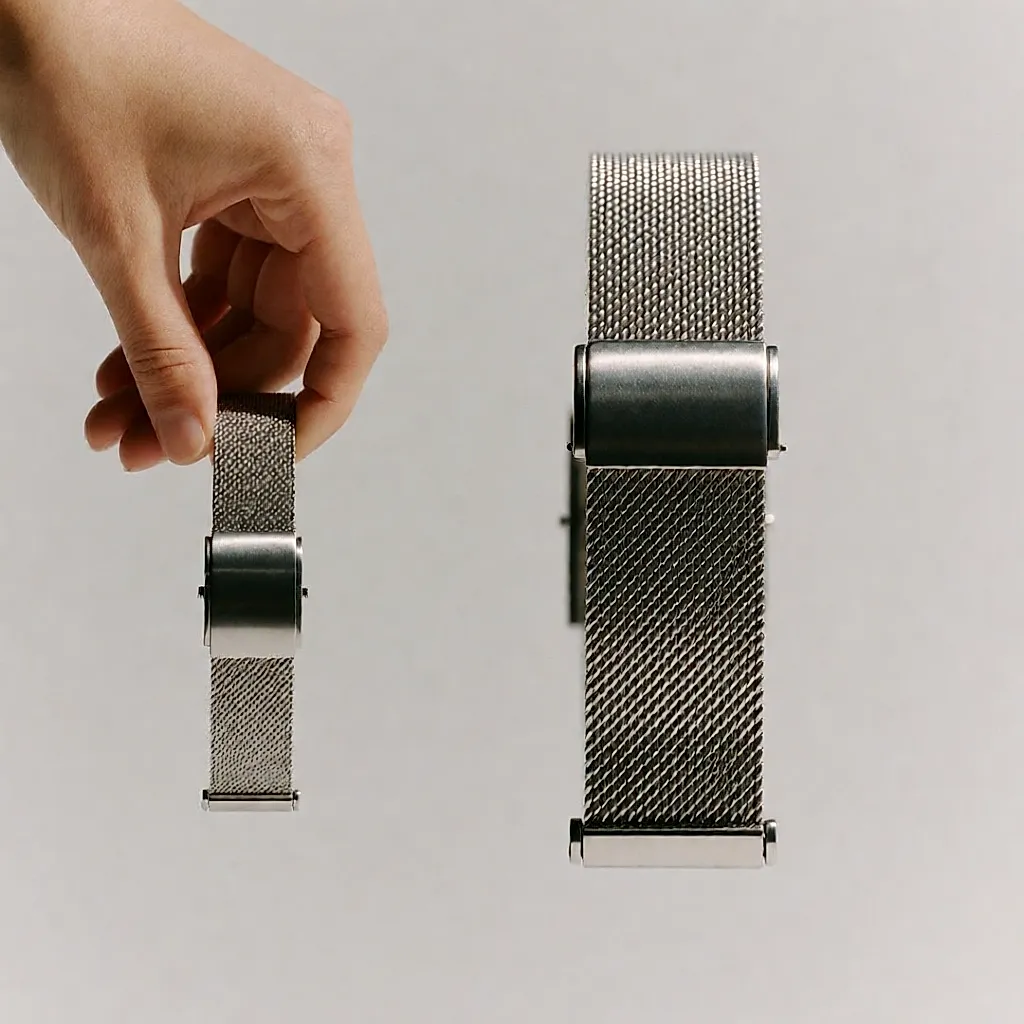
Steel plays the jewellery card: a Milanese mesh or a three-link bracelet turns a watch into a dinner accessory. It's heavy, cold on first contact, and it picks up scratches – but a watchmaker can repolish it, which helps it last. Textile, finally, remains king for sport: washable, light and quick to dry, provided you check the synthetic fibre content on the label.
Care: the step everyone forgets
In practice, the usual advice is to feed leather with a colourless cream and let it dry well away from a radiator. Textile washes by hand in warm water and dries in the air. Above all, alternate: two straps worn in turn tend to last longer than one worn every day.
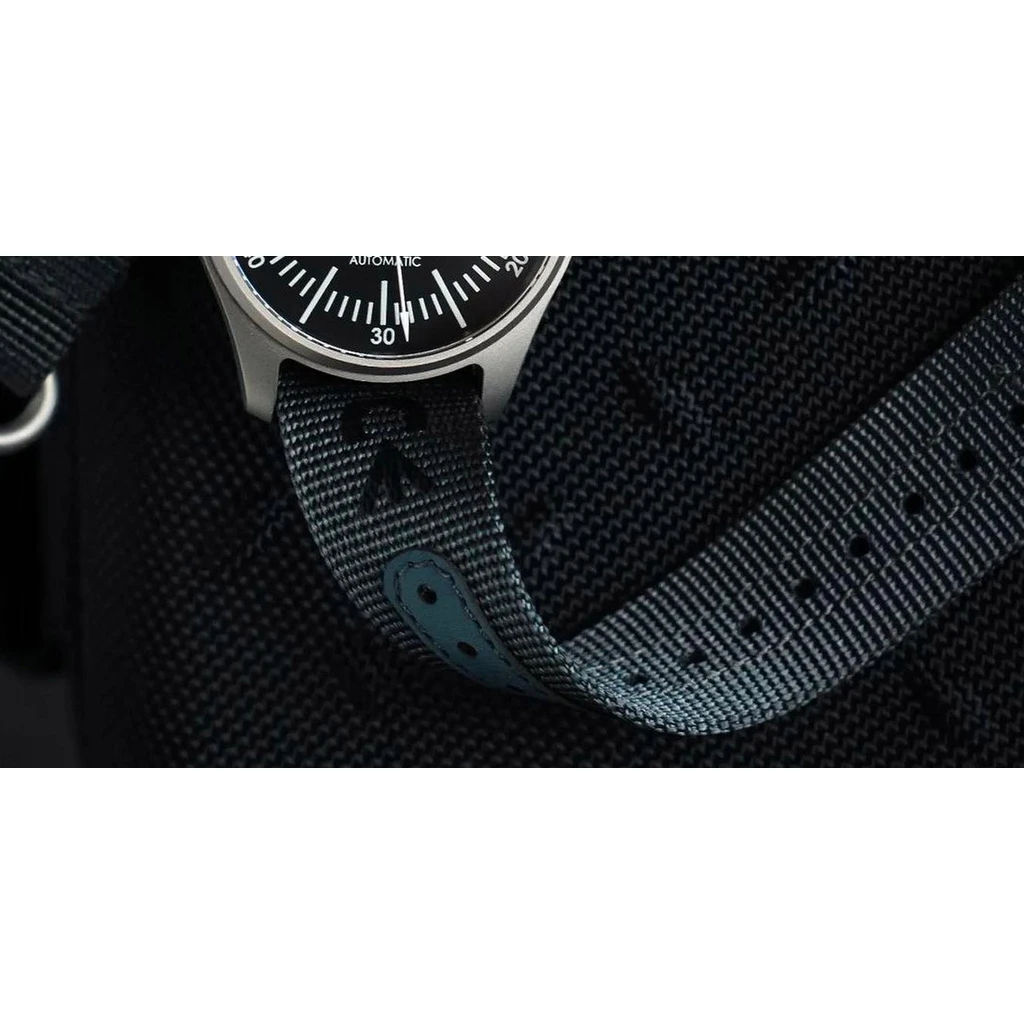
One last habit to watch: perfume sprayed on the wrist and hand cream can both damage leather. Apply them elsewhere, or let them dry first. Your strap will thank you.
What it costs
Expect to pay around £15 to £40 for a decent leather strap online or from an accessories shop, £50 to £100 for a well-finished vegetable-tanned one, and £100 to £250 for good-quality steel. Official straps from the big brands can sit above that: that's often the price of the proprietary system.
Where to find them? A watchmaker or jeweller for fitting and advice, accessories shops and specialist websites for choice. Fitting is sometimes included when you buy the strap; otherwise, expect a small charge.
Before you order, note down three things: the width in millimetres, the thickness the case will accept, and the type of fitting. A photo of the back of the watch on your phone saves a lot of returns.
Really, you're not changing your watch: you're changing your wrist. Leather for office days, steel for evenings, the original silicone for the gym – three straps, one watch, and the impression of owning three. Start with the one that matches your real week, not the one you wish you had.



Comments
Your opinion matters: rate the article, react and reply to comments.
Comments are moderated; AI-assisted comments are flagged. Text emoticons (8-), :-), <3…) are automatically shown as images.