
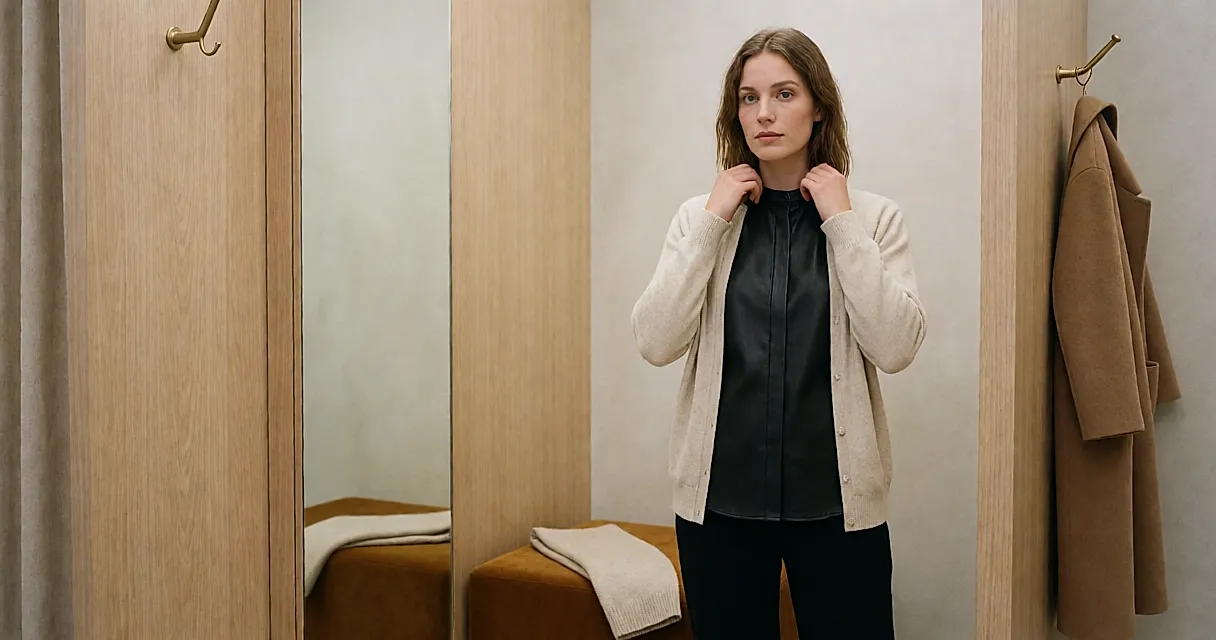
7.40am. The roll-neck is on, the coat is on, and the same silly question comes round every November morning: what do you put underneath? A leather shirt so fine it does not creak when you lift your arm to reach for coffee, for instance. The piece we thought was welded to October jackets has moved up a layer: it is now a first layer, against the skin, under wool.
The jacket that became a base layer
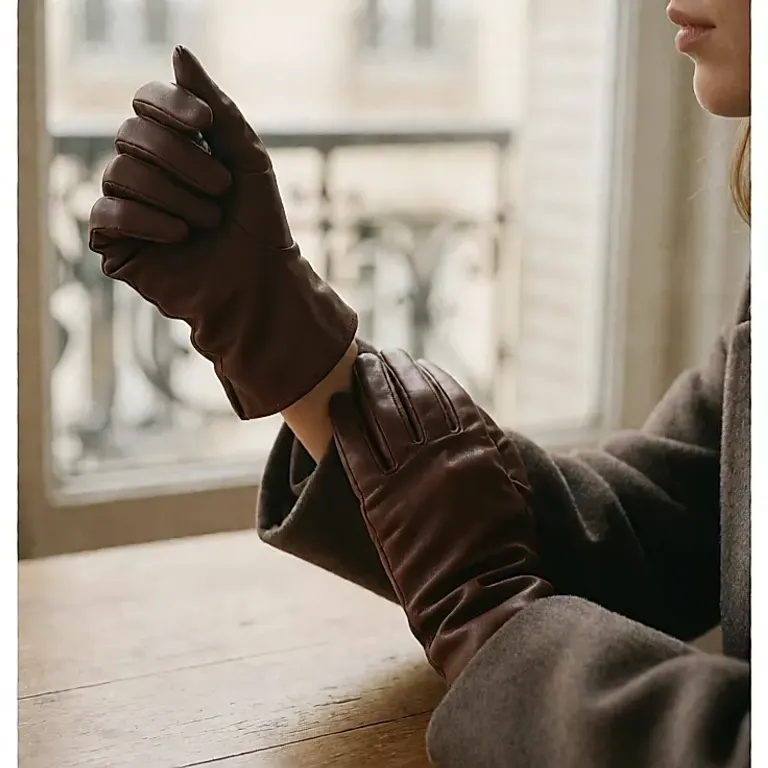
What makes this possible is a material, not a styling trick. A plongé lambskin, tanned and then softened until it is almost textile-like, creases in the hand like a slightly heavy poplin. Soft drape, matte sheen, no rigid structure: fine leather no longer feels like armour, it feels like a second skin. You find it as a shirt, a T-shirt, a camisole, sometimes a bralette; shapes that would have made no sense in jacket leather.
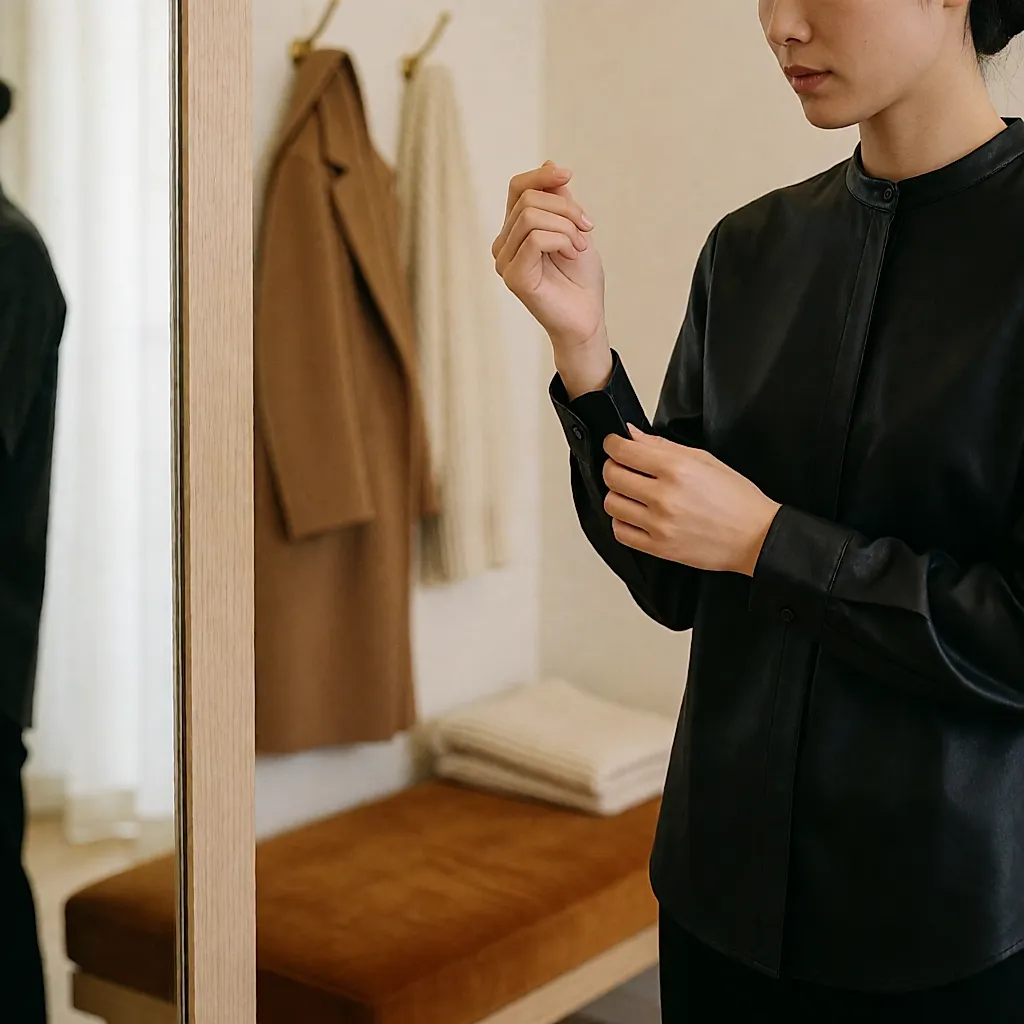
Do not ask it to do what it cannot. It does not replace knitwear for warmth, and it is not what you would choose for a long day in overheated interiors. Its job is elsewhere. It gives structure to the layer above, stops a jumper slumping at the shoulders, and brings a subtle sheen that lifts an all-wool outfit. Under a cardigan, it is the difference between 'I am warmly covered' and 'I look put together'.
The outer layer decides the style
This is where it is decided, and often where things go wrong in the fitting room. A fine close-fitting merino crew neck works with a stripped-back leather shirt: no chest pocket, no studs, discreet buttons and fine topstitching. The slightest bulky detail shows through the knit like something left in a pocket. Long or three-quarter sleeves, collar open by one or two buttons; any more and the collar stops a roll-neck sitting properly.
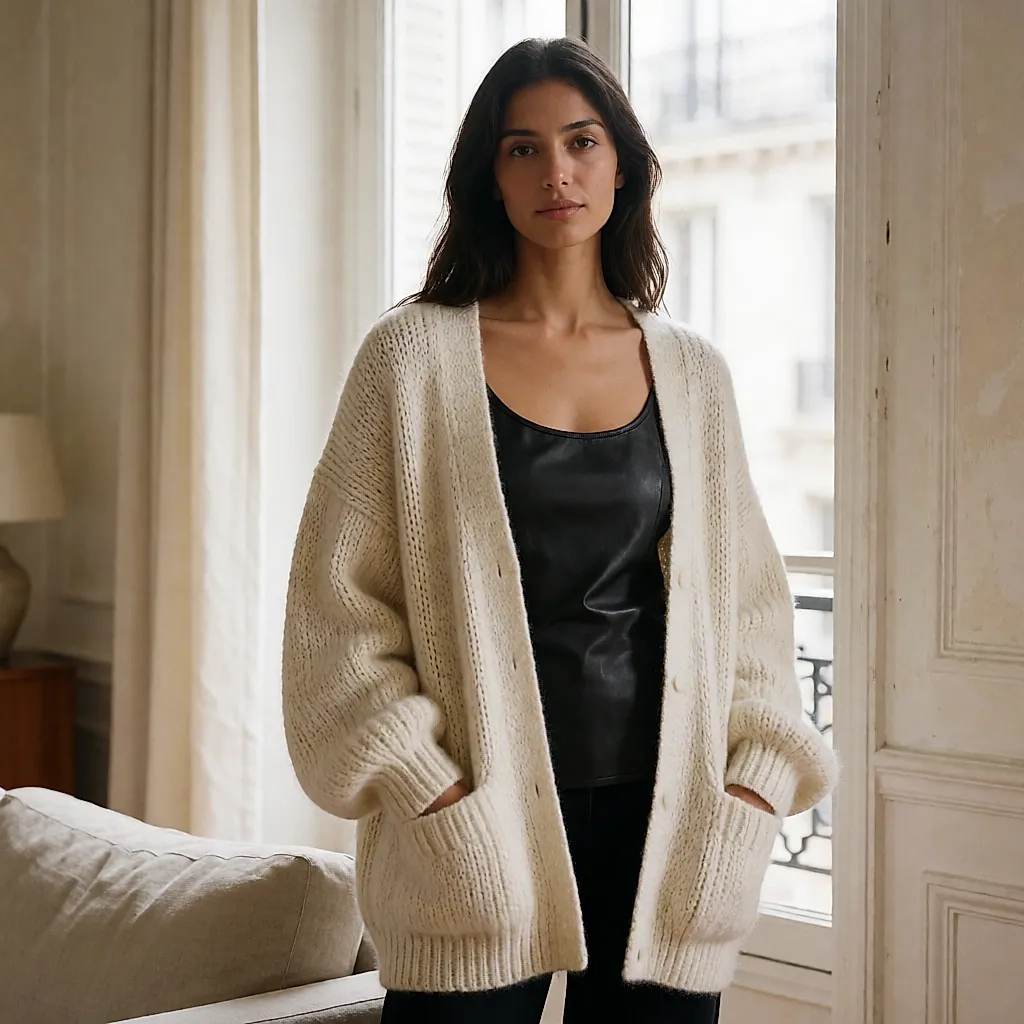
A chunky knit worn open, a loose cardigan, a tailored jacket: the logic flips. The more volume in the outer layer, the closer the leather piece should fit. A fitted camisole, a bralette, a vest top that sits close at the armhole create the contrast that holds the silhouette together; a loose shirt under a wool coat turns you into a cushion. And under a blazer, keep the collar: that is what gives it edge, especially when everything else is jersey.
Three details that matter in the fitting room
First, the thickness at the collar: fold the collar between two fingers; if it doubles in thickness at the edge, it will show under a crew neck. Then the armhole: if it drops low, you will get batwing folds under a jumper, which is charming in a film and much less so on the Tube. Finally the lining: a satin lining lets the piece slide over the skin; an unlined piece catches and you end up contorting to get it on under knitwear. It is a three-second check, not a diploma.
On colour, black under a light knit gives crisp, easy contrast; cognac warms up greys and navy. As for sizing, trust the actual fit: in practice, a slightly fitted leather is better than sizing up, because it relaxes a little with wear, though never enough to bridge two whole sizes. If you want a piece that will develop a patina, look at vegetable-tanned leather: firmer at first, softer later, and more expensive, because it remains a minority option next to chrome tanning. Check the label rather than the word 'sustainable' on the product page.
Three habits that help leather last for years: in practice, let the piece air before storing it and condition it once or twice a season, depending on wear. Hang it on a wide hanger (never in a plastic bag). A seam that gives way can be repaired at a local alterations service for a few pounds: it is usually cheaper than replacing the piece.
What to spend
In the UK, expect to pay around £35–£80 second-hand for a good-quality fine leather piece; that is where value is best, provided you check linings and armholes. New, a soft lambskin shirt or camisole often sits around £100–£220. From about £260 to £430, you are mainly paying for vegetable tanning, European manufacturing and hand finishing. Price varies with thickness, lining, hide origin and tanning method, not with the number of studs.
And if you like the idea of leather but are not convinced? A poplin shirt does the job under knitwear perfectly well, for a third of the price. Second-hand lets you try this layering move without commitment, and resell without guilt anything that does not make it past the wardrobe door.
A black leather top with a simple collar, long sleeves and a slightly fitted cut is the version that will earn its place three times a week from November to March. The rest, you will discover with wear.

Comments
Your opinion matters: rate the article, react and reply to comments.
Comments are moderated; AI-assisted comments are flagged. Text emoticons (8-), :-), <3…) are automatically shown as images.