
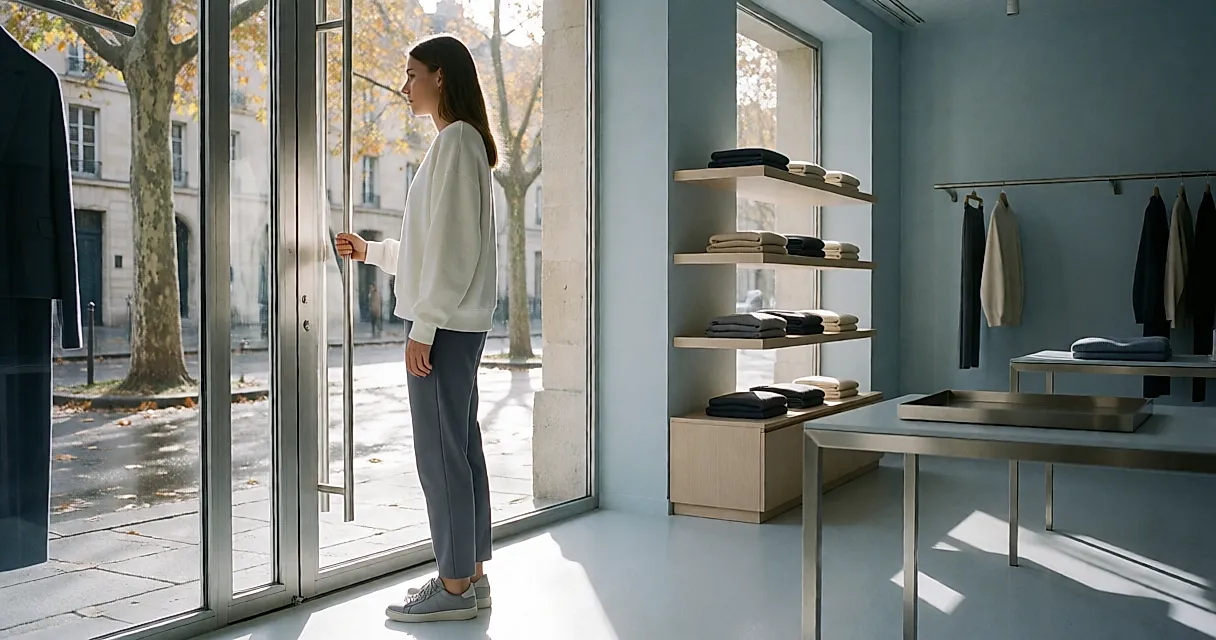
There is less difference between a well-cut tracksuit and a pair of smart trousers than between two sizes of the same pair of jeans. Sportswear left the gym a while ago, but not everything that comes out of the changing room makes it through the door. What decides it is almost never the piece itself: it's the drape, the proportion and what you put next to it. In other words, the character of gym kit worn in town is a matter of style — not a question of logos.
The piece is never the point, the cut is
A pair of leggings, a hoodie, a pair of trainers: three staples of the sports wardrobe, and nothing inherently urban about them. What makes them hold up in the street comes down to three details a photograph rarely captures — a leg that tapers slightly rather than pressing flat on the calf, a shoulder that falls in the right place, a waistband that sits at the right height.

Hence a rule that holds for everything: before asking whether a piece is 'fashionable enough', look at it in profile. The garment should trace a clean line, not cling to every contour. And if you have to pull the hem down for it to sit properly, you've already lost.
One clean lower half, one loose piece
Imbalance is the enemy of a silhouette. One loose piece on top, one clean-lined lower half below: the outfit breathes without diluting itself. Wide joggers over tight leggings give you something that won't make it out of the building; an oversized hoodie over straight-leg trousers in dense cotton holds up on the pavement.
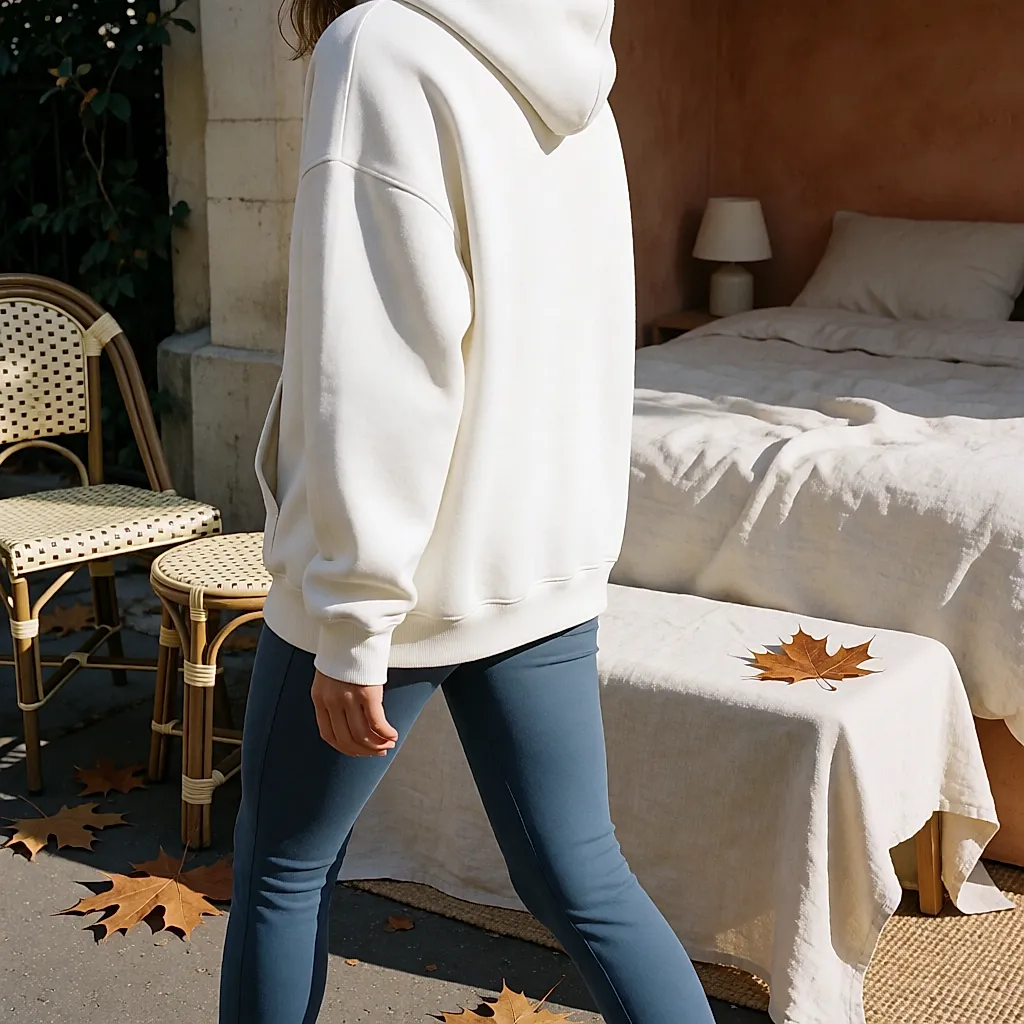
You like volume? Keep it to one piece — that's the whole mechanics of layering. And a clean lower half doesn't mean a tight one: it means a seam with a sharp line. The distinction feels thin? Thick leggings with flat seams, straight-leg jogging trousers, a pair of dense cotton shorts that stop above the knee — three options, three looks, none of them shouting 'I've just come from the gym'.
Fabrics that hang straight
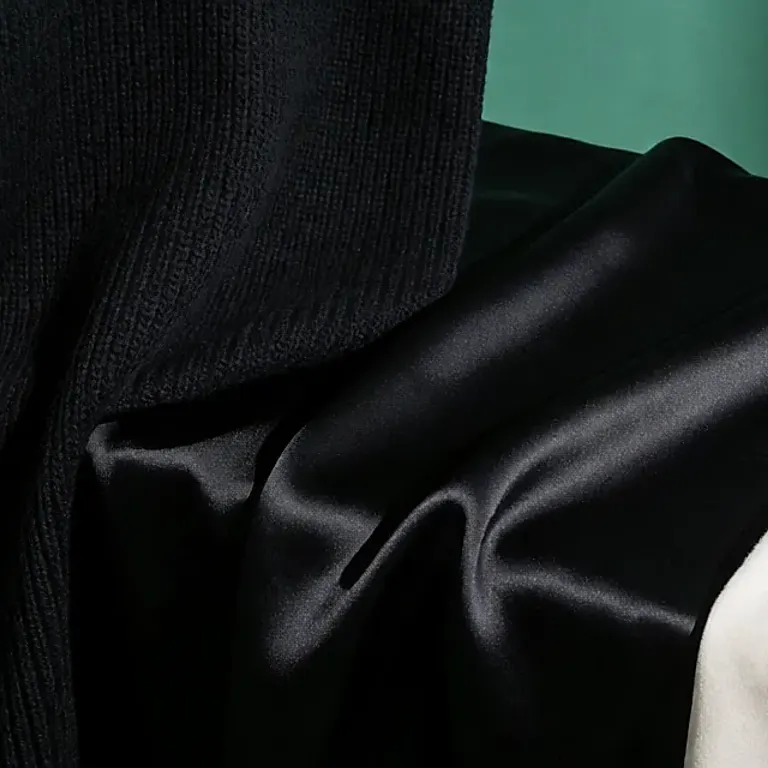
Heavy cotton, dense knits, brushed-back fleece: that's what holds a shape. A fine, shiny fabric, on the other hand, clings, marks and turns a piece of sportswear into sports underwear. The difference doesn't show when you're standing still, but when you move: take a few steps and the line has to stay.
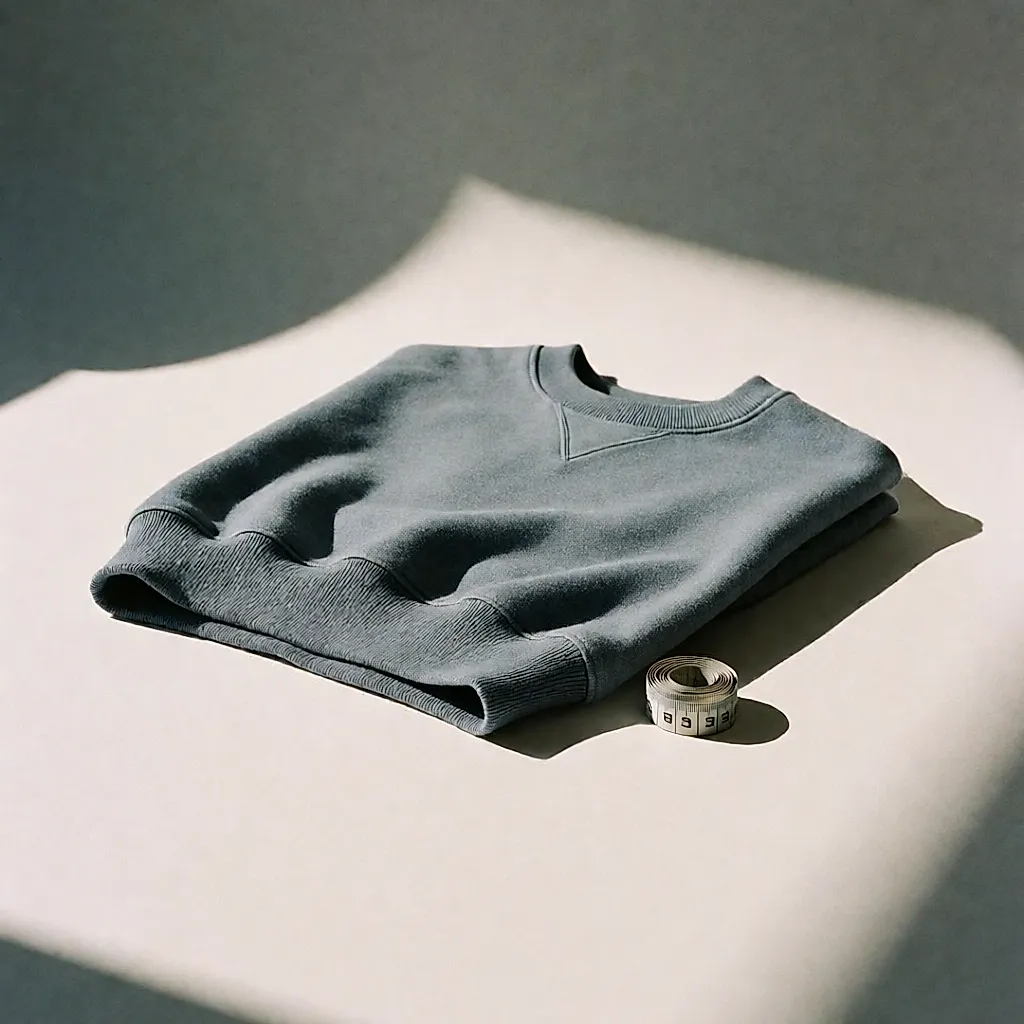
On the fibre front, one simple rule: turn over the label. A jersey that is mostly cotton often hangs better than a blend loaded with synthetics, which can trap sweat and smell. A touch of elastane is still useful for movement; just check that it stays in the minority.
Sofa comfort or street comfort?
Sportswear worn in town asks you for a trade-off, not a miracle. A heavy fleeceback holds its shape but weighs on the shoulders; a light jersey wears like pyjamas and can collapse quickly. For a dressed-down day at the office, thick cotton jogging trousers win hands down. For a standing commute on the Tube, the question is worth asking: heavy fleeceback tires you out fast.
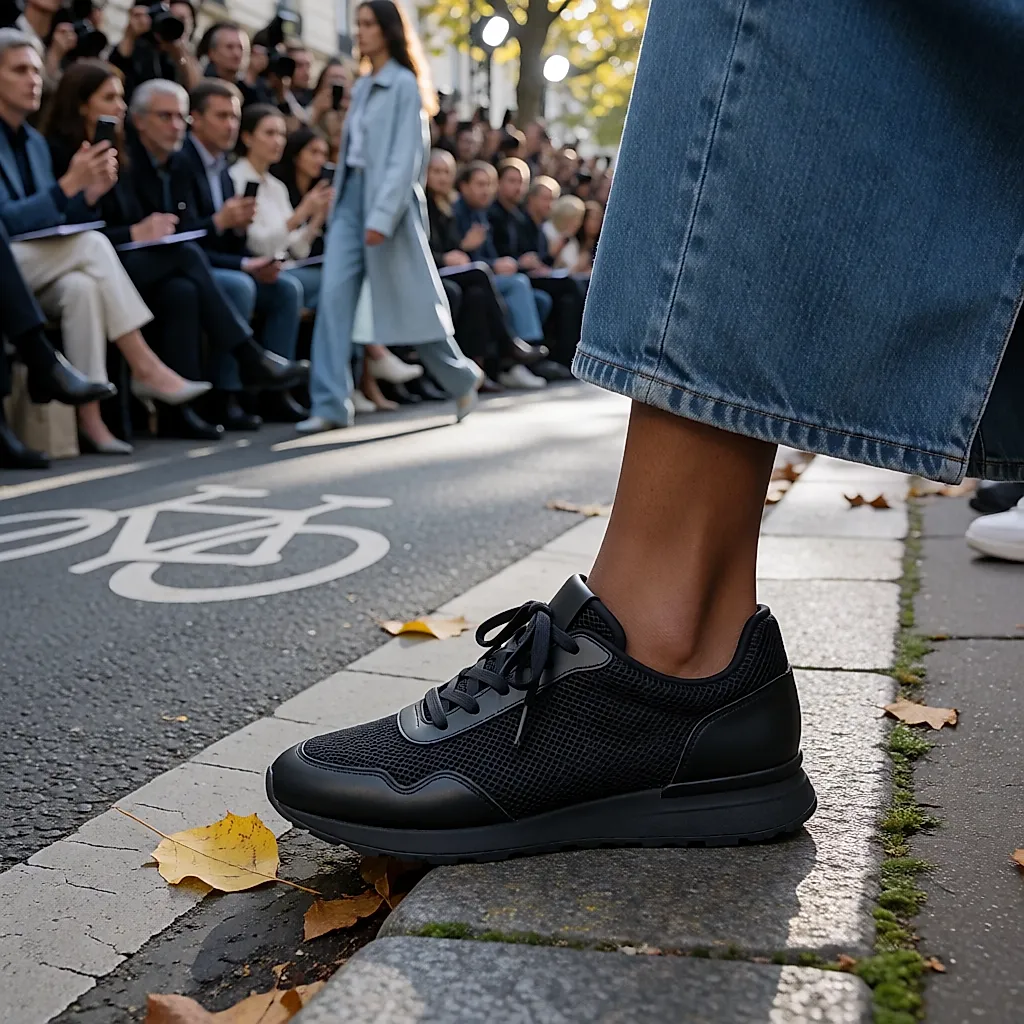
Same logic for trainers. A very thick sole gives instant cushioning and questionable stability; a flat rubber sole holds the foot and is less forgiving over long distances. The tell that never lies: if your heel swims in the shoe, you won't last the day.
Care, washing and buying second-hand
For washing, trust the care label: in practice, plenty of brushed-back cottons cope with a cool wash. Drying too hot can damage the knit and speed up wear. As for a smell that lingers after washing, it can also come from incomplete drying or an insufficient wash.
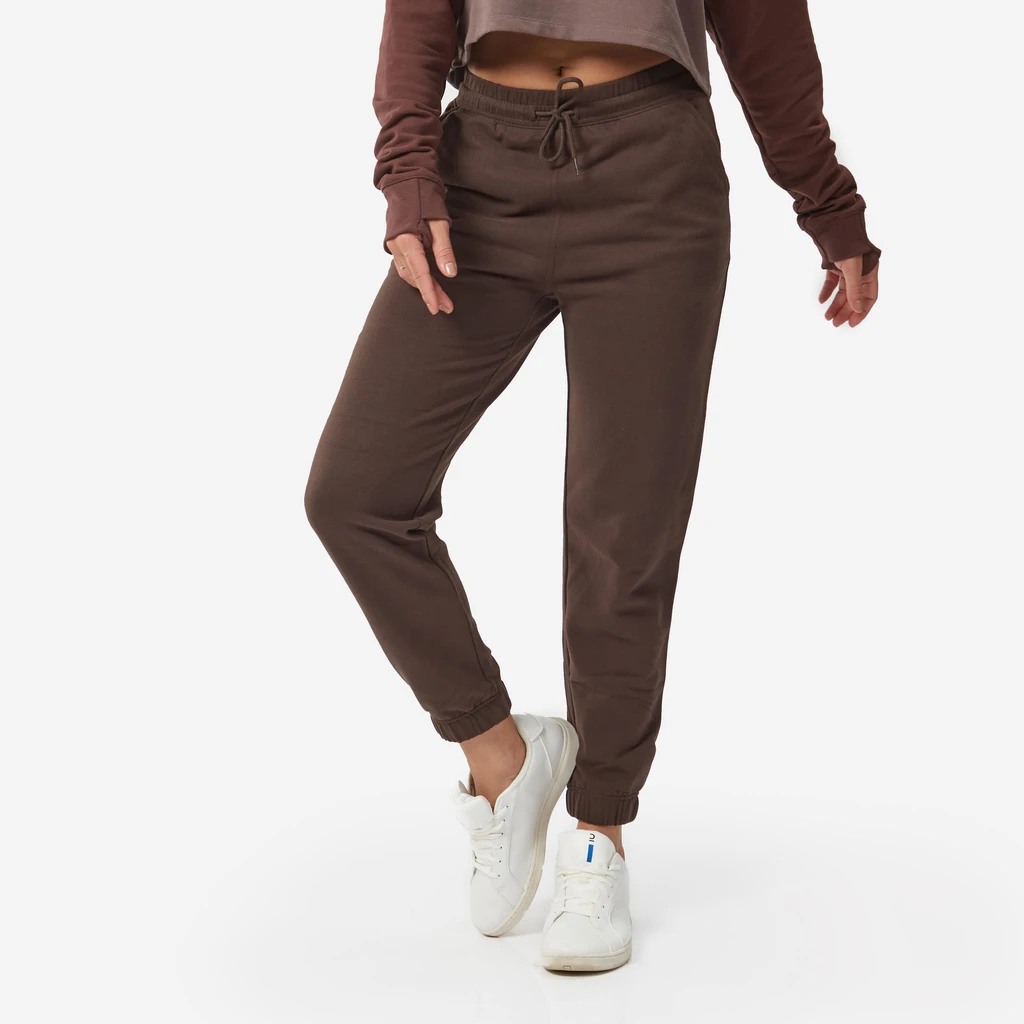
Second-hand is particularly rewarding for this wardrobe: tracksuits and hoodies in good condition often turn up for £15 to £50, often in heavy cotton, at a quality that barely exists new at that price. Check the crotch seams, the cuffs and the stretch of the waistband. Second-hand leggings, though, need a very close look: elastane tires and can't be repaired.
Budget
Expect to pay around £60 to £130 for a mid-range heavy cotton tracksuit, and £25 to £60 for flat-seam leggings. On the shoe front, plain leather or dense-mesh trainers sit somewhere between £80 and £150 — that's where the price gap shows up fastest in how they wear.
To keep the cost down, second-hand remains your best ally for tops and bottoms. Keep the new spend for the trainers: a sole is hard to judge from a distance. And if you're after volume, smart straight-leg cotton trousers often do the same job as wide joggers for less.
The three-second mirror check: one loose piece, a sharp-lined lower half, a fabric that hangs straight. If one box is unticked, you're still in gym kit — not quite ready for town.
The real test, in the end, isn't in front of the mirror but on the pavement. This wardrobe doesn't ask for a new set of clothes: it asks you to pick one piece that breathes and leave the rest standing to attention. Start with what you already own, dig out the hoodie, pull on a clean lower half, walk to the door. If you don't feel like changing the moment you arrive, you've won.


Comments
Your opinion matters: rate the article, react and reply to comments.
Comments are moderated; AI-assisted comments are flagged. Text emoticons (8-), :-), <3…) are automatically shown as images.