
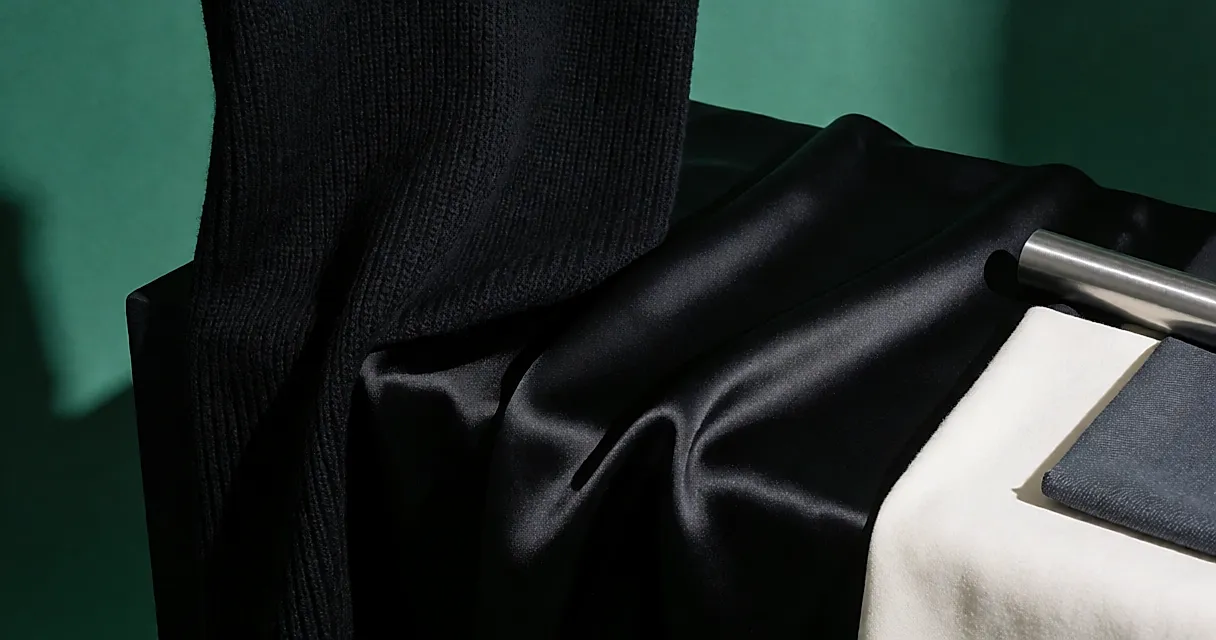
Black doesn't always sit happily with black. Matt cashmere against glossy satin, and you have two blacks that won't talk to each other under the same light. The shade has nothing to do with it: what changes everything is texture, and the way each fabric bounces light back. It also costs nothing — no card needed, no need to spend a penny, just a little order in what's already hanging in the wardrobe.
The problem isn't the colour, it's the light
Black is the most discreet colour in the wardrobe and the most unforgiving about fabric. On matt wool it absorbs light and settles for an outline. On satin, patent leather or a slightly shiny jersey it throws it back — and that's where everything happens: creases show, friction marks stand out, and a piece that's a bit worn suddenly looks ten years old.
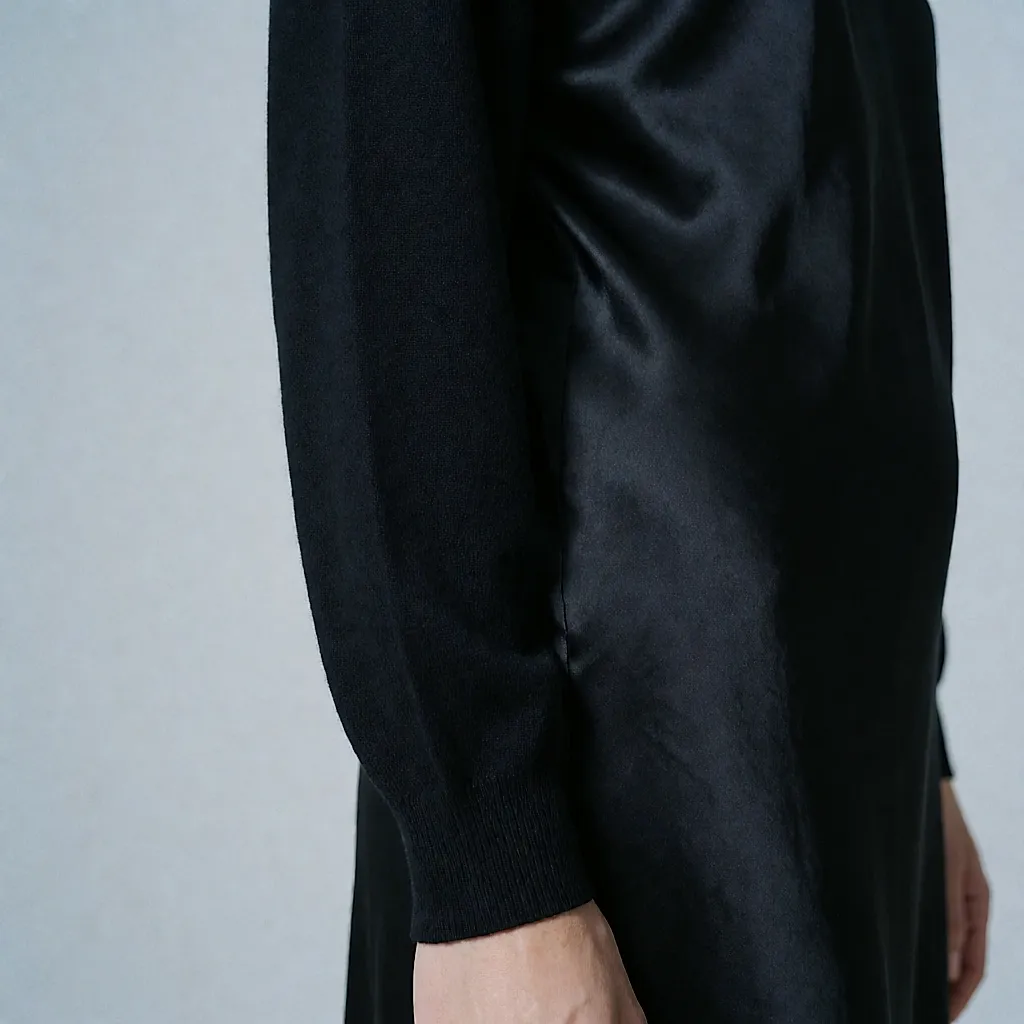
Hence the simplest rule going: don't mix blacks, mix textures. Two fabrics that don't reflect light the same way create a contrast the eye reads as a difference in shade. That is exactly what separates an all-black outfit from a funeral uniform you didn't intend.
Keep it matt near the face
This is the zone that decides the rest. A collar, a roll neck, a shoulder line: anything near the chin either lights up the complexion or dulls it. Dense matt fabrics — merino wool, cashmere, a slightly heavier cotton, organic cotton jersey — reflect almost nothing and let the face be the brightest point of the silhouette. Which of these do you already have in the wardrobe?

Shine right under the chin does the opposite: it bounces light downwards and picks out the hollow of the neck, the jawline, every shadow. It isn't forbidden, it's a choice. If you're after an evening effect and your skin is rested, a black satin shirt does the job nicely. If sleep has been short this week, start with matt — you'll see the difference straight away.
Another detail that counts: the finer the knit, the more it shows. A very fine wool roll neck draws the contour, a chunkier knit softens the area. It's your call what you want to show.
Outer layers can take the shine
The outer layer can take light without risk: leather, velvet, wool coating, a good dense satin. This is where black gains depth, because we see it from a distance and in movement. A leather jacket over a matt jumper, a wool coat over a satin skirt: the contrast reads immediately and the look seems put together without effort.

Then there's dosage. One shiny area at a time is enough — two reflective surfaces and the eye no longer knows where to settle. Already carrying a patent bag and wearing patent boots? Keep the clothing matt and it will breathe better.
Breaking up a head-to-toe black look with what you already own
A single black piece — a dress, a jumpsuit, a long coat — is where the uniform effect really lurks. You can break it up without buying anything, using what you already own. The leather belt first: it cuts the surface, marks the waist and brings a different texture into the middle of the silhouette. Layering next: a cropped cardigan, an open shirt or a jumper tied over the shoulders changes the visual rhythm without touching the colour.
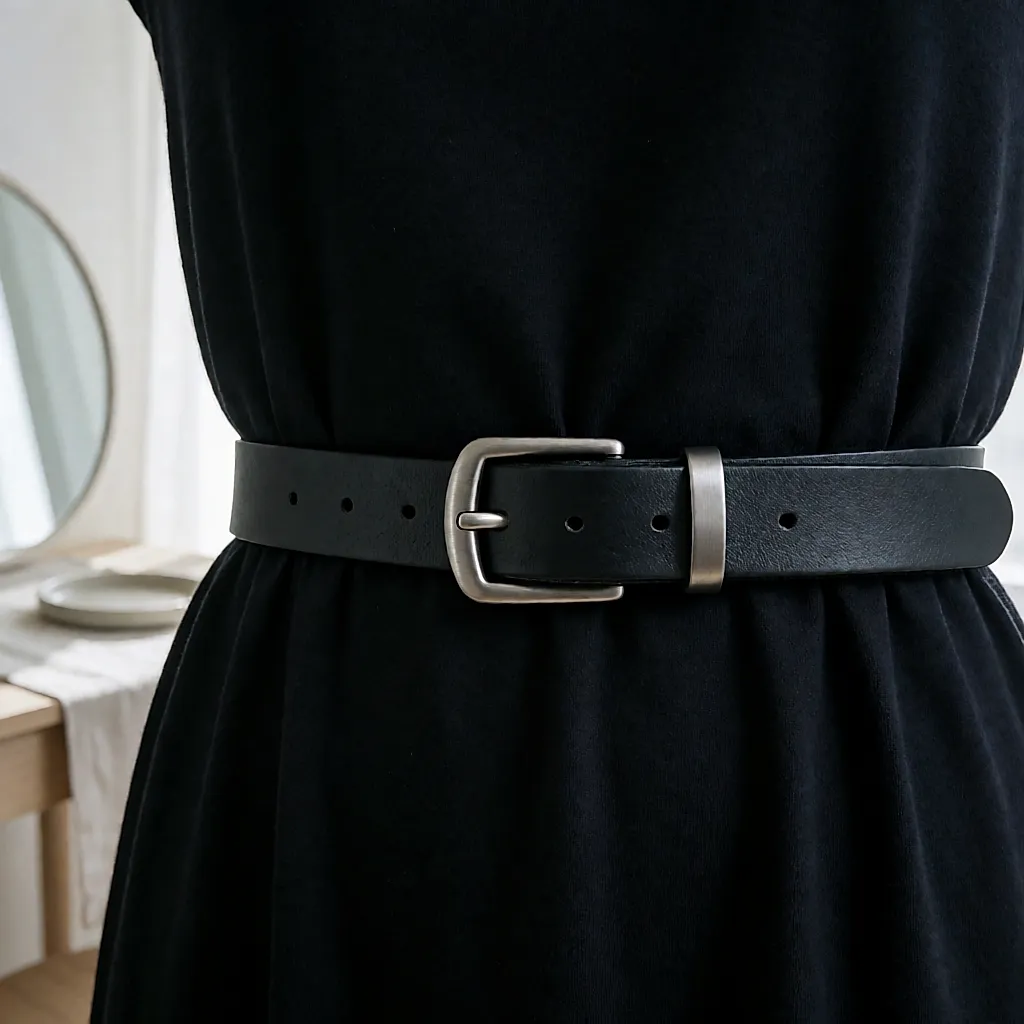
Last lever, and the most underrated: construction details. Topstitching, visible seams, knit or leather panels — a piece that's already doing something doesn't need accessories. And if your black dress is in a slightly shiny jersey, the most cost-effective investment is a matt jacket over the top: the shine doesn't disappear, it becomes a detail you control.
The shop-window check. Passing a shop window or a full-length mirror, look for where the light catches. If it catches at the face and chest, the fabric is too reflective for daytime. If it catches at the shoulders, hips or feet, the balance is right — and the outfit is ready.
Budget
The right instinct is to sort before you shop. Pull out your black pieces, sort them by fabric and look at what's missing: a matt jumper, a structured jacket, a fluid skirt — the three texture families are usually already there.
If a piece really is missing, budget around £45 to £110 for a new merino or cashmere-blend jumper, and £15 to £35 second-hand for the same fabric family. A new leather jacket is more likely to sit between £150 and £450 depending on the tanning and the cut; from vintage or second-hand shops, £60 to £180. A good-quality satin skirt or dress: £35 to £85 on the high street. What pushes the price up is the density of the fabric and the finish of the seams, not the label.
One habit before you commit: read the composition. A large share of synthetic fibres changes the drape, how the fabric behaves under the iron and the way the black ages.
In the end, black asks only one thing: variety in the grain. Take out three pieces, lay them side by side in daylight, and keep the pairing where matt and shine talk to each other. The rest is just wardrobe — and honestly, that's often where the best find is hiding.



Comments
Your opinion matters: rate the article, react and reply to comments.
Comments are moderated; AI-assisted comments are flagged. Text emoticons (8-), :-), <3…) are automatically shown as images.