

A glove divides; a mitten gathers. A glove gives every finger its own compartment; a mitten gives four fingers a shared woolly dorm. And against all intuition, it's the shared dorm that holds the heat better.
This isn't nostalgia or a mountain postcard: the mitten has its own way of moving: a hand that grabs, grips, taps and pulls out a phone without taking the mitten off completely.
Thumb out, palm warm
Look at the shape: it tells you everything. The thumb stays free, isolated in its own little sleeve; the other four fingers share a single layer of wool. A mitten stops at the wrist or climbs up the forearm, and it's that edge—tight ribbing, sometimes lined—that decides whether cold air gets in.

This design explains the difference in warmth. In a glove, each finger loses its heat on its own, separated by thin dividers; in a mitten, the fingers warm each other inside the same volume of wool. Material matters just as much: a fine merino mitten will feel less warm than a dense felted mitten, and a wet mitten stops protecting you whatever its shape. Shape gives an advantage; material does the rest.
What really changes once you're outside
The first time you slide your hand into a proper mitten, you notice something else: speed. You grab the stair handrail, lift the recycling bin lid, pull out your travel card without taking the mitten off or stuffing it into a pocket. With gloves, each of those actions needs a full dismantling. You know the drill?

Then there's the compromise to accept. A touchscreen mitten—conductive thread woven into the thumb and index finger—is enough to unlock, read a message or take a photo; it won't turn your hand into a keyboard. And if your job has you picking up screws, sheets of paper or tiny keys, it won't do the work of a technical glove. Each has its own territory: the mitten for city days, walking, commutes and weekends with your hands in your pockets; the glove for the workshop and heavier DIY.
Felted wool or merino? The choice is here
Wool felt is dense, slightly stiff, almost structured: it holds its shape and ages with a patina. It is often made from recycled wool—a way of not adding new wool to a wardrobe that hardly needs it. The trade-off is that it doesn't wash often or well: brush a felted mitten, air it, spot-clean it, and it will rarely go into the machine.
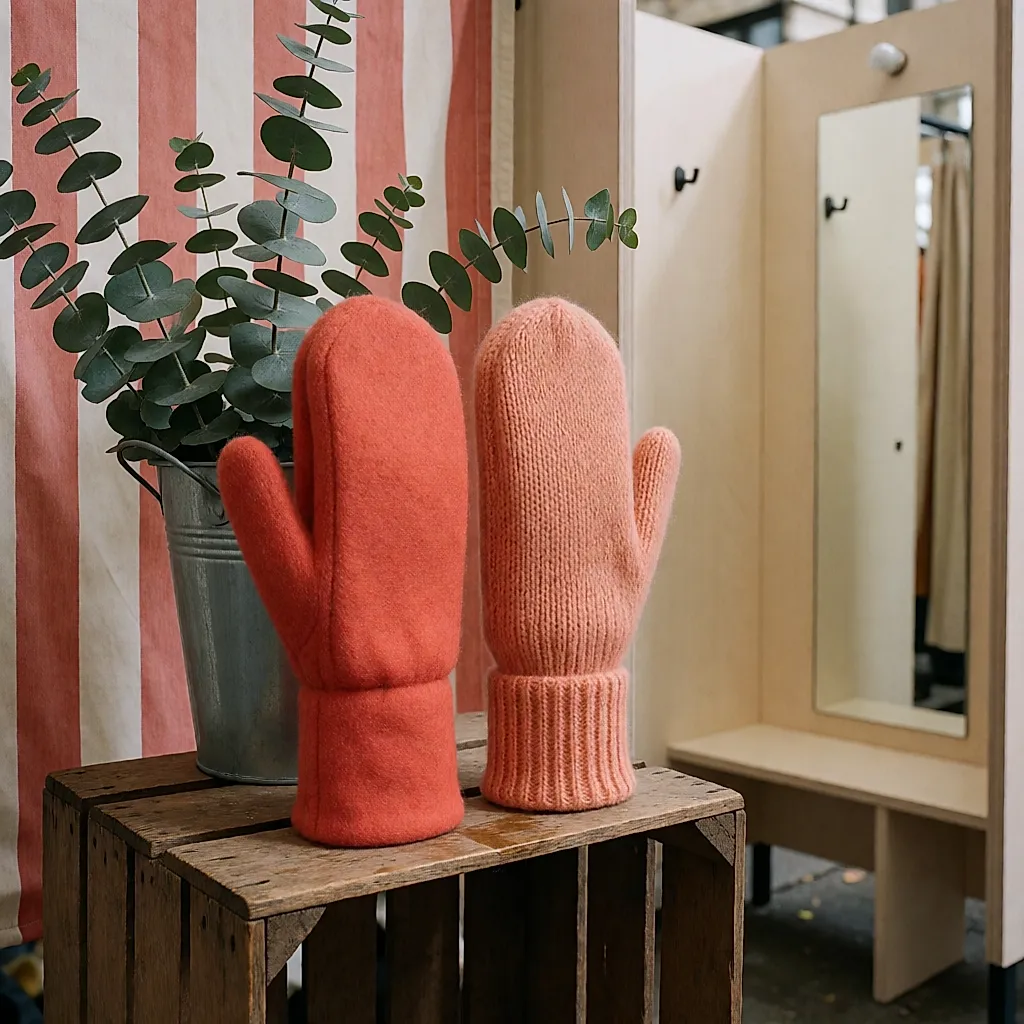
Merino, by contrast, is a fine, soft wool that doesn't itch and can even be worn against sensitive skin. Knitted tightly, it makes softer, more elegant mittens that follow the hand without bulking it up—perfect with a city silhouette, a straight coat or a trench. It is, however, more vulnerable to friction and damp.
A good habit before buying: turn over the label and check the share of synthetic fibres. A mitten that is mostly acrylic or polyester feels warm at the time, but it soon shows wear, goes shiny and bobbles; if the synthetic blend is in the minority—say, for stretch at the wrist—fair enough. For care, wash merino by hand or on a wool cycle, without a fast spin, and dry it flat—never on a radiator, unless you want to regret it.
The wrist test, in the changing room. Put the mitten on and bend your wrist twice: if the edge gapes or rides up onto your palm, it's too loose for you. A well-cut mitten covers the base of the hand without squeezing, and lets the thumb move without pulling at the seam.
Budget
As a rough guide, expect to pay £15–£30 for a basic wool mitten, often in knitted merino, sold by high-street fashion chains or supermarkets: touchscreen thumb, fine for a city winter, replace as it wears out. From £30 to £60, you're into well-made knitwear—finer merino, wool felt, neater seams, lined cuffs.
Beyond that, £60 to £100 and upwards, there is craft: hand-made felt, small European runs, pieces designed to last and be repaired. Prices vary a lot by city, material and where you buy; makers' markets and second-hand are still the best hunting grounds for trying the shape without spending a fortune.
The real deciding question remains: do your hands spend the day picking up fine things or holding on to handles? If the answer leans towards handles, swap your gloves for a mitten and keep the gloves for workshop days—you probably won't go back. And if you're still unsure, a £20 pair is enough for a trial winter: it's a purchase you'll regret less than a coat that's too snug!


Comments
Your opinion matters: rate the article, react and reply to comments.
Comments are moderated; AI-assisted comments are flagged. Text emoticons (8-), :-), <3…) are automatically shown as images.