
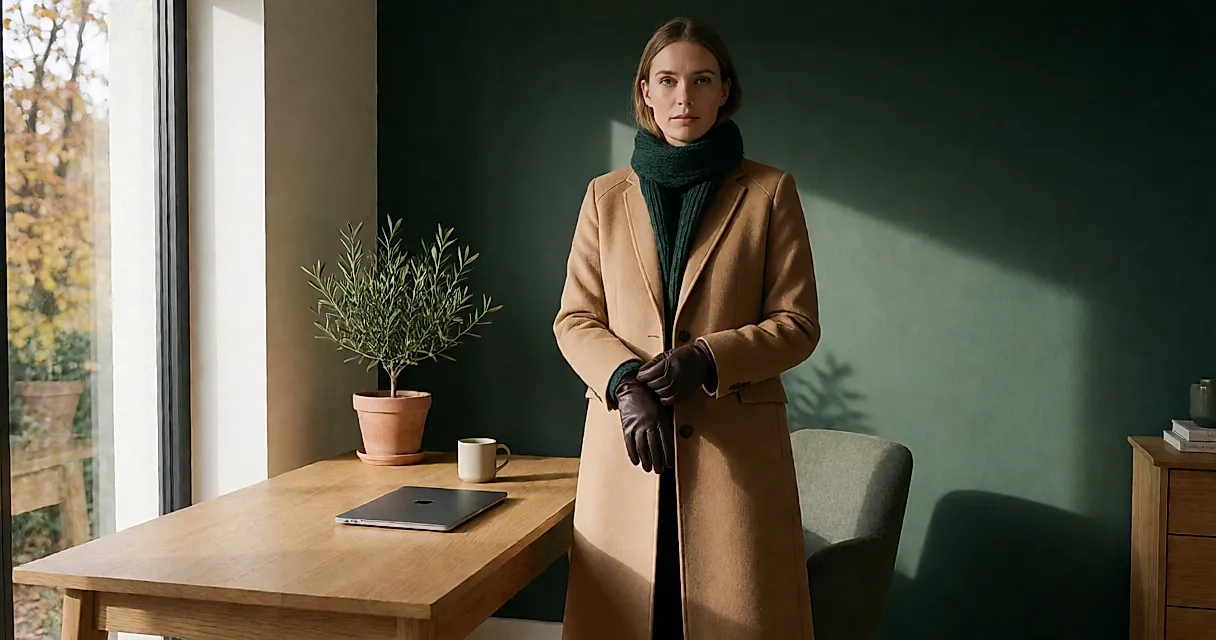
A glove is chosen at the wrist as much as at the hand. That's the join we forget to look at in the shop, and it's the one that decides whether you spend the winter with your wrists open to the cold or your fingers properly warm. Everything else — colour, lining, the neat little seam across the back — comes a long way after.
The wrist: the bit we forget to check
We try gloves on while looking at them, palm open, as if we were waving at a stranger. Except life isn't lived with the fingers spread wide: it's lived gripping a bike handlebar, pulling a phone out of a pocket, catching a scarf as it slides off your shoulder. A glove that stops too short lets the air straight in at the exact point where blood vessels sit close to the skin at the wrist, and however warm your fingers are, you feel cold.
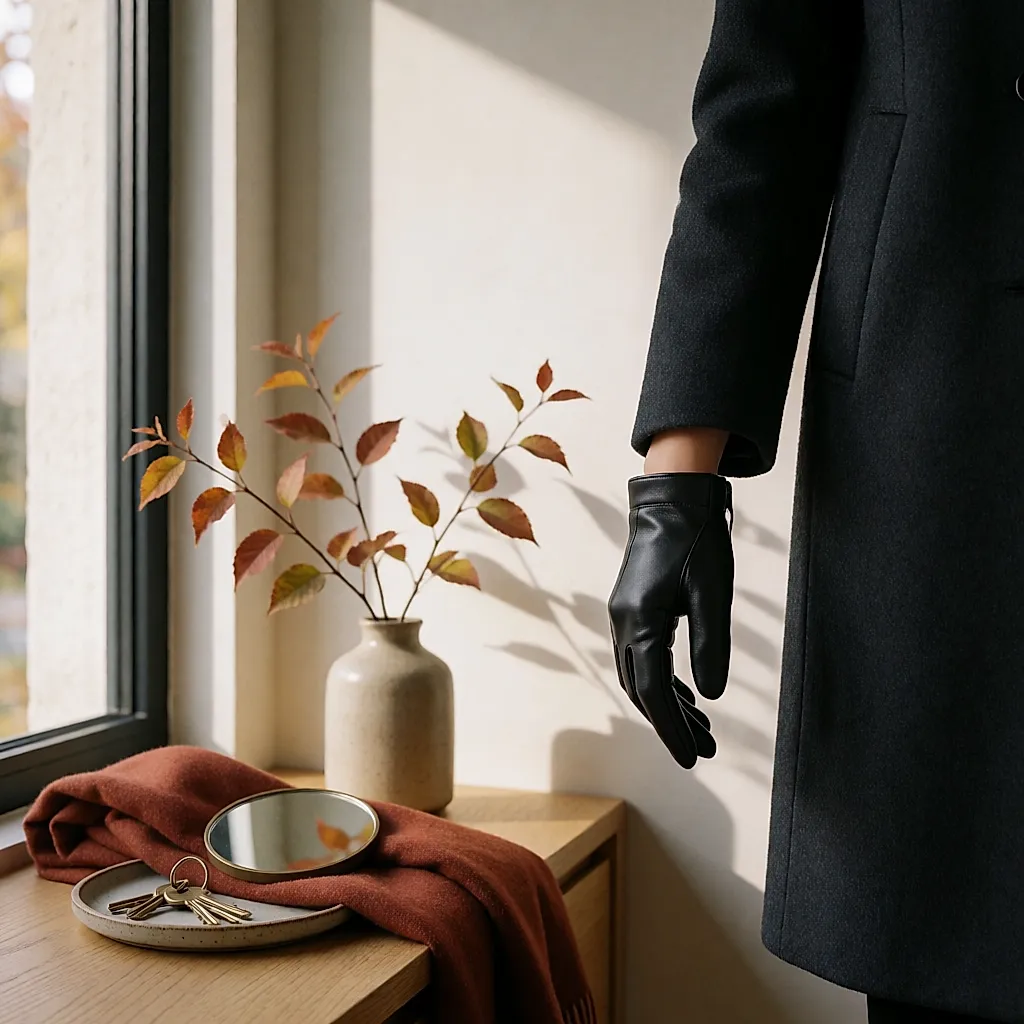
Styles that come three or four centimetres above the wrist genuinely change how warm a pair feels, especially if your coat sleeve also stops at the top of the hand. Then there's the width of that sleeve: a loose one swallows the glove, a narrow one demands a slim glove. You won't notice any of this under the white lights of a shop, in shirtsleeves. You notice it in the street.
Measuring your palm: the step we all skip
Before you try anything on, measure. A soft tape measure around the palm, just above the thumb, without pulling it tight. It's this palm circumference, not finger length, that decides your size — and it's tempting to go up a size for comfort, just to take the bigger one "just in case". The result: gloves that float, that twist round on the hand, and let the air in through the cuff.
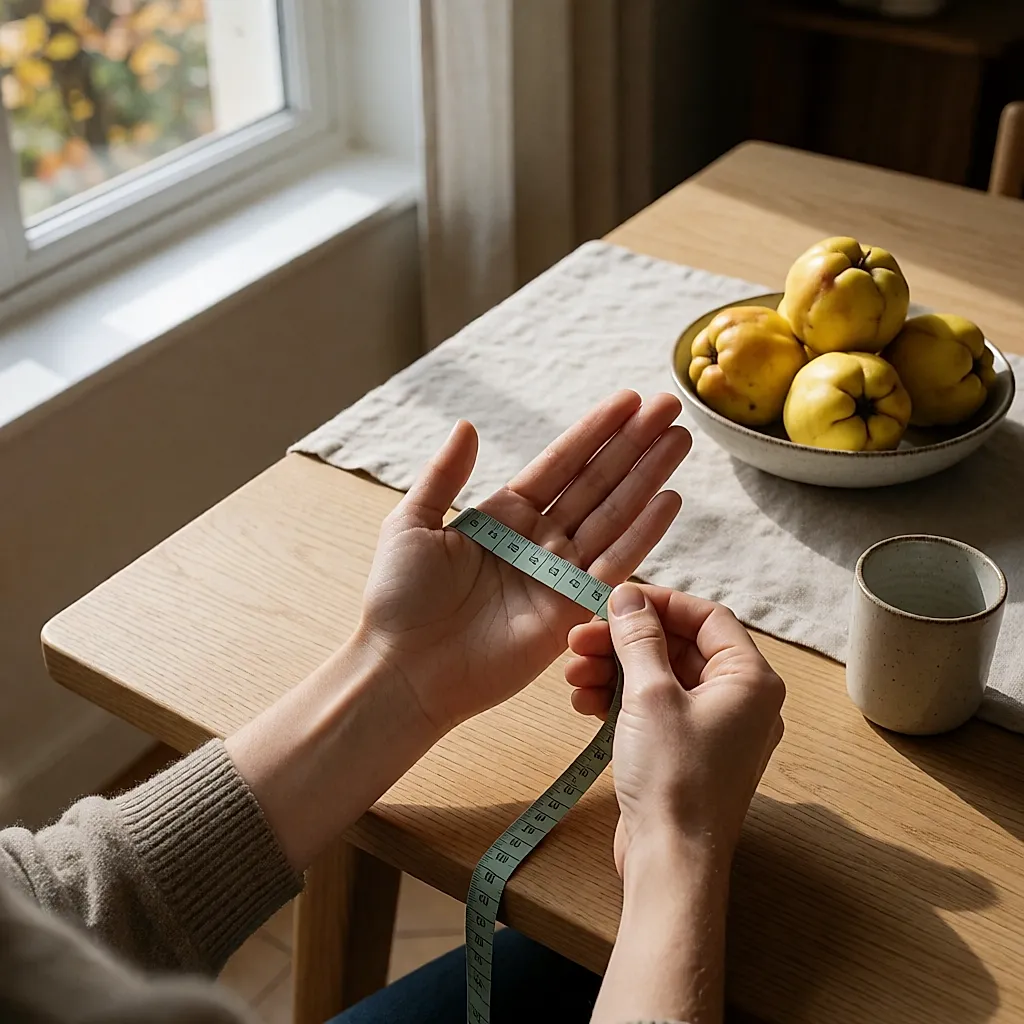
Measure both hands: left and right are never quite identical, and you go with the larger. A glove should feel slightly snug when you try it on, without cutting off the circulation — leather gives, wool much less so.
The coat-sleeve test: the real check
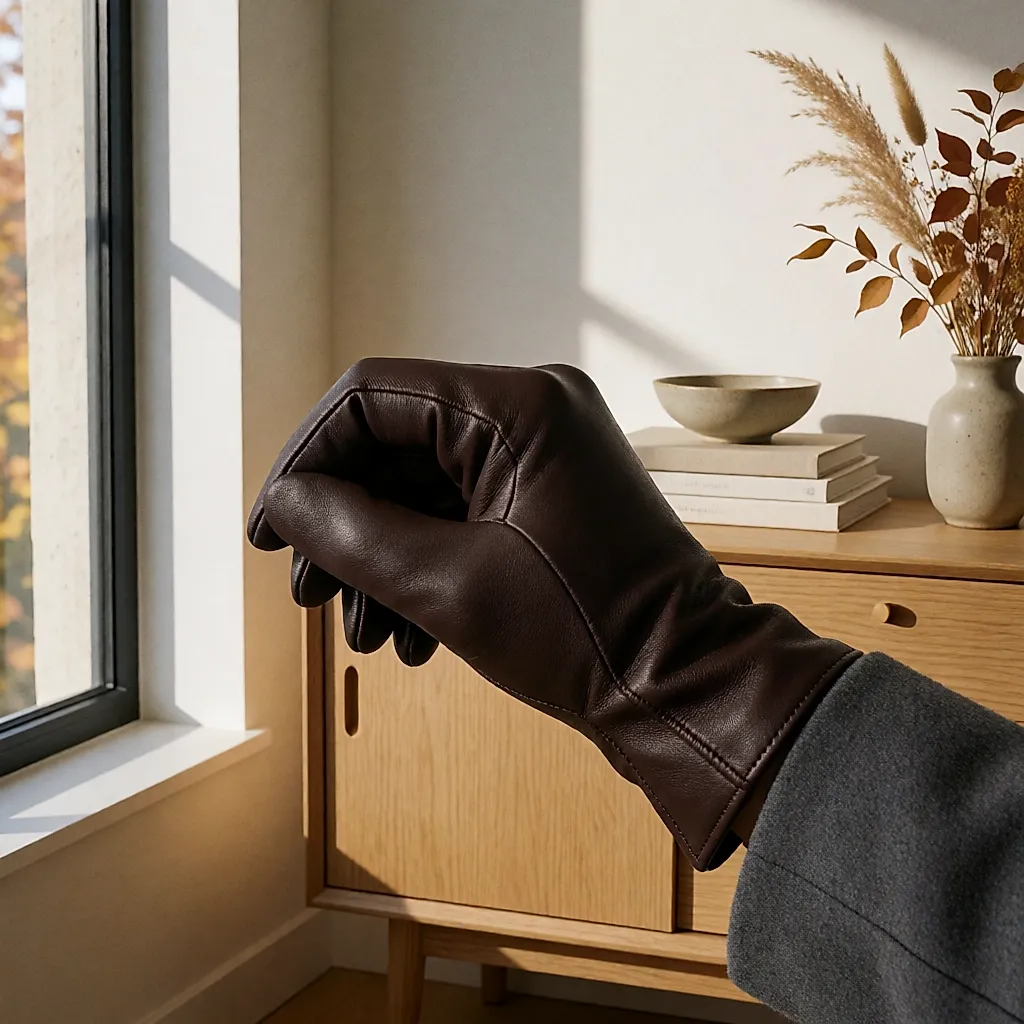
Here's the step almost nobody takes: gloves on first, then the coat. The glove cuff should sit over the sleeve, not push it up. If the sleeve ends up on top of the glove, you'll be shoving it back up twenty times a day; if it forces the glove down, the palm takes the strain. The right overlap is a centimetre or two either way, depending on the cut of the coat.
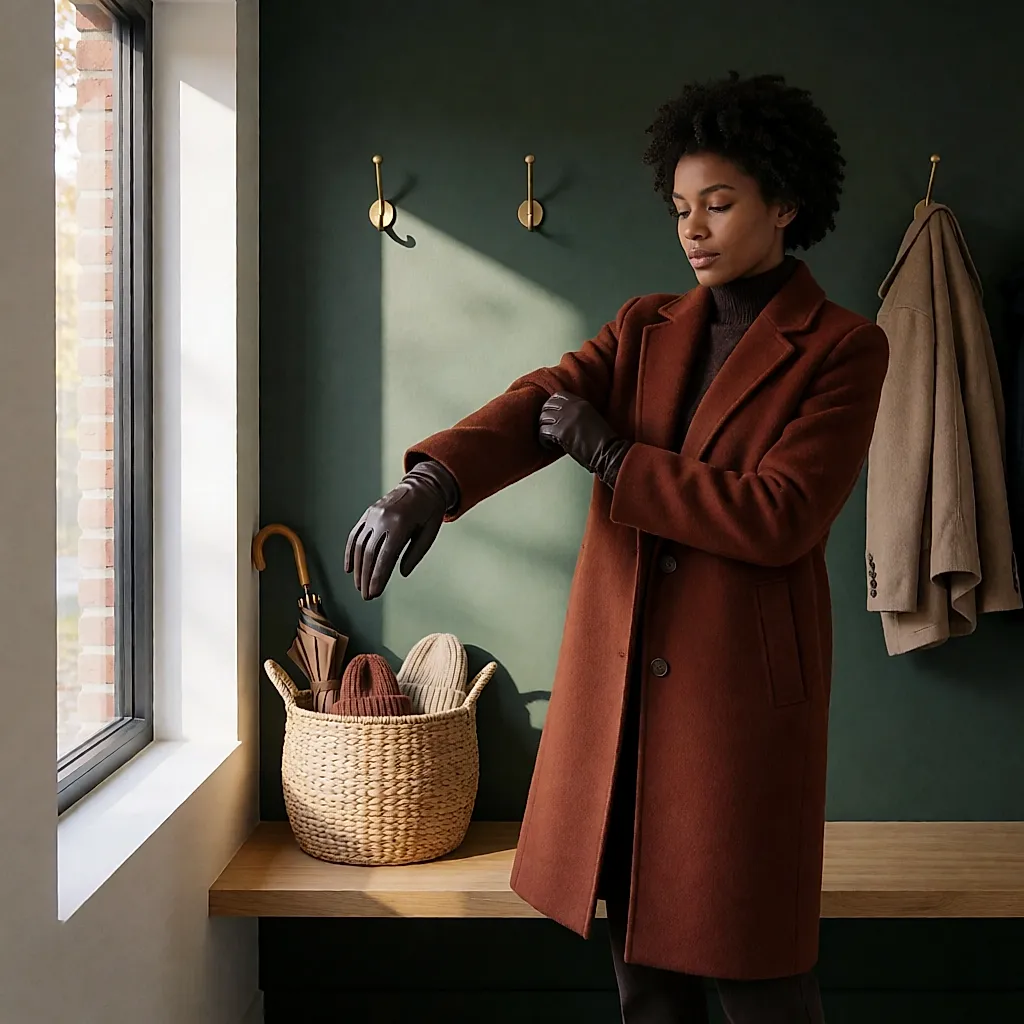
And try it standing up, coat done up, arms folded, then with your keys in your hand. Those are the positions that show whether the cuff gapes or the thumb pulls. Judge a glove in motion, never with your arms hanging at your sides.
Bending the fingers: where it all comes down
Bend your fingers as if you were holding a steering wheel. If the glove gapes inside the palm, it's too big; if you can't close your fist, it's too stiff. Lambskin and kidskin soften quickly and develop a nice patina; oiled leathers are more forgiving but hold their shape less well. On the wool side, merino is genuinely warm for its thinness, and recycled wool does the job perfectly well for everyday town wear.
One word of warning: check the synthetic fibre content on the label. Plenty of budget pairs are heavy on it — the insulation holds up, the breathability much less so.
What to pay
Expect to pay roughly £15 to £40 for merino or recycled wool, from a high-street knitwear shop, a department store or a market stall: that's the everyday pair, the one that lives in your coat pocket. Around £55 to £160 for lined lambskin, from a leather-goods shop, a dedicated glove shop or online; beyond that, you're paying for hand-stitching and the tanning. And roughly £10 to £35 second-hand for leather that's already broken in and just needs a little conditioner — often the best warmth for the money.
Looking after them, or how to get more than one winter out of a pair
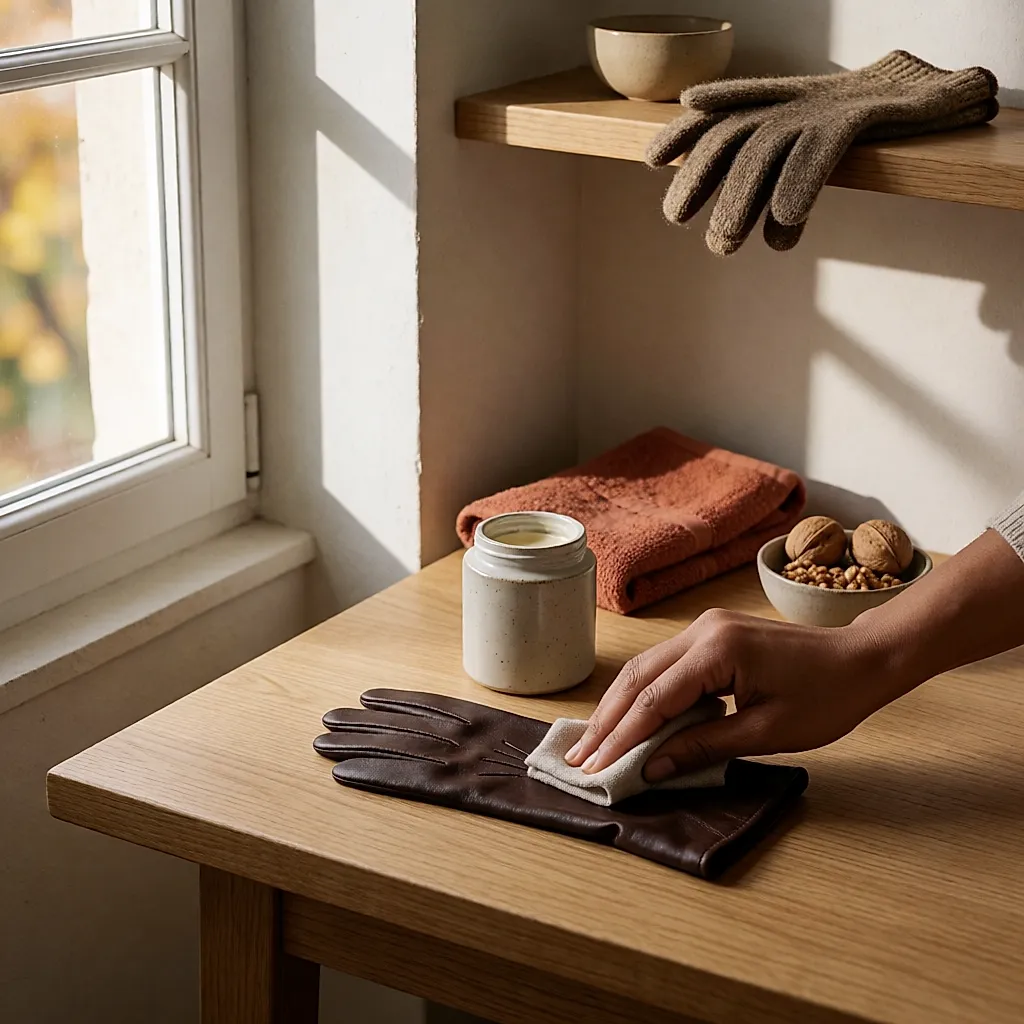
The usual advice is to feed leather while it lies flat, once or twice a season: a pea-sized amount of colourless cream, massage it in, let it sink in. Above all, never dry leather on a radiator: rest it on a cloth at room temperature, well away from any heat source. If it's got soaked, stuff it with crumpled newspaper so it keeps its shape. Save the hairdryer for your hair.
Wash wool in cold water, by hand, with a gentle soap and no wringing. Roll it in a towel to draw the water out, reshape the glove, dry flat. And the trick that really rescues a pair: buy two and alternate. Two pairs worn in rotation last far longer than one worn every day.
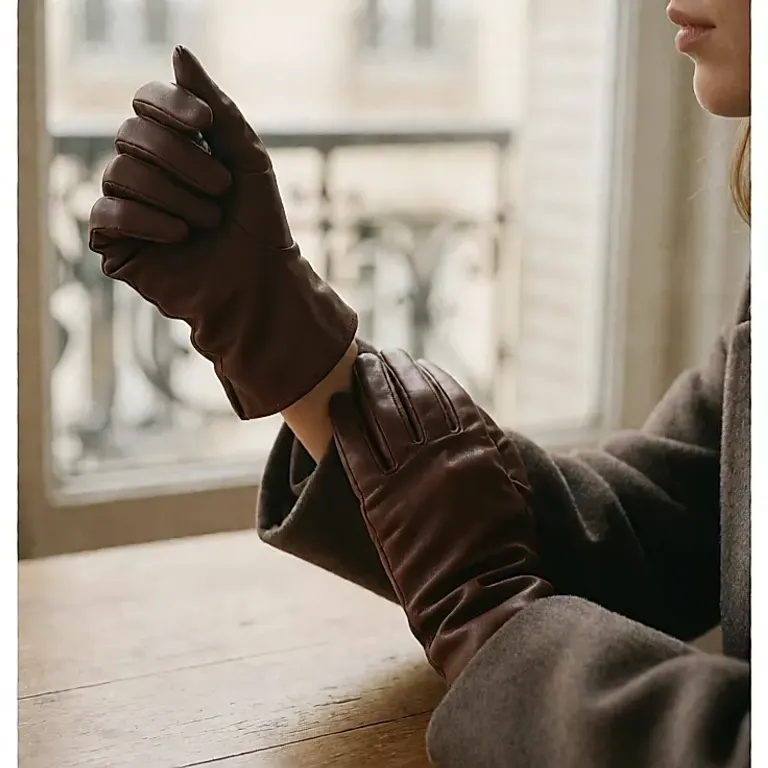
The three-second wrist test, in the shop: glove on, raise your hand, palm towards you. If the glove slides down and exposes your wrist, go down a size — or pick a longer style. And above all, put your coat on before you say yes.
Which leaves the awkward question: colour. Black, camel, grey — all three will see you through a winter without you getting bored of them. A bolder glove works beautifully against a plain coat, provided you're happy to commit to the same shade for two months. The right pair is the one you stop counting winters with, not the one that makes the biggest impression on the day you buy it — so, what colour are yours?

Comments
Your opinion matters: rate the article, react and reply to comments.
Comments are moderated; AI-assisted comments are flagged. Text emoticons (8-), :-), <3…) are automatically shown as images.