
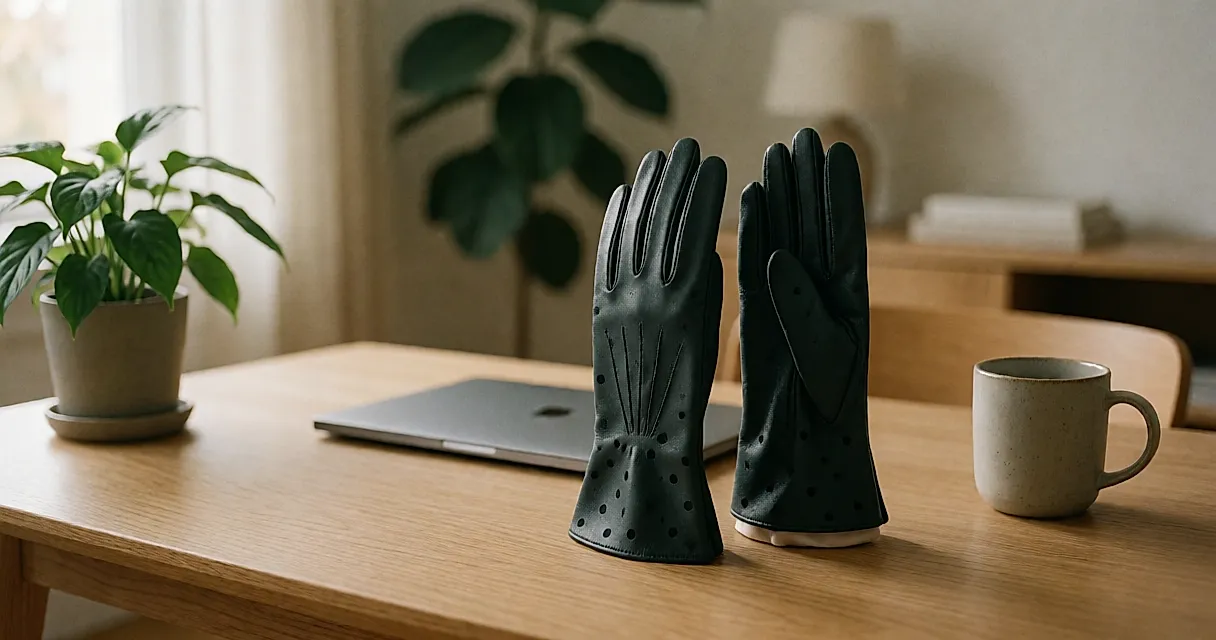
A fine cashmere glove and a thick wool mitten are not playing the same game. On paper, though, they promise the same thing: warm hands. The difference isn’t on the label; it comes down to three details we rarely think to check in store — the lining, the fit between the fingers, the cuff — and which we regret all winter when they’re wrong.
Thickness feels reassuring, but it doesn’t guarantee warmth
A thick glove that’s too loose is a piece where air circulates and cold gets in at the sides. A thick glove that’s too tight is a compressed hand pulling at seams as soon as you grab a shopping trolley handle. Either way, you’ve bought thickness, not warmth.
In practice, a glove keeps its promises when three things align: enough material to insulate, enough room for the hand to open and close, and a material that doesn’t hold moisture. This is exactly where fine styles earn their place. Not against February snow, no: for all those everyday moments when a thick glove is already too much — waiting on the platform, replying to a message, driving, holding a glass on a terrace in mid-November.
The lining: the detail that changes comfort
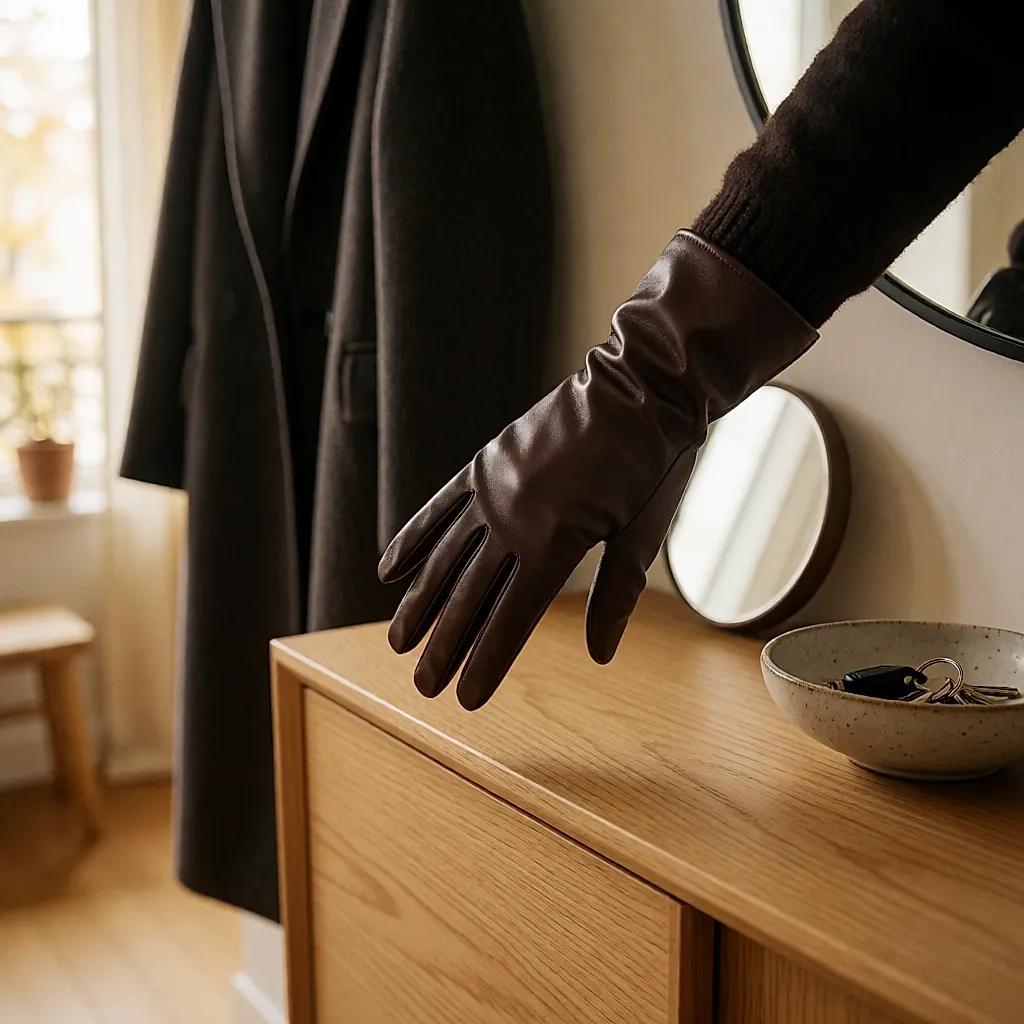
There’s lined and then there’s lined. A silk or cashmere lining glides over the skin without scratching and gives that immediate cosiness you want when you pull your pair on in the morning. A merino wool lining does the job well too, provided it’s fine: too thick, it takes up the space your fingers need and turns you into someone holding their keys in gardener’s mittens. As for synthetic linings, one simple reflex: check the fibre content on the composition label before you commit.
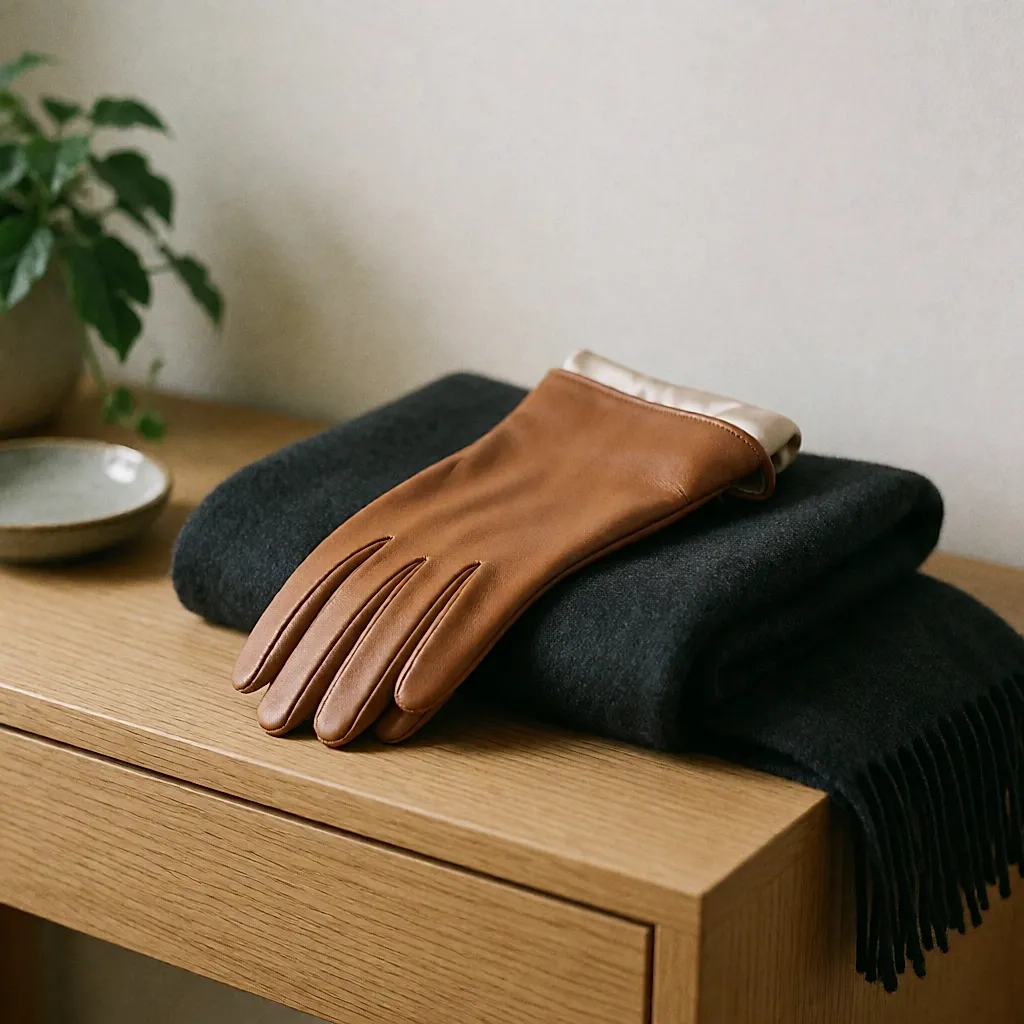
Leather deserves a closer look. Unlined lambskin is supple and develops a lovely patina, but it offers no protection once the wind picks up. The same lambskin with a silk lining, however, becomes the pair you pull on without thinking from November to March. Think of the lining as the inner wall of a coat: it’s what makes the difference between a garment you put up with and one you actually live in.
The fit between the fingers, the cuff, and that crucial centimetre
The fork — the space between the fingers — needs to fall just right. Too high, and you can’t spread your hand. Too low, and the glove gapes and lets air in. The test takes three seconds: put the pair on, open your hand wide, close your fist. If it pulls, if it gapes, it isn’t your size, even if the label says otherwise.
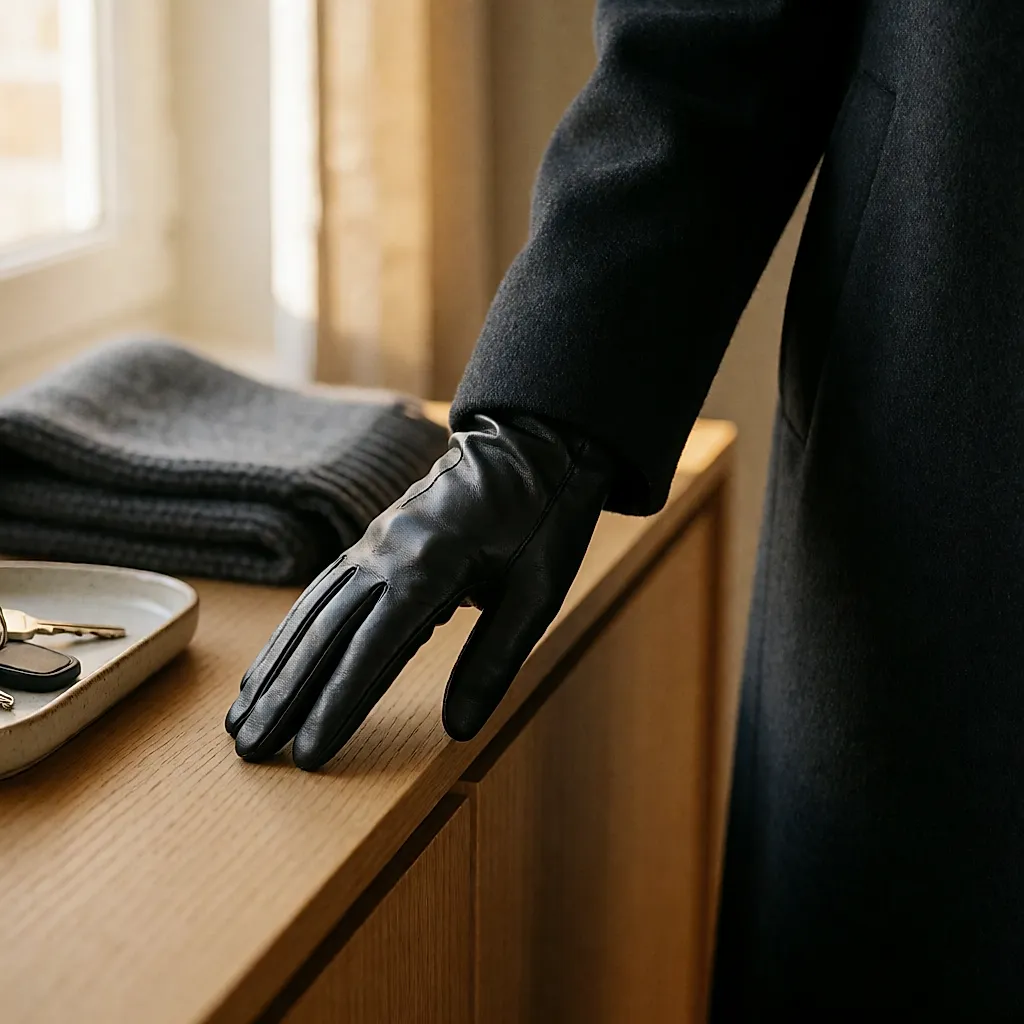
Then there are the cuffs — the great forgotten detail of any try-on. An edge that stops short of your sleeve lets a draught in every time you move your arm. Our editorial rule of thumb: the glove covers the sleeve, not the other way round — allow two to three centimetres beyond your bare wrist to be safe under a coat. And if an elasticated edge is so tight that it leaves a mark, walk away: you’ll be taking it off within ten minutes.
One pair you keep, one pair you keep taking off
The pair you keep is almost never the most spectacular. It’s the one you forget you’re wearing: discreet interior seams, an index fingertip that works on a touchscreen (a genuine comfort, frankly), a colour that goes with your coat and scarf without a second thought. Camel, black, chocolate: three reliable choices that don’t compete with the rest of your wardrobe.
The pair you keep taking off, by contrast, gives itself away through small betrayals: a cuff that’s too short, a lining that turns inside out, a stiff leather that keeps the shape of an open hand. It’s also the pair that seems to vanish by magic — one glove, always the same one, in a pocket. The remedy is simple and effective: a small clip or a tie keeps them together in your bag.
The three-step try-on. Open and close your hand (does it pull? too tight). Raise your arm (does air get in at the wrist? the edge is too short). Take the glove off (does the lining come with it? it isn’t properly secured). Three seconds that save you a winter of regret.
Budget: what really pushes the price up
Expect to pay around £15 to £40 for a knitted pair — merino wool or a cashmere blend — in a high-street shop, online or in a concept store. £45 to £110 for silk-lined lambskin from a leather-goods shop or traditional glover. Beyond £80, and up to £180, you’re into cashmere and lambskin from a specialist house, often hand-sewn. And in charity shops or online secondhand, a good pair can be found for £10 to £25, provided you check the seams and lining.
What makes the price vary? The material, the lining, the construction, the city and the maker. The right trade-off, in our view: put your budget into the lining and the fit, not the logo. A £55 pair that fits properly will serve you better than a £160 pair that’s too loose across the fingers.
Then there’s the question that settles everything: what will you actually be doing in these gloves? For the daily commute and phone use, a fine silk-lined leather pair will do wonders. For the mountains and long spells outdoors, embrace thickness and a mitten. In between, there’s room for one well-chosen pair — the one you’ll pull on without thinking, and won’t take off until spring.


Comments
Your opinion matters: rate the article, react and reply to comments.
Comments are moderated; AI-assisted comments are flagged. Text emoticons (8-), :-), <3…) are automatically shown as images.