
You know the scene. Sunday night, you undo the top button of your jeans before pudding has even landed. Monday morning, the same trousers hang loose. A belly that swells and deflates inside twelve hours has nothing to do with established fat: that's bloating. And on that front, what lands on your plate carries far more weight than yet another detox tea.
One thing is clear: no food melts belly fat. Spot reduction doesn't exist, and no cream stamped "flat stomach" gets around that. What eating better can genuinely buy you is a less stretched belly as the day wears on, more regular digestion and fewer cravings. Less photogenic than a before-and-after, but you notice it immediately in how a pair of trousers falls.
Bloating and fat are two different things
What you feel at 7pm is air and water, not kilos of fat that appeared during the day. The usual suspects, again and again: salt, fizzy drinks, oversized portions, meals eaten too fast, alcohol, constipation. For some people, lactose or fermentable fibres — onion, leek, cabbage, pulses — produce exactly the same effect. It isn't a question of willpower, it's physiology.

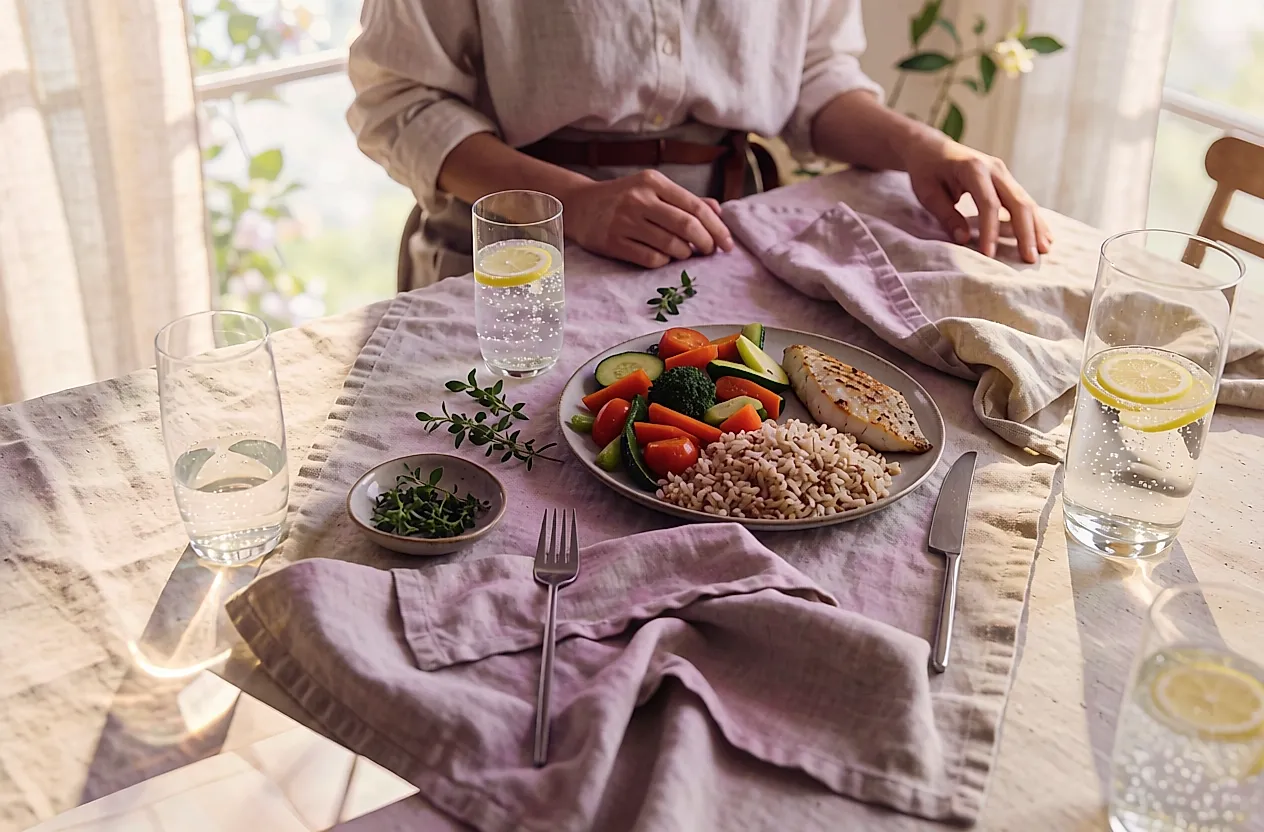
The half-plate rule
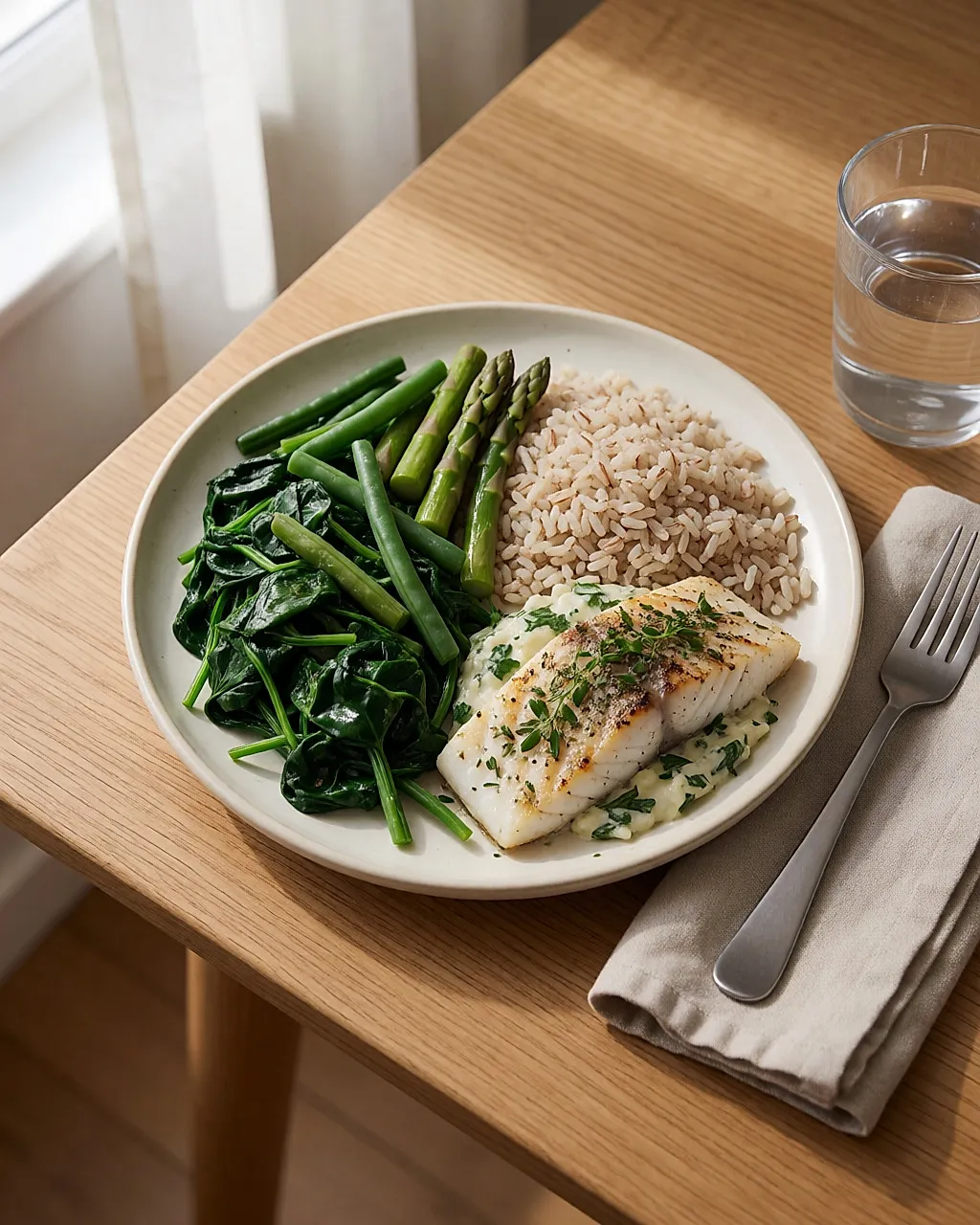
The simplest marker fits in one image: half your plate vegetables, a quarter wholegrain carbs, a quarter protein. Carbs don't make you fat, whatever the old rumour says; wholegrain versions keep you fuller for longer, and that is precisely what heads off the late-afternoon raid on the cupboard. UK guidance puts the fibre target at around 30g a day, and most of us are nowhere near it.
One detail that matters: build fibre up gradually. Going from three bits of raw veg to a monkish regime in two days is a guarantee of a tight belly and bowels on strike. Add one portion a week, not five.
Pulses, brought back gently
Chickpeas, lentils, kidney beans: they feed your gut bacteria, keep you full for hours and cost next to nothing. Their windy reputation isn't wrong, but it can be worked around. Rinse tins thoroughly, soak dried pulses, start with two tablespoons in a salad. And if you have irritable bowel syndrome, talk to a GP or dietitian rather than cutting out whole food groups at random: a diagnosis from a doctor or a registered dietitian beats a list you found online.

Salt: the quickest lever
The move that changes things comes down to three words: taste before salting. The World Health Organization recommends less than 5g of salt a day, and we routinely get through double that without ever touching the salt cellar. In the UK, NHS advice is no more than 6g a day — about a teaspoon. Bread, cheese, cured meat, sauces, ready meals and aperitif biscuits do most of the damage. A palate adapts within a few weeks: it's unpleasant for three days, then what tasted bland tastes normal again.

What you keep, what you lighten
Protein — eggs, fish, poultry, tofu, pulses — keeps its place at every meal: it satisfies without piling on extra fat. Eat at regular times, breakfast included. Days built on restriction always end with a full-scale raid on the biscuit tin, and that's no accident.
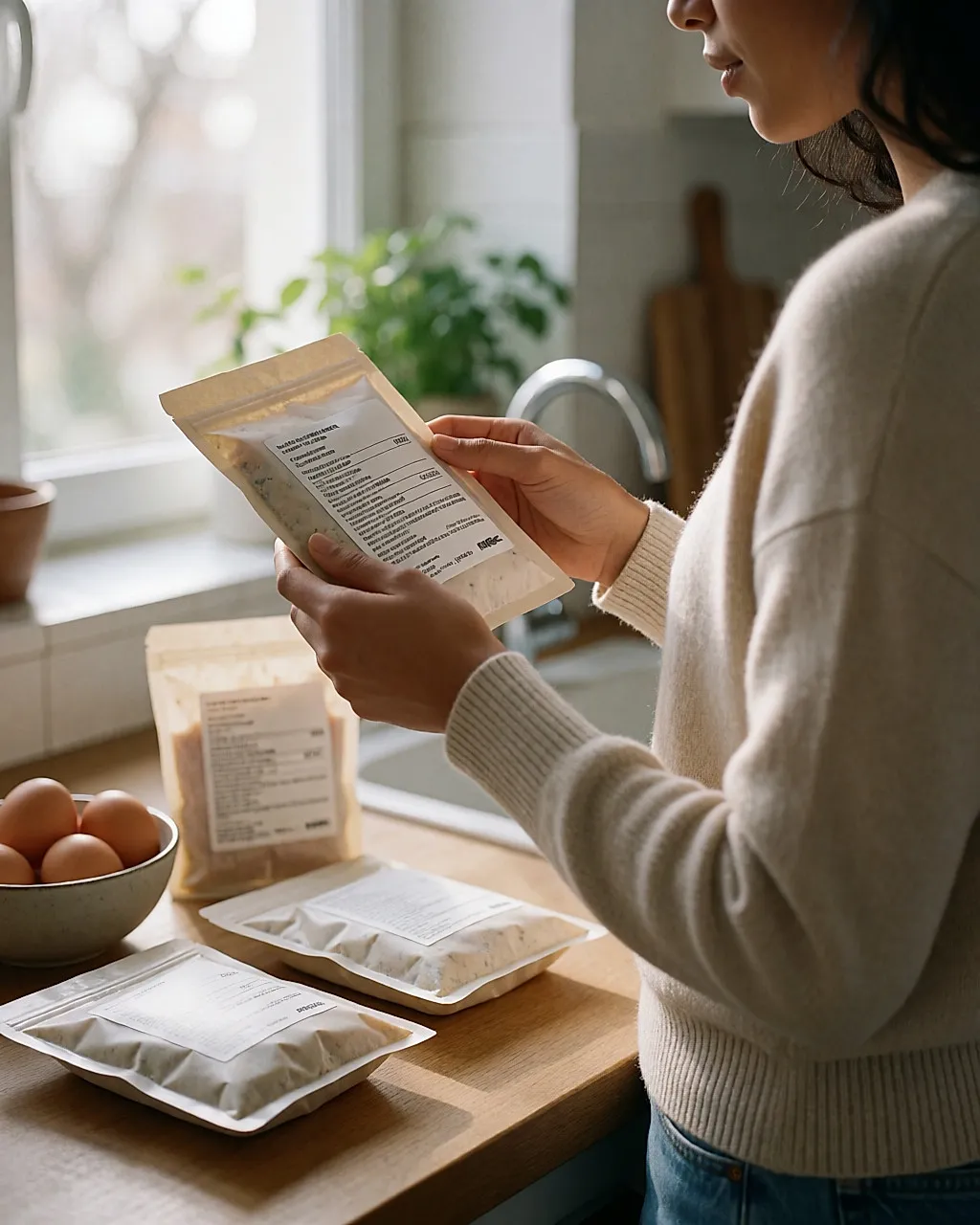
As for ultra-processed food, there's no need to ban it. Read the ingredient list rather than the big slogan on the front: the shorter it is, the better — genuinely.
Dressing a belly that bloats
It feeds nobody, but it changes the day. Skip tight belts and fabrics that grip the waist: they press on the stomach and heighten that bloated feeling. A high-waisted cut gives a cleaner line; a low-slung jean that cuts across the belly doesn't. For drape, go for fluid fabrics — linen, viscose, soft cotton — that skim the body instead of moulding it.

Layering is your ally: a fine T-shirt, an open shirt over the top, and the silhouette picks up shape again without anything gripping. Toning head to toe in a single shade lengthens the whole line, and one statement piece up top — a bold print, a detailed collar — pulls the eye upwards. Nothing magic, just wardrobe notes taken at mirror height. One well-cut basic beats three pieces that pull.
A starting point, no promises: one week of tasting before salting, swapping fizzy drinks for sparkling water, and eating sitting down. Honest verdict — not a centimetre lost, but noticeably more comfortable evenings in high-waisted jeans. It isn't a method, just a test to repeat at home, on your own body and at your own pace.
What it costs
At the supermarket, expect to pay in the region of £1–£3 for 500g of dried pulses, nearer £2–£5 for organic; tins sometimes work out cheaper per kilo if you don't cook much. Seasonal fruit and veg, loose from a market stall or through a veg box scheme, remains the cheapest route — and the one with the least packaging. Slimming supplements (£15–£40 a month), on the other hand, deliver very little: the MHRA has issued repeated warnings about the ingredients in some unlicensed slimming products. Where to find what: markets and supermarkets for fresh food, wholefood shops or online refill retailers for dried goods, charity shops and resale apps for the wardrobe — a new cotton high-waisted pair runs £50–£120 depending on the label, and often half that secondhand.
Sources
- World Health Organization (WHO), recommendation on salt intake (less than 5g a day)
- NHS Eatwell Guide and SACN, UK guidance on fibre (around 30g a day) and salt (no more than 6g a day)
- MHRA, warnings on unlicensed slimming products
- EFSA, dietary reference values for carbohydrates and dietary fibre
- Monash University, research on FODMAPs
Food supplements do not replace a varied, balanced diet and a healthy lifestyle.



Comments
Your opinion matters: rate the article, react and reply to comments.
Comments are moderated; AI-assisted comments are flagged. Text emoticons (8-), :-), <3…) are automatically shown as images.