
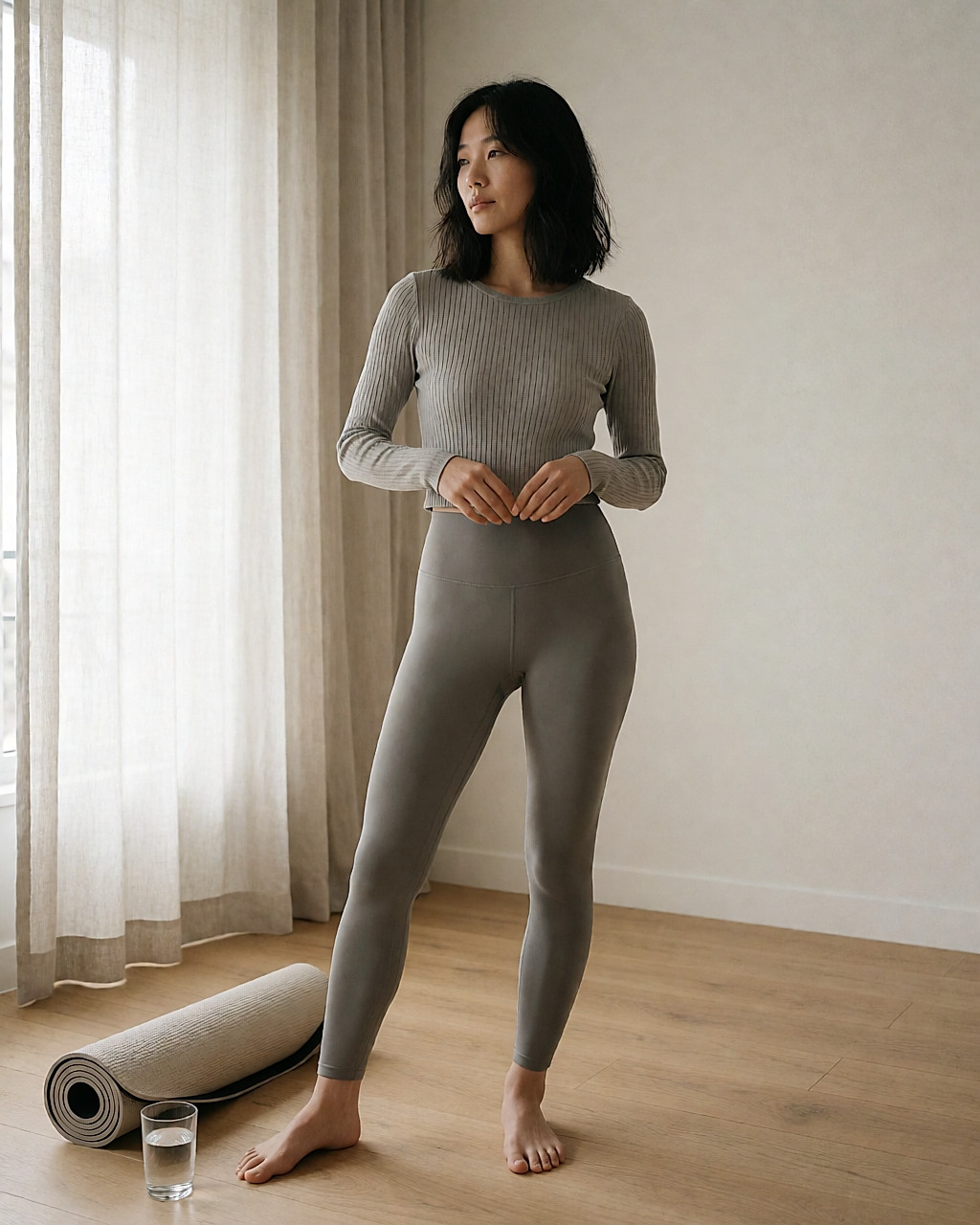
Flat tummy mission for spring #2: the right habits
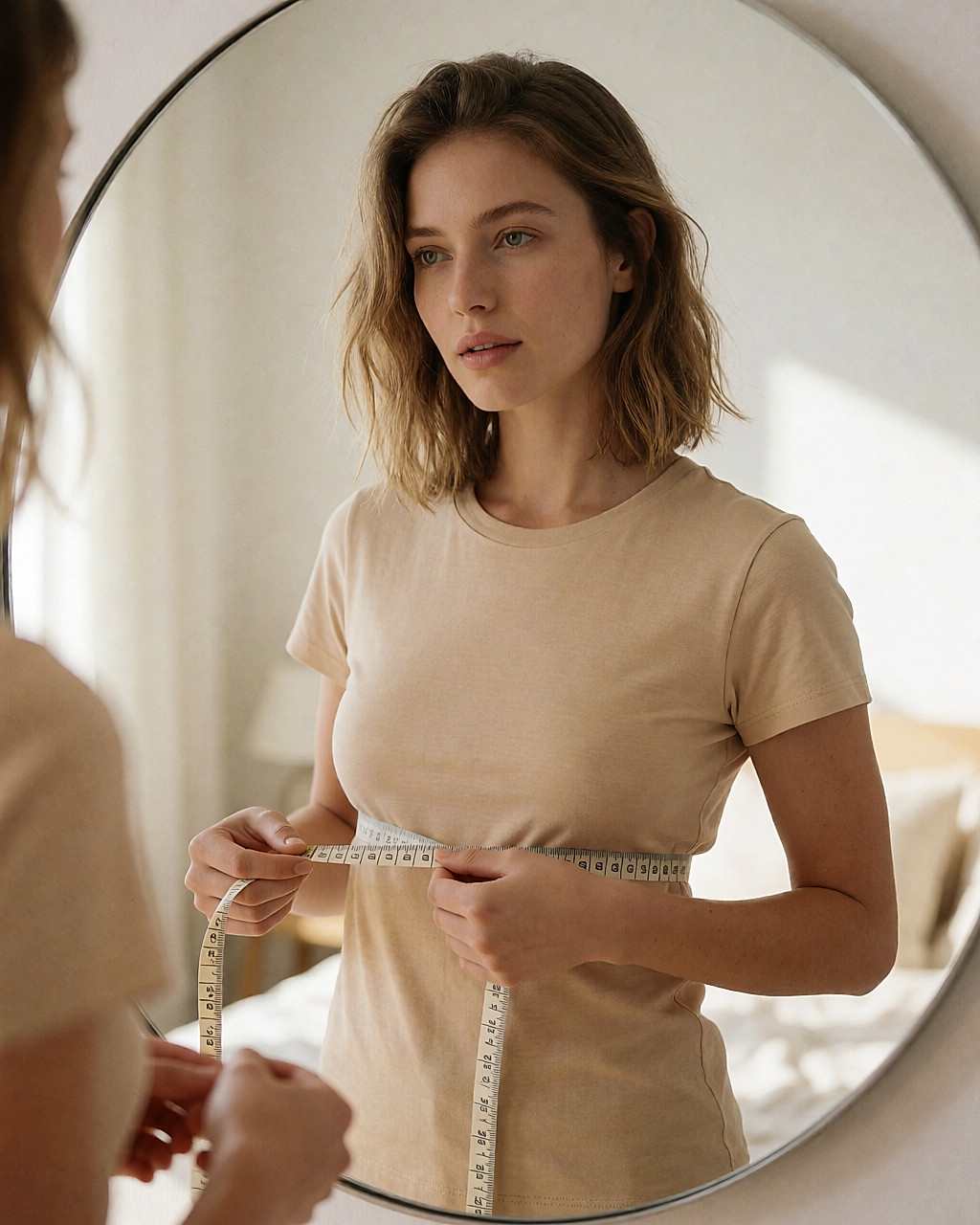
You've put evening snacking behind you, you're making better choices on your plate, and you've even got into the habit of a herbal tea after dinner. And yet, in the mirror, that little rounded tummy still seems to be mocking you. Don't panic, and above all don't feel guilty. The tummy is the area that stores fat first and gives up the last few centimetres most grudgingly — hormones, genetics, body shape: willpower doesn't explain everything, and it's important to say so.
The good news is that what's on your plate doesn't do all the work — far from it. Three simple habits, kept up over time, count for more than any set of Sunday-night crunches. Shall we run through them together?
Move, yes — but over the long term
The heroic workout that leaves you aching for three days is often abandoned after a week. The real pace that lasts all spring is more modest: two to three sessions a week, 45 minutes to an hour. Repetition, not one-off heroics — that's where it all really happens.
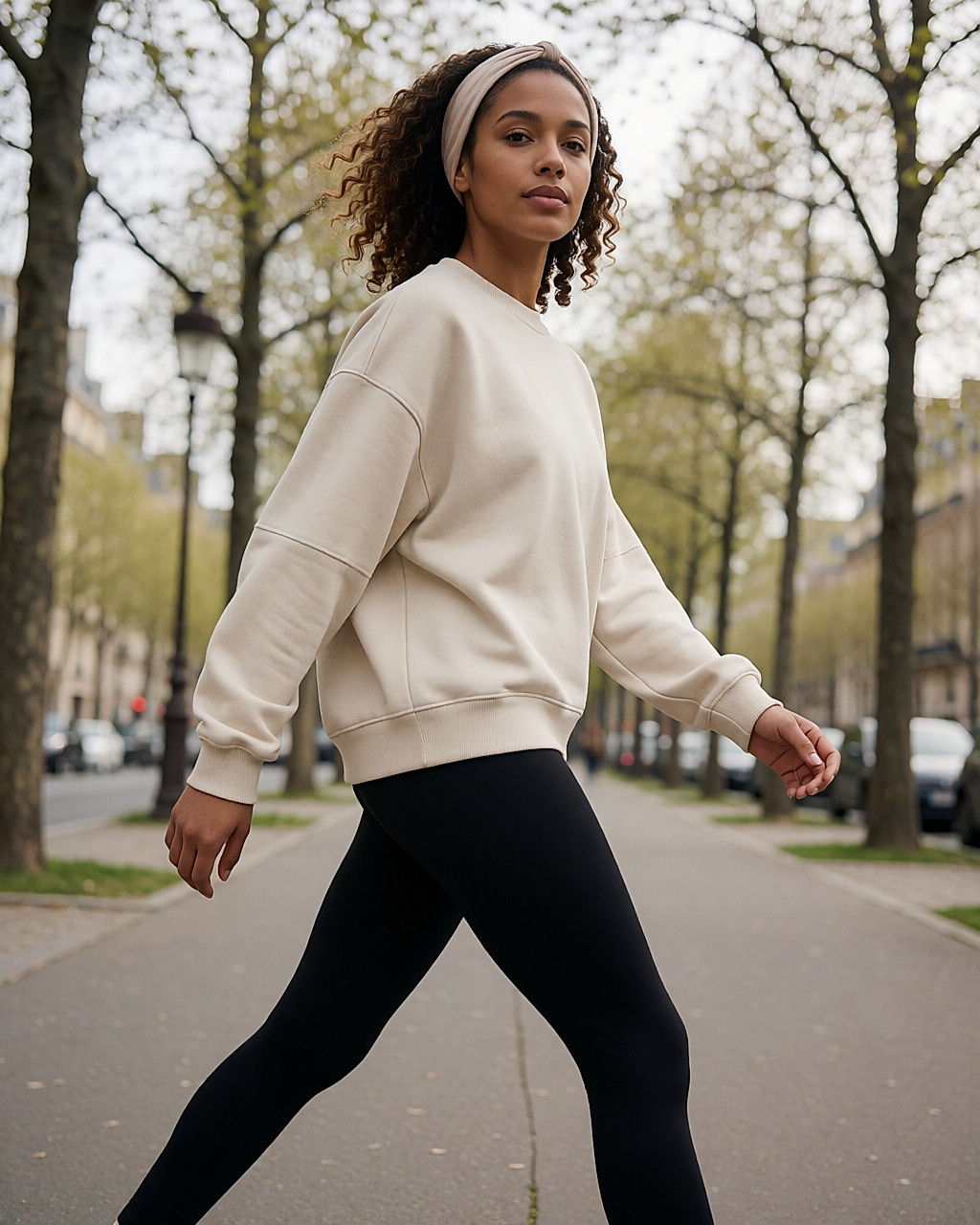
And to make it stick, mix up your activities. Cardio — cycling, running, swimming, brisk walking — increases your overall energy expenditure. Strength training, meanwhile, supports the abdominal wall, takes the strain off the lower back and helps with posture. To give you a concrete benchmark, the WHO advises adults to get 150 to 300 minutes of moderate aerobic activity a week, plus two strength sessions. Nothing impossible, even with a busy diary!
A quick note of realism, because we'd rather be honest: working a specific area doesn't burn fat from that area. Nothing in the available evidence shows a spot-reduction effect. Movement, however, firms, protects your back, gets your digestion moving and helps bring stress down. Four very real benefits — we're not going to turn our noses up at that.
Posture: the habit that changes everything
We rarely think about it, and yet: when you're slumped in your office chair, your tummy relaxes, your back suffers and your abdominal wall switches off. The reflex to build, at your desk or on your commute, comes down to four points: shoulders down, chest open, neutral pelvis, spine long. Simple? On paper. In practice, it asks you to remember it several times a day — the idea is to make it an invisible workout.
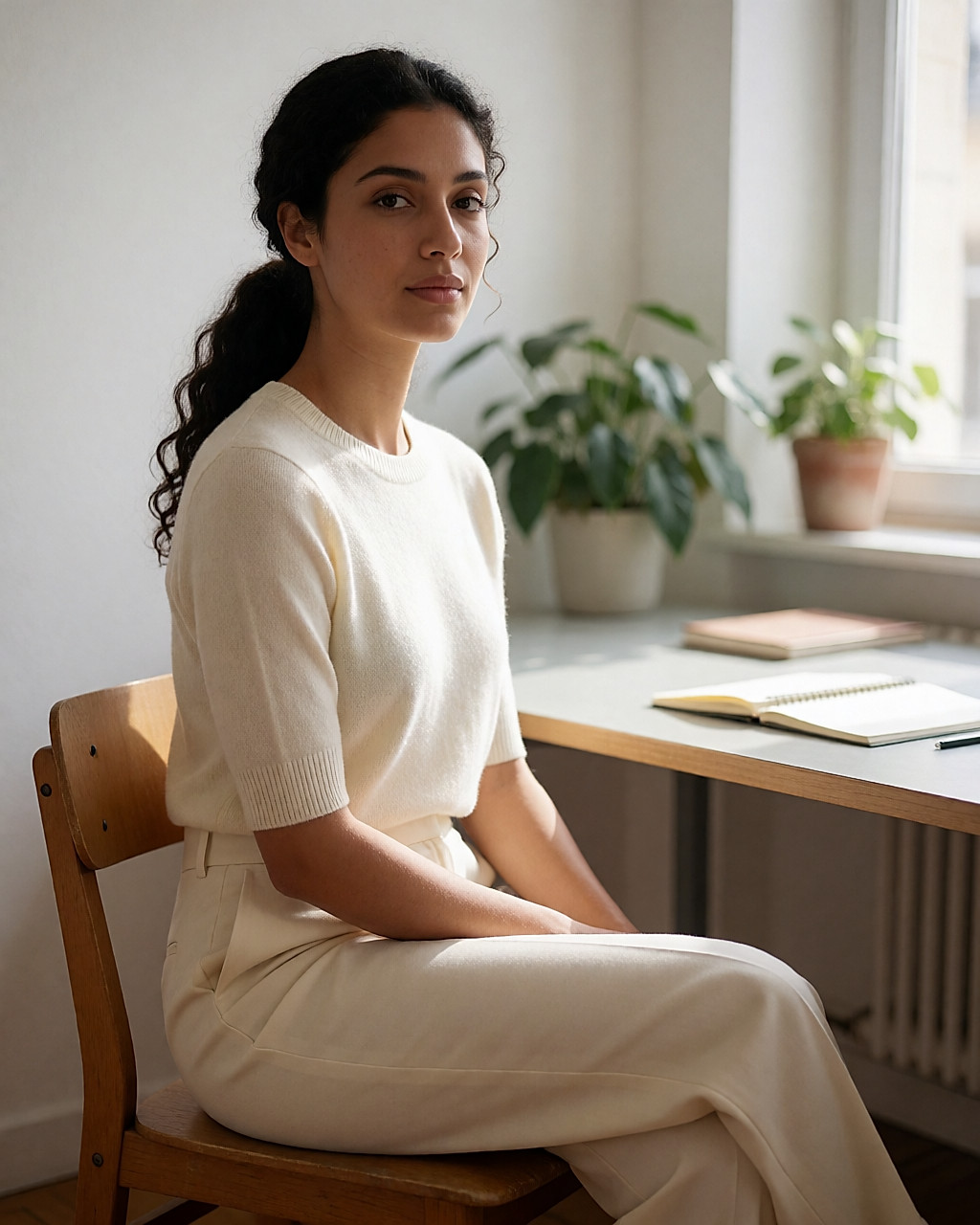
Then, several times a day, gently contract your abdominals for a minute, release, and repeat three or four times. All without ever holding your breath — that's the key point. This won't replace a workout, obviously, but it wakes the area up at times when it spends its life switched off.
The one-minute test. Sitting with your back straight, gently draw your navel in without arching your lower back, and breathe as usual. Hold for sixty seconds. Three to four times a day is enough to wake up the abdominal wall. If your back arches or you hold your breath, stop: it's a sign you're compensating with your lower back, and that's not the aim.
Shape your silhouette rather than hide it
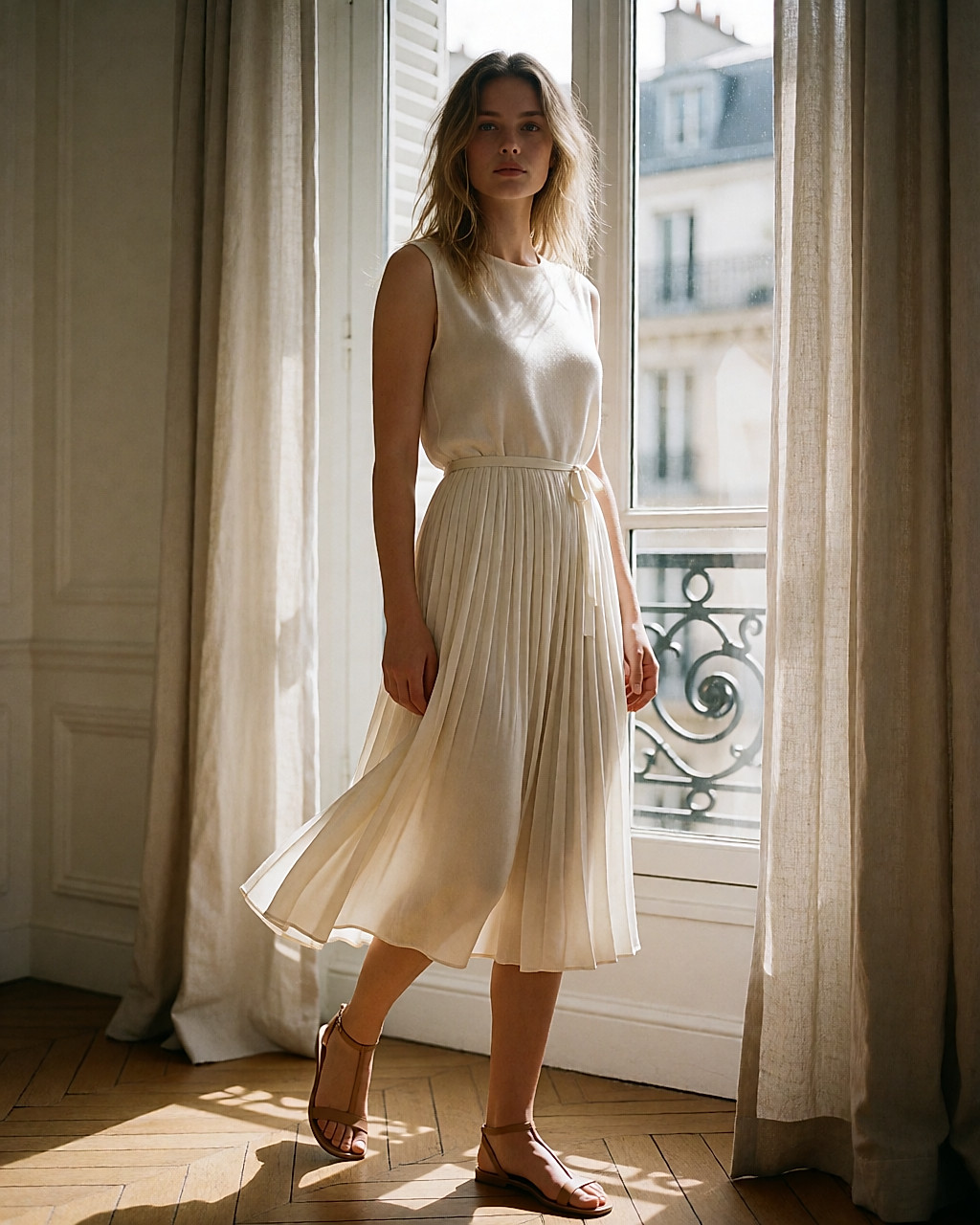
On the wardrobe front, we're not talking about hiding anything — that's really not our thing. The idea is to create a look, not to disappear. A high waist structures the silhouette and draws a clean line. A fluid drape — cool wool, dense viscose, raw denim — glides over the body without clinging. Conversely, a jersey that's too thin clings to every contour: that comfortable staple can become your worst enemy, and it's good to know before you buy it in three colours.
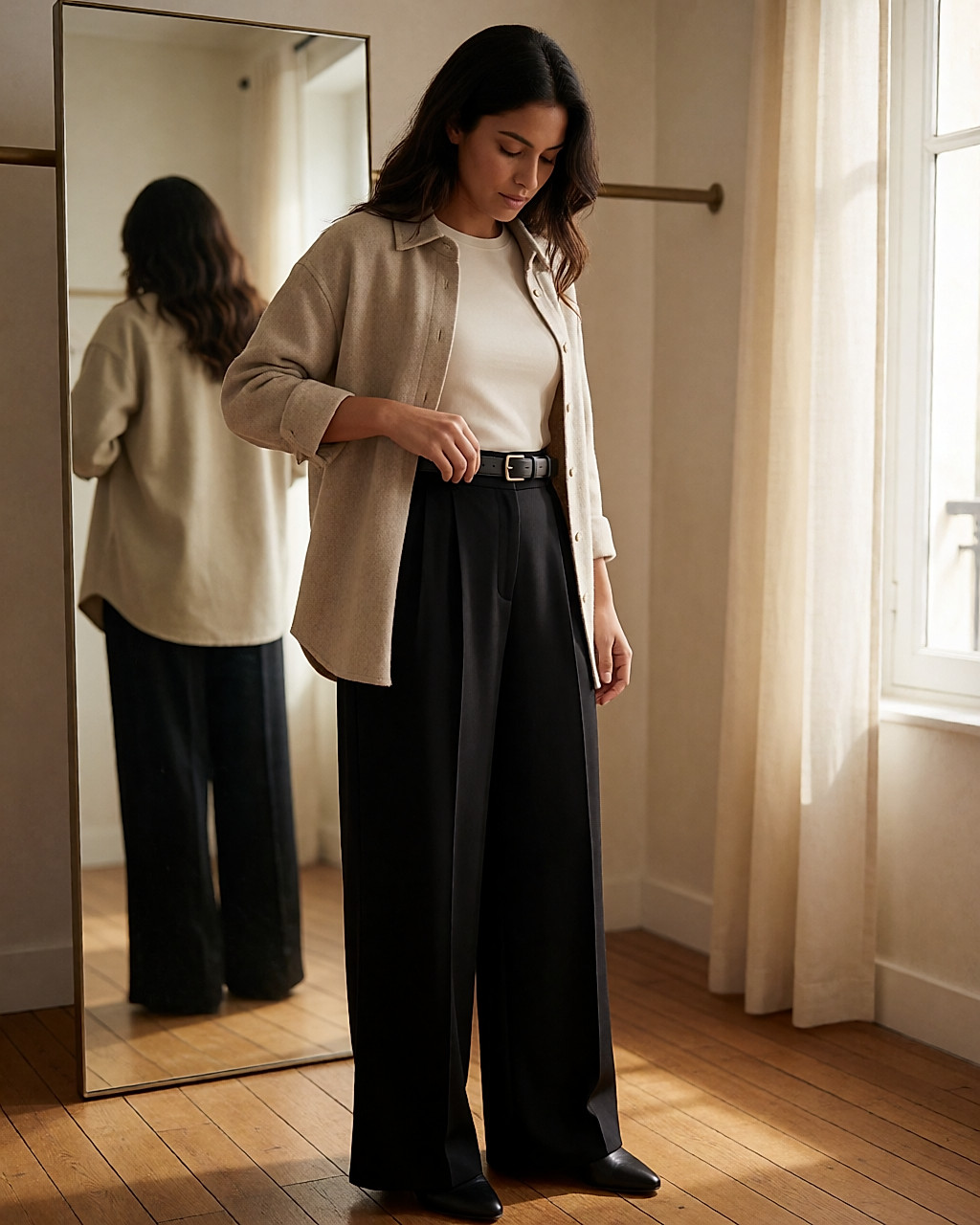
Layering finishes the job: T-shirt, open overshirt, straight-cut jacket, and there's a vertical line that lengthens. Add a belt at the natural waist — a discreet statement piece that shifts the eye and redefines the top-to-bottom proportion. No cut will make a tummy disappear, let's not kid ourselves. But a well-thought-out wardrobe can change your look in an instant.
Herbal teas and creams: what you can really expect
Draining or 'detox' herbs in infusions are everywhere, and they capture the imagination. In reality? First and foremost, you're giving your body water — and drinking more is already a good habit. Be careful, though: some herbs are not advised if you're taking medication, are pregnant, or have kidney or liver problems. The right move isn't to look for the answer on a blog, but to ask your doctor or pharmacist.
On slimming creams, honesty obliges us: the evidence remains thin. What is real is the action itself — massaging after a shower, kneading as you go, can improve the look of your skin and give you two minutes just for you. Not very dramatic? No. But honest, and genuinely pleasant.
Budget
On the budget front, it all depends on what you decide to add to this mission — and remember that none of these purchases is essential.
- Gym or club: expect around £20 to £60 a month. The bill climbs with access to group classes, opening hours and an annual commitment. The right move: compare online and read the cancellation terms before you sign.
- Drop-in classes (yoga, Pilates, strength): £12 to £20 per session, often cheaper with a block of ten.
- Exercise mat: £12 to £35 from supermarkets or online. Thick, non-slip models tend to be at the top of the range.
- Organic herbal tea: £3.50 to £7 for a box of tea bags, £7 to £13 for 100g loose. Loose tea often works out cheaper per litre and cuts down on packaging.
- Certified organic moisturising body cream: £9 to £22 depending on the size. Choose glass, a recyclable tube or a refill where one exists.
Prices vary by city, size, certification and retailer. The first two habits in this mission, though, don't cost a penny.
Sources
- WHO — Guidelines on physical activity and sedentary behaviour, 2020.
- Santé publique France — Physical activity, dossier.
- ANSES — Food supplements, opinions and reports.
- ECOCERT Greenlife — COSMOS standard, COSMOS ORGANIC and COSMOS NATURAL labels.
- INAO — Organic farming label specifications, official texts.
Food supplements do not replace a varied, balanced diet and a healthy lifestyle.


Comments
Your opinion matters: rate the article, react and reply to comments.
Comments are moderated; AI-assisted comments are flagged. Text emoticons (8-), :-), <3…) are automatically shown as images.