
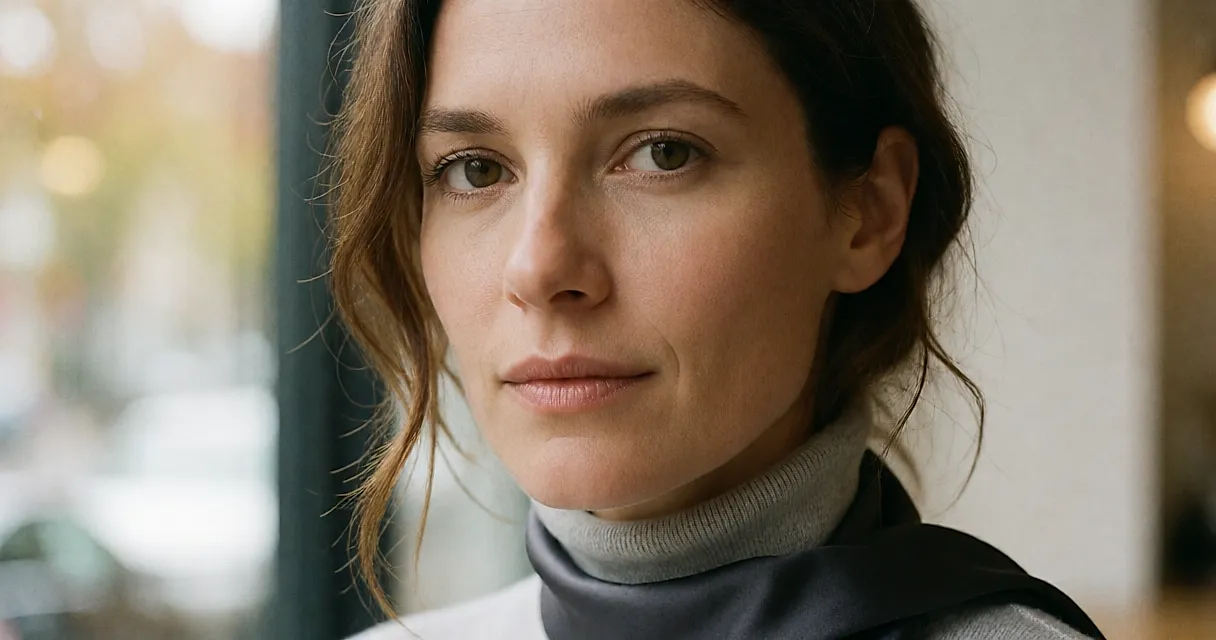
We've already covered how monochrome can start with tights; here's the other half of the equation: texture.
Take two pieces in the same colour — that mid-grey that lives in every wardrobe. One is dry wool, the other fluid satin. Side by side, they tell completely different stories: the first absorbs light, the second reflects it. There: you've already grasped the whole tonal idea.
Monochrome has a bad reputation, and often it earns it. People suspect it of sliding into uniform, or those perfectly matched outfits that look as if they've come straight from a catalogue. But what if colour is almost never the problem? The issue is repetition: three pieces in the same shade and the same fabric, and the whole thing goes flat. Change one texture and the palette starts breathing again.
Texture contrast does the heavy lifting
A good tonal look is built like a conversation. Dry wool, matte and slightly grainy under the fingers, answers satin that slips and catches the light. Structured leather holds soft jersey without crushing it. Good news: you don't need three new pieces; one is enough to shift the balance.

The simplest pairing is still a matte knit with a fluid bottom half. A merino wool jumper and cotton-satin or silk-satin trousers, and you're done. The jumper gives structure, the trousers give movement. Go all-fluid and the silhouette melts; go all-dry and it stiffens. It's that small tension between two fabrics that creates the effortless dressed-up look we're all after.
Three other combinations that work: a poplin shirt with a wool skirt, a leather jacket with a jersey dress, a corduroy waistcoat with linen trousers. The logic is always the same: one fabric absorbs the light, one reflects it. Nothing more complicated than that.
Two depths are better than one
Two pieces in exactly the same colour are actually the hardest case. The eye has no reference point, and the silhouette turns into one solid mass. What rescues it is a difference in depth: a light grey with anthracite, a cream with a warmer ivory, camel with chocolate. The contrast stays soft, but it draws the cut, the length, the waistband.

In practice, stay within one colour family and layer two depths, sometimes three. Darkest at the bottom? It anchors the silhouette. Lightest at the top? It lifts light towards the face. In between, add a bridge piece: a jumper, a belt, a pair of tights.
One word of warning: a tonal look that's too contrasty simply becomes a contrast. The shift needs to stay subtle, two neighbouring tones on the colour card, never more. Often it's a nuance of difference and three centimetres of drape that make all the difference.
The traps you can avoid
First, the all-black look in three shiny fabrics. Satin, patent leather and velvet: together they quickly start to resemble an evening uniform. Matte black with shiny black, yes; three shiny finishes together, no.
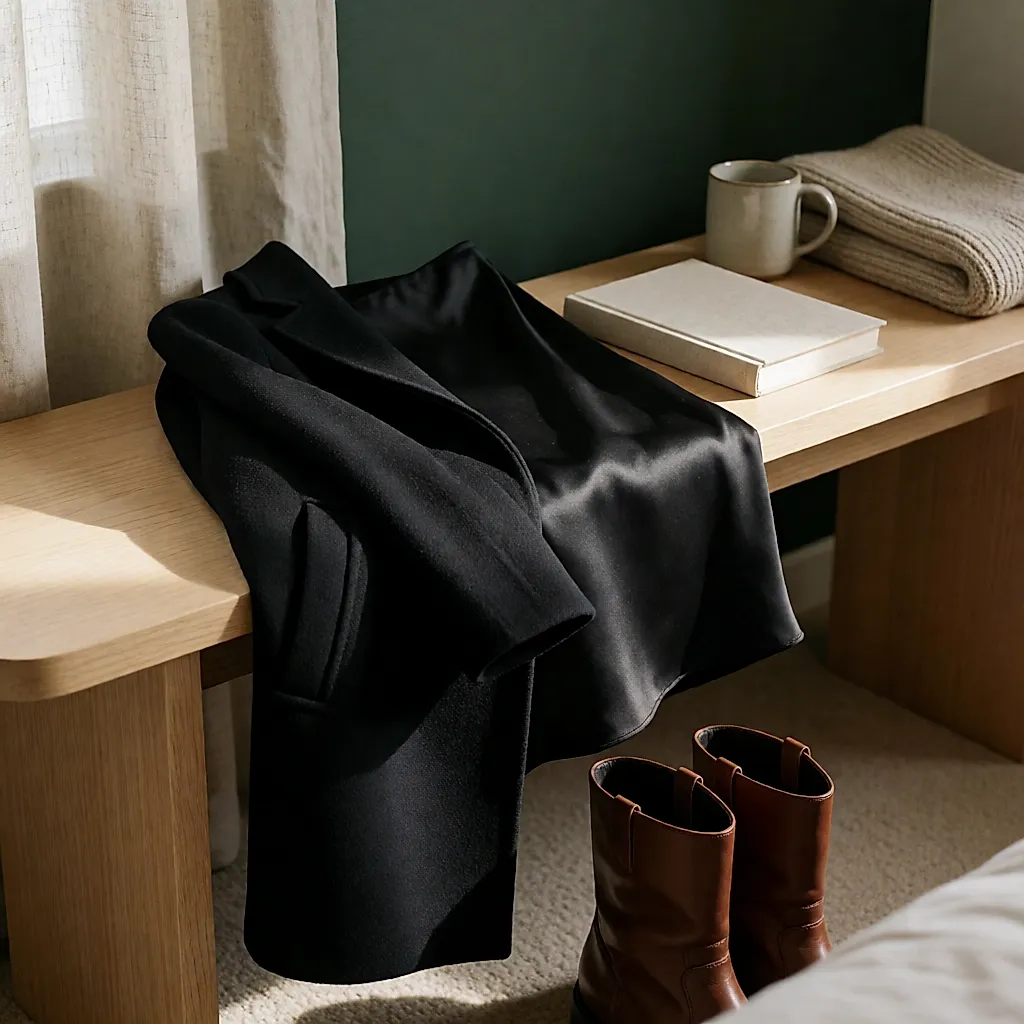
Next, beige on beige. It's the least forgiving combination, because it blends into the skin and tips into hotel-pyjama territory. Rescue it with one structured piece: a wool blazer, a leather bag, a well-chosen belt.
One last habit: check the synthetic fibre content before you buy. Some synthetics have a shine that gives them away and kills the matte-versus-satin effect. Wool, cotton, linen, silk, leather: natural materials develop a patina and age better, which is exactly what you want from a tonal wardrobe you'll wear for three winters.
Three tonal looks to try without buying anything
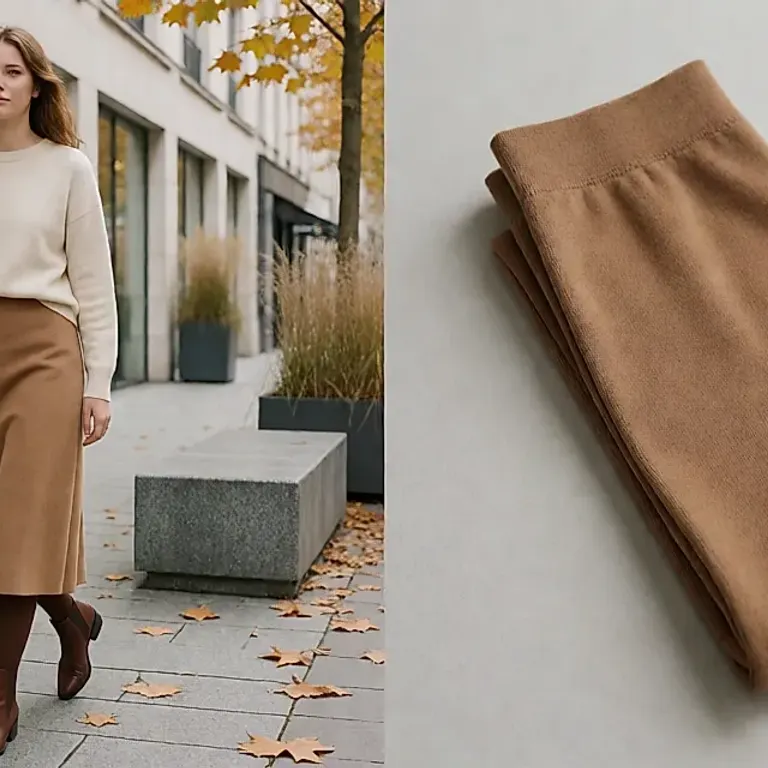
Grey: a light grey merino wool jumper, anthracite trousers, black leather boots. Camel: a cream poplin shirt, a camel wool skirt, brown tights. Navy: a wool cardigan, raw denim jeans, a black leather jacket.
Lay the three pieces on the bed and step back two paces. If two fabrics look too similar, swap one out.
Budget
A tonal look doesn't require a new wardrobe. If you do need to add a piece, expect to pay roughly £35–£100 for a merino wool jumper (depending on the fineness of the knit and how much recycled wool it contains), £25–£60 for cotton-satin trousers or a skirt, and £80–£220 for silk-satin. On the leather front, a vegetable-tanned jacket sits at around £130–£350 new; second-hand, more like £35–£100, often with the leather already softened.
Where to look? The high street for knitwear and poplin, charity shops and markets for leather — that's where the good finds tend to be — and specialist natural-fibre brands for silk. And if money is tight, remember that one piece in a different texture is enough to transform an outfit you already own.
A tonal look isn't about adding up identical pieces; it's a game of differences: one fabric that catches the light, another that absorbs it, two depths that answer each other. Start with your favourite piece, add one whose texture has nothing in common, step back two paces. More often than not, the piece you were missing was already there at the back of a drawer, a little creased and far more useful than yet another parcel.


Comments
Your opinion matters: rate the article, react and reply to comments.
Comments are moderated; AI-assisted comments are flagged. Text emoticons (8-), :-), <3…) are automatically shown as images.