
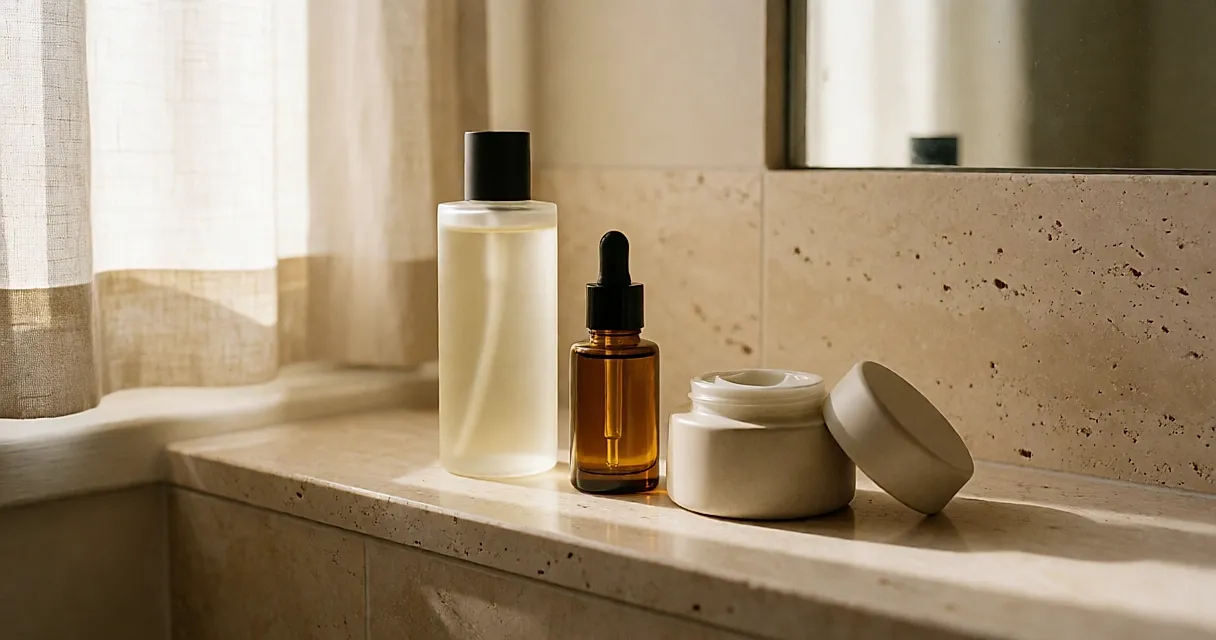
On the shelf, the bottles are lined up by size, biggest to smallest, like well-behaved children. It's pretty. It's also the exact opposite of the order in which skin welcomes them. The Korean routine isn't primarily about the number of steps: it hinges on a rule of household physics, from the most fluid to the richest. The rest — the shopping list, the three-minute video, the bottle that costs half a month's rent — comes later, and often for nothing.
Order isn't a hierarchy, it's layering
An aqueous serum over a thick cream is a bit like putting socks on over shoes: it stands up, but you can feel something's off. In layering logic, you start with what pours — lotion, essence, watery serum — then build up in thickness to the cream, which stays last. The richest layer brings up the rear.

And a routine isn't a collection. Ten textures stacked on top of each other don't do ten times the work; they often make a paste that pills under foundation at 8.40am. If your skincare rolls into little grains under your fingers, the product is rarely the problem: it's the order, or the dose.
Two textures are enough
The question that keeps coming back: do you really need a lotion AND an essence AND a serum? In reality, no. A fluid layer that hydrates — lotion, essence, watery serum, whatever the bottle calls itself — and a richer layer that seals it all in: that's the base. A third texture is a seasonal bonus, not a duty.

The way you apply it matters as much as the product: a few drops in the palm, tap rather than rub, and allow time for the first layer to sink in — enough to finish your coffee, hunt for the missing sock, knock over said coffee. November and its grey rain call for a richer layer; in July, a simple fluid is often enough.
The dose, the variable nobody talks about
We talk about the right product, rarely the right amount. A cream is a pea-sized amount — not a tablespoon because your skin feels tight in January. A serum is a few drops for the whole face; any more and you're feeding your elbow, not your cheek. And what if the problem isn't the bottle but the amount?
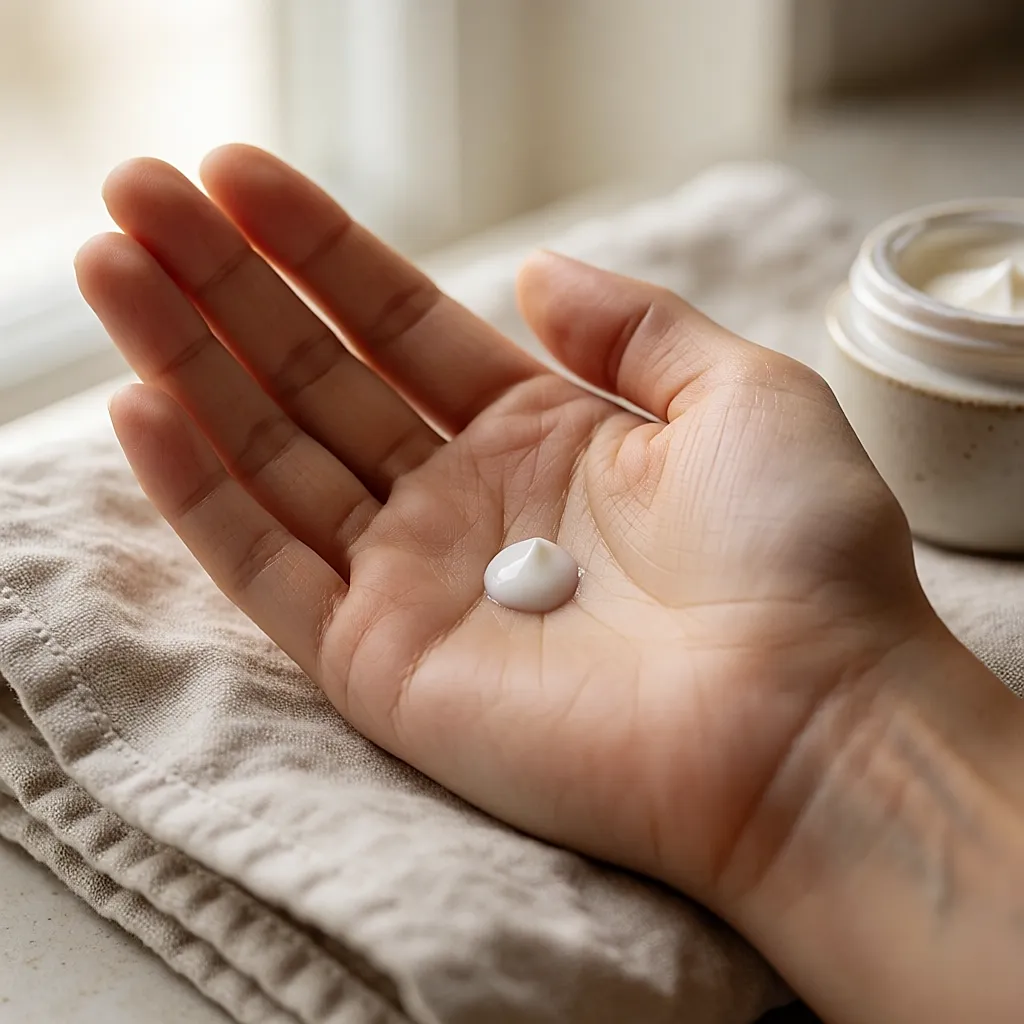
The other lever is timing: applying to skin that's still damp, straight after cleansing, changes how the first layer spreads. This is the principle of damp layering, whose extreme version — seven layers of lotion — does the rounds. Honestly, seven layers on a Tuesday morning isn't happening, and that's fine. Two layers applied properly beat seven layers rushed.
What to take out when you add in
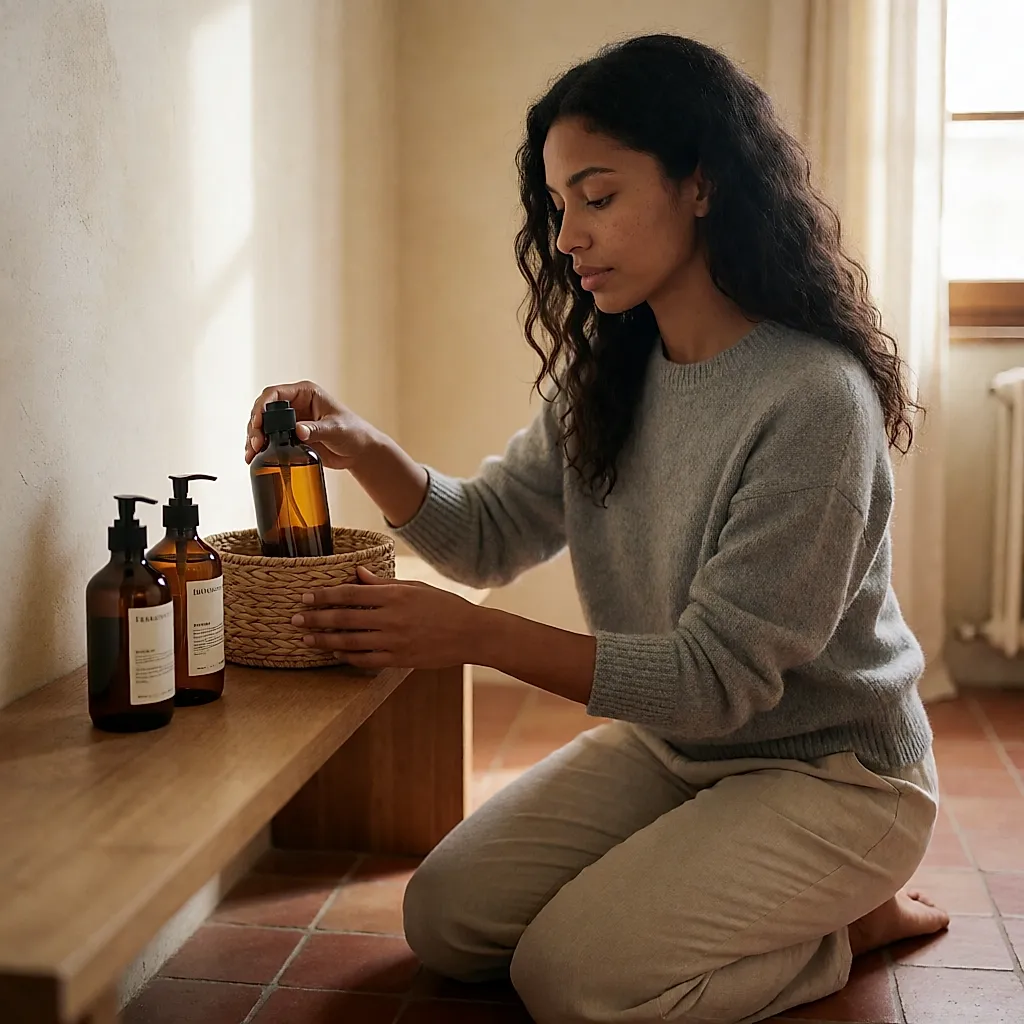
It's the most useful rule and the least followed: one in, one out. Adding a serum? Drop the Sunday mask or the mist that was hanging around. A product you haven't used in ages isn't a routine step, it's a decorative object — and it's taking up the space of something that would actually work.
Be careful, too, about stacking actives that 'tingle' (acids, retinoids, vitamin C): three at once isn't a competition. If skin feels tight, looks red or starts peeling, simplify, go back to two textures, and ask a pharmacist or dermatologist rather than adding another layer.
Budget
As a rough guide, expect to pay around £10–£35 for a lotion or essence, £18–£65 for a serum and £12–£55 for a cream. The difference comes down to size, concentration, where you live and where you buy — pharmacy, supermarket, health food shop or brand website. You can find good fluid layers for under £20 at the supermarket, and very expensive creams that won't necessarily do better than a basic one applied properly.
On the eco side, three things to look at: refills where they exist, packaging (glass, cardboard, solid formats) and the proportion of natural ingredients covered by a verifiable label such as Cosmos Organic. A well-formulated conventional product can beat a badly made natural one; that trade-off is worth accepting. A green claim without evidence is not.
The Sunday-evening audit, in three questions. Which texture did you use this week without thinking? Which one made you raise an eyebrow — in a good way? Which one hasn't been used in ages? Put the third away, keep the first two: your routine already stands up.
At heart, the Korean routine isn't a shopping list to tick off, it's a grammar: first the light verb, then the rich one. Two textures, the right dose, one in and one out — and the rest of the cupboard can breathe. The one step that stays when you've only got five minutes? The fluid layer, a pea-sized amount on top, and you're out the door.

Comments
Your opinion matters: rate the article, react and reply to comments.
Comments are moderated; AI-assisted comments are flagged. Text emoticons (8-), :-), <3…) are automatically shown as images.