
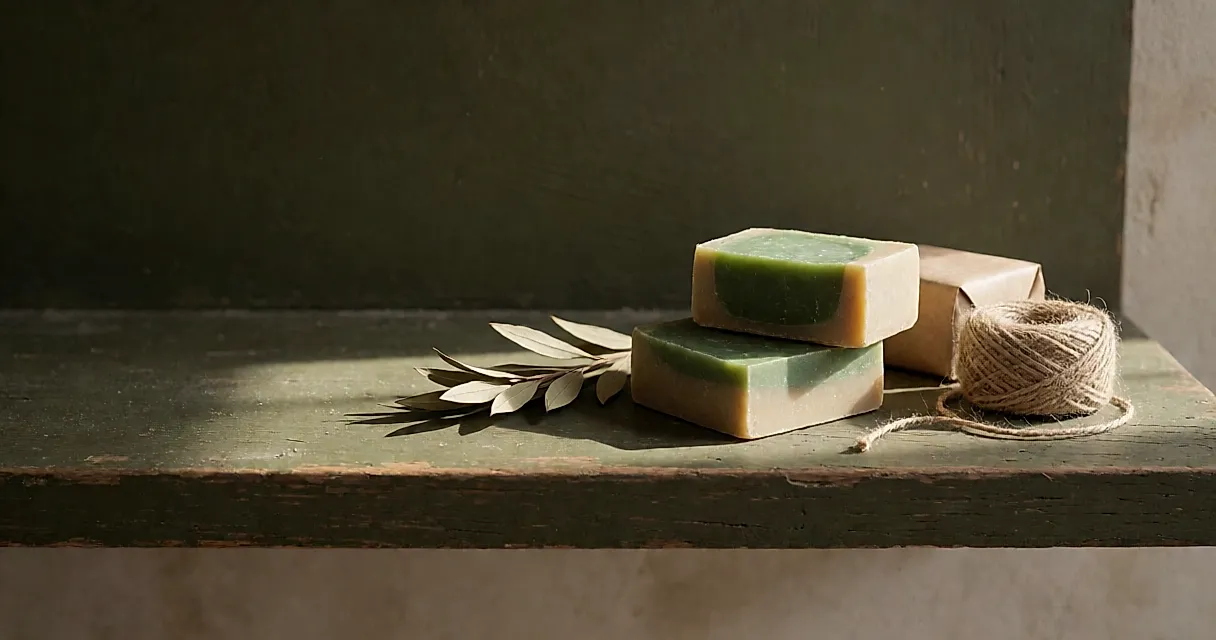
On the shelf, two bars of Aleppo soap can look like sisters. One says 20% laurel, the other 5%. The first left the workshop six months ago; the second has been drying on a shelf for two years. The label won’t tell you which will hold up better in the shower, nor which will feel gentler when your skin is tight in November.
Laurel brings the scent, age brings the character
Traditional Aleppo soap combines olive oil and laurel oil. The laurel percentage is often the headline: the higher it is, the more strongly scented the soap and the more expensive it tends to be. But that number tells you nothing about maturity. A bar with a very high laurel content can be very young; a more modest one may have spent months drying.
Curing is the time the soap spends hardening. Water evaporates; the bar becomes denser and firmer in the hand. The age of the soap then matters more than its laurel percentage: a well-cured bar dissolves more slowly, tends to last longer and is less likely to crumble in the first shower. Soap makers talk in terms of several months, sometimes a year or more. If the seller can’t tell you how long the bar has been drying, that already tells you something.
What curing changes in the hand
Pick up the bar. A fresh soap is softer, dents under your thumb and wears down quickly. A cured soap is dry, firm, sometimes slightly cracked on the surface; its colour is more matte. That isn’t a fault. It’s a sign that it has waited.
And what about lather? Sparse lather is not a flaw. Aleppo soap doesn’t foam like a shower gel, and that’s normal. Rub it between your hands or over a wash mitt with a little warm water. The lather is thin, sometimes almost absent. It’s the action that counts, not the big cloud of foam.
Dry it properly and it will keep its shape
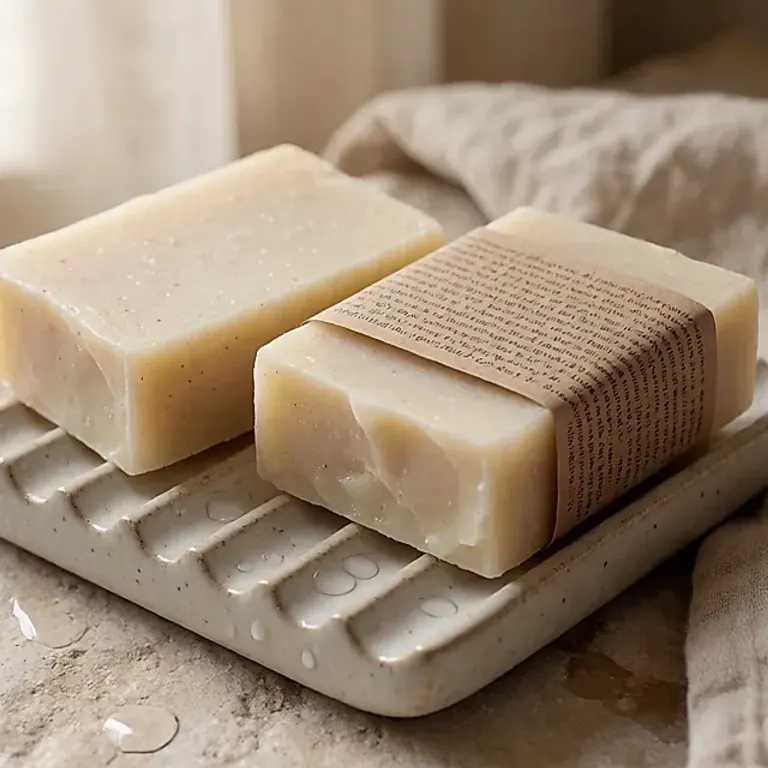
After use, don’t leave it sitting in water — that’s how you turn a dense bar into a sad little puddle. Use a draining soap dish that lets air circulate, away from the shower jet: the soap dries between showers. Don’t leave it soaking in a long bath either: a bar that soaks loses its corners and its shape. It sounds obvious, but this is the difference between a soap that lasts weeks and one that vanishes before your eyes.
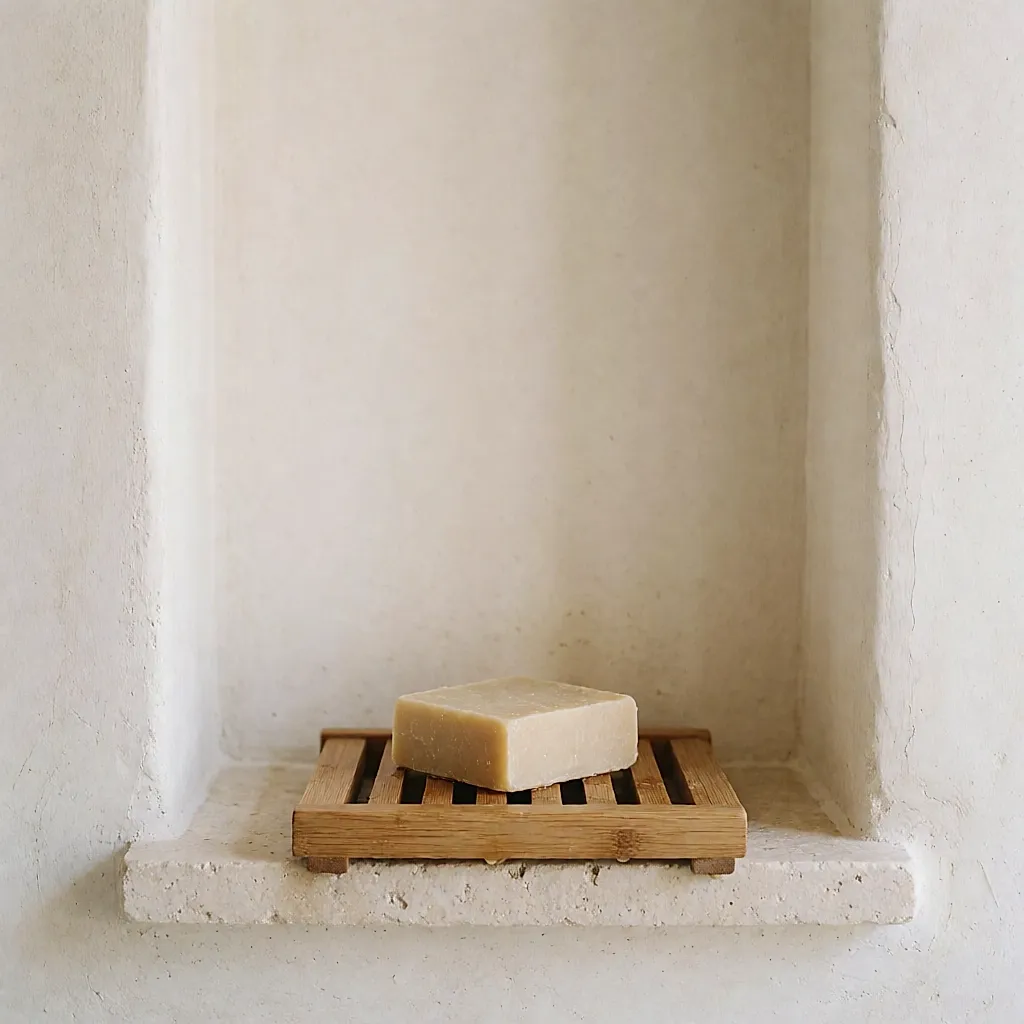
And if you take long showers? Move it out of the splash zone. An Aleppo soap doesn’t need ten minutes under the jet to do its job. It just needs to dry. A magnetic soap holder or a small wooden rack works perfectly; what matters is that water drains and air gets to it.
November is the real test
In November, the heating is on, the air turns dry and skin feels tight. Aleppo soap has one simple advantage: it is often sold without plastic packaging, naked in a kraft paper wrap or tied with string. Look for a 100–200 g bar, check that it feels properly dry, and skip unnecessary gift sets.
We won’t claim it suits every skin type, or that it replaces a whole routine. But for skin that feels tight, a well-cured bar with a low laurel content may feel more comfortable than a very high-laurel, freshly made soap. In its traditional form, the ingredients list is short: olive oil, laurel oil, water and lye. The rest is up to your skin.
The price question — and why the bigger bar can win
Expect to pay roughly £5 to £10 for a 100–200 g bar. The price varies with laurel percentage, curing time, origin and where you buy it. You may find it in fine food shops, specialist soap shops, markets, health food shops and online — where delivery charges can add to the total.
Does a more expensive soap always mean better curing? No. A larger bar that lasts the season can work out better value than a smaller one that disappears in weeks, even if it costs more up front. Ask about the cure date or how long it has been aged before you pay.
Before you pay, ask three things: how long has this soap been drying? What is the laurel percentage? How has it been stored? If the first two answers are vague, walk away — there are other bars on the shelf.
Aleppo soap isn’t a luxury product to keep under glass. It’s a bar that asks for a little attention: ask its age, let it dry, accept the sparse lather. Start with the soap dish. That’s the small gesture that changes everything.

Comments
Your opinion matters: rate the article, react and reply to comments.
Comments are moderated; AI-assisted comments are flagged. Text emoticons (8-), :-), <3…) are automatically shown as images.