

Five minutes hunting for a name. Three passes over the same line with nothing going in. It's nothing alarming, and yet the question is worth asking: what exactly are you serving your brain? What we do know is that no single food transforms your memory at a stroke. What we also know is that what's on your plate, and how you live more broadly, carry real weight in the equation.

What happens in your head when you take something in
Remembering a word, a face or a passcode is often described as happening in stages — attention, storage and retrieval — but that is a simplified model, not a precise map of which molecule does what.
Your body doesn't buy neurotransmitters ready-made: it assembles them from nutrients drawn from your diet. Your neurons are themselves built largely from fatty acids. Hence the fairly logical idea that what goes on your plate influences communication between nerve cells. Food isn't the whole story, but it is part of the picture.

The building blocks your brain needs
Four families keep coming up in the current data.
Vitamin C contributes to the normal function of the nervous system. The B vitamins — B1, B3, B6 and B12 — contribute to normal energy-yielding metabolism, and some also to the normal functioning of the nervous system. Antioxidants limit the oxidation of cells, and the nervous system is as sensitive to that as the rest of the body. Then there are the omega-3s, DHA in particular, which are constituents of cell membranes.
One note of caution, though. In the UK, claims about what a nutrient does are tightly regulated. You can say that vitamin C contributes to the normal function of the nervous system; you cannot promise anyone a better memory. The distinction matters.
Where to find them on your plate
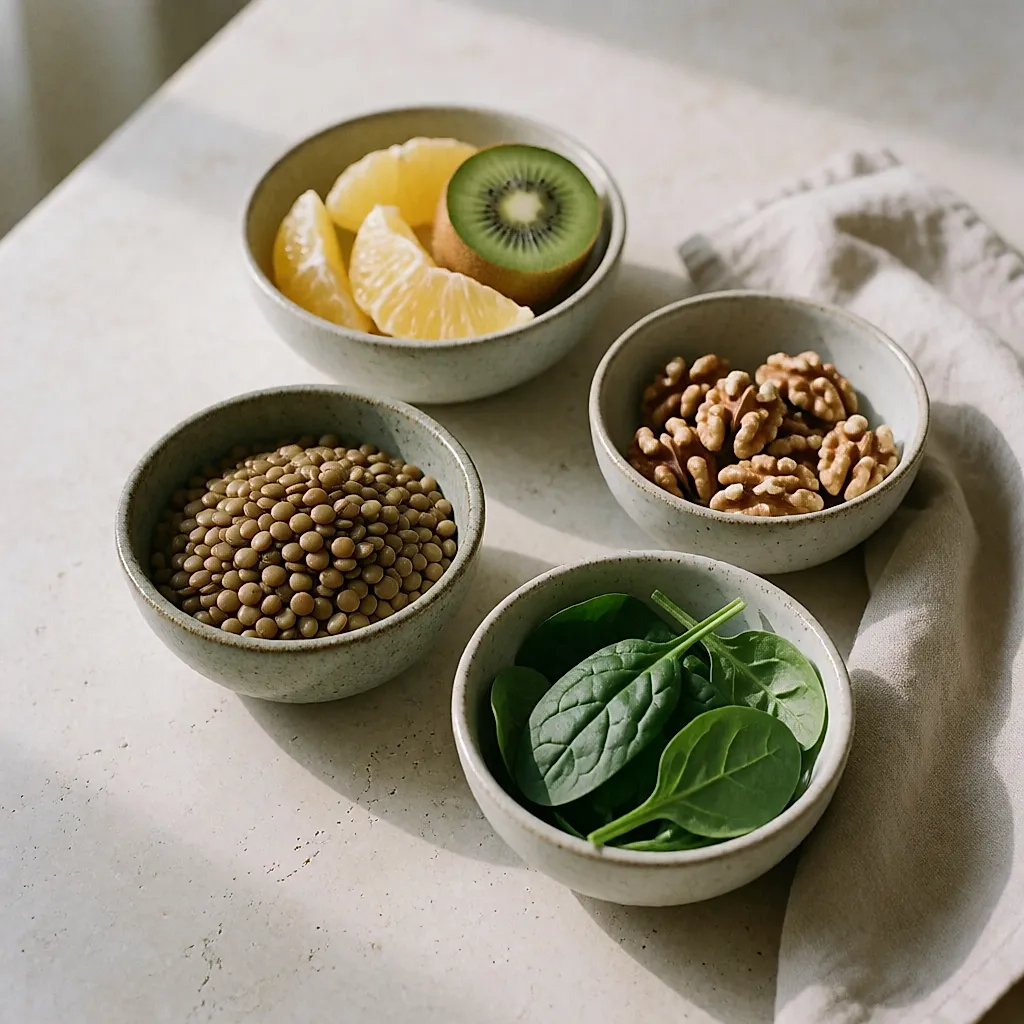
You'll find B1 in brewer's yeast, the outer layer of wholegrains, pulses and pork. Heavy drinking is a classic risk factor for B1 deficiency; if that applies to you, it is worth raising with a GP or pharmacist. B3 turns up in poultry, fish, liver and wholegrains. B6 in eggs, dairy, poultry, fish, pulses and nuts. B9 in leafy green vegetables, pulses, eggs and citrus fruit.
B12 is found naturally in animal-derived foods such as meat, fish, eggs and dairy. If you're vegan, B12 needs particular attention; it is worth asking a GP, pharmacist or registered dietitian whether you need a supplement. For vegetarians, it depends how much room eggs and dairy take up on the plate.
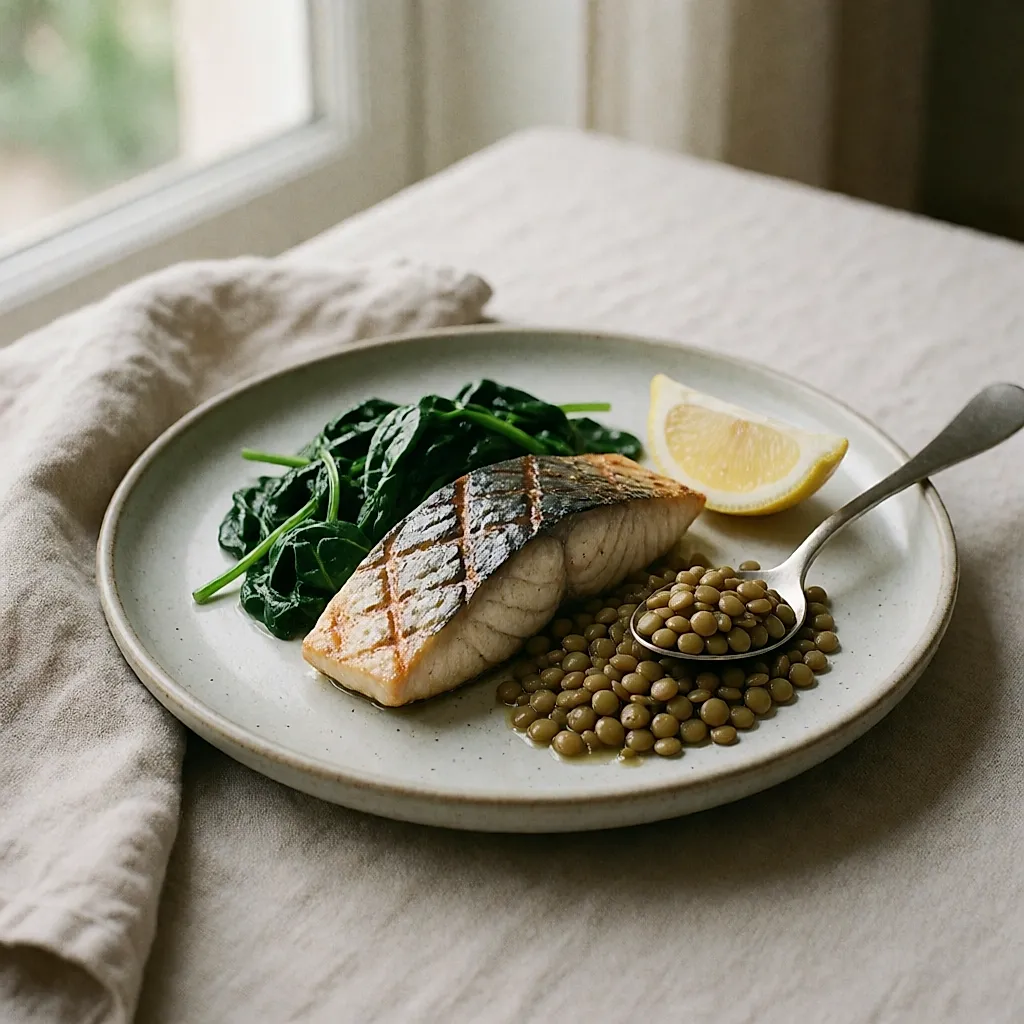
For vitamin C, think kiwi, blackcurrants and citrus — but also raw peppers, parsley and broccoli. For antioxidants the rule is simple: mix up the colours of your fruit and veg. For omega-3s, go for oily fish — sardines, mackerel, herring, salmon — plus walnuts, and cold-pressed rapeseed or walnut oil, alternating between them.
In practice, this is what to hold on to
A varied plate won't get you far if the rest doesn't follow. Sleep is when the brain consolidates what it has taken in: regular, sufficient sleep is part of the picture. Regular physical activity, cutting back on alcohol and stopping smoking are among the same prevention levers as for cardiovascular health. Untreated high blood pressure, poorly controlled diabetes, unaddressed hearing loss and social isolation are worth discussing with a health professional when it comes to long-term cognitive health: that is a conversation for the surgery, not a forum thread.

Keeping mentally active is part of the picture too. Learning a language, an instrument or a new route, reading, cooking a recipe you've never tried: these are ways to stay mentally engaged.


Budget
Feeding your memory doesn't have to mean buying expensive supplements.
Cold-pressed rapeseed or walnut oil in a tinted glass bottle generally comes in at around £5 to £10 for 500ml in a health food shop, a little less in a supermarket. A tin of sardines or mackerel usually costs £1.50 to £5, a bit more if you choose certified sustainable fish. Plain frozen or tinned fruit and veg, with no added salt, are a practical alternative to fresh, often for less. Prices vary mainly by brand, pack size and where you shop — and buying loose at a market or straight from a grower is often worth doing, with no packaging to bin.
If you're vegan, a B12 supplement costs a few pounds for several months' supply; the form and dose are best chosen with a pharmacist or GP. Omega-3 supplements tend to cost £10 to £25 a month, and no authorised claim allows a promise of any effect on memory: food comes first. You can look for these in supermarkets, health food shops, pharmacies and online.
When to see a doctor Forgetting a name now and then is normal. But if the lapses settle in and start getting in the way of daily life — missed appointments, forgotten medication, difficulty following a conversation — talk to your GP. A check-up can rule out simple and often treatable causes: sleep apnoea, a thyroid problem, depression, B12 deficiency, an adverse reaction to a medicine. Nothing replaces medical advice.
Food supplements do not replace a varied, balanced diet and a healthy lifestyle.



Comments
Your opinion matters: rate the article, react and reply to comments.
Comments are moderated; AI-assisted comments are flagged. Text emoticons (8-), :-), <3…) are automatically shown as images.