
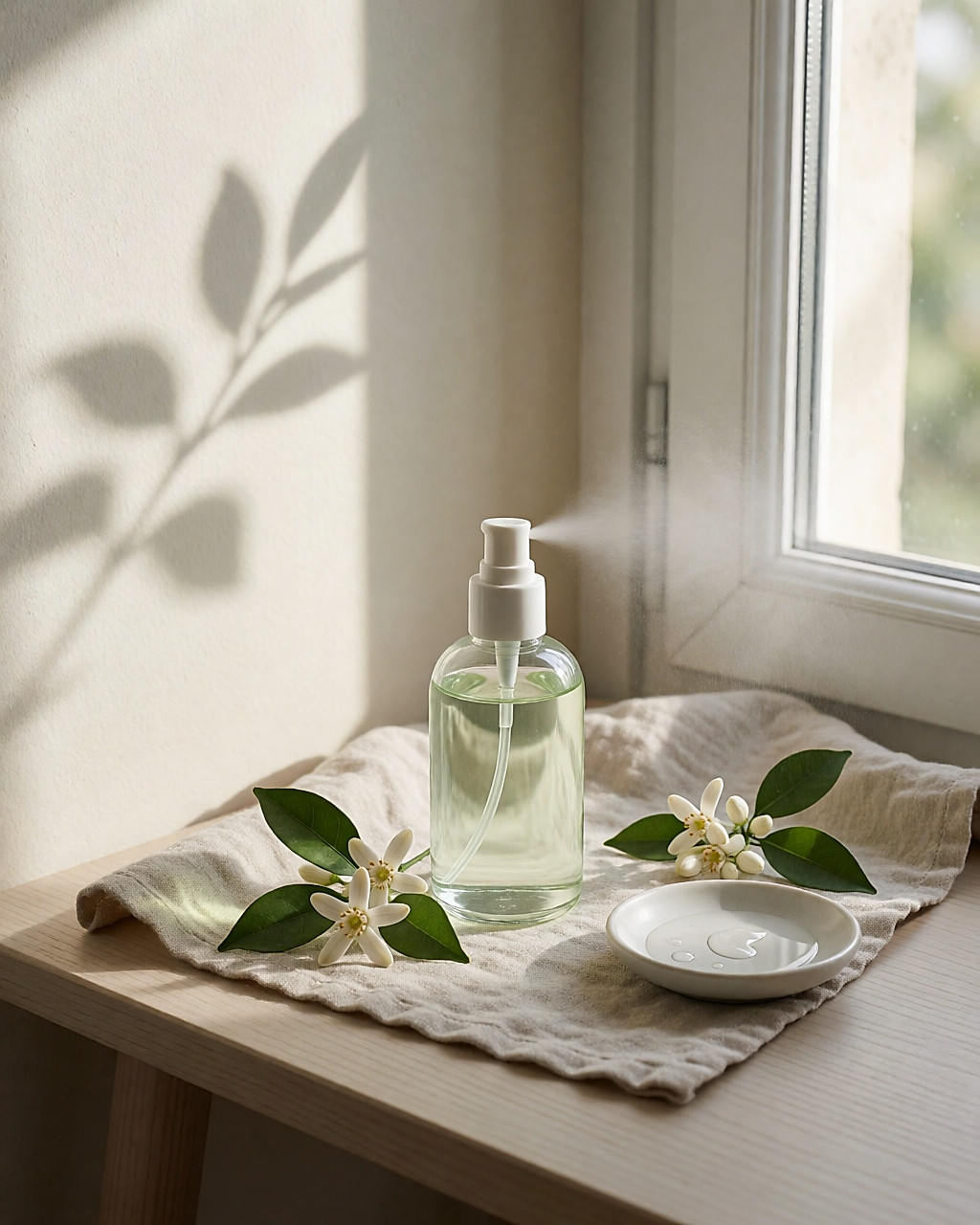
You finish your double cleanse, reach for your toner, and there it is — that little sting on the sides of your nose. We've all done it without ever really questioning it. Then one day your skin starts to feel tight after every swipe, and the pleasant tingle turns into discomfort. I put my toner away and switched to an orange blossom mist: it's now my post-cleanse step. I haven't gone back, and honestly, I have no regrets!
What exactly is a floral water?
A floral water, or hydrolat, is what comes out of the still when flowers or plants are distilled to extract an essential oil. What you get is a clear water that retains a small share of the plant's aromatic molecules — far less concentrated than an essential oil, so generally better tolerated. No alcohol in the classic version, no added fragrance. That's why so many reactive skins turn to it when alcohol-based toners make them go red.
There's one caveat, and it matters: gentle doesn't mean inert. An unpreserved floral water doesn't keep long and can become contaminated with microbes. Some also contain natural allergens — benzyl alcohol, linalool, geraniol — that the plant makes itself. Hence the inner-arm test before you mist your face.
The step that changes everything
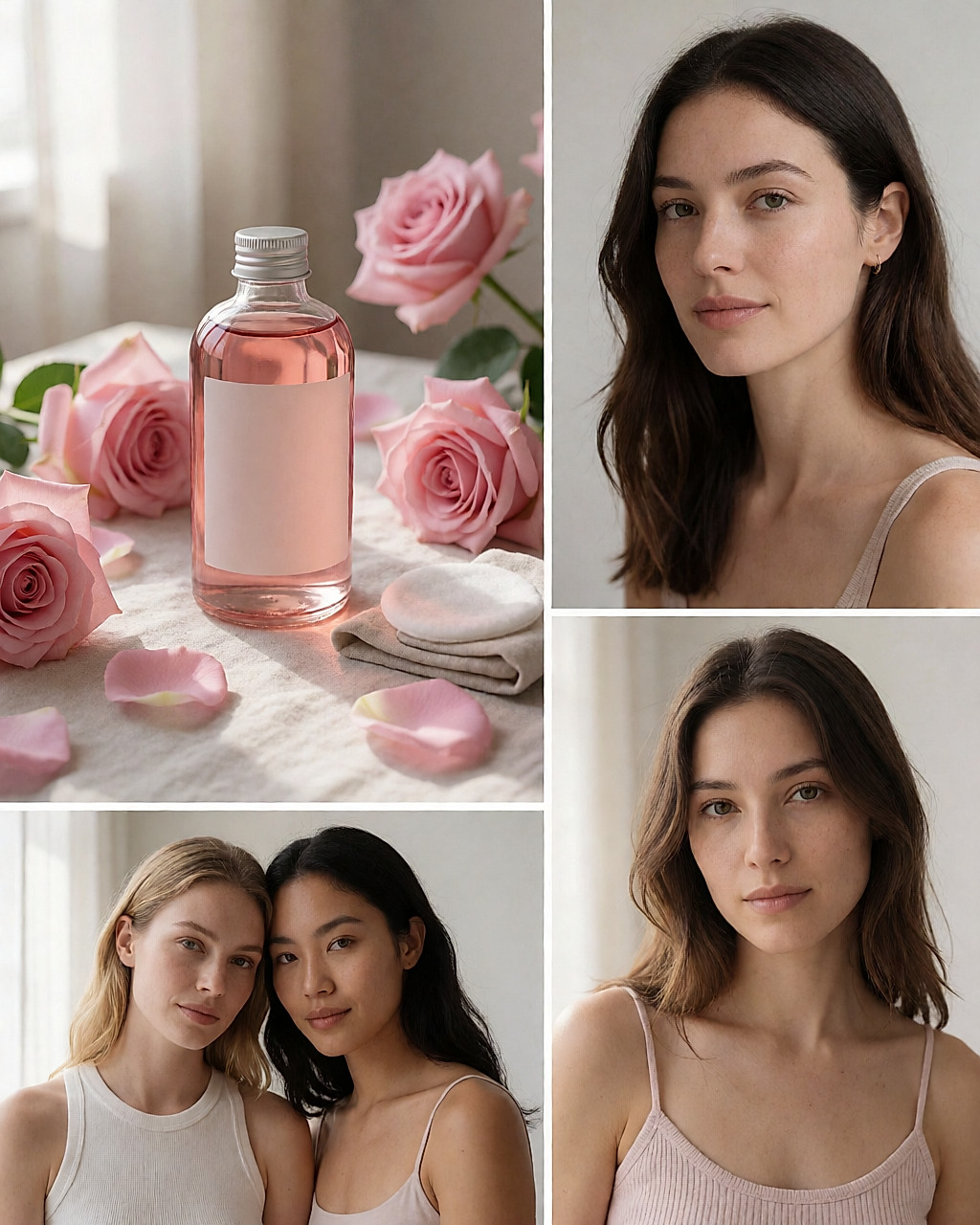
After cleansing, soak a reusable cotton pad or spray from about 20 cm away from your face. Let it sink in for about ten seconds, then follow with your serum while your skin is still damp. That's when the next product works best: the texture spreads further, your complexion stays fresh, and you use less.
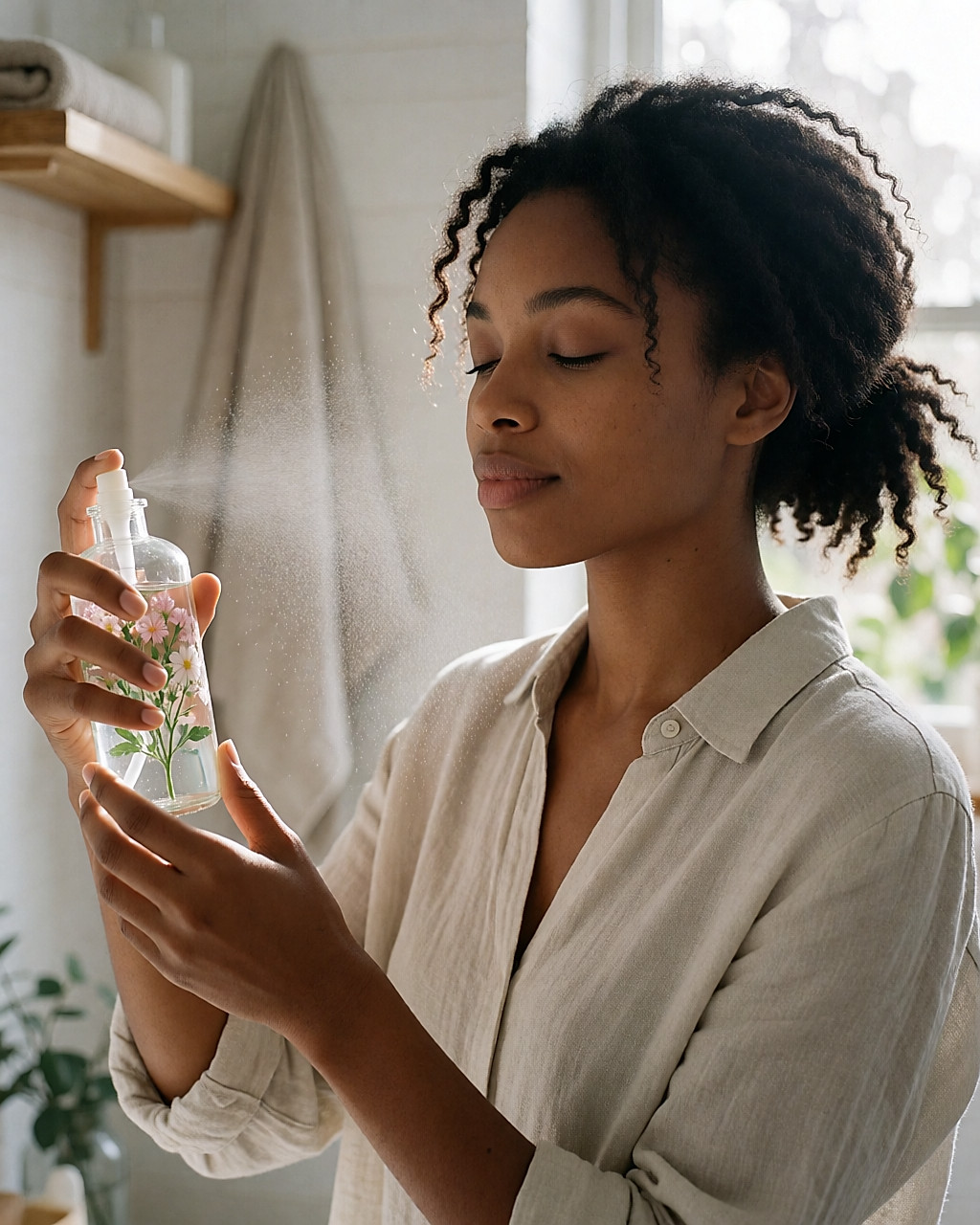
Need a top-up during the day? Yes, as a mist this time, especially in summer or in an overheated office. Extra tip: keep a bottle in the fridge; the cold feels lovely around the eyes.
Which flower for which skin type?
In traditional use, each hydrolat has its own reputation. Lavender for combination to oily skin that's prone to blemishes; peppermint for an immediate fresh, astringent effect — keep it away from your eyes; rose, hydrating and firming, for dry or mature skin; orange blossom, soothing, which suits most skin types; chamomile, softening, for skin that reddens easily; and cornflower, as a cold compress on puffy eyes.

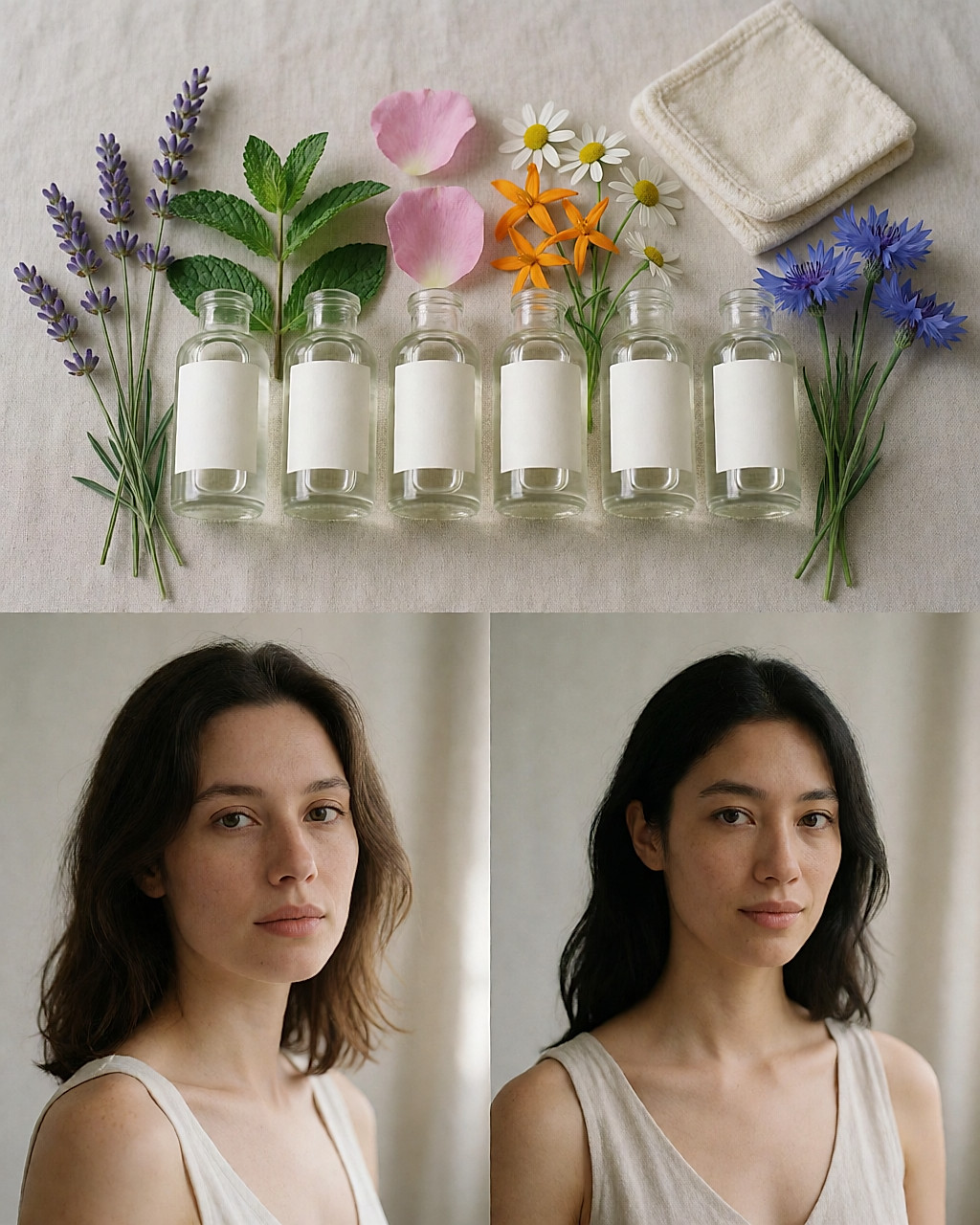
Some brands sell blends, and that's where you need to pay attention. Look at the INCI list: it will show whether alcohol or added fragrance has gone into a water that was meant to be simple, though it doesn't always say whether that fragrance is natural or synthetic.
On the other hand, I've stopped using peppermint on my face — it's too cooling and stings on reactive skin.
The inner-arm test: before misting your whole face, spray a little hydrolat into the crook of your elbow and wait 24 hours. If it reddens, stings or itches, that flower isn't for you — and it's better to know before you spray!
Storage and pitfalls
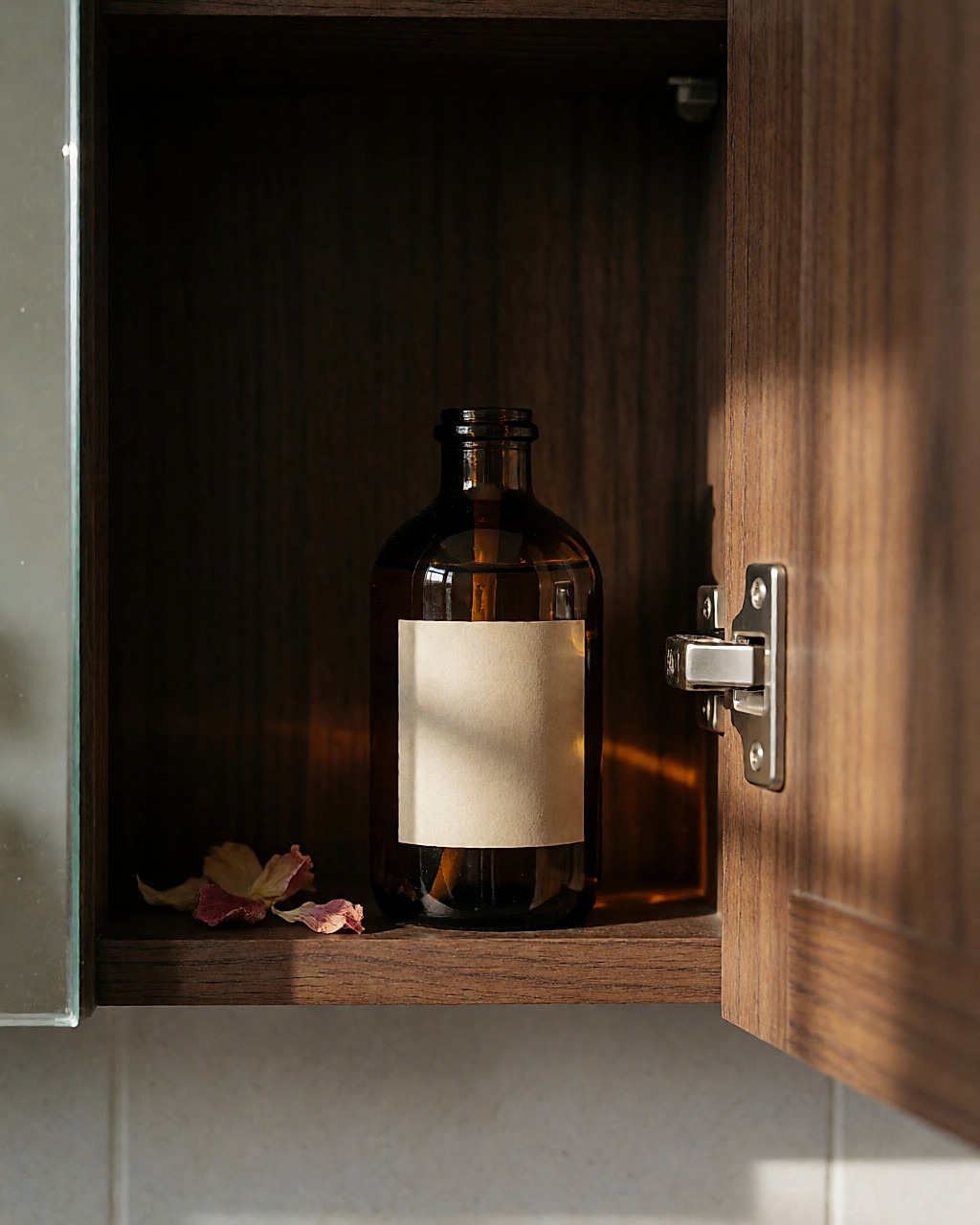
Choose a tinted glass bottle, store it away from light and open it as little as possible. An unpreserved floral water should be used within a few weeks of opening. If the smell turns or a deposit appears, throw it away without hesitation — don't gamble with your skin.
Organic labels such as Ecocert or COSMOS Organic regulate the sector and limit synthetic molecules, but they don't guarantee that a product is allergen-free. A useful nuance: a certified hydrolat isn't magically harmless; it's just made to a stricter set of standards.
Budget
- 100 to 200 ml in a health food shop or on a specialist website: expect around £4 to £13.
- Organic brands in pharmacies or beauty halls: more like £9 to £22 for 200 ml, often in glass.
- Reusable pads and cloths: £4 to £13, and they pay for themselves within a few months.
What pushes the price up: the plant first — rose and neroli cost more than lavender — then certification, packaging and how it's preserved. Start with a small size, then buy a refill later if you like it: it's often cheaper per litre and avoids an extra bottle.
Sources
- Regulation (EC) No 1223/2009 on cosmetic products, European Union
- Cosmétique Info, FEBEA (French Federation of Beauty Companies)
- Ecocert and COSMOS Organic certification standards
- ANSM (French National Agency for Medicines and Health Products Safety), guidance on herbal products and essential oils


Comments
Your opinion matters: rate the article, react and reply to comments.
Comments are moderated; AI-assisted comments are flagged. Text emoticons (8-), :-), <3…) are automatically shown as images.