
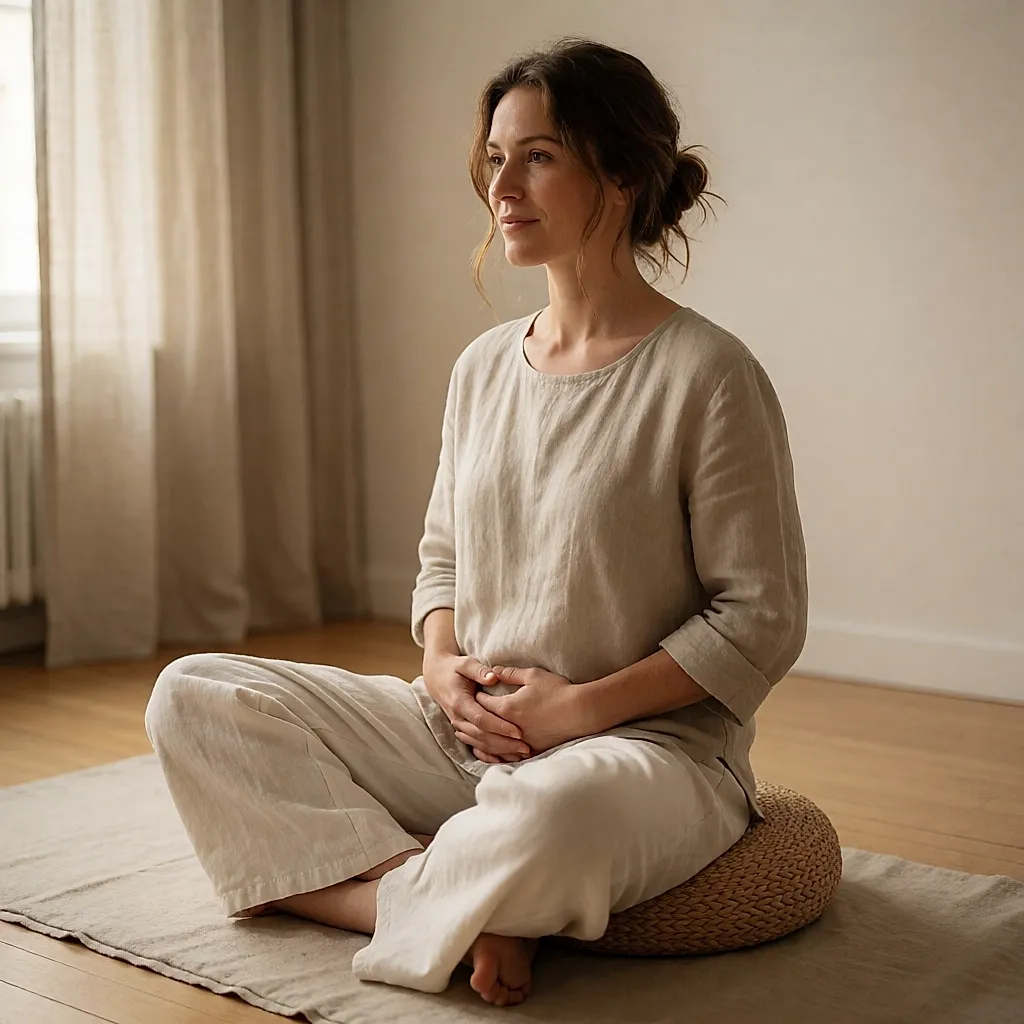
'Sit in silence and you will see': this invitation to meditation comes from Buddhist traditions, of which Zen is an important school. The word Zen comes from the Sanskrit dhyana — which became chan in Chinese and zen in Japanese — and means meditation; the idea of meditation without a goal is an interpretation specific to certain Zen approaches. Zen cannot be contained in a concept or understood by thought alone, because it is first and foremost a practice that teaches us to be fully attentive to the present action, to the smallest event or gesture of daily life. What is specific to it, zazen, consists simply of being there, attentive to the present moment and to everyday gestures. You are free to take the mindset from it without committing to anything at all: it is a method of attention, not a belief.
How to practise zen meditation
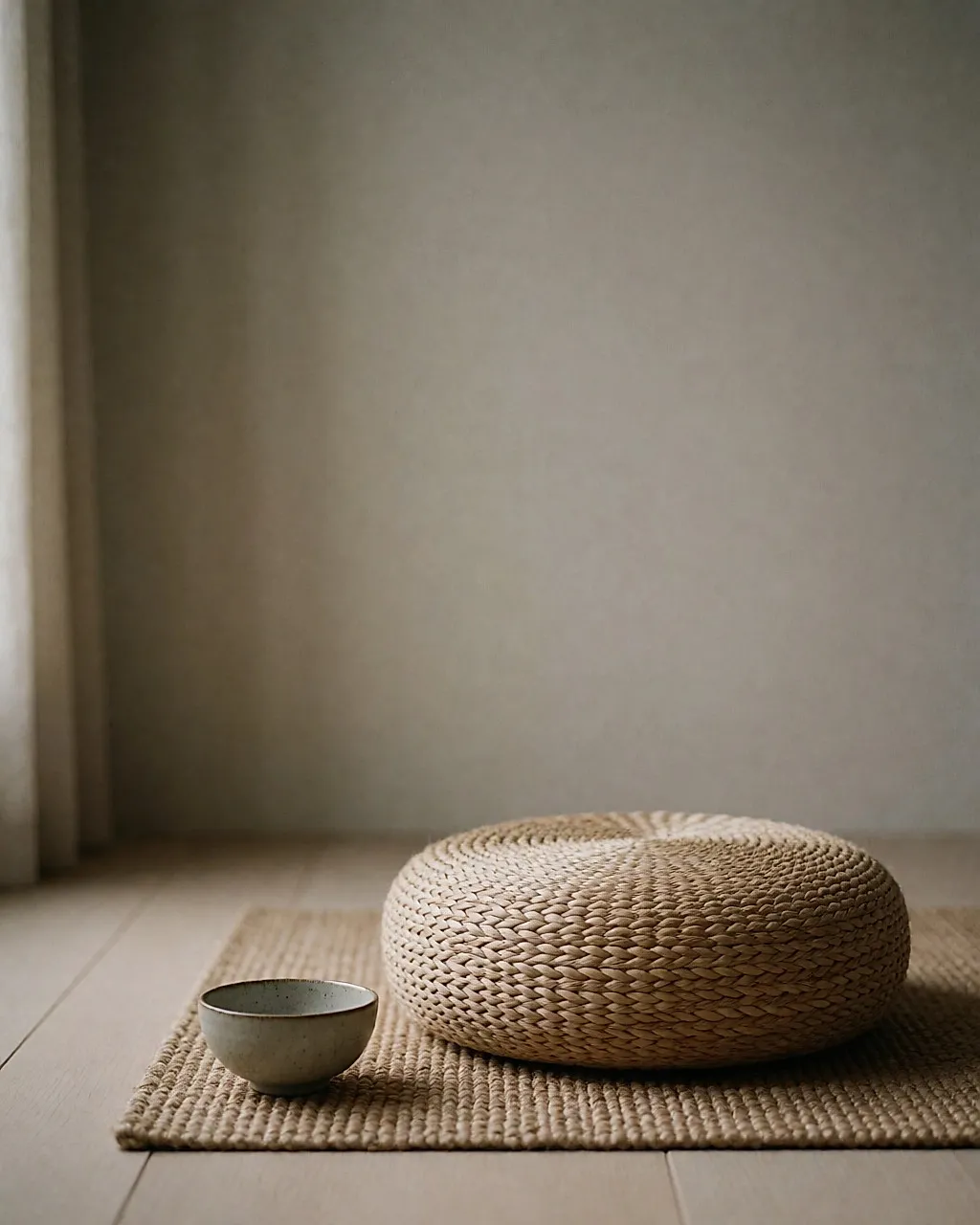
In loose clothing that does not feel restrictive, choose a time when no one will disturb you. Settle onto a round cushion, a zafu, with your legs crossed if your body allows; if not, kneel, or simply sit on a chair with your feet on the floor.
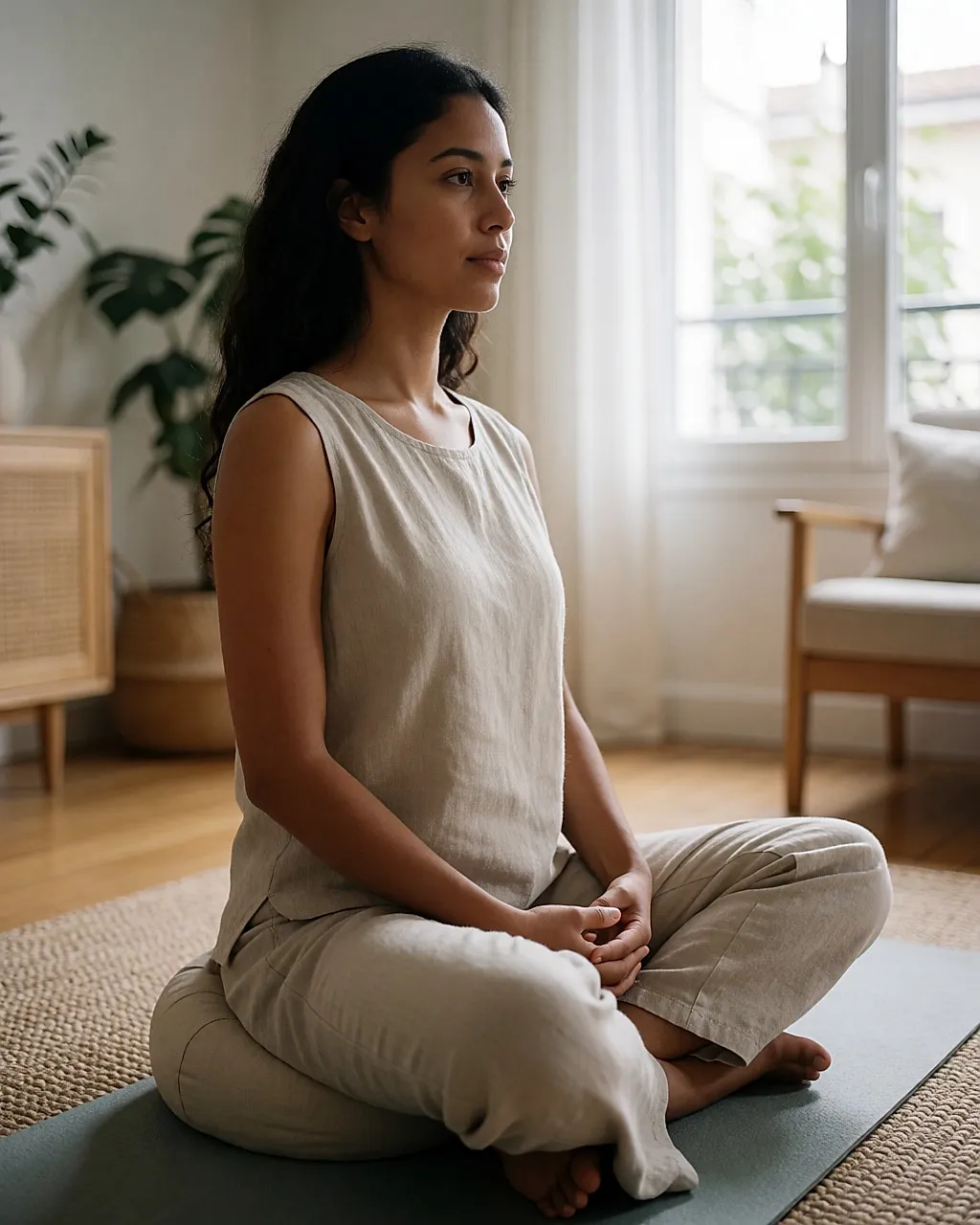
Bring your right foot onto your left thigh and your left foot against the cushion. Form a circle with your hands, palms facing upwards, the outer edges resting on your lower abdomen. Sit upright, chin tucked in and the crown of your head reaching towards the ceiling. You can also choose other positions: kneeling with your hands on your thighs, palms facing upwards, or sitting on a chair with a straight back. In every case, keep your back straight; in Zen tradition this is said to support a better flow of energy.
Begin by observing your breathing without trying to change it, then gently let the out-breath lengthen by itself. There is no score to beat. Rest your gaze on the floor about a metre in front of you, and focus on that long, deep breath. To help clear your mind, you can use a mantra: a word or phrase you repeat continuously, aloud or silently, to support concentration. Choose a positive word or phrase associated with wellbeing, or a small, pleasing object placed at eye level about 50 cm away: you will gently hold your gaze on that point while breathing slowly and deeply, to help you let go of negative thoughts and settle the mind.
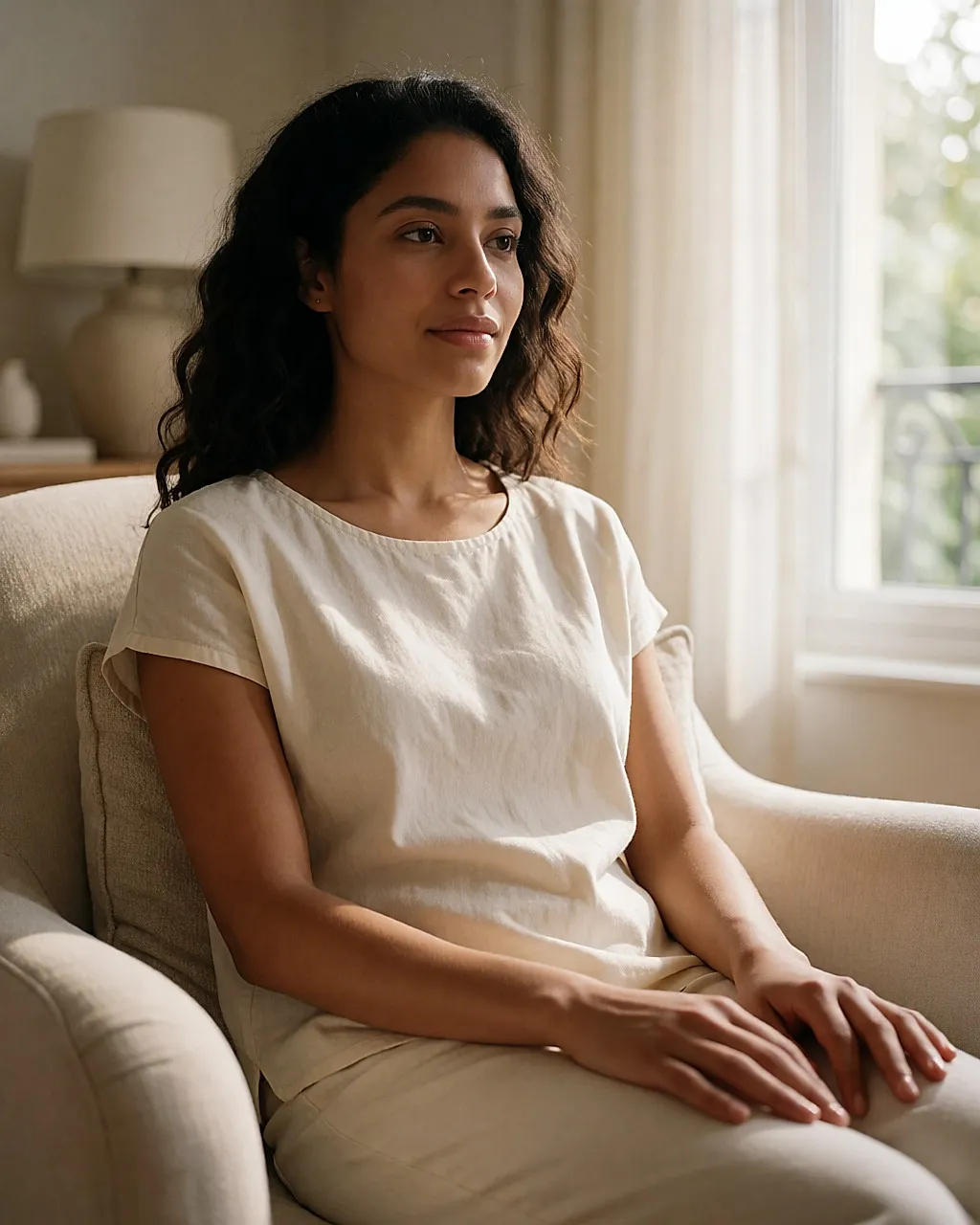
In practice, though, meditation is not always so simple. As a rough guide, if you are new to this relaxation method, try five minutes a day at first, then gradually increase the length of each session to 20 or 30 minutes. With practice, this daily pause for relaxation can help you release mental and physical tension, recharge, gain perspective and see life in a new light; it is time you will not regret.
Zen is not the only form of meditation; there is a whole spectrum of other approaches.
Vipassana, a form of Buddhist meditation, involves observing sensations throughout the body, understanding their nature and developing equanimity by learning not to react to them. It is often practised seated in the lotus position, and there are now many centres and retreats that teach it, in the UK and elsewhere.
Dynamic meditation is practised standing, with intense physical effort, jumping and shouting; it includes a phase of silence and complete stillness, followed by a phase of celebration, though you will want to keep your neighbours in mind. This cathartic meditation method was popularised by Osho Rajneesh from the 1970s onwards.
Tantric meditation relies on an image as a support for the gaze: mandalas or yantras, geometric forms that represent fundamental archetypes and nodes of energy.
Jnana yoga sums up its meditation on the Self in a phrase attributed to one of the great contemporary masters of the path, Shri Nisargadatta Maharaj: do nothing; be.
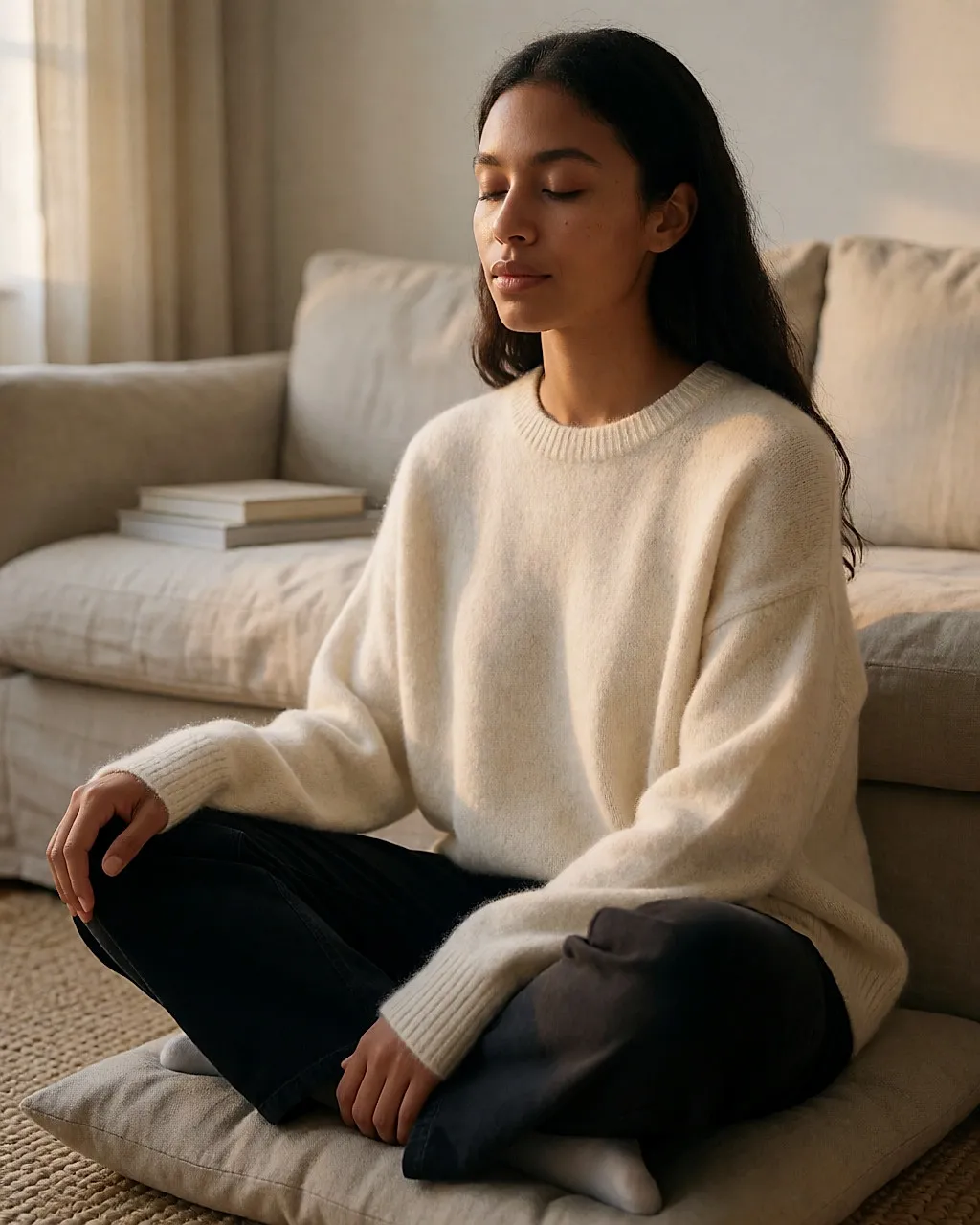
There you have it. All that remains is to sit in a quiet corner where you will not be disturbed and, gradually letting go of everything around you, contemplate yourself from the inside... You may then understand the full force of the popular saying: 'How sweet it is to do nothing when everything around you is in a flurry.'
As a form of 'spiritual relaxation', meditation is a well-known way to focus, clear the mind and release stress. When tension is released in this way, many people find it easier to meet everyday life with more calm. If you like simplicity and a pared-back approach, meditation may suit you very well. One caveat, though: if you are going through a period of severe anxiety or depression, or have experienced trauma, some sessions can stir up uncomfortable material. In that case, talk to your GP or another healthcare professional, and never use meditation as a substitute for treatment or support.
A short pause in three moments. Upright back, eyes closed: you can try dividing a short break into three moments. First, observe what is present, including thoughts and sensations; then bring attention back to the breath, wherever it feels clearest; finally, widen attention to the whole body. This is a practical suggestion from the magazine, not an established programme, and it can be useful on days when a longer sit is not possible.
Budget
Zafus and meditation mats are easy to find, and a decent cushion usually costs around £20–£45. A guided app can be free or cost up to about £15 a month, while an eight-week group beginners' course, with one weekly session, usually sits between £150 and £350. Short sessions in a studio or online are more affordable, and many centres offer a first taster session. Prices vary by city and format.

Comments
Your opinion matters: rate the article, react and reply to comments.
Comments are moderated; AI-assisted comments are flagged. Text emoticons (8-), :-), <3…) are automatically shown as images.