
Lids that start stinging by mid-afternoon, that gritty feeling under the eyes, a gaze that refuses to settle on the next line... If you spend your days in front of a screen, you'll recognise all three. Eye yoga promises to sweep them away. So what should you make of it? We looked into where the practice comes from — and, more to the point, at what the evidence actually says.
Where does the practice come from?
It starts with William Horatio Bates, a New York ophthalmologist who published his work in 1920. Watching his patients, he noticed that many of them held a fixed stare, and concluded that this lost eye mobility must lie behind vision problems. Physiology has since contradicted his theory — not least the idea that the eye focuses by anything other than the lens. The exercises, though, outlived it: they have been passed down from one generation to the next, long after the framework that produced them was abandoned.

What the current evidence suggests
Let's be clear from the outset: no eye exercise corrects short-sightedness, long-sightedness or astigmatism. None of these movements can reduce a prescription, and none is a substitute for a pair of glasses. Where things get interesting is elsewhere. Screen-related eye strain is well documented, and it comes down to two simple mechanisms: we blink far less often, and we hold near focus for hours at a stretch. That is precisely where these movements have their place.
Palming: two minutes in the dark
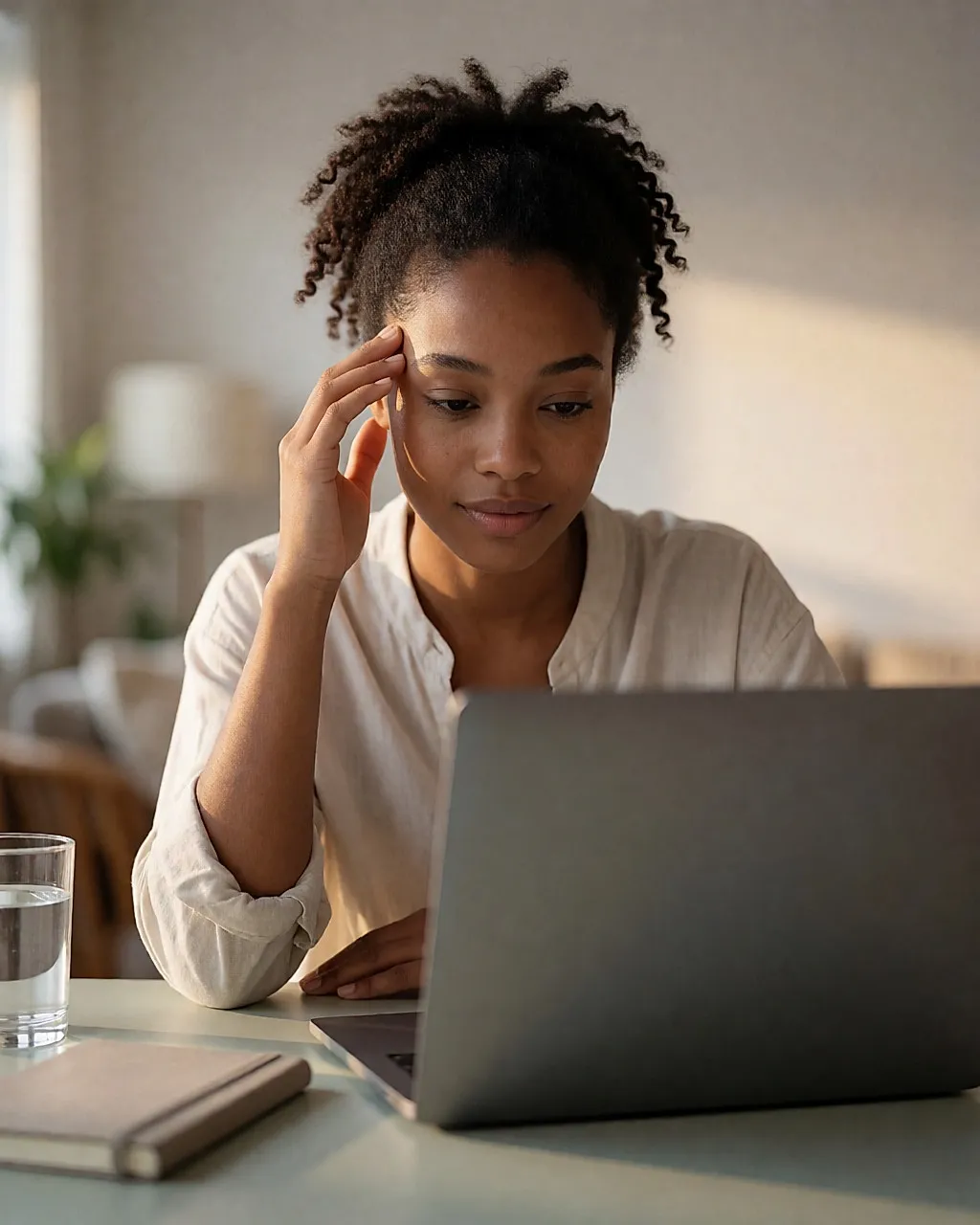
Sit with your elbows resting on the desk and your shoulders relaxed. Cup your palms slightly and place them in front of your closed eyes, without pressing: your fingers cross over your forehead and no light gets through. Breathe without forcing it and let a pleasant image come to mind — a beach, a wood, it doesn't matter. The darkness and the warmth of your hands repair nothing, but they do give your visual system a genuine pause. A few minutes, several times a day, and that's already a lot.
Deliberate blinking
Without any particular stimulus, a healthy eye blinks roughly fifteen times a minute. In front of a screen that reflex slows sharply, and the cornea dries out. The exercise takes two minutes: hold your hand in front of your face, fix on your thumb and blink once, then open your eyes slowly. Move on to your index finger, two blinks. Your middle finger, three. All the way to your little finger. It's simple, slightly silly, and it kickstarts your natural lubrication.
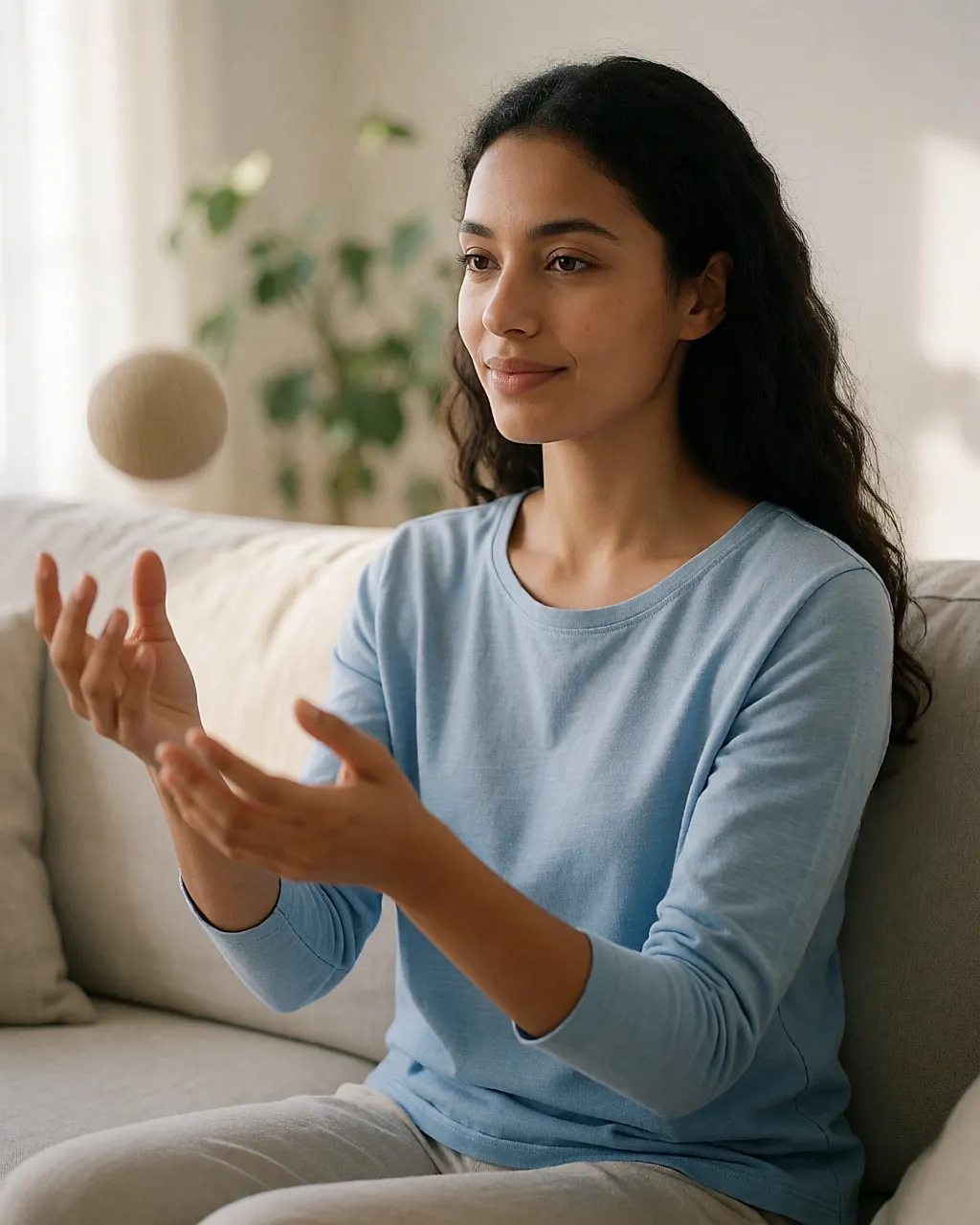
Tracking a ball with your eyes
Take a small soft ball and throw it from one hand to the other without moving your head: only your eyes follow the trajectory. Vary the height, the throws, the rhythm. The aim isn't to perform, it's to break out of a fixed stare. You can happily do this sitting down between video calls; nobody will notice.
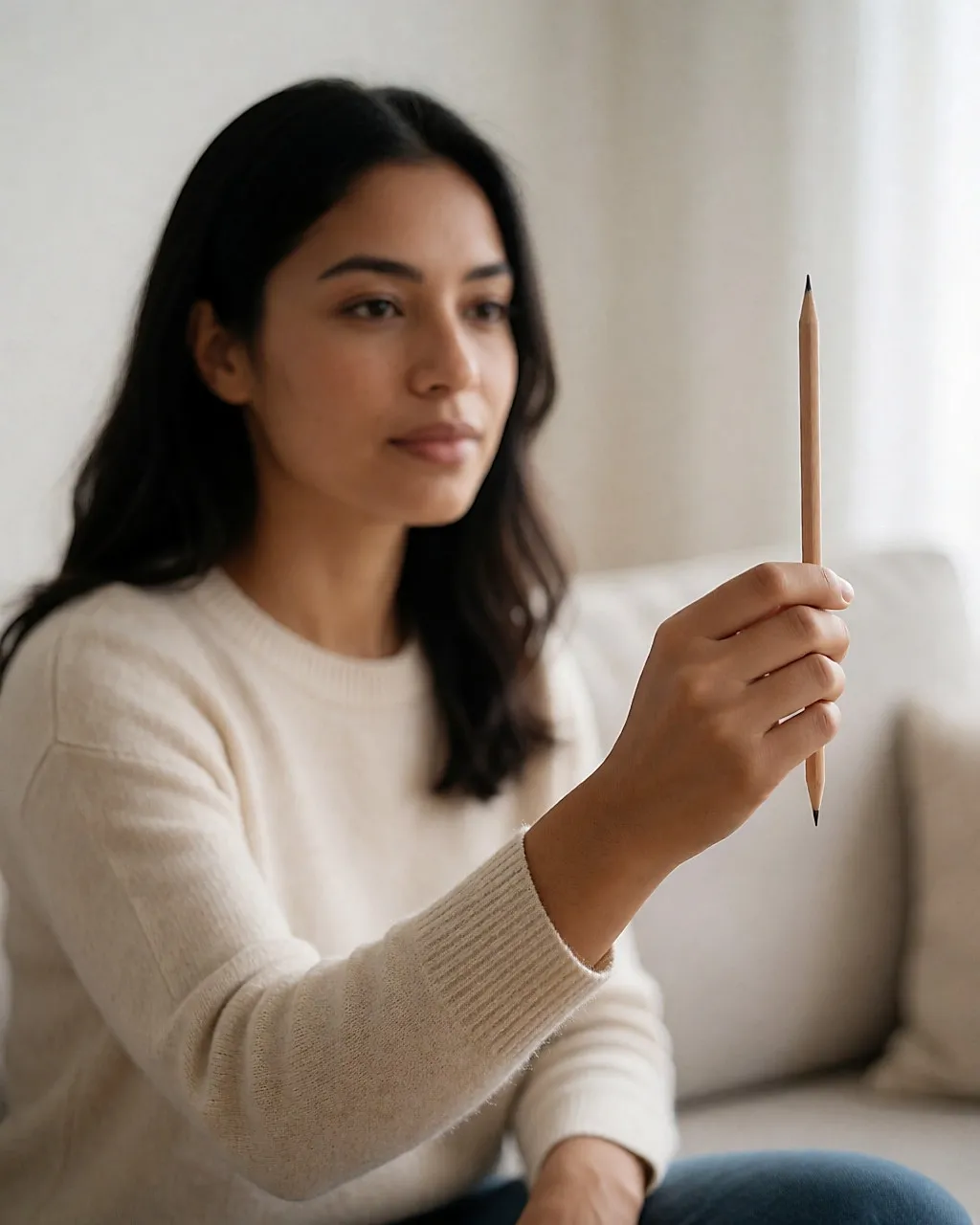
Focusing near, then far
With your arm outstretched, fix on your index finger or a pencil held about 15cm away. Bring it slowly towards your nose, keeping the image as sharp as you can, then move it away just as gently. Around ten round trips, no rushing. If you wear glasses for close vision, keep them on: the exercise is done with your usual correction.
Eye yoga eases discomfort, it does not treat your sight. If you are seeing blur or double vision that is unusual for you, if headaches keep coming back, or if one eye changes: talk to a professional — an optometrist, an ophthalmologist or an orthoptist. Sudden loss of vision, flashes of light or a curtain coming down over your sight need urgent attention, without waiting.
Budget
Good news: the practice is free. Mostly it asks for your time. If you want kit, expect to pay £3 to £10 for a soft foam or rubber ball, from a supermarket or online. A pencil or your own finger works perfectly well for the convergence exercise, so there is no need to buy anything. On the prevention side, preservative-free lubricating drops usually cost between £6 and £15 at a pharmacy — ask for advice before choosing one, as they don't suit every situation. An NHS sight test is free for some groups, including under-16s, over-60s, people with diabetes, people at higher risk of glaucoma and those on certain benefits, and orthoptic assessment is available on NHS referral.
Sources
- American Academy of Ophthalmology (AAO), aao.org — digital eye strain and the 20-20-20 rule; eye exercises do not correct refractive errors.
- NHS, nhs.uk — "Eye strain".
- ANSES, anses.fr — France's agency for food, environmental and occupational health and safety; opinion and report on blue light and LEDs (2019).
- NHS, nhs.uk — NHS sight tests and eye care entitlements.


Comments
Your opinion matters: rate the article, react and reply to comments.
Comments are moderated; AI-assisted comments are flagged. Text emoticons (8-), :-), <3…) are automatically shown as images.