

How to stop snacking: a few tips
Seven o'clock in the evening. You get home, you've barely put your bag down, dinner isn't ready, and your hand has already dipped into the packet of savoury snacks. You weren't even hungry on the stairs. That is the whole mystery of snacking: it often arrives without warning, without real hunger, and yet you find yourself holding an empty packet, feeling a little guilty. So how do you take back control?
It may sound obvious, but it isn't quite that simple: to stop snacking, you first and foremost have to have decided to do it. And no one can do that for you. Willpower is personal — either you have the moment of resolve, or you don't.
Once the decision has been taken seriously, there are fortunately some small tricks to make the task less daunting, and to suffer a little less from the deprivation you are imposing on yourself.
Look at your habits before you begin
First reflex, and not the least important: look at how you operate. When do you give in? In the morning, between breakfast and lunch? In the evening when you get home from work, just before sitting down to eat? Or after dinner, in front of the TV, when boredom sets in? Also ask yourself under what conditions snacking happens — when you are upset, anxious or tired? And finally, what your "urges" lead you towards: sweet, salty, a bit of everything?

We tend to snack without trying to understand why, tell ourselves it's not good, feel guilty and start again the next day. Asking why and under what conditions it happens is, however, the best way to find solutions that suit the way you personally work. It sounds mundane written like that, but it really changes things.
So if you notice that snacking mainly happens when you are bored, the idea is not to force yourself to exercise if you hate it, but to arrange activities you enjoy and that keep you occupied. When you are absorbed, you simply stop thinking about food.
Three meals are better than a day of grazing
And what if the cause were simpler than we think? If snacking without hunger is, for some women, a pure habit, it may also be that you snack in response to hunger — without knowing how to stop. Here there are two approaches: organise your meals better, and "focus" on foods that keep you full for longer. Plan more protein and slow-release carbohydrates on days you know will be long. That will help you avoid getting too hungry too early and give you the energy you need to last until your next meal.
Remember that three proper meals a day are better than three small ones topped up with grazing all day. In practice, it is often hunger talking, not greed — we are just giving it the wrong outlet.
Also think about adapting your daily rhythm to your body's. A typical example: you always snack when you get home from work, while the meal is simmering. Of course you do — you're hungry and can't wait any longer. The solution is sometimes tiny: prepare meals in advance, organise things so everything is ready when you get home, so all that is left is to reheat it and sit down at the table.

Cravings pass if you give them time
Feel a snacking craving coming on? Wait a moment. It often goes as quickly as it came, especially when you aren't truly hungry. You suddenly think of a square of chocolate, of something tempting, and your hand moves on its own. So rather than rushing to the sweet cupboard, breathe, keep yourself busy with something else, and watch: the craving usually fades.
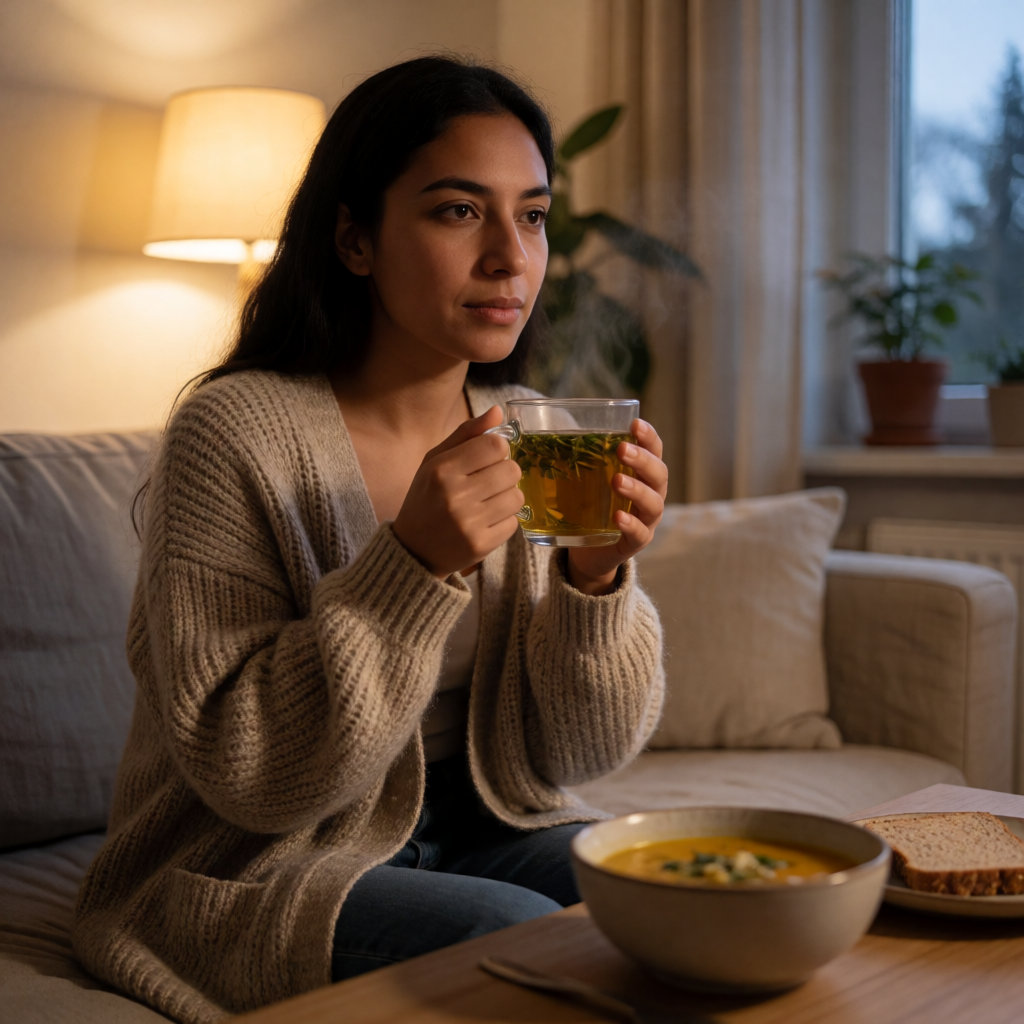
Are you genuinely hungry and giving in? In that case, choose the right foods, ones that take the edge off hunger and still make nutritional sense: dried fruit and nuts, an apple, a banana, wholemeal bread, raw vegetable sticks. Have a cup of tea or some flavoured water — and while we're at it, swap the chocolate bar you always carry at the bottom of your bag for a nice big apple and a bottle of water. Your bag will be a few grams heavier; your afternoon will feel lighter.

Eat, yes — but really do it
Another anti-snacking rule, and not a minor one: when you eat, that is all you do. There is nothing worse than meals swallowed in front of the TV or amid noise. You stop paying attention to what you are eating, so you no longer pick up on the signal of fullness. You don't enjoy it, you eat more and faster, stressed by everything around you.
Eat slowly, chew properly and focus on the flavours and on what is on your plate. It sounds silly, but fullness takes time to reach the brain — so give it the chance.
Which brings us to a question we often avoid: why do we give in? If you tend to snack because you are stressed, anxious or frustrated, it is partly about learning to manage your emotions and stress, and partly about finding what really helps you. Exercise, relaxation, walks, sophrology, acupuncture — different things suit different people. But knowing the pitfalls of stress already makes you more aware: you know that when you are tense, you snack; so before putting cake or savoury nibbles in your mouth, ask yourself whether that is really what you need in that moment, or whether you are compensating for something else. And if stress is taking up too much room in daily life, do talk to a health professional — without making it your only recourse.
Allow yourself real pleasure, without guilt
It may sound paradoxical, but also learn to treat yourself. There is nothing worse than frustration and foods you categorically forbid yourself. You have probably noticed: you deny yourself your favourite indulgence and swallow an apple instead. It may have taken the edge off your hunger, but not your desire for fat or sugar. As a result, you are frustrated, you eat a second thing from the "not calorific" category, then a third — and, ironically, you often end up giving in to what you wanted in the first place. Suffice to say the tally is heavy, for a pleasure you didn't even savour.
So allow yourself small pleasures from time to time: if they stay reasonable, they shouldn't affect your waistline. On the other hand, either buy these treats occasionally, one at a time, or choose small packets so you limit yourself to a portion. Because the three packets on offer that you thought you'd keep "for later" may well stir up a few regrets before the week is out.

That said, everyone knows it: snacking is also a habit to break. It is difficult at first, with a few relapses, because out of reflex the body craves that sweet, comforting ritual. But once the new habit is established, you can live without it — and it may help you feel better in your body, without any promise of results, which is already quite encouraging!
In practice, when a craving strikes: drink a large glass of water, go for a five-minute walk or start a small task that keeps your hands busy. Very often, the craving fades after a few minutes — a sign that it wasn't really hunger.
Budget
Budget-wise, alternatives to snacking remain perfectly affordable, provided you look at where the products come from. Expect around £2 to £5 per kg for seasonal fruit, and more like £10 to £22 per kg for plain nuts and seeds — almonds, walnuts, hazelnuts — pricier by weight, but you eat less of them at a time. For loose tea or herbal infusion, you can find almost anything between £5 and £13 per 100g. The price varies with the season, the label (organic or not), where you shop (supermarket, market, specialist shop, click and collect) and whether you buy loose or in bulk; buying just what you need is, in fact, the best way to avoid finishing the packet out of pure habit.
Sources
- Santé publique France — Manger Bouger programme, accessed 2026.
- ANSES — French Agency for Food, Environmental and Occupational Health & Safety, accessed 2026.

Comments
Your opinion matters: rate the article, react and reply to comments.
Comments are moderated; AI-assisted comments are flagged. Text emoticons (8-), :-), <3…) are automatically shown as images.