
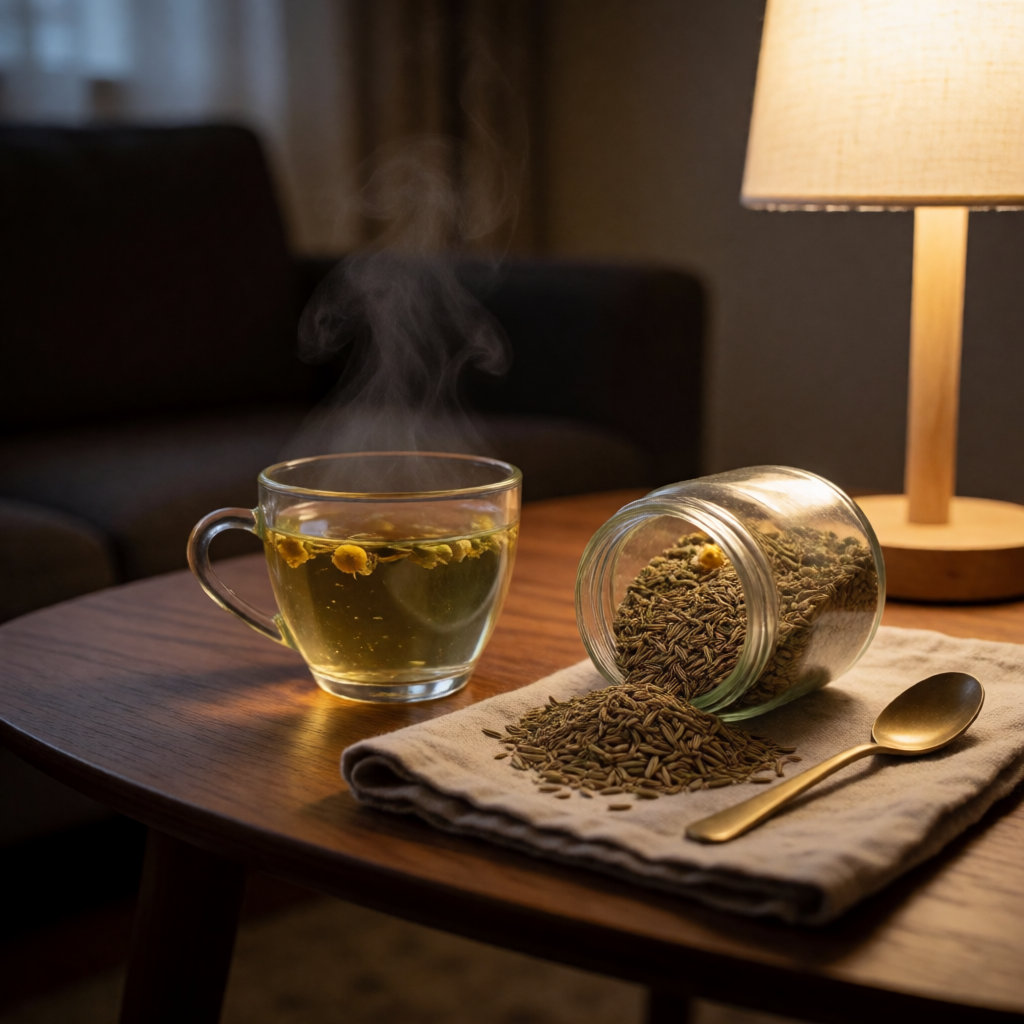
You know that moment, don't you? It's dark by 6.30pm, dinner is over, the box set starts — and your hand is already reaching for the biscuit packet. It isn't a lack of willpower; it's a habit loop. And the good news is that habits are often easier to swap than to fight. Loose-leaf herbal tea is probably one of the simplest rituals to install in autumn: a spoonful of herbs, hot water, five minutes. It keeps your hands busy, gives you something warm to sip, and the reflex to snack often loses much of its power without you having to reason with yourself.
What a herbal tea can do — and what it won't do
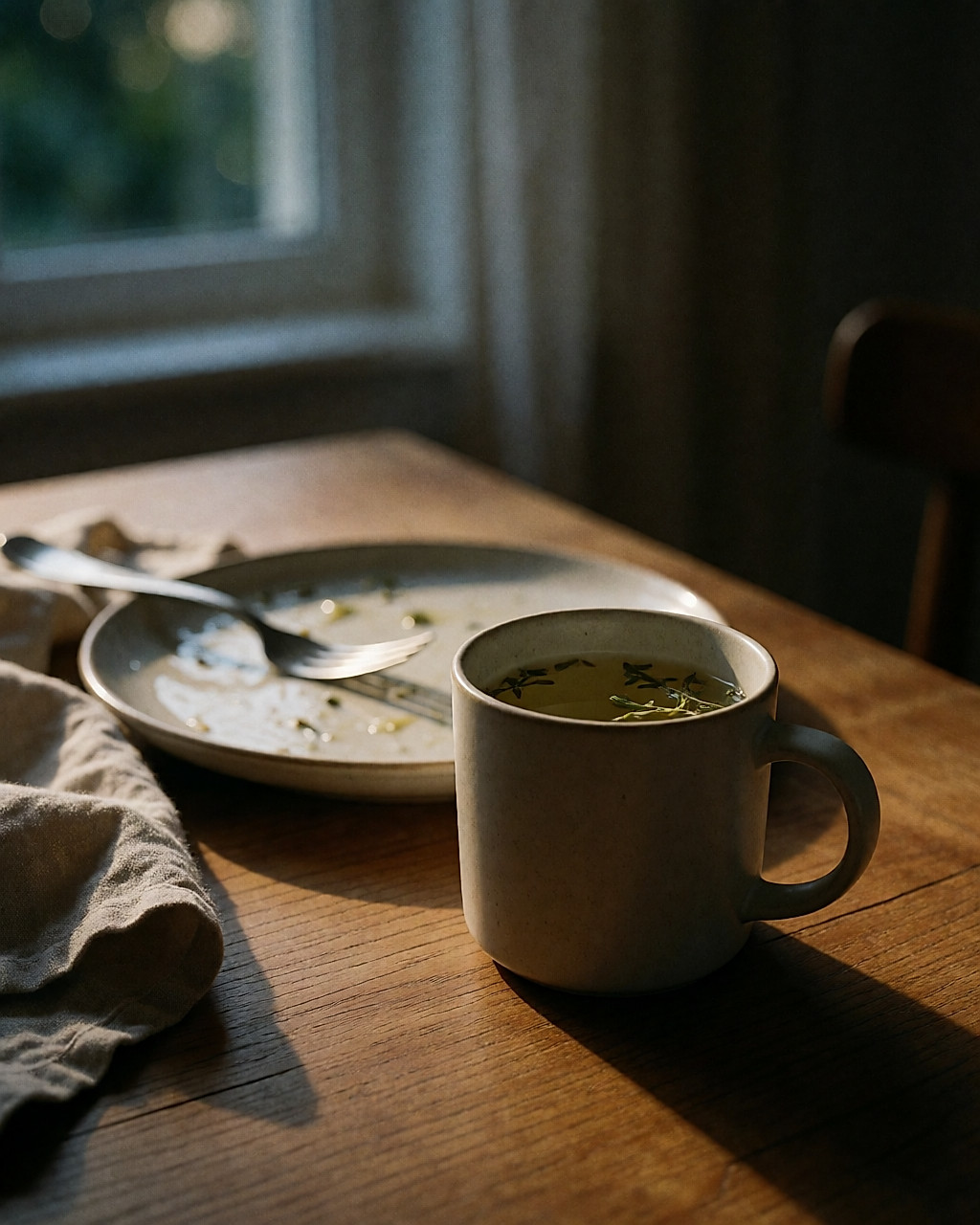
Let's be clear from the start: a herbal tea doesn't replace a meal, doesn't 'cleanse' anything and won't melt anything away. Current evidence mostly suggests a ritual effect: a signal that the meal is over, a warm drink you sip slowly, a pause that breaks the dinner-sofa-packet-open chain. That's not nothing, either — much evening snacking is less about real hunger than a sequence of habits no one has interrupted.
Also worth keeping in mind: health claims around herbs are tightly regulated in the UK, and many of the benefits attributed to herbal infusions come from traditional use rather than robust clinical proof. That's no reason to go without — just a reason to stay clear-eyed and not expect lemon verbena to deliver what it doesn't promise.
Which blend to choose
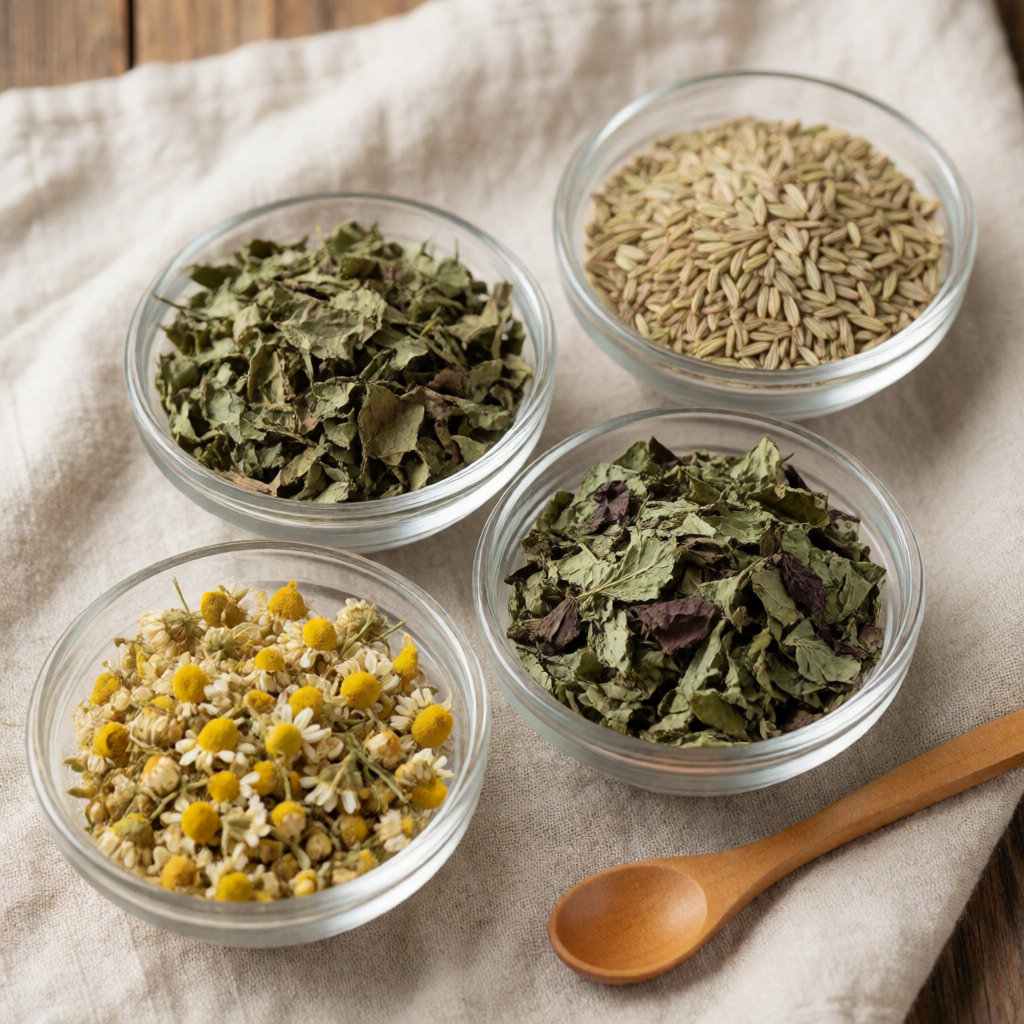
For herbs, four reliable options that are easy to find and fairly gentle on the palate. Lemon verbena first: mild, slightly lemony, not bitter — the easiest to drink in the evening if you dislike astringent infusions. Fennel next, with its aniseed flavour, traditionally served after a heavier meal, when you leave the table feeling you've eaten too much. Chamomile, rounded and faintly honeyed, often associated with bedtime. And peppermint, fresh and direct but very aromatic: use it more sparingly than the rest.
A homemade blend that works well: two parts lemon verbena, one part fennel, one part chamomile. Add a pinch of peppermint if the mix tastes too flat. And if you're new to it, it's better to start with a single herb for a few evenings — you can more easily identify what you like, and what suits you, when the blend isn't muddying the picture.
Loose-leaf by the spoonful, compostable tea bags, refillable jars
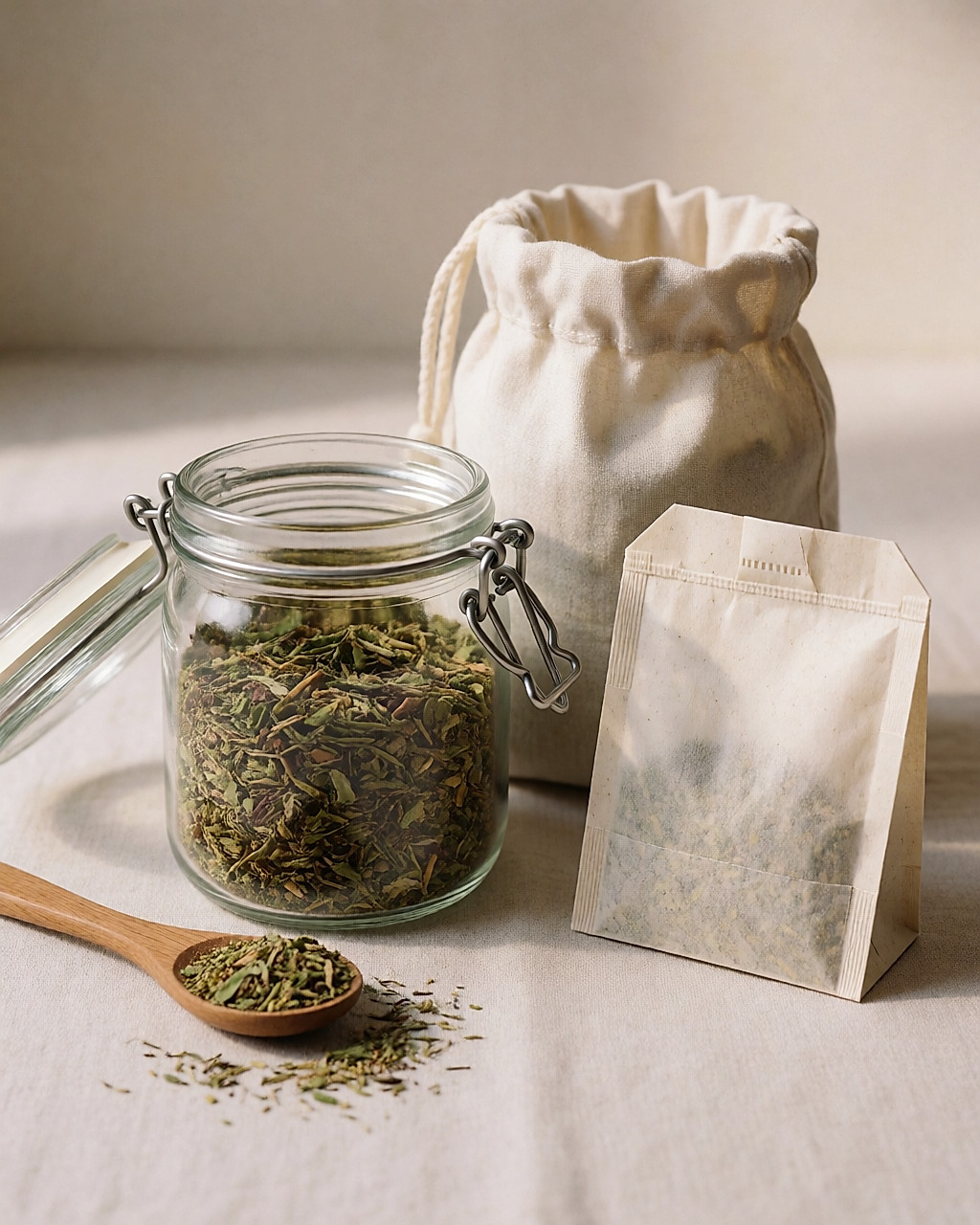
Loose herbs, from a health food shop or a supermarket's dedicated aisle, remain one of the formats that limits packaging most: you fill your glass jar, take home only what you need, and throw away far less card. Just check that the bins are properly closed and that the shop's spoon hasn't been used across the whole aisle.
Compostable tea bags are genuinely useful for work or travel, but they often cost more per cup, and their compostability depends on your local waste collection. A refillable glass jar has another advantage: it closes properly and protects the herbs from moisture. A herbal tea that's exposed to air quickly loses its aroma.
How to measure
Allow one level teaspoon of blend, about 2 g, for 250 ml of water. Aim for water at around 90–95°C — just below a rolling boil; furiously boiling water damages the aromas. Leave to infuse for five minutes, then remove the herbs. For peppermint on its own, three to four minutes is enough — beyond that, it turns bitter.
Small detail that changes everything: taste before you sweeten. Many herbs already have a natural roundness, and chamomile and fennel both drink very well plain.
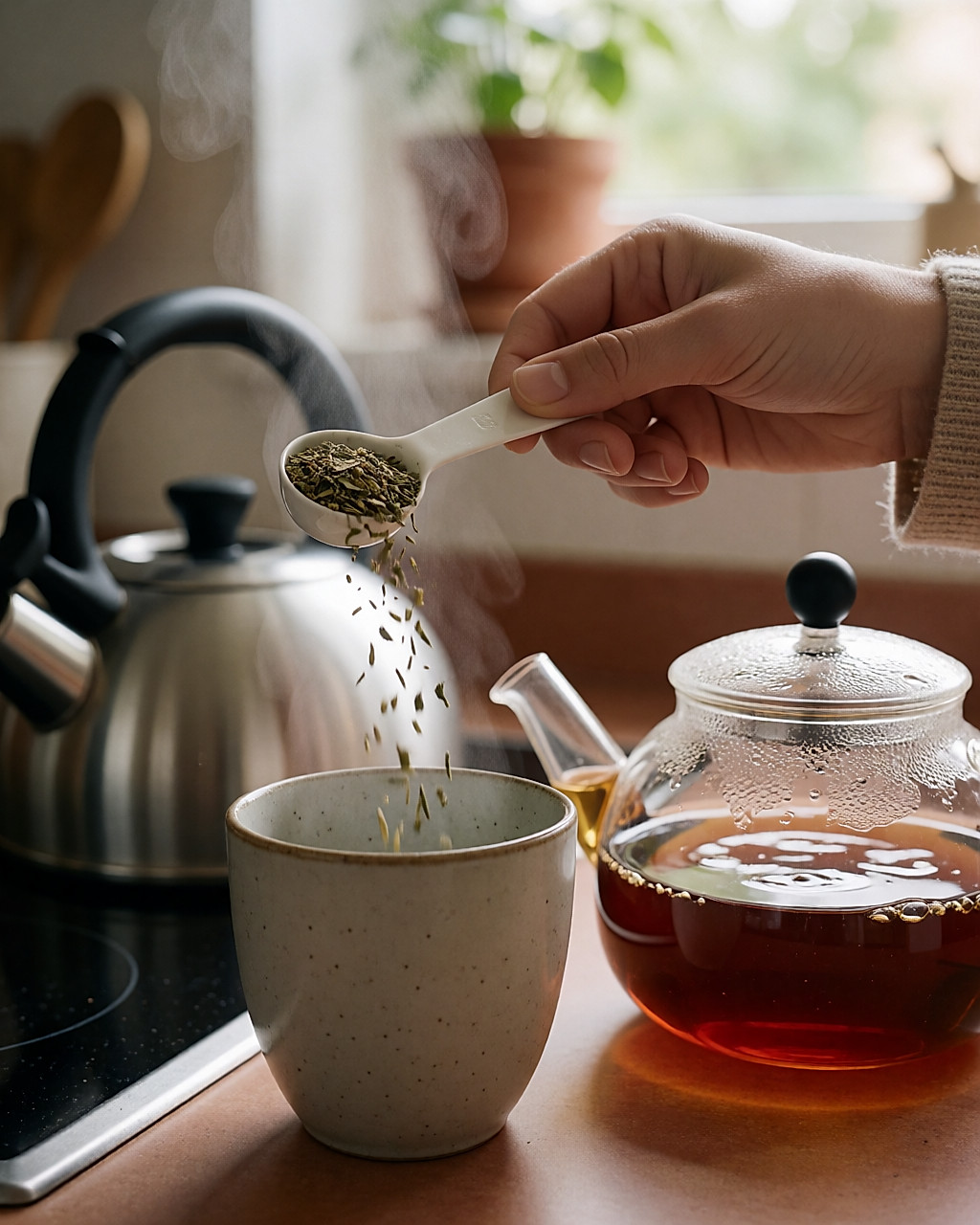
Herbs aren't harmless for everyone. If you are pregnant or breastfeeding, if you take medication (anticoagulants, thyroid medicines, sleeping pills, antidepressants…), or if you get acid reflux — peppermint can sometimes make it worse — ask your GP or pharmacist before making it a daily habit. No herbal tea replaces a diagnosis from a healthcare professional, and this ritual is not medical care.
When to drink it
The slot that tends to work best: twenty to thirty minutes after you finish dinner, with the cup you sip during an episode. Early enough not to wake you in the night, late enough to occupy exactly the moment when the urge to snack creeps in. If you're prone to reflux, wait a little longer and stick to gentle herbs rather than peppermint.
The trick is one sentence long: make your herbal tea before you sit down. Once you're on the sofa, you won't get up again.
Loose-leaf versus tea bags: taste and cost per cup
For flavour, loose-leaf often has the edge. Whole herbs, less crushed, hold on to their essential oils for longer; in many branded tea bags, the contents are reduced to a fine powder and the aroma seems more uniform, sometimes at the expense of subtlety. The difference is clear on the palate: loose lemon verbena gives a cleaner infusion, less dusty.
On budget, the gap is real but less dramatic than you might think: loose-leaf often works out cheaper per cup, provided you buy in small amounts and don't leave your herbs to go stale at the back of a cupboard. Let's be honest, that's often where the sums stop adding up: a large bag forgotten for six months is no better than a supermarket tea bag.
Budget
Here are typical UK price ranges. Loose-leaf, from a health food shop or supermarket aisle, expect to pay around £3 to £8 per 100 g depending on the herb, quality and certification: an entry-level organic chamomile sits at the lower end, while organic lemon verbena from a small producer goes higher. At 2 g per cup, that's still only a few pence a cup. Branded supermarket tea bags are more like £2 to £5 for a box of 20, which is roughly 10p to 25p per cup. And for compostable tea bags or specialist brands, in a health food shop or online, budget closer to £4 to £8 for 20 bags.
These ranges vary by city, packaging and season: herb prices follow harvests, and a 250 g jar often costs less per gram than a 50 g bag.
Where to buy it
The simplest option is the loose-leaf section of your health food shop, or a supermarket's dedicated aisle. You can also order online from UK or European growers, remembering that delivery charges quickly add up on small quantities. Either way, choose dried herbs that smell strong when you open the jar: that's a good sign of freshness.
A final word: don't turn this ritual into one more rule to keep. An evening herbal tea is a simple pleasure, not a programme. If the biscuit packet wins on some evenings, it's not a disaster — the ritual will still be there tomorrow.
Sources
- NHS — Herbal medicines
- Food Standards Agency — Nutrition and health claims
- NHS — The Eatwell Guide

Comments
Your opinion matters: rate the article, react and reply to comments.
Comments are moderated; AI-assisted comments are flagged. Text emoticons (8-), :-), <3…) are automatically shown as images.