

It’s 7pm, the soup is steaming in the pan and a bag of beige powder is sitting on the worktop. In recent autumns, this root has been settling into kitchens like a woollen throw in the living room: quiet, a bit pricey, oddly talked-about. We expect it to feed gut bacteria. But first you need to know what you’re actually spooning into the bowl.
A root, some bacteria, and questions still open
You may know chicory as a coffee substitute or a salad leaf, but it is the root that draws the attention: that’s where inulin is found, a fermentable fibre. It travels through the small intestine undigested, reaches the colon and becomes a meal for part of the gut microbiota. That’s why benefits and discomfort often come in the same packet.

What we know: dietary fibre plays a role in bowel habits and digestive comfort, as NHS guidance on fibre sets out. What we don’t yet know: whether a powder, on its own, changes the microbiome in the long term. Current data suggest a modest effect, especially alongside a diet that already contains fibre. One thing is clear: inulin is not a magic appetite suppressant. At best, fibre contributes to the fullness of an already balanced meal.
Before you add it to your basket: check the composition
Three lines are worth your time. First, the actual inulin content: check the ingredients list for maltodextrin, which adds sweetness and has a very limited effect. Then read what else the list says: a sweetener, flavouring or anti-caking agent has no place there if you are simply looking for the root. Finally, consider origin and format, because a capsule rarely contains the equivalent of a spoonful of powder.
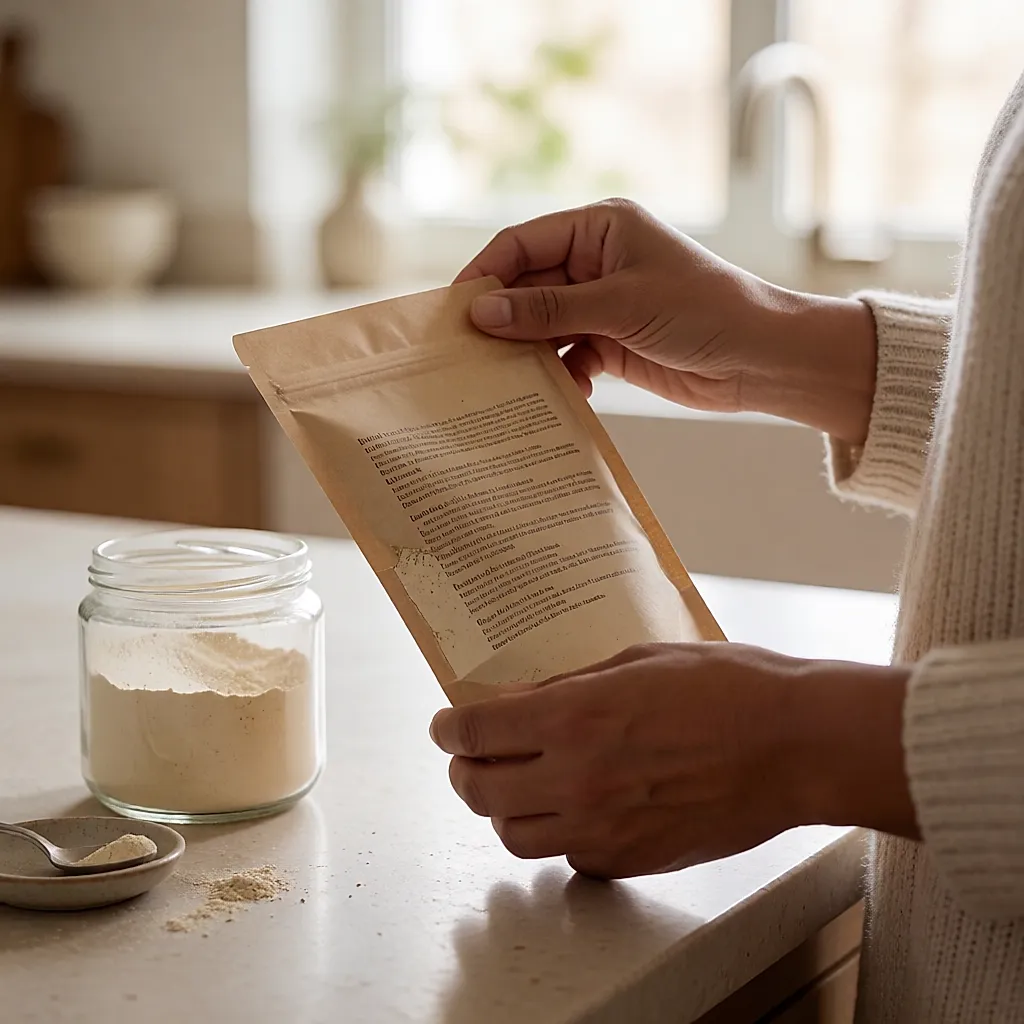
Format also changes how you use it. Powder can be measured, adjusted over the weeks and stirred into a broth. Capsules are reassuring and portable, but you need several a day to get anywhere near the same amount, and the price soon climbs. Not sure? Always compare the cost per kilo of fibre, not the weight of the tub.
Increase the dose in steps, without upsetting your gut
This is the point that makes all the difference. A fermentable fibre arrives faster than your gut bacteria can adapt, which is why bloating, wind and sometimes cramps can occur when you start too fast. In practice, begin with a very small amount and increase gradually according to your tolerance, slowing down if you feel uncomfortable. Evening or the weekend is a good time to test it, rarely the night before a meeting.
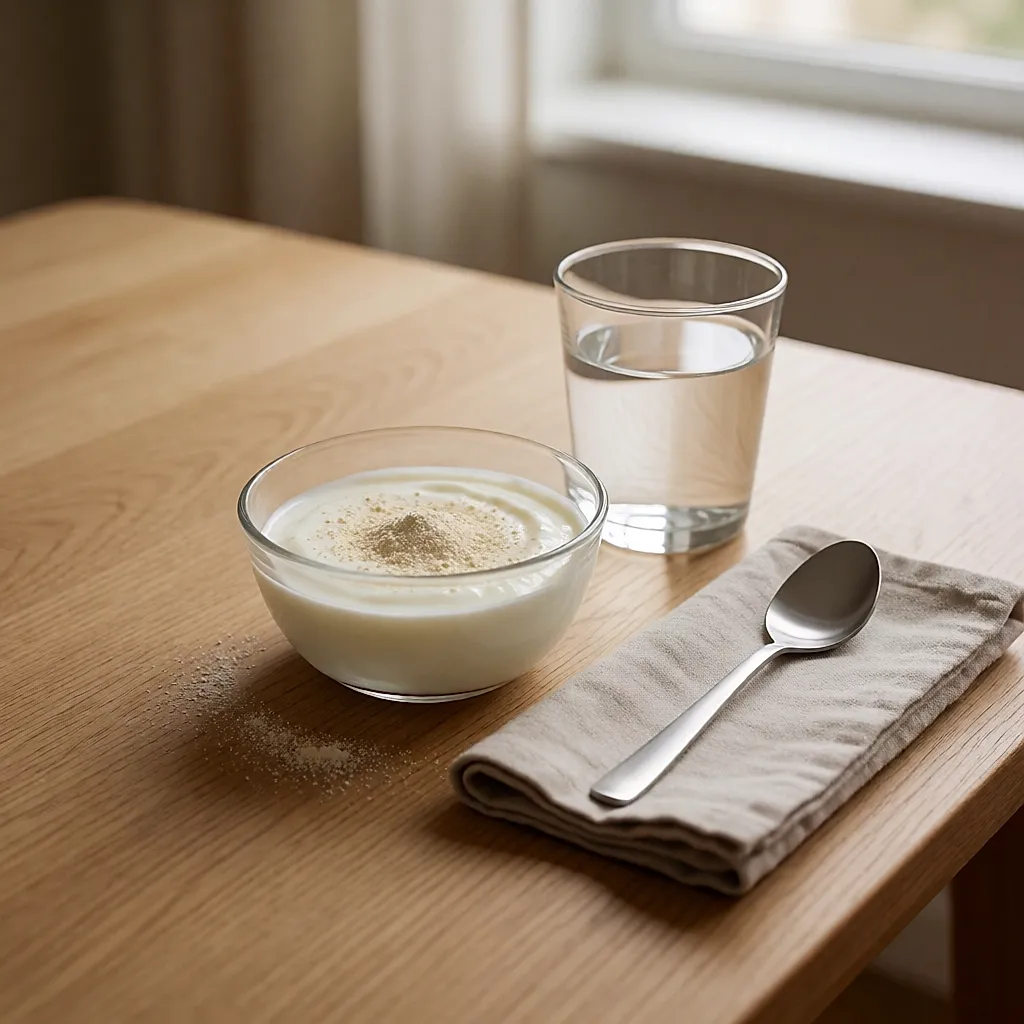
Drinking enough water supports the process, and it is better to spread fibre across the day than pile it all into dinner. If discomfort persists, drop back a step, or stop: this is not a competition. For some situations — irritable bowel syndrome, a low-FODMAP diet, pregnancy or a digestive condition under medical care — the question belongs with a healthcare professional, not a packet.
The move: a spoonful in your evening soup
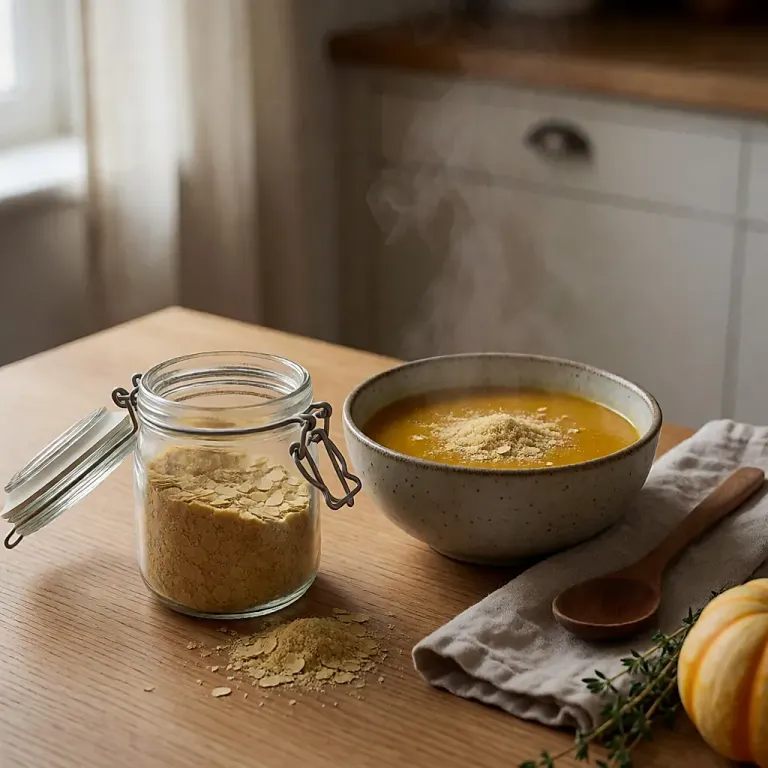
Soup is the ideal vehicle: liquid, warm and already flavoured by vegetables, it takes the powder without changing the dish’s character. Stir it in off the heat, just before serving, whisking to avoid lumps. The taste remains that of squash or leek, which is exactly what you want.

You can also stir it into plain yoghurt, no-added-sugar stewed fruit or porridge. But be careful about piling it on: adding powder to a dinner already rich in onions, leeks, artichokes or pulses can be a lot for one meal. The same fibres are on your plate — leeks, garlic, asparagus, bananas, whole grains — and a varied diet remains the benchmark. The powder is a convenient shortcut on days when you don’t want to cook all of that.
Budget: count by the kilo of fibre
In the UK, prices vary with format, brand and where you shop. As a rough, non-contractual guide, loose inulin powder often works out at around £15 to £40 per kilo of fibre, while capsules can climb to around £100 to £250 per kilo of fibre. Prices move, so check the current cost per kilo rather than the pack size. Capsules often cost more per gram of fibre than loose powder, while organic products and small packs tend to be pricier. Supermarket supplement aisles can offer cheaper entry-level options, but check the ingredients closely.
Where to look: health food shops and bulk-buy sections, often in paper or refillable cardboard; pharmacies and supplement aisles; online retailers for larger sizes. The smart move is to compare the price per kilo of inulin: a tub that costs twice as much but is twice as concentrated can sometimes work out at the same price, while a tub containing a large proportion of maltodextrin is not the bargain its label suggests.
Temporary bloating when you start is common and usually settles if you slow down. However, persistent pain, alternating diarrhoea and constipation, blood in your stools or unexplained weight loss are not matters for a powder but for medical advice. No supplement replaces a diagnosis from a healthcare professional.
Nothing spectacular here, and that’s absolutely fine. If you are looking for a simple habit to go with autumn soups and look after your digestive comfort, a powder you have read carefully and built up slowly can earn its place next to the saucepan. If your plate is already overflowing with colourful vegetables, you may have everything you need — and the tub can wait until next Sunday.
Sources
- NHS — How to get more fibre into your diet
- British Dietetic Association — Fibre
Food supplements do not replace a varied, balanced diet and a healthy lifestyle.

Comments
Your opinion matters: rate the article, react and reply to comments.
Comments are moderated; AI-assisted comments are flagged. Text emoticons (8-), :-), <3…) are automatically shown as images.