
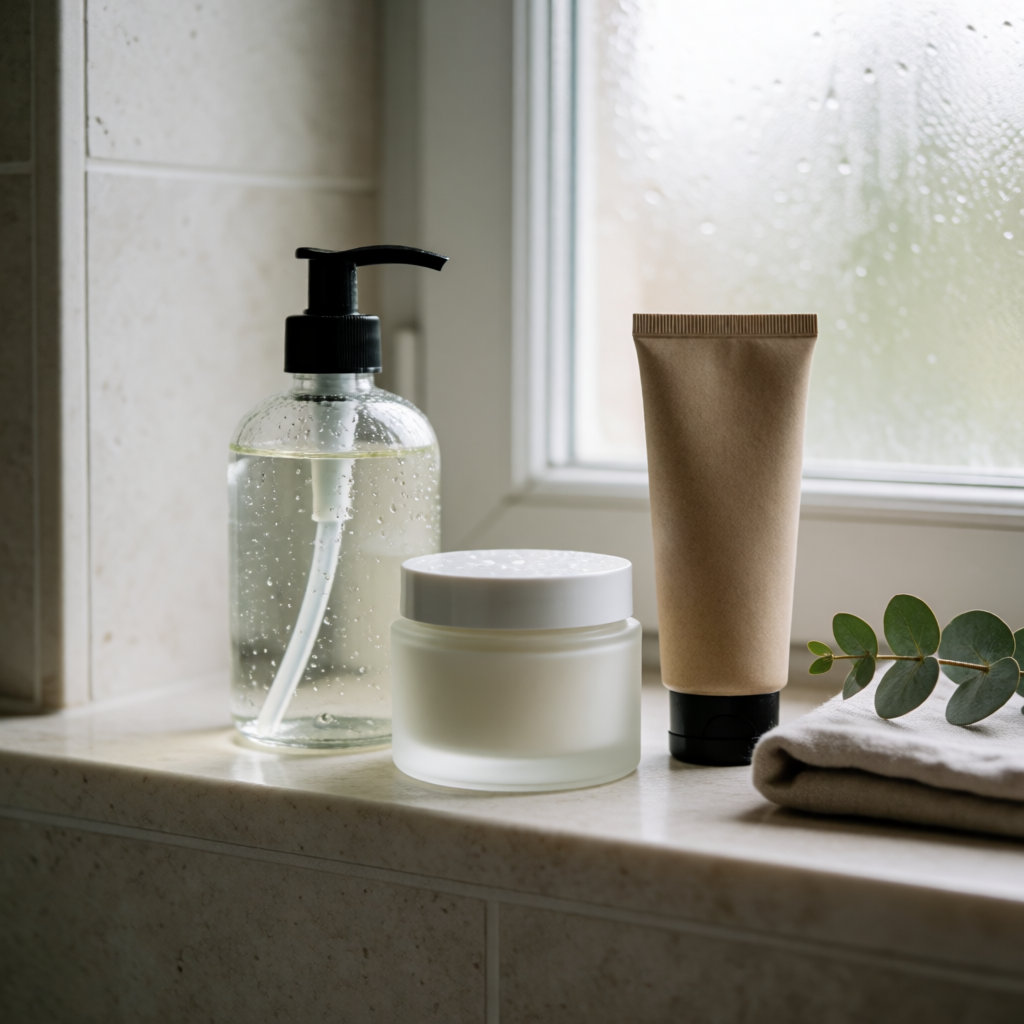
You open your bathroom cabinet and the verdict is instant: a morning serum, an evening one, a repairing cream, a purifying toner. Meanwhile, someone is promising that a capsule will "fix" your gut, that a cream will "rebalance" your skin the way you'd right a compass, and that you're recovering badly after exercise. Three ideas keep coming back — skinimalism, attention to the microbiome, active recovery. We've looked at what holds up, and what is mostly polished brand speak.
Skinimalism: fewer products, better chosen
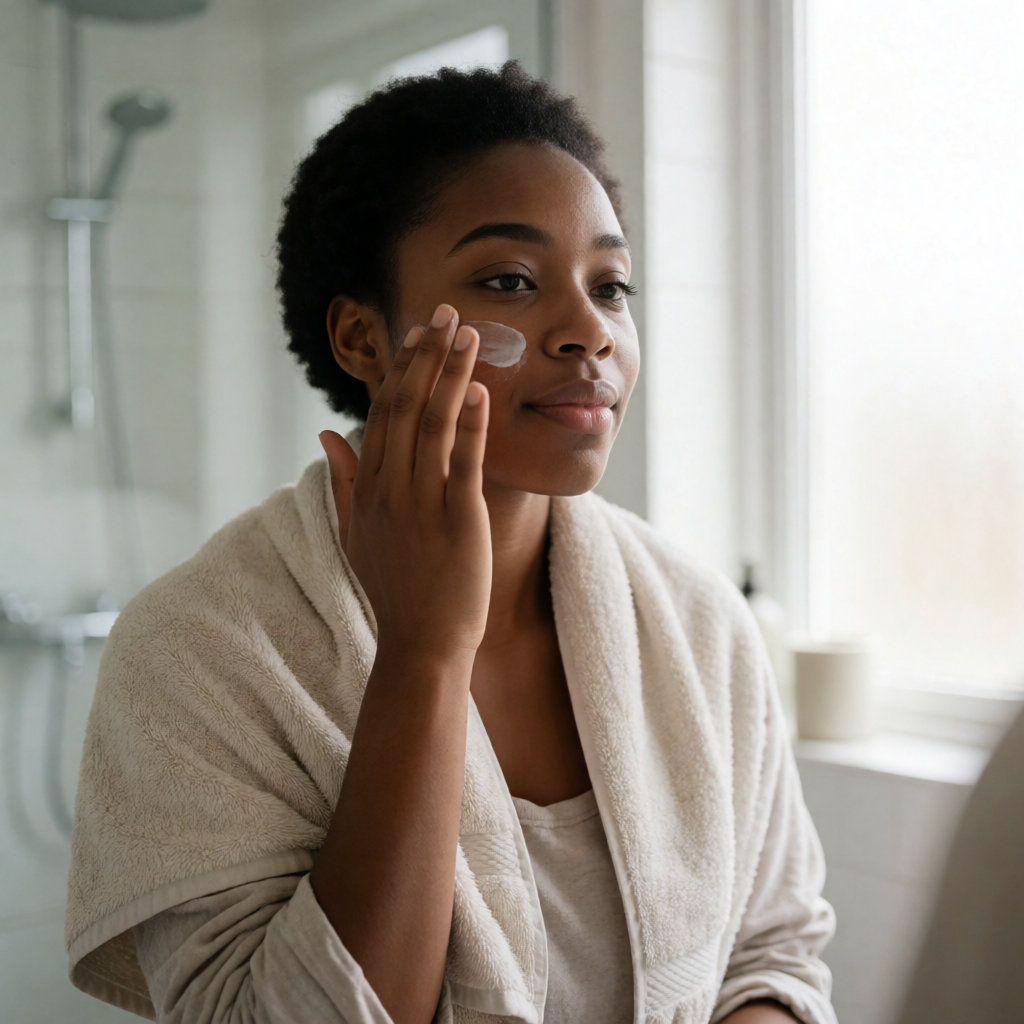
The principle fits in one sentence: fewer products, keeping only those whose usefulness is best documented. In practice, a basic routine often comes down to three or four steps — cleanse gently, moisturise, protect from the sun. Nothing dramatic, you might say, but that's exactly where it gets interesting.
Take sun protection: it's the best-supported step for limiting skin ageing and the risk of skin damage. When it comes to layering ten actives onto sensitive skin, though, we still lack long-term evidence — and piling on products mainly increases the risk of irritation and allergy. What we know, what we don't yet know: that's a formula worth keeping in mind before every purchase.
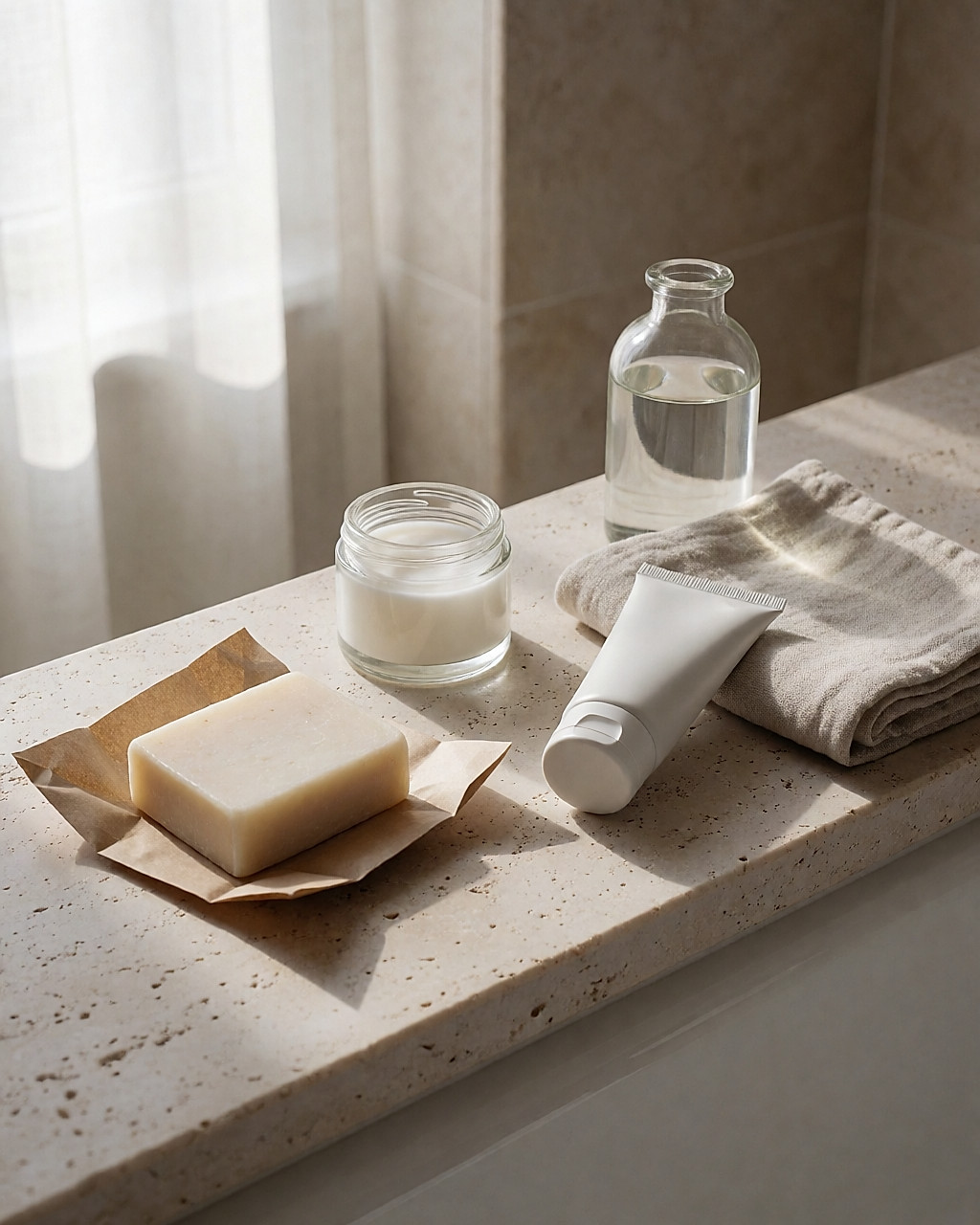
Watch out for the flip side: skinimalism has become a selling point, and some "minimalist" formulas cost more than the classics. Fewer products doesn't mean more effective products! The sensible move is to read the ingredients list — naturally derived actives, short lists — then look at how the packaging will be disposed of. A solid cleansing bar, water-free and wrapped in card, has a far lighter footprint than a plastic bottle, and that's a choice you can see in daily life.
The microbiome: what are we really talking about?
The microbiome is the collection of micro-organisms living on your skin, in your mouth and in your gut. It has interested researchers for several years, and current data suggest it plays a role in digestion, immunity and certain chronic conditions. In short, this isn't a passing fad — nor is it a magic wand.
On the plate, what we know is simple: a varied diet rich in fibre — vegetables, pulses, whole fruit, wholegrains — feeds these bacteria, and fermented foods such as plain yoghurt, raw sauerkraut or kefir also supply live micro-organisms. Variety before the "microbiome-specific" product, in other words. But what would an "ideal" microbiome look like? Nobody really knows, and the idea that a capsule could change it long-term is still unproven. Not all probiotics on sale have the same level of evidence, so it's better to talk to a health professional — GP, pharmacist or dietitian — rather than self-prescribing on a whim.
On the skin side, so-called "microbiome-friendly" products rely on gentle formulas, without fragrance or harsh antiseptics; the idea being to preserve the skin barrier rather than strip it. That holds up. It never replaces, however, a diagnosis from a dermatologist when a real problem sets in.

Active recovery: keep moving rather than stop
No more total rest after exercise? Not exactly — this is about something else. Active recovery means gentle activity — walking, easy cycling, slow swimming or mobility work — that keeps your circulation going without adding fatigue. It's often better tolerated than a complete stop, particularly after a hard session.
WHO guidelines put moderate physical activity at at least 150 minutes a week for adults, with muscle-strengthening work twice a week. Active recovery sits within that framework — it doesn't replace it.
One nuance, and it's a big one: recovery depends above all on sleep, food and hydration. No massage roller, no cold plunge compensates for accumulated sleep debt. We like the idea of the gentle gesture as much as the reality check.
In practice, three markers to remember:
- Bathroom: a gentle cleanser, a moisturiser, a sunscreen. The rest is optional.
- Plate: aim for variety (fibre, pulses, whole fruit) rather than a "microbiome-specific" product.
- Training: after a hard session, a 10 to 20 minute walk rather than the sofa.
Budget: what it really costs
Good news: trimming your routine often trims the bill! Allow around £7 to £18 for a gentle cleanser from a pharmacy or beauty retailer, £9 to £30 for a moisturiser depending on texture and range, and £10 to £26 for a facial sunscreen. In supermarkets, prices often come down by a few pounds; online, be wary of counterfeits — stick to official retailers.
On "microbiome" supplements, prices run from £13 to £35 a box, but there's nothing to justify buying without professional advice. And if you prefer solid or refillable formats — a cleansing bar, a superfatted soap, glass refills — the ranges are similar: £5 to £22 for a solid format, with refills often costing 20 to 30% less than the full container. Labels such as Cosmos Organic or Ecocert set standards for ingredients and a precise specification; they don't however guarantee greater effectiveness, and it's worth saying so in front of a shelf.
In practice, where should you start?
Pick one change at a time. Too many changes at once, and you won't know what's actually working.
If you have reactive skin, a digestive problem that persists or aches that linger after exercise, talk to a health professional. A trend never replaces care tailored to your situation.
What we know, what we don't yet know — that's always the compass that helps you decide. Fewer products, more variety on the plate, regular movement: that's the modest, solid foundation that lasts. The rest, often, is nicely packaged marketing.
Sources
- World Health Organization — Guidelines on physical activity and sedentary behaviour, 2020.
- Santé publique France — Activité physique et santé, dossier.
- Inserm — Microbiote intestinal (flore intestinale), dossier.
Food supplements do not replace a varied, balanced diet and a healthy lifestyle.




Comments
Your opinion matters: rate the article, react and reply to comments.
Comments are moderated; AI-assisted comments are flagged. Text emoticons (8-), :-), <3…) are automatically shown as images.