

Two pots, same brand, same flavour, same supermarket shelf. One carries "reduced fat" in large letters; the other says nothing at all. Turn them over and the two labels stop telling the same story: less fat never guarantees less sugar.
What "reduced fat" actually promises
Start with the part that is regulated. A claim such as "reduced fat" — the family the "lower in fat" wording on lids belongs to — means a reduction in fat compared with a similar product. The promise is real, then, but narrow: it covers one nutrient only. It says nothing about sugar, nothing about salt, nothing about total calories, and nothing about how much of the pot you will actually eat. "Light" or "lite" works on exactly the same principle and buys you no extra reassurance.
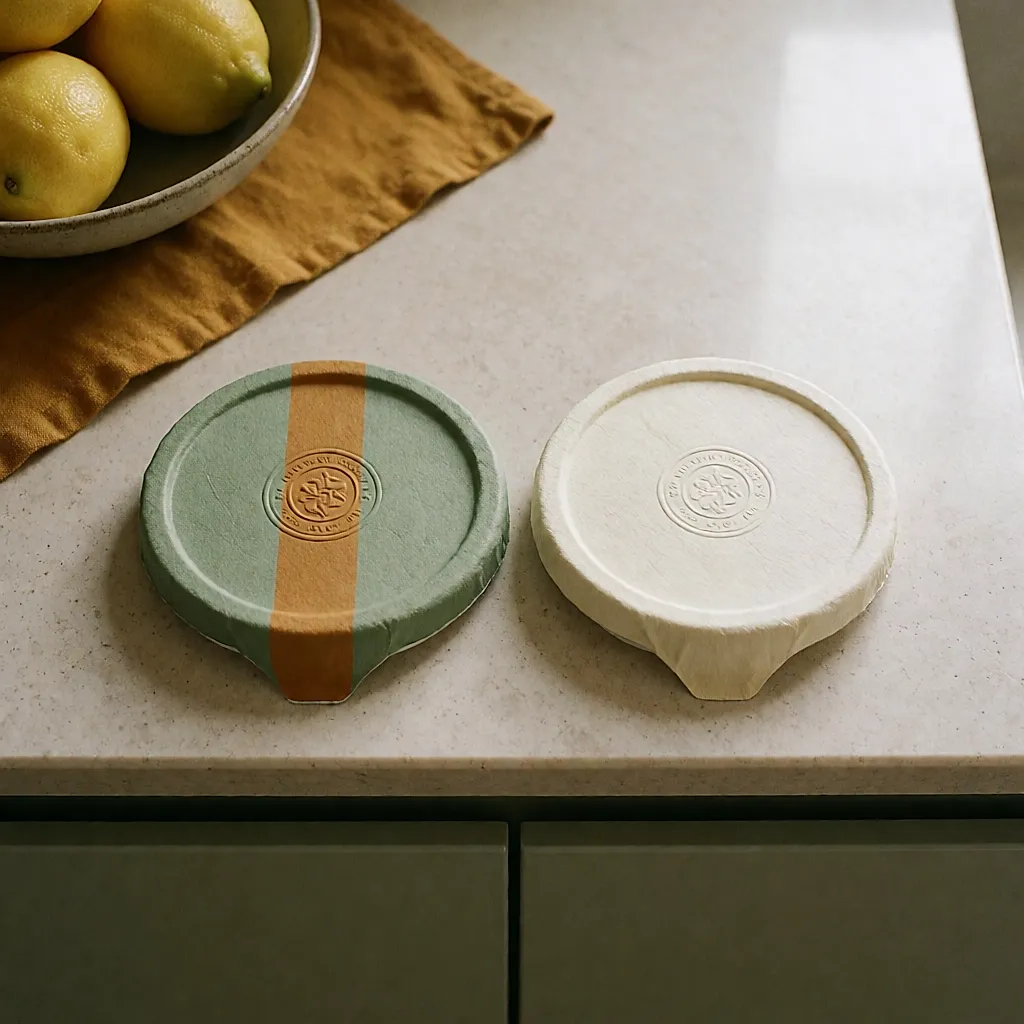
What the label is even quieter about is what replaces the fat. Take out fat and you take out creaminess, texture, sometimes flavour, so manufacturers adjust the recipe with other ingredients — sugars, starch, fibre, thickeners, flavourings, sweeteners. It isn't a mechanical law, and not every reduced-fat product is sweeter than its original. But it happens often enough that a glance at the back is worth more than the promise printed on the lid.
The method: two pots, one line, 100g
The whole thing takes ten seconds. Take the two versions of the same product, the standard one and the reduced-fat one, and find the nutrition table on the back. Not the "reduced fat" on the front: the "of which sugars" line, in the "per 100g" column. That is the fairest ground for comparison, because nutrition tables usually give values per 100g, whereas the portion sizes manufacturers quote vary from pot to pot — 125g here, 150g there, a 30g "serving" somewhere else.

In practice a second check completes the first: read the ingredients list. As a rule, and especially among the main ingredients, the list runs in descending order; ingredients used in very small amounts may be ordered differently. If sugar, glucose syrup or starch has moved up compared with the standard version, the answer is there, no arithmetic needed. And if the product carries a Nutri-Score — widely used in France and some EU markets, but not on UK labels — note that the calculation counts sugars, so a sweeter pot can drop a letter despite the fat reduction. UK packs use front-of-pack traffic lights instead, and those count sugars too: a red for sugars can sit quite comfortably next to a green for fat.
Three habits for the aisle: compare two products on the sugars line per 100g, never per portion; read the ingredients list to see whether sugar has moved up; check the price per kilo, which doesn't necessarily fall when the fat comes out.
Yoghurts, sauces, biscuits: where it gets trickier
Yoghurt is the textbook case, because we assume every pot says the same thing. Plain yoghurt contains carbohydrates, mostly lactose, milk's own sugar: it's there whatever you do. A plain "0% fat" yoghurt doesn't escape that. A fruit "0%", though, adds sugar or sweeteners to carry the flavour. The "0%" refers to fat only; it never promises zero sugar.
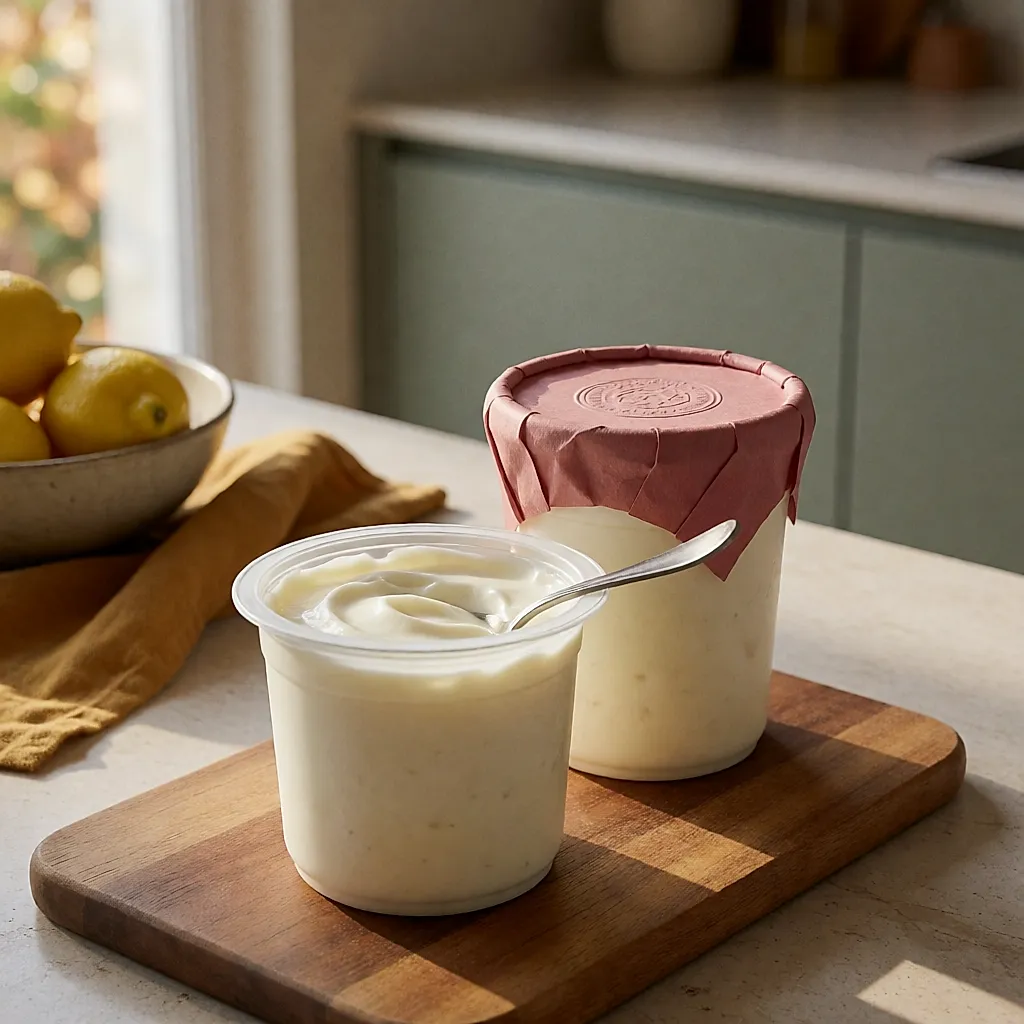
Same logic with sauces and biscuits. In a vinaigrette or a tomato sauce, fat carries part of the flavour and the texture: take it out and the recipe often compensates with sugar or starch. With "reduced-fat" biscuits, check twice rather than once: the reduction applies to one ingredient, not to how sweet the recipe is overall. And the lighter packet doesn't shrink the portion for you — if anything, we tend to serve ourselves more generously because the word is reassuring.
What we know, and what we don't yet know
On the substance, public health advice doesn't shift: cutting back on free sugars in the everyday diet remains a stated goal, and that is the line the NHS takes too. A reduced-fat product is not, by definition, a "healthier" product: it is lower in fat, which is a piece of information, not a certificate of balance.

What the current evidence can't tell us is the actual effect of these substitutions on weight in the long term. Nothing establishes that a reduced-fat product helps you lose weight, and nothing establishes that it makes you gain it either. And no label replaces advice: if you're working towards a weight goal, your GP or a registered dietitian can help you sort out what really matters on the plate — without putting a pot of yoghurt on trial.
So the takeaway comes down to one move: two products, one aisle, the sugars line per 100g, then the ingredients list as a second look. It isn't glamorous, it takes ten seconds, and it's worth a good deal more than promises printed in large type. What it doesn't replace: the pleasure of a proper plain yoghurt, and professional advice if the subject is on your mind.
Sources
- European Union — Regulation (EC) No 1924/2006 on nutrition and health claims made on foods, 2006. The basis for claims such as "reduced fat", still reflected in UK rules.
- European Union — Regulation (EU) No 1169/2011 on the provision of food information to consumers, 2011. The source of the nutrition table and ingredients list UK shoppers read.



Comments
Your opinion matters: rate the article, react and reply to comments.
Comments are moderated; AI-assisted comments are flagged. Text emoticons (8-), :-), <3…) are automatically shown as images.