
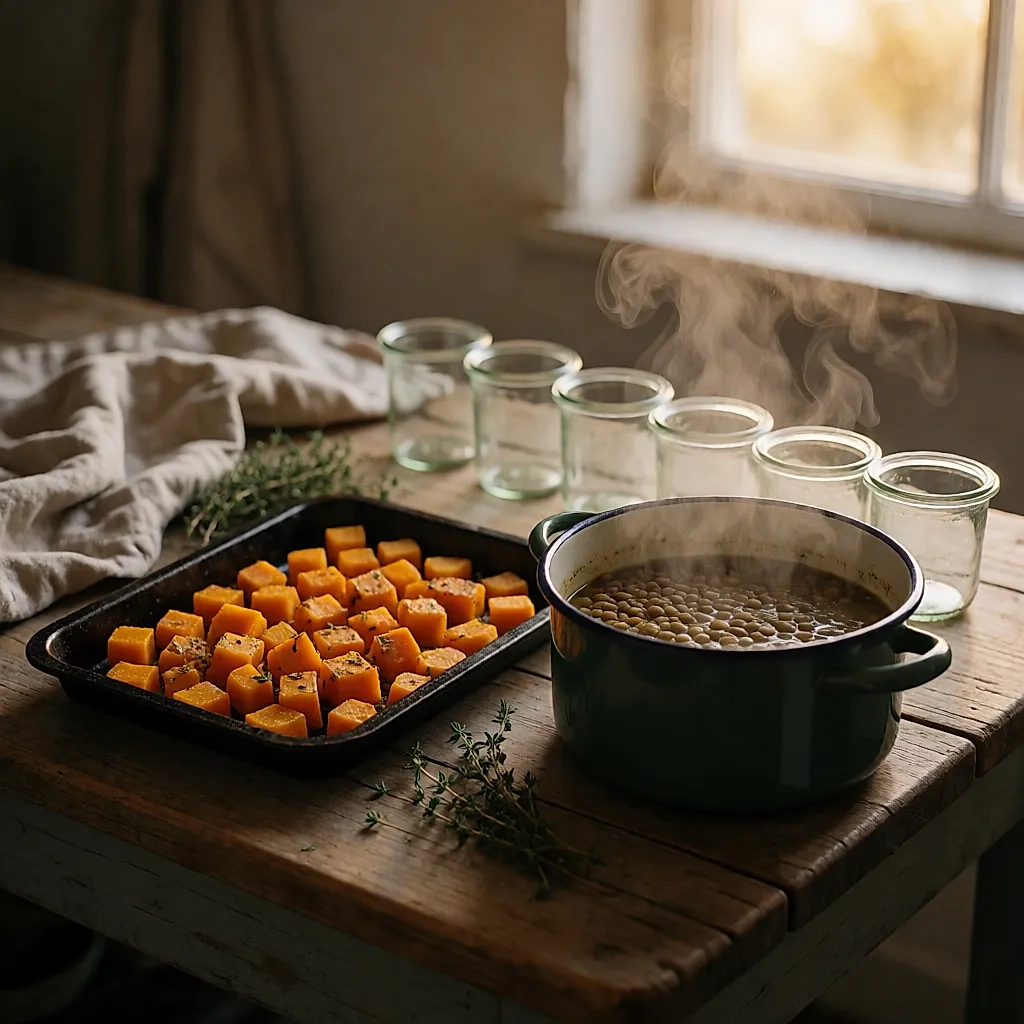
It's past seven in the evening, the rain is settling in for the night, and all you want is something warm, filling and comforting. You open the fridge: half a squash, a stray leek, a part-used jar of lentils. The week's dinners don't hinge on a seven-day meal plan drawn up with military precision — they hinge on right now, in a single cooking session.
One evening, three dinners
It all starts with the oven, because that's what takes longest. Cubes of squash — butternut, red kuri, whatever you've got — on a baking tray with a drizzle of oil and a pinch of salt: give them a good half-hour and then forget about them. Meanwhile, a pan of lentils simmers gently (green ones hold their shape; red ones collapse and will make a soup). Finally, sliced leeks soften slowly, covered, in a frying pan without taking on colour.
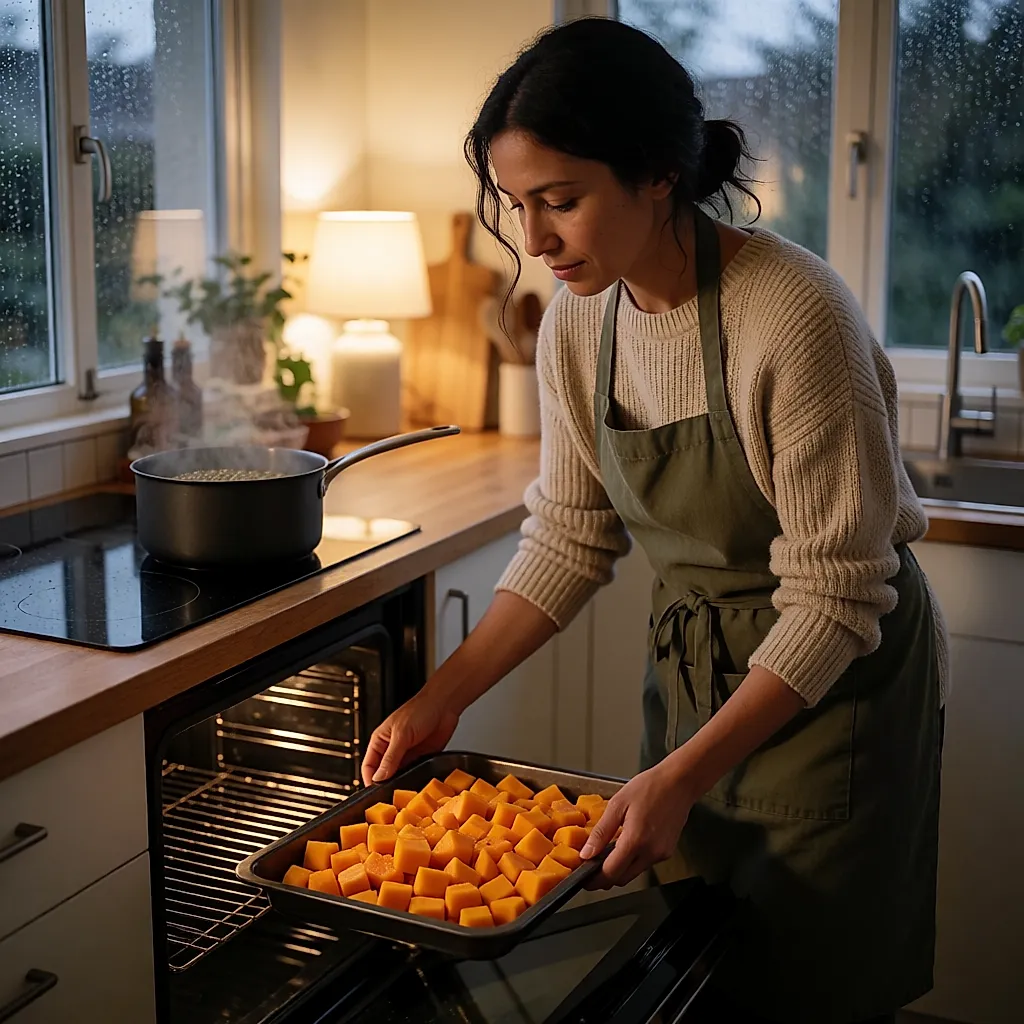
The order isn't pedantry for its own sake: you start with what cooks long and unattended, and finish with what needs thirty seconds of attention here and there. A cabbage can be added along the way — braised if you've got the time, raw and shredded if you haven't. The worktop stays cluttered for an hour, not for six evenings.
The neutral base: the one that doesn't commit
This is the step people skip most often, and it's the one that makes the difference. Cook without strong spices, without tomato sauce, without salty stock: just oil, a clove of garlic, a bay leaf. A neutral base looks like nothing much, and that's precisely the point — it never tastes like leftovers, because it never really had a fixed flavour to begin with.
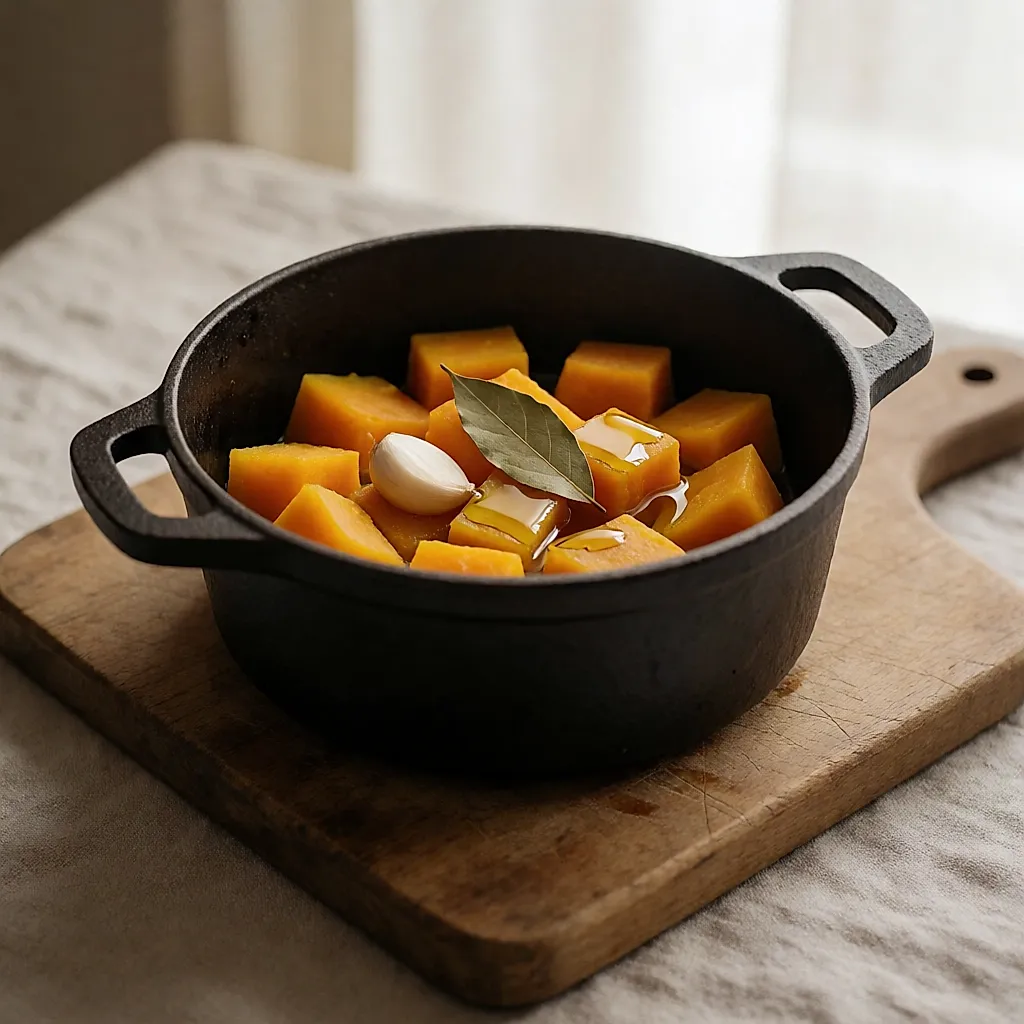
The result: the same squash can become a silky soup on Tuesday and a spiced fry-up on Thursday. The lentils go from vinaigrette to tomato without a fuss. Season on the plate, never in the pot: that's the simple rule that keeps you from the dreaded 'not this again' on the third night.
Three plates, three moods
Monday, the comforting bowl: warm lentils, roast squash, soft leeks, a spoonful of mustard vinaigrette. Nothing more, and it's properly filling.
Wednesday, the rushed version: the squash blitzed into a silky soup with a little milk or plant-based cream, the lentils served cold as a salad with shredded cabbage and a few walnuts. Twenty minutes, ten of which you spend watching the blender do its thing.
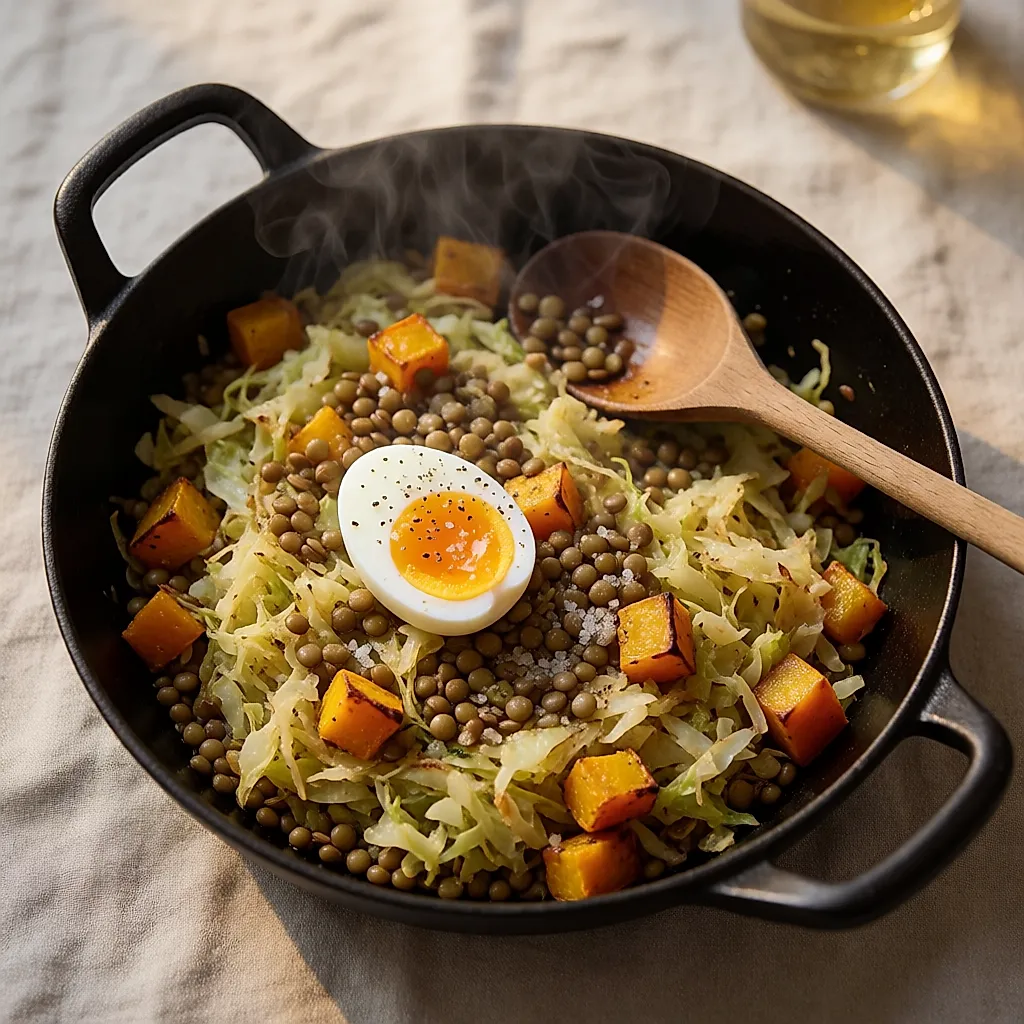
Friday, the fry-up version: whatever's left goes into the pan together, cabbage included, topped with a soft-boiled egg or a few cubes of golden tofu. Three dinners, one cooking session — and not a rigid meal plan in sight.
The thread running through it stays the same: seasonal vegetables in volume, pulses for protein and fibre, and a little wholegrain starch for energy. Pulses such as lentils, and wholegrain options like rice, bulgur wheat or wholemeal bread, sit within the UK's Eatwell Guide — a familiar anchor point in healthy-eating advice.
In the fridge, the real rule: cool it fast
What ruins a batch cook is almost never the recipe: it's the lukewarm container left on the worktop. Cool it fast: divide into shallow containers, leave them open until the steam escapes, then seal them and get them into the fridge.
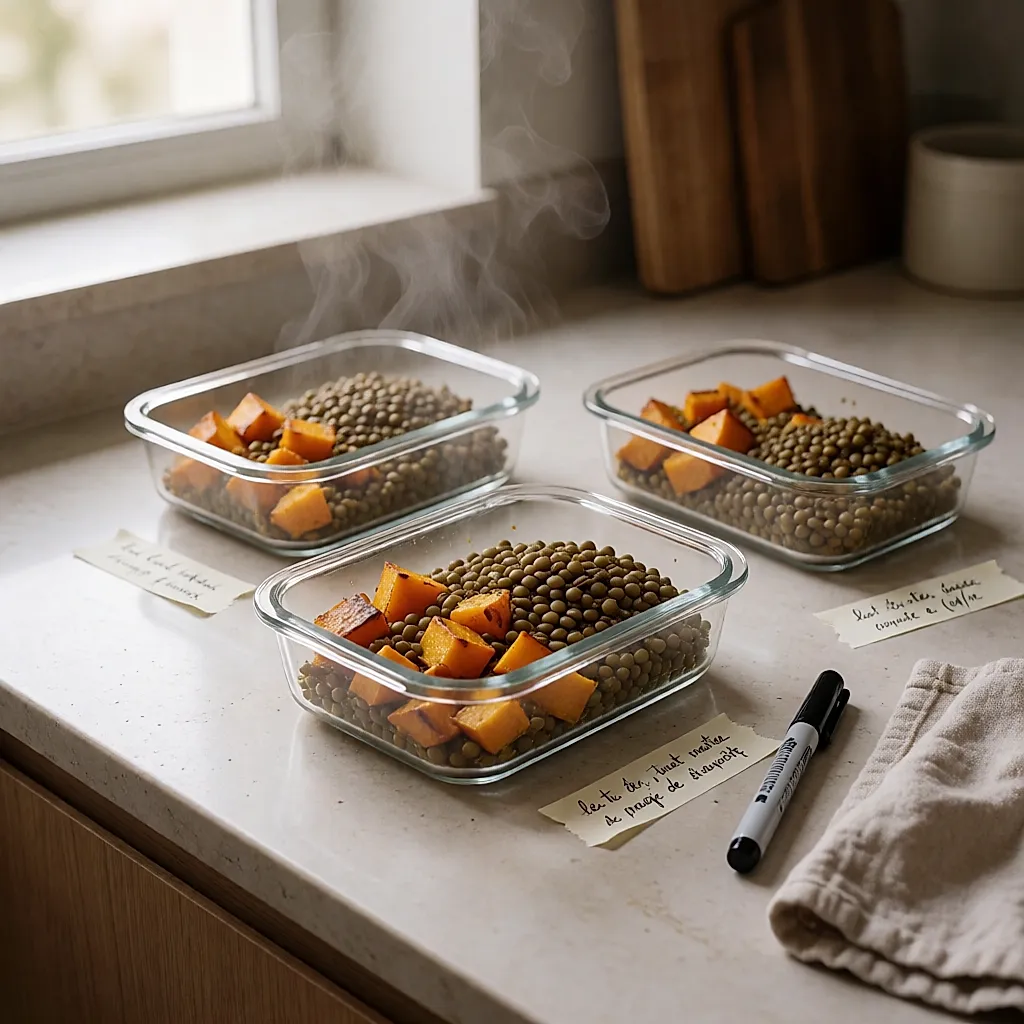
In practice, follow food-safety advice for how long cooked food keeps: cool it fast, refrigerate it promptly, and check the guidance for the dish and your fridge temperature. The exact time depends on the food and how careful your cold chain is. Label the lids: squash and lentil purée look far too alike once chilled.
The proportions: what goes where
Lighter eating here isn't a number: it's a way of putting a plate together. A simple framework many people find useful: half the plate vegetables, a quarter pulses or protein, a quarter wholegrain starch. Nothing strict, but a framework that stops you ending up with a dinner made of just one thing.
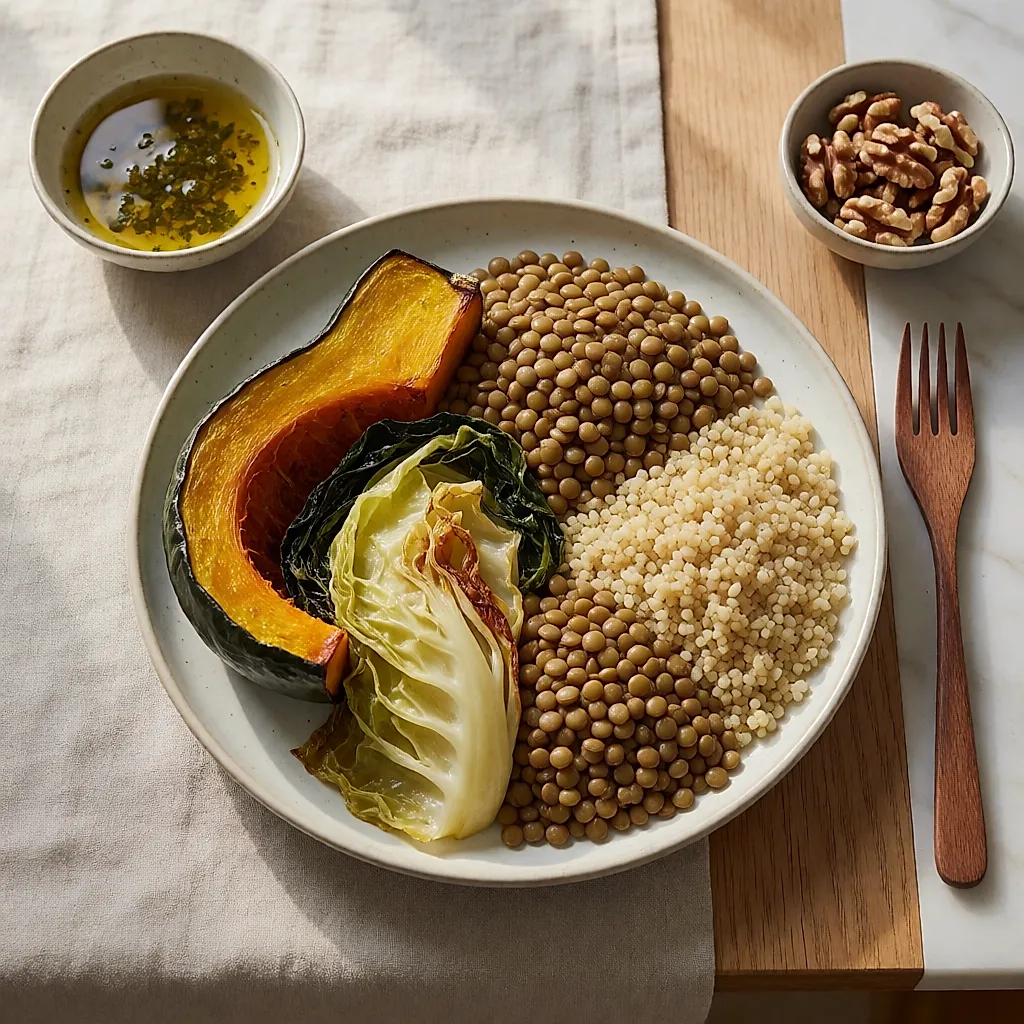
In practice, fibre-rich foods and pulses tend to satisfy more than a very light dish eaten too fast, and cooking ahead cuts down the evenings when you fall back on just anything. What we don't know yet — or rather, what nothing can replace: no cooking method makes you lose weight on its own. Consistency, portion size and the bigger picture matter more than the glass container.
Lighter eating isn't about restriction, and a lasting change to your diet deserves more than a single article. If you're on medication, if you're pregnant, if you have a history of disordered eating or a chronic condition, talk to a healthcare professional before changing your habits — only they can make a diagnosis and tailor advice to your situation.
Budget
Batch cooking doesn't have to be expensive. In the UK, the base ingredients for this kind of batch cook — a squash, dried lentils, leeks and a cabbage — generally come to around £6 to £12 at a supermarket, greengrocer or market stall, depending on the season and whether you choose loose, value or organic produce. Tinned or ready-cooked lentils cost more per portion but save time; dried pulses are cheaper and go further. The total also depends on your city, the shop and what you already have in the cupboard — oil, garlic, bay leaves and spices make a difference. You'll find the ingredients in supermarkets, greengrocers, market stalls and international grocery shops, and online grocery delivery is another option.
Sources
- NHS — The Eatwell Guide.
Comments
Your opinion matters: rate the article, react and reply to comments.
Comments are moderated; AI-assisted comments are flagged. Text emoticons (8-), :-), <3…) are automatically shown as images.