
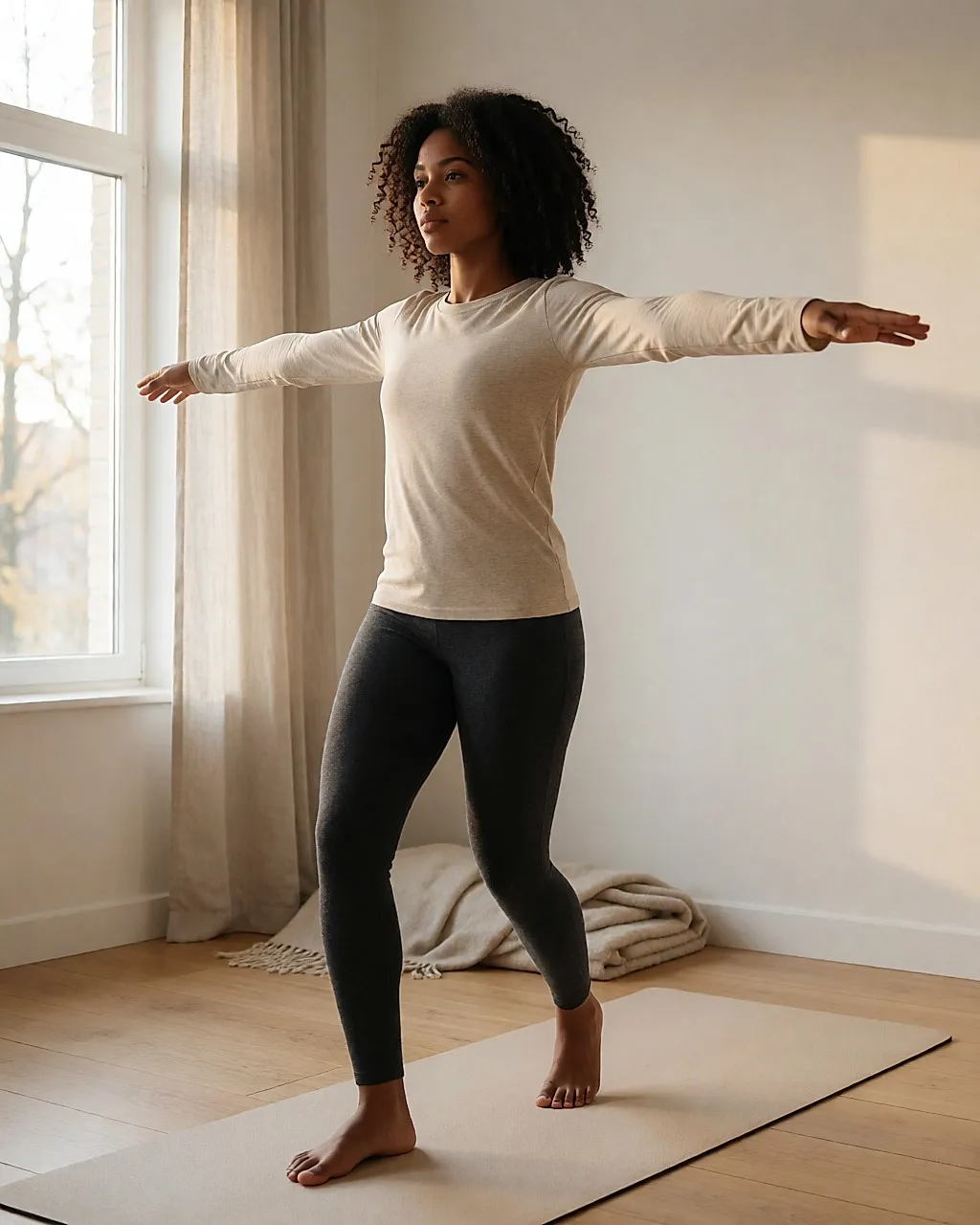
Today the cult of reason has reached such a point that the body can feel as if it belongs to the unconscious. The reflex is to say, 'You need to exercise!' Sport is, of course, a good thing: it can begin to restore a dialogue with the body. But too often the body is reduced to the role of a slave, treated as a racing machine from which effort is demanded. In the end, the body can barely make itself heard except through the symptoms of illness, and then medicine is called in to silence them. This is not an argument against treatment. It is a reminder that symptoms may also carry a message from the body, and an opportunity to restore harmony between body and mind.
Practice across several body techniques—shiatsu as well as yoga—leads me to see the human being as made up of a mental sphere, with a conscious and a mental unconscious; a bodily sphere, with a conscious and a bodily unconscious; and an emotional sphere at the point where the other two meet. Together they form a psychosomatic unity. This is simply a modern way of expressing what many traditions have passed down through concepts such as body, soul and spirit—ideas that science was quick to relegate to the rank of superstition and medieval belief. No one would dispute the advances made by science, but we have to acknowledge that its reductive side has closed many doors to research.
Many body practices aim to restore the harmony of this psychosomatic being. I will take yoga as an example, through three of its aspects.
Postural yoga
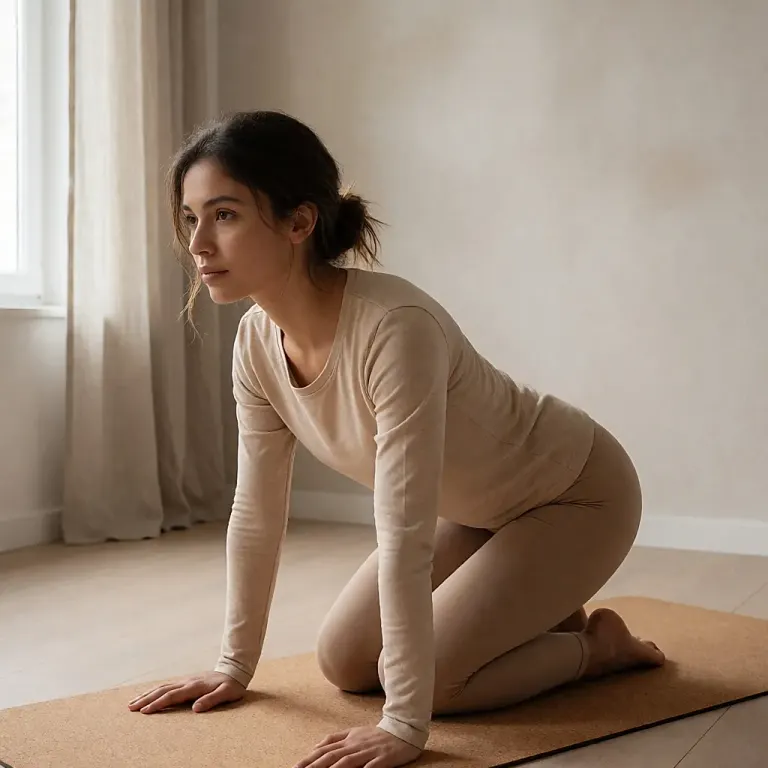
The postures of yoga have a demanding side that can come as a surprise. At first they are rarely comfortable, to put it mildly, and that is precisely how they work as a powerful revealer: by obliging energy to move along unfamiliar routes, they make us aware of the tensions blocking it. These tensions form something like dams between saturated and depleted areas, protecting the latter from a sudden surge of energy that could destroy their more fragile structure. In this approach, a posture may help release some of the tensions that constrain the body and allow traumatic memory to rise into mental consciousness in the form of images or emotions. By traumatic memory I mean the conflicts that, because of family, social or circumstantial pressures, could not be expressed and are therefore stored in the body as stasis, waiting to be resolved. These tensions therefore act as a kind of fuse, and great care is needed when teaching a body technique such as yoga, or when practising one of the many massage techniques intended to release bodily tension. A student or patient risks being overwhelmed by emotions that could seriously shake their sense of identity. Some psychosomatic approaches hold that the body is the guarantor of psychological stability.
The idea of a body/mind duality has existed since Antiquity. It lies at the origin of many dichotomous schools of thought, and expressions such as 'feeling uncomfortable in your own skin' or 'being trapped in your body' are very telling. A body saturated with the traumatic memory of unresolved conflicts is experienced as a prison, and the temptation is to escape it—hence the enthusiasm for 'astral travel' and other practices intended to leave the body. In some psychosomatic readings, if the body or the psyche expresses trauma through tension, this is because all incarnate life is expressed through a tension that reflects the first cellular separation and therefore the first conflict. It is important to understand that conflict serves to define the limits of a structure. In the creation of an embryo, we move from an undifferentiated world to a first cell whose membrane draws the line between inner and outer worlds. Conflict helps define the identity of a structure that is not yet aware of its contours. It is necessary for the continuation of life and the affirmation of identity, which helps us understand that body-mind duality—or bodily consciousness and mental consciousness—is the sine qua non of the functioning of an incarnate being. For a being whose identity contours are poorly defined, entering into conflict with those around them is an attempt at self-recognition through resistance to being invaded by the other.
When the pressures of the surrounding world are too strong to allow conflict to be expressed, suffering may take other paths. The mechanisms involved are still debated, and the available data do not yet allow a conclusion. If we look at a country such as Japan, where people are conditioned from an early age to express not their own emotions but the emotions expected of them, it is interesting to note the success of a director such as Takeshi Kitano, whose inexpressive—almost autistic—characters have found no response to their suffering other than inhibition, or the abandonment of traumatic memory, which amounts to abandoning part of the body and denying the deep personality.
The function of posture is to gather consciousness and define its physical and psychological contours, which is a way of setting a boundary between oneself and the world. Broadly speaking, the body carries the innate personality, while the mind carries the personality acquired through education, family, social and ethnic environment, and so on. We can be perfectly aware of the origin of our tensions, but putting them into words does not make them disappear; postural work, by contrast, aims to relax muscular tension and release memories buried in the body. Many yoga postures—including those grouped under the name Five Tibetan rites—extend or twist the spine; some yoga traditions credit them with the power to awaken memories of our conception and embryonic life.
Some psychosomatic readings hold that the blurrier the identity, the more the body must tense to compensate, and that mental hypertrophy serves to protect and mask the atrophy of bodily identity. In the theoretical reading of the psychosomatic approach, when there is a deep imbalance between the mental and bodily spheres, illness may function to maintain the cohesion of the psychosomatic being and prevent its destruction through loss of identity.
Breathing yoga
When we talk about the body, we often think of its matter and rarely of its space. The idea can sound abstract, but a few examples quickly show why the body needs space in order to function. In the case of the digestive space, we have an opening at the mouth and another at the anus, with the digestive tract between them. When you are inside the digestive tract, you are not inside the body but outside it. The same reasoning applies to the cardiac space, the respiratory space and so on.
Breathing is one of the keystones of yoga. Governed both by the will and by the autonomic nervous system, breathing is a hinge function whose necessity raises the question of survival in an acute way and therefore helps to found the consciousness of being. Breathing is the link between the fullness of the body's matter and the space needed for it to function. There is no discontinuity between the respiratory space and the external space, and the hinge between the respiratory space and the body's matter, at the level of the pulmonary alveoli, can be described as the breath: the mouth then becomes a door onto the universe.
When breathing is suspended—not in an attempt to break an apnea record, but as an act of letting go—some traditions report a suspension of mental activity that can last from a few seconds to a few minutes depending on training. Remember, however, that breath retention should be supervised. This state, which is found in a prolonged form in meditation, is of great importance. Far from being a state of torpor, it is a highly conscious state. The silence of the mind is assimilated to death, and the experience can therefore take on a frightening dimension, but it is only when the noise of the mind falls silent that we can access body consciousness, whose circulating fluids are like so many sensitive surfaces. We can then hear the pulse of the world.
Sound yoga
What is sound, if not vibration? And vibration is a way of getting energy to move through areas where its circulation is inhibited. To take an example: if I fill a container with sand and place a stone on the surface, it stays there. But if I subject the whole thing to continuous vibration, the sand behaves like a fluid, because the friction between the grains is reduced, and the stone slowly sinks to the bottom. By analogy, we can imagine a comparable process in the body. When we receive certain massage techniques that include vibration, practise certain rhythmic breathing patterns or sing, we allow energy to circulate from saturated areas to depleted ones.
The human being can be compared to a musical instrument. To understand this, we need a few basic ideas from acoustics, especially about harmonics. On a stringed instrument, each string vibrates at its fundamental frequency: for middle C (256 Hz), for example, the vibrating string forms a single antinode. If you lightly touch the string at its midpoint (a node) and pluck it elsewhere, you get the octave, a C at 512 Hz—the second harmonic; the vibrating string then forms two antinodes and one node. If you touch it at a third of the way along, you get the fifth, a G—the third harmonic: the string then forms three antinodes and two nodes, and so on.
Some approaches draw an analogy between the whole body as a resonance chamber—a line running from the perineum to the top of the skull—and the nodes of the different harmonics, which would correspond to the energy centres, or chakras. This helps explain the importance given to harmonic singing in different parts of the world, including Siberia, Mongolia and Tibet, to name only a few. Sound yoga teaches the existence of the bija chakra, described as the 'centre of all sounds', which transmits sound vibrations to the higher centres.
As far as singing is concerned, it is particularly interesting to look at the work of Marie-Louise Aucher, who explored, through her method, the phenomena of resonance between sounds and different parts of the skeleton, especially the vertebrae and the bones of the skull. I recommend 'L'homme sonore' to anyone who is interested; it contains two particularly illuminating plates showing the correspondences between musical notes and acupuncture points on the 'governing' meridian, and between musical notes and the sympathetic nervous system.
Cymatics is another fascinating line of research. In the 18th century the German physicist Ernst Chladni studied the forms produced by sound by making metal plates covered with sand vibrate with a bow. In the 1960s Hans Jenny, a follower of Rudolf Steiner, repeated these experiments on bodies of different densities: powders, liquids, glycerine, mercury and so on. His films are especially fascinating: inert matter can be seen coming to life as if by magic and forming mandalas, galaxies and troubling organic shapes.
In his book 'La source noire', Patrice Van Eersel describes an interview with the physicist David Bohm about his theory of an 'implicate order' and an 'explicate order'. I will quote two short extracts. 'I know at least two ways of exploring this elsewhere. The first is mathematical. It is the sharpest, but also the most limited. It does not allow us to say what the implicate order is. At most, it lets us make a few furtive incursions and bring back sections, symbolic fragments.' And, on the other: 'It is musical emotion […] At the precise moment when music moves you, if you are intuitive, you can perceive how the past, present and future of its melody telescope into a single point—a point that is your consciousness. In a sense, at that moment, you put, if I may say so, one foot in the implicate order. Part of you begins to participate consciously in this primary reality, which is the implication of our space-time.' And Patrice Van Eersel adds a little further on: 'At the very bottom of our memory, at the central knot of our consciousness, where our will and our capacity to feel intersect, there would therefore be a hole? A hole through which we escape space-time?'
Hearing these words, I cannot help thinking of the famous woodcut published by Camille Flammarion in his work L'Atmosphère (1888).
Known in English as the Flat-Earth Woodcut or the Flammarion woodcut, it carries this caption: 'A medieval missionary tells that he has found the point where heaven and Earth meet…' What is remarkable is that the solar system and nearby stars are represented in the first sphere, while the pilgrim's gaze embraces a plurality of worlds. I like to imagine this pilgrim contemplating the starry vault during a stop on the journey. Closing his eyes, his gaze turns inward and discovers the hidden order of the world in a prodigious revelation.
The recurring confusion between yoga and religion
Titles such as 'Christian yoga in ten lessons'—written by a Benedictine monk whose sincerity I do not doubt for a second—add to the confusion by suggesting a religious affiliation. Strictly speaking, there is no such thing as Christian yoga. From its origins, yoga has been taken up by many religious currents, and to think that practising it means tacitly adhering to one of them is as absurd as believing that someone treated with acupuncture has an affinity with the Taoism from which it comes. The yoga tradition is addressed to all who practise it, without distinction of sex, culture or belief.
These body-based approaches can support a sense of wellbeing, but they do not replace diagnosis or medical follow-up. If pain, anxiety or unusual fatigue persists, talk to a healthcare professional—your GP, a psychologist or a nurse—who can advise you. And if you are pregnant, recovering from an operation or living with a chronic illness, ask for advice before beginning sustained postural or breathing work.
What it costs
As a rough guide, expect to pay around £10–£19 for a studio yoga class, and £85–£155 for a block of ten; an unlimited monthly membership often falls between £40 and £75, depending on the city and the size of the studio. A group class in the Five Tibetan rites usually sits in the same range as hatha. A one-hour shiatsu session in a practice usually costs £50–£75, a little more in London and other large cities. The books mentioned above can be found secondhand for £8–£17 and new for around £17–£25. A weekend retreat costs more, roughly £210–£510, not including travel. Yoga and meditation apps often cost £4–£13 a month; many advertise a free trial, so check before subscribing.

Comments
Your opinion matters: rate the article, react and reply to comments.
Comments are moderated; AI-assisted comments are flagged. Text emoticons (8-), :-), <3…) are automatically shown as images.