

The sight of an ascetic wearing nothing but a simple loincloth and practising yoga in defiance of the Himalayan winter is, to say the least, unusual—and owes more to fantasy than reality.
Tibet has always been, for us Westerners, a magical country trailing a string of mysteries: the legend of the yeti, stories of monks who levitate—Tintin in Tibet is very revealing on that score. So why not hermits with powers that allow them to withstand the cold?
Yet our view changes when we discover that tummo has followers in France, and that they are not lamas with supernatural powers but simply people who are passionate about this very particular yoga.
We can understand that Tibetans were driven by the need to adapt to the harshness of their climate. But what could possibly drive “normal” people to enter icy water or stand under waterfalls at –15 °C?
First, the need to reconnect with the body. Everyone has the capacity to adapt to cold; it is just that the trappings of modern life have made us forget it: air conditioning and heating are obstacles between us and the body’s thermoregulation. Be careful, however, not to confuse adaptation with invulnerability: current data suggest that training mainly affects peripheral circulation and the sensation of cold, not the ability to endure –20 °C without consequences. Samples remain small, protocols differ from one study to another, and nothing indicates that we become insensitive to cold.
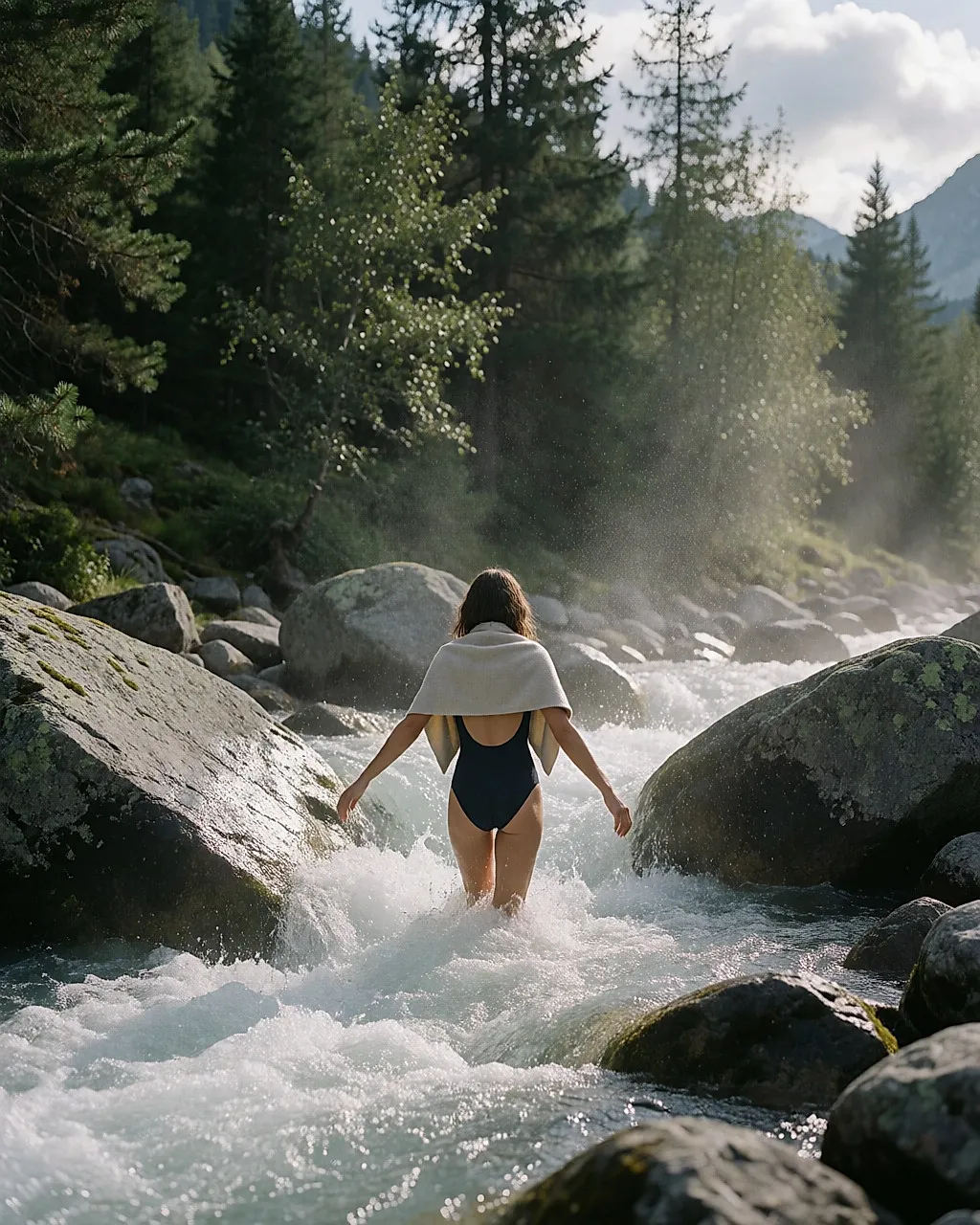
Second, the need to reconnect with nature. I have never known a more intense sensation than the times I have been in a mountain torrent or under a waterfall while thunder rolled—what an extraordinary feeling not just to watch the spectacle but to be one of the particles tossed about by the unleashed elements!
Finally, that surge of energy when you come out of icy water. Cold triggers a circulatory reaction and is traditionally used in hydrotherapy; its effects on immunity are still being studied. The work of Father Kneipp, one of the pioneers of hydrotherapy, belongs to this tradition.
Tibetan yoga has a very martial side. It is probably no accident that the yamabushi monks in Japan use the same techniques to purify themselves—meditation under waterfalls, burial in snow, and so on. To practise cold yoga, you need to be committed to overcoming your deepest fears, to be determined and, above all, to be prepared by a competent instructor. You cannot improvise your way into being a cold yogi: exposure to cold, when the body has not been prepared by the specific exercises of tummo, can simply end in catastrophe.
Tummo is passed down and is not found in manuals. For those who might be tempted by the experience, I have only one piece of advice: meet Maurice Daubard, Europe’s tummo specialist, at his yoga school deep in the Auvergne, where he teaches a Westernised form of tummo. Since then, the Wim Hof method—sustained breathing and short exposures to cold—has shifted the dial: we now talk about self-improvement, sometimes pure performance. The two approaches can coexist, provided you do not confuse a sporting feat with a tradition.

Let us not forget that in Tibet, tummo has no value in itself and is merely a step towards a spirituality of renunciation and self-denial. I am not claiming that these notions are absent in the West, although to encounter them you would have to go back to the Middle Ages, or go to certain Orthodox monasteries, where prayer and renunciation have always been the rule of life. It is simply that Tibetan mysticism is not accessible to us. No one expresses this better than Jung in The Psychology of Kundalini Yoga: “The Hindu representations are alien to us Westerners. Most of us are incapable of acquiring any deep knowledge of them. Moreover, we are all, physiologically speaking, Christians, whether our consciousness recognises it or not.”
We first hear about tummo in the book by the great explorer Alexandra David-Neel, Mystics and Magicians of Tibet. Let us listen to what she says: “To spend the winter in a cave often situated between 4,000 and 5,000 metres above sea level, wearing a thin robe or even naked and not freezing to death, is a complicated problem. Many Tibetan hermits have nevertheless solved it, and their endurance is attributed to the fact that they possess the means to stimulate the internal heat called tummo. The word tummo means heat, but it is not used in everyday language to refer to ordinary heat.”
In practice, remember this: the capacity for adaptation does exist, but it is built slowly, through repeated progressive exposures. A plunge into a lake at 8 °C is no initiation. If in doubt, speak to a healthcare professional before you start.
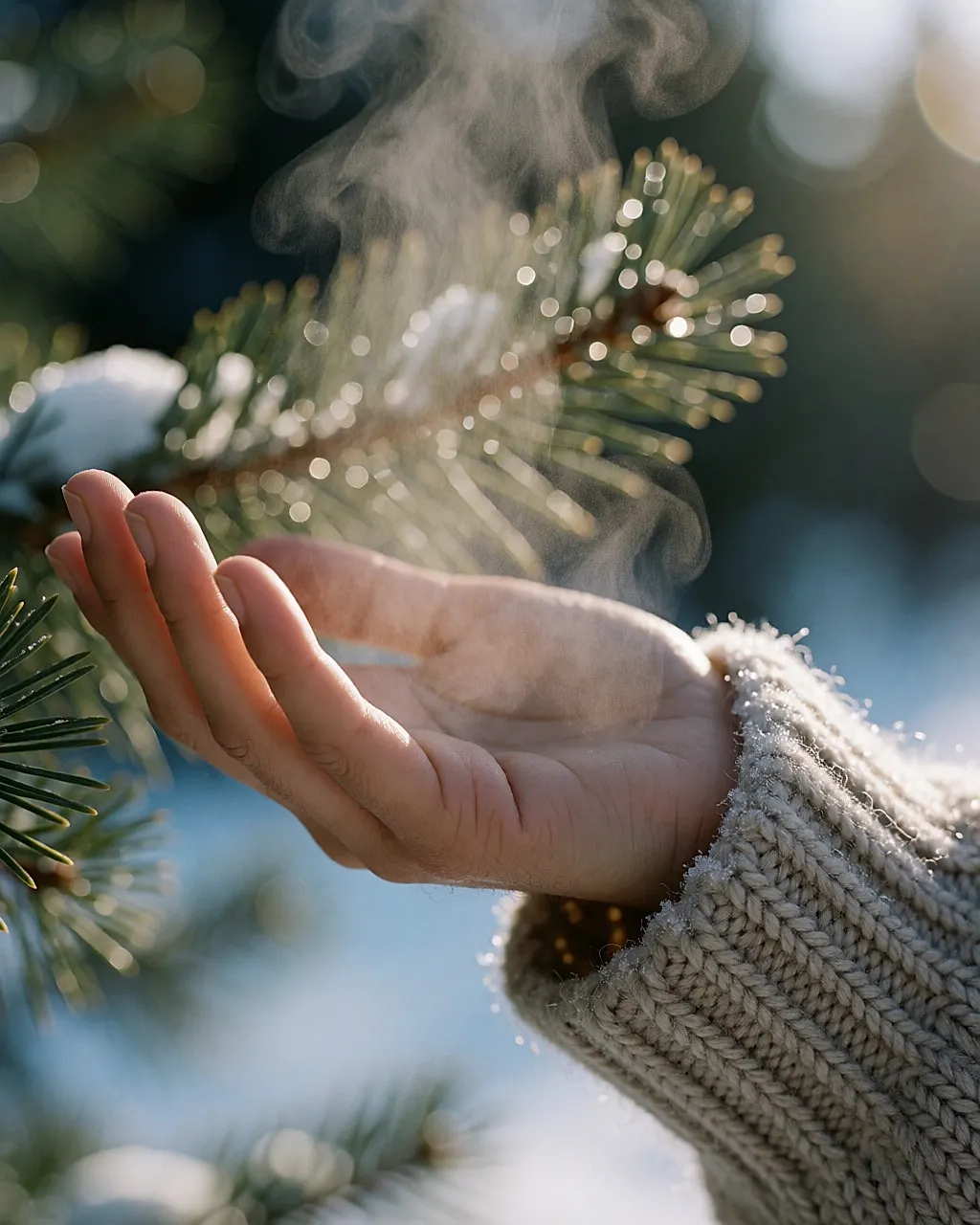
Cold-water bathing is not without risk. If you have a heart condition, uncontrolled high blood pressure, are pregnant, have epilepsy, or have a history of cold-water shock, ask your GP before any prolonged exposure. Progress in stages, never alone the first time, and stop immediately if the sensations become unpleasant.
Budget
Expect to pay from a few hundred pounds for an introductory course in breathing and progressive cold exposure supervised by an experienced instructor; the price depends on the length, location (mountains, Auvergne, spa towns) and level of supervision. A multi-day stay with accommodation costs considerably more. Prices change quickly, and many providers do not publish their rates publicly: it is better to ask the school or centre for a quote before committing.
Sources
- Alexandra David-Neel, Mystics and Magicians of Tibet, Plon, 1929.
- Carl Gustav Jung, The Psychology of Kundalini Yoga.
- Sebastian Kneipp’s work on hydrotherapy (19th century).
- M. Kox et al., “Voluntary activation of the sympathetic nervous system and attenuation of the innate immune response in humans”, PNAS, 2014 (research on the Wim Hof method).
- NHS guidance on cold-water swimming and cold-water shock.



Comments
Your opinion matters: rate the article, react and reply to comments.
Comments are moderated; AI-assisted comments are flagged. Text emoticons (8-), :-), <3…) are automatically shown as images.